Catalog of British Columbiana and Pacific Northwest Americana
Encyclopedia Cascadia Catalog contains book titles of mostly non-fiction Pacific Northwest Coast of North America Titles (primarially British Columbia, Idaho, Oregon and Washington State) in an easy-to-understand title catalog. If you see a link with this badge ONLINE CIRC it means that there is an online institution that provides free access to that title. In some cases there may be more than one institution hosting the title digitally.
| Catalog Title | Published |
|---|---|
|
General William S. Harney prince of dragoons by George Rollie Adams 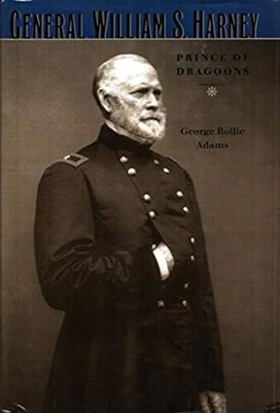
"Between the War of 1812 and the Civil War, General William S. Harney became one of the best-known military figures in America. In a career aided by Andrew Jackson and the concept of an expansible army, Harney saw duty in virtually every part of the country and participated in most of the key military episodes of his time. He chased remnants of Lafitte pirates in Louisiana, campaigned with Abraham Lincoln and Jefferson Davis during the Black Hawk War, developed Vietnam-style riverine tactics that ended the Second Seminole War, and led Winfield Scott's cavalry in the Mexican War. In the 1850s Harney devised the army's largest and most successful pre-Civil War campaign against Plains Indians, commanded troops charged with upholding federal authority in Kansas and Utah, and almost provoked hostilities with Great Britain in the Pacific Northwest. Removed from command amid false charges of disloyalty during the Missouri secession crisis, he returned as a leading member of the Indian Peace Commission of 1867-68." "Harney was bold, ambitious, and innovative, but also impulsive, vindictive, and violent. His career illustrates the nineteenth oentury army's role in implementing federal policy, highlights its limited resources compared to its responsibilities, and illuminates key aspects of its organizational structure, the behavior of its officers, and its impact on personal lives."--Jacket xix, 389 pages : illustrations ; 24 cm CIRC [ 1 ]
|
2001 |
|
Old Square-Toes and his lady the life of James and Amelia Douglas by John D. Adams 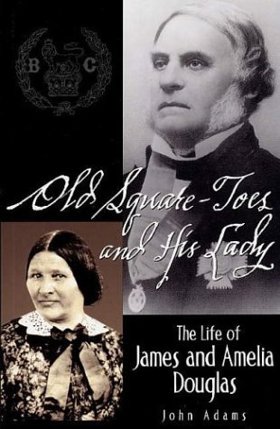
August 12, 2003, marks the 200th anniversary of the birth of Sir James Douglas. Although he played an integral role in British Columbia's history, in many ways Douglas remains misunderstood and an enigma. He is known for his contradictory qualities he was self-serving, racist, a military hawk, sometimes violent and arrogant. Yet he was also extremely community oriented, a humanitarian, brave and a devoted family member. John Adam's bestseller Old Square-Toes and His Lady: The Life of James and Amelia Douglas serves as an important source of information regarding Douglas's public and private lives. As Adams writes, [the term] old square-toes characterizes him as an unbending, stodgy, boring individual, but nothing could be further from the truth. At the pinnacle of his career, Douglas was knighted by order of Queen Victoria. Considering his modest, mixed-race beginnings in South America, his lofty status is, indeed, remarkable. Equally so is the life of his wife, Amelia. She was also of mixed blood, her mother being Cree and her father Irish. But unlike Douglas, who was educated in Scotland, she never left the northern forests until they married. Their ending up as a knight and lady of the British Empire was an unusual achievement. Old Square-Toes discusses the Douglases' diverse experiences of astonishing contrasts, from crossing North America by canoe to touring Europe by train, from Native uprisings to the frantic gold rush. Besides finding glory, they also faced grief in losing seven of their beloved children. This is a story of the adventure, heartbreak, and devotion that lies at the roots of western Canada xi, 243 pages : illustrations, maps ; 22 cm CIRC [ 1 ]
|
2001 |
|
Namely Vancouver the hidden history of Vancouver place names by Tom Snyders, Jennifer O'Rourke 
Namely Vancouver traces the fascinating origins and history of Greater Vancouver's place names--its streets, neighbourhoods, waterways, mountains, boroughs, and buildings, among others, in an illustrated historical glossary that takes you behind the ubiquitous signs and symbols, and provides a unique vantage point on the city. For instance, Commercial Drive was originally named Park Drive, as it abutted Clark Park in East Vancouver. As part of the route of the Vancouver-New Westminster interurban railway, Park Drive attracted a lot of new businesses; so much so, that in 1912 it was renamed Commercial Drive. There seems to be no truth to the rumour that Gassy Jack Deighton was so named for his frequent passing of wind. Rather, this instrumental figure in Vancouver's early history--the original site of his pub still forms the division between east and west streets in the city--was named for his windbag tendencies, and the legacy of this saloon keeper lives on in the name of historic Gastown. While many of Vancouver's early surveyors, mayors, and even saloon keepers had the honour of having streets or neighbourhoods named after them, John Morton had a slightly more dubious distinction. As one of the "three greenhorns," Morton went down in history as one of Vancouver's earliest settlers. In return, one of Vancouver's shortest streets is named after him. Lulu Island is named after Lulu Sweet, an actress with a travelling theatre company. Colonel Moody (of Port Moody fame) was smitten with Miss Lulu, and named the island, now known as Richmond, after her. An unorthodox and revealing guide, Namely Vancouver is an ideal book for tourists and Vancouverites alike. Includes numerous historical and contemporary B&W photographs. 299 pages : illustrations ; 23 cm CIRC [ 1 ]
|
2001 |
|
This blessed wilderness Archibald McDonald's letters from the Columbia, 1822-44 by Archibald McDonald, Jean Murray Cole 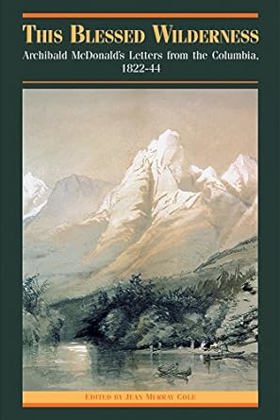
"The twenty-five years between 1821 and 1846 were turbulent but important years in the history of the fur trade in the Pacific Northwest: 1821 saw the merger of the Hudson's Bay Company and the North West Company, and 1846 saw the signing of the Oregon Treaty, which established the Canada-US border." "Archibald McDonald was a man who experienced these changes first-hand. As a senior HBC officer, he was sent to the Columbia District headquarters at Fort George in 1821 to oversee the recently absorbed NWC posts and assets. After the merger, McDonald went on to direct operations at Thompson River (1826-28), Fort Langley (1829-33), and Fort Colvile (1834-44)." "During his tenure in the Pacific Northwest, letters were McDonald's only link with the outside world. Collected here for the first time by Jean Murray Cole, these public and private letters to friends, business colleagues, missionaries, botanists, and many others provide a fascinating narrative of the expansion of the fur trade at a critical time in its history."--Jacket ix, 297 pages : illustrations, map ; 24 cm CIRC [ 1 ]
|
2001 |
|
Portland, then & now by Linda Dodds, Carolyn M. Buan 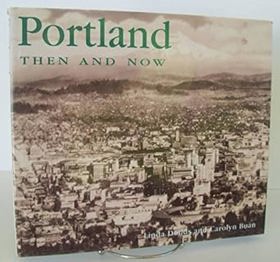
Celebrating America's favorite cityscapes, this series combines historic interest and contemporary beauty. Then and Now features fascinating archival photographs contrasted with specially commissioned, full-color images of the same scene today. A visual lesson in the historic changes of our greatest urban landscapes 144 pages : chiefly illustrations (some color) ; 26 x 29 cm CIRC [ 1 ]
|
2001 |
|
The great Northwest the search for regional identity by William G. Robbins 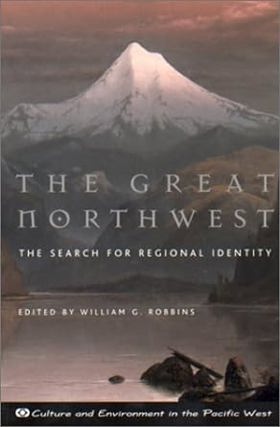
For more than 150 years, Pacific Northwest writers have sought out the region's shared stories and traditions in an attempt to explain the common features of its places and people. A key element in the study of place and region is the relationship between human experience and the natural world. This newest volume in the acclaimed Culture and Environment in the Pacific West series offers a compelling blend of ideas and perspectives on region identity in the Pacific Northwest. In The Great Northwest, historian William G. Robbins gathers writings that explore the idea and reality of the Pacific Northwest from a surprising variety of viewpoints. Descriptions of and stories about such distinct places as Celilo Falls on the Columbia river, Alaska, interior British Columbia, and the reforested Tillamook Burn in Oregon show why the search for regional identity is a complex but ultimately rewarding endeavor. "The business of understanding the Pacific Northwest is messy but important," writes series editor William Lang. "Knowing what we think about our place and our region offers opportunities to understand ourselves our communities, and our relationships to the larger world." x, 190 pages : illustrations ; 23 cm. CIRC [ 1 ]
|
2001 |
|
Puget Sound ferries from canoe to catamaran, an illustrated history by Carolyn Neal, Thomas Kilday Janus 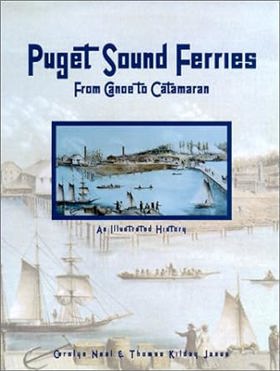
Authored by Carolyn Neal and Thomas Kilday Janus, Puget Sound Ferries: From Canoe to Catamaran, an Illustrated History presents a visual and narrative chronicle of the vessels that have spanned Washington’s inland sea across generations. The book traces the technological evolution of water transit from indigenous dugout canoes and early steam-powered "mosquito fleet" boats to modern automobile ferries and high-speed catamarans. Richly illustrated with historical photographs and detailed vessel logs, the text highlights how changing ship designs directly reflected the growing mobility needs of a decentralized coastal population. A keen insight drawn from the work is how the ferry system functioned as the original democratic equalizer of the region; by stitching together disparate islands and mainland shorelines before bridges were feasible, these vessels created a unified regional community out of a fragmented marine geography. 224 pages : illustrations ; 29 cm CIRC [ 1 ]
|
2001 |
|
Oregon burial site guide by Dean H. Byrd, Stanley R. Clarke, Janice M. Healy 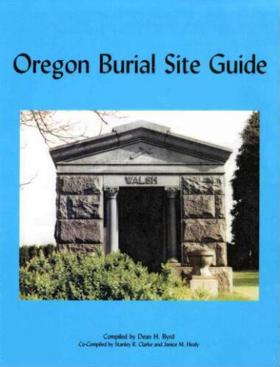
Published by Binford & Mort and compiled by researchers Dean H. Byrd, Stanley R. Clarke, and Janice M. Healy, Oregon Burial Site Guide serves as a comprehensive genealogical and historical inventory of cemeteries across the state. The volume documents thousands of burial locations ranging from pioneer family plots and historic urban graveyards to remote rural resting places, providing precise geographic coordinates and historical context for each site. By systematically cataloging these final resting places, the text rescues forgotten local figures and early settlers from historical obscurity while mapping the shifting human settlement patterns of the Pacific Northwest. A keen insight drawn from the work is how regional cemeteries function as open-air archives of frontier demographics; the layout, marker materials, and clustering of these graves physically map out the waves of migration, epidemic diseases, and harsh environmental realities that shaped early Oregon communities long before modern municipal records were established. xxxvi, 1180 pages : illustrations, maps ; 29 cm CIRC [ 1 ]
|
2001 |
|
Elegant arches, soaring spans C.B. McCullough, Oregon's master bridge builder by Robert W. Hadlow 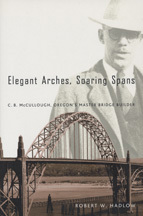
Conde Balcom McCullough ranks as a modern bridge builder of national and international acclaim. This first major study of McCullough traces the Professional life of a brilliant engineer and builder renowned for his elegant, cost-efficient, custom-designed spans. McCullough's legacy lies in the nearly 600 bridges he and his staff designed and built in Oregon during the years between the two world wars, most notably several beautiful bridges along the Oregon Coast Highway, bridges he called "jeweled clasps in a wonderful string of pearls." Trained as a civil engineer, McCullough came to Oregon in 1916, drawn by the state's dire need for bridges and its drive to "lift its feet out of the winter's mud and summer's dust." After developing the engineering program at Oregon Agricultural College (now Oregon State University), McCullough was named the state's bridge engineer. He became an impassioned promoter of state-sponsored bridge building that incorporated engineering efficiency with economic practicality and aesthetic appeal. McCullough's long career with the State Highway Department left a legacy of bridge building in Oregon unequaled in the twentieth century. In 1999, Engineering News-Record recognized McCullough as one of the most important bridge engineers of the past 125 years. He was an innovator in twentieth-century reinforced-concrete arch construction and built one of the first concrete tied-arch bridges in the United States. McCullough's bridges are rich in aesthetic detail; the finest among them are embellished with arch crowns, Art Deco-inspired pylons and obelisks, Gothic piers, towering spires, and arched railing panels. Illustrated with historic photographs and drawings, Robert Hadlow's definitive and highly readable biography will delight bridge buffs and engineering enthusiasts everywhere. It will also be of great interest to Oregon coast visitors and residents, and to students of transportation and technology history. xi, 211 pages : illustrations ; 23 cm CIRC [ 0 ]
|
2001 |
|
Wildlife-habitat relationships in Oregon and Washington by David H. Johnson , Thomas A. O'Neil 
The biggest challenge facing natural resource conservation efforts today is to maintain biological diversity and viable ecosystems. This requires the best available scientific information on the relationships between individual species and their habitat. Wildlife-Habitat Relationships in Oregon and Washington is the first book to compile and synthesize in a single convenient, comprehensive volume a vast amount of diverse information on 593 wildlife species and their relationships with the 32 terrestrial, freshwater, and marine habitat types of Oregon and Washington. Included are color photographs of each habitat type, as well as hundreds of maps, diagrams, and other illustrations. In addition, a separate CD-ROM (included with the book) contains additional wildlife diata and color maps, and seven matrices that link wildlife species with their respective habitat types. The 88 contributing authors include experts in wildlife, botany, fisheries, conservation biology, vegetation mapping, and the ecology of forest, rangeland, and marine environments, among other fields. Intended for use by natural resource managers and planners, scientists, conservationists, educators, and other individuals with a deep interest in wildlife species and their habitats, this book is sure to be a valuable resource and standard reference for many years to come. xix, 736 pages : illustrations, maps (some color) ; 29 cm + 1 CD-ROM (4 3/4 in.) CIRC [ 0 ]
|
2001 |
|
Winter twigs a wintertime key to deciduous trees and shrubs of northwestern Oregon and western Washington by Helen M. Gilkey, Patricia L. Packard 
Winter Twigs has long been respected and widely used as a unique guide for wintertime identification of the deciduous plants of northwestern Oregon and western Washington (many of the species covered are also found in British Columbia and Alaska). The first edition of this book has been used by thousands of botany students and other interested individuals to identify plants during the months that they lack the leaves and flowers that most field guides rely on. Intended for use by teachers, students, scientists, amateur botanists, and outdoor enthusiasts, Winter Twigs brings together in one convenient volume the information necessary to identify all of the native deciduous woody plants likely to be encountered in the region, as well as many of the more common escaped cultivated species, Also included are certain species which are normally evergreen but may be deciduous during severe winters. Covered are 82 species representing 35 genera of 17 plant families likely to be found between the Cascade mountains and Pacific Coast in Washington and Oregon as far south as the Umpqua divide, and keys to all species that can be readily identified by winter characteristics. The glossary of botanical terms and more than 100 line drawings that highlight the identifying features of various plants will be especially valuable to students and beginners. To make this new edition as accurate and up-to-date as possible, the nomenclature for 22 species has been updated to conform to the latest scientific literature, with contributions by the Oregon Vascular Plant Checklist Project. x, 118 pages : illustrations ; 23 cm CIRC [ 0 ]
|
2001 |
|
Harvest Wobblies the Industrial Workers of the World and agricultural laborers in the American West, 1905-1930 by Greg Hall 
Increased Mechanization and the expansion of new markets transformed the face of American farming in the early decades of the twentieth century, especially in the American West. These changes demanded a new kind of agricultural worker--gone was the local farmhand, replaced by a cheap and temporary labor force of migrant and seasonal workers. Greg Hall's fascinating book analyzes how "harvest Wobblies," members of the Industrial Workers of the World (IWW), organized these men, women, and sometimes children who had become so essential and yet so exploited on the farms of the West. Although harvest Wobblies worked in nearly all the western states, their stongholds were the Great Plains, California, and the Pacific Northwest, regions where harmers developed monocrop agriculture and where seasonal labor was indispensable come harvest time. Like their IWW brethren in logging camps and mines, the harvest Wobblies combined an effort to improve the lives of workers with harger revolutionary goals. Harvest Wobblies personified most of the indelible features of IWW membership: they were the militant casual laborers of the American West, riding the rails, living in hobo jungles, preaching revolution, and facing repression with innovative strategies, impassioned speech, humor, and song. Through trial and error, Wobbly organizers eventually implemented the idea of an industrial union in agriculture and helped the IWW to establish itself as a powerful force to be reckoned with by employers in the West. In tracing the rise and the eventual fall of the harvest Wobblies, Greg Hall examines the diverse and changing nature of the agricultural work force. He offers a social and cultural history of a union uniquely suited to organizing tens of thousands of migrant and seasonal workers. Harvest Wobblies will appeal to a broad audience of readers interested in labor history, the American West, U.S. agricultural history, and the history of the WWI. 279 pages : illustrations, map ; 24 cm CIRC [ 0 ]
|
2001 |
|
Lewis and Clark meet Oregon's forests lessons from dynamic nature by Gail Wells, Dawn Anzinger 
As Lewis and Clark's Corps of Discovery steered their canoes down the tumultuous narrows and rapids of the lower Columbia River, they were propelled out of the virtually treeless desert east of the Cascades into a vastly different landscape--one of thick and diverse forests. The forests the explorers encountered had been continuously shaped by many factors. Floods, windstorms, volcano-induced mud flows, landslides and fire, both naturally occurring and deliberately set by the Indians as part of their cultural practice: all had been working over many millennia to create the Oregon landscape of 1805. Recreating that landscape with the help of Clark's journal entries and those of early European explorers to the region, the authors examine the natural and human-caused influences that shaped and continue to shape the landscape in three different northwestern Oregon locations: the area around Tillamook Head, the lower Willamette Valley and the west slopes of the Cascades, and the Alsea River country of the central Coast Range. Concluding with a discussion of the lessons we can learn from the land's history, Wells and Anzinger assert that Northwest citizens need to be aware of the landscape, shaping it and being shaped by it, in a manner that sustains both its vital processes and our own. An excellent and engaging resource for anyone interested in the historic and future role of forests in the Northwest, the book includes more than 100 photographs and maps, many in full color. 223 pages : illustrations (some color), maps ; 23 cm CIRC [ 0 ]
|
2001 |
|
Handbook of Northwestern plants by Helen M. Gilkey , L. D. Johnston 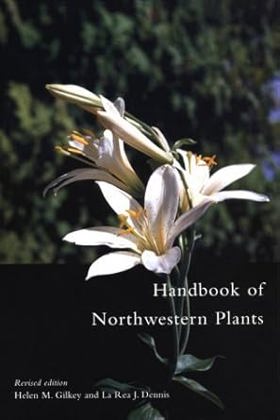
The Handbook of Northwestern Plants has long been one of the most respected and widely used guides for identifying the plants of western Washington and Oregon. Earlier editions of this book have been used by thousands of botany students and other interested individuals to identify hundreds of different species of plants, while learning how to use analytical plant keys and the basic botanical terminology necessary to understand and accurately identify plants in the field. Intended for use by teachers, students, scientists, amateur botanists, and outdoor enthusiasts, the Handbook of Northwestern Plants brings together in one comprehensive but convenient volume the information necessary to identify the amazing variety of plants found between the Cascade mountains and Pacific Coast in Washington and Oregon as far south as the Umpqua divide. The glossary of botanical terms, illustrations of different types of leaves and flowers, and hundreds of line drawings that highlight the identifying features of various plants will be especially valuable to students and beginners. To make this new edition as accurate and up-to-date as possible, author La Rea J. Dennis has updated the nomenclature to conform to the latest scientific literature, added species, and revised some plant descriptions and keys. To make the book easier to use, the genera and species have bee arranged alphabetically within families, and the longer keys have been numbered. As in earlier editions, hundreds of excellent line drawings illustrate the key characteristics of various plants 494 pages : illustrations ; 23 cm CIRC [ 0 ]
|
2001 |
|
Forest primeval the natural history of an ancient forest by Chris Maser 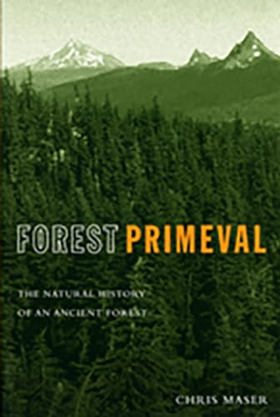
In this classic work of ecology, Chris Maser traces the growth of an ancient forest in Oregon's Cascade mountains from its fiery birth in the year 987 to present. A unique "biography" of an ecosystem, Forest Primeval portrays a diverse fabric of plants, animals, and microorganisms working in unison. Maser offers precise yet evocative accounts of the lives and events within the burgeoning forest: the habits of deer mice who help reseed the burned earth, the seemingly accidental but vitally necessary symbiotic associations between fungus and tree root tips that stimulate growth, the constant predation among wildlife. He revels how over the course of a millennium, "microbes and fungi change a forest just as surely as a raging fire, only inconspicuously and more slowly." As the life cycles of the forest progress, Maser's minute scientific observations unfold against the backdrop of history, a chronology of "humans struggle and suffering that is paralleled in the life of ..." a single 1000-year-old Douglas fir." In taking this millennial view, Maser shows how the forest represents our spiritual and historical roots as human beings. Arguing that our survival is as intertwined with the forests as are the myriad interlocking life cycles that created them, Maser makes a plea for the immediate global implementation of restoration forestry. Selected by School Library Journal as one of the year's "Best Science and Technical Books." xxi, 282 pages : illustrations ; 23 cm CIRC [ 0 ]
|
2001 |
|
Atlas of Oregon by William G. Loy, Stuart Allan, Aileen R. Buckley, James E. Meacham 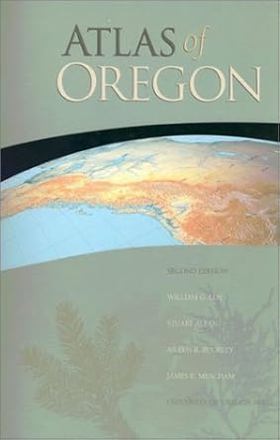
This beautiful and authoritative volume offers a detailed look at the history, geography, and people of Oregon. Stunning full-color maps are complemented by informative text exploring everything from the earliest settlers to the growth of Oregon vineyards to Portland's traffic jams. The Atlas maps a world of information, from native cultures, exploration, politics, religion, and economic growth to landforms, volcanoes, lakes, place names, vegetation, and wildlife habitat. Created by an award-winning team of geographers and cartographers, it is both a work of art and a fascinating reference. 1 atlas (xvii, 301 pages) : color illustrations, color maps ; 34 cm CIRC [ 0 ]
|
2001 |
|
An identification guide to the larval marine invertebrates of the Pacific Northwest by Alan L. Shanks 
The study of larval invertebrates is a vital and growing field in contemporary marine science. The key ecological role of larvae in determining adult population sizes has been recognized for decades and has inspired extensive research. This volume, the first of its kind, is an identification guide to the planktonic larvae of shallow subtidal and intertidal invertebrates common to the Pacific Northwest coast. Each chapter provides a brief background to the larval biology of an invertebrate group; keys, line drawings, and descriptions for the identification of larvae; a list of the species present in the Pacific Northwest; and a reference section. The geographic range covered is roughly from southeast Alaska to northern California; however many of the species are found along the entire coast of California, as far south as Baja California. An essential reference for anyone attempting to identify larval invertebrates from zooplankton samples, this working manual is intended for students as well as scientists and researchers. It offers an important new resource for marine biologists, biological oceanographers, marine and intertidal ecologists, and especially larval biologists. 314 pages : illustrations ; 27 cm CIRC [ 0 ]
|
2001 |
|
Landscape traveled by coyote and crane the world of the Schi̲tsuʼumsh : Coeur d'Alene Indians by Rodney Frey, Coeur D'Alene Tribe of the Coeur D'Alene Reservation, Idaho 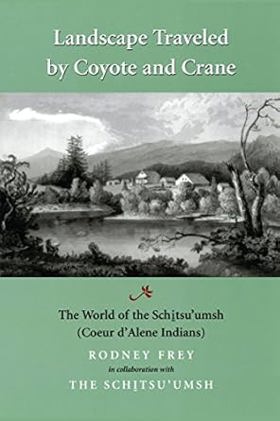
Anthropologist Rodney Frey culminates a decade of work with the Schitsu’umsh (the Coeur d’Alene Indians of Idaho) in this portrait of the unique bonds between a people and the landscape of their traditional homeland. The result of an intensive collaboration between investigator and Native people, the book includes many traditional stories that invite the reader’s participation in the world of the Schitsu’umsh. The Schitsu’umsh landscape of lake and mountains is described with a richness that emphasizes its essential material and spiritual qualities. The historical trauma of the Schitsu’umsh, stemming from their nineteenth-century contacts with Euro-American culture, is given dramatic weight. Nonetheless, examples of adaptation and continuity in traditional cultural expression, rather than destruction and discontinuity, are the most conspicuous features of this vivid ethnographic portrait. Drawing on pivotal oral traditions, Frey mirrors the Schitsu’umsh world view in his organization and presentation of ethnographic material. He uses first-person accounts by his Native consultants to convey crucial cultural perspectives and practices. Because of its unusual methodology, Landscape Traveled by Coyote and Crane is likely to become a model for future work with Native American peoples, within the Plateau region and beyond. xi, 329 pages : illustrations ; 24 cm CIRC [ 0 ]
|
2001 |
|
The boys of Boise furor, vice & folly in an American city by John Gerassi, Peter Boag 
A classic account of a 1950s sex scandal that depicts middle America's traditional response to homosexuality. Written in 1965 about a same-sex sexual scandal that occurred in 1955 in Boise, Idaho, John Gerassi’s classic study depicts both middle America’s traditional response to homosexuality and an era in the country’s history before the modern gay rights movement really got underway. Because much of what Gerassi wrote about persists in today’s struggles over gay and lesbian issues, his book still has much to tell us about how contemporary society reacts to, and misunderstands, homosexuality. On the morning of November 2, 1955, the people of Boise, Idaho, were stunned by a screaming headline in the Idaho Daily Statesman, THREE BOISE MEN ADMIT SEX CHARGES. Time magazine picked up the story, reporting that a "homosexual underworld" had long operated in Idaho’s staid capital city. The Statesman led the hysteria that resulted in dozens of arrests—including some highly placed members of the community—and sentences ranging from probation to life imprisonment. Peter Boag’s Foreword places the book in historical perspective, summarizing the popular psychological theories and legal conceptions that helped to shape Gerassi’s research. He discusses advances in Idaho’s public approach to homosexuality and ways in which the provincialism chronicled by Gerassi persists to this day. xxxii, 328 pages ; 22 cm. CIRC [ 0 ]
|
2001 |
|
Saving the reservation Joe Garry and the battle to be Indian by John Fahey 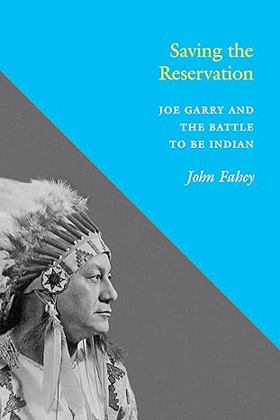
Joseph R. Garry (1910–1975), a Coeur d’Alene Indian, served six terms as president of the National Congress of American Indians in the 1950s. He led the battles to compel the federal government to honor treaties and landownership and dominated an era in government-Indian relations little attended by historians. Firmly believing that forced assimilation of Indians and termination of federal trusteeship over Native Americans and their reservations would doom Indian cultures, Garry had his greatest success as a leader in uniting American Indian tribes to fend off Congress’s plan to abandon Indian citizens. Born into a chief’s family and raised on the Coeur d’Alene reservation in northern Idaho, Garry rose to chairmanship of his tribal council, president of the Affiliated Tribes of the Northwest Indians, and leadership of NCAI. He was the first Native American elected to the Idaho House and Senate. Handsome, personable, and articulate, Garry traveled constantly to urge Indian tribes to hold onto their land, develop economic resources, and educate their young. In a turbulent decade, Garry elevated Indians to political and social participation in American life, and set in motion forces that underlie Indian relations today. xi, 220 pages : illustrations ; 24 cm CIRC [ 0 ]
|
2001 |
|
Uncertain encounters Indians and whites at peace and war in southern Oregon, 1820s-1860s by Nathan Douthit 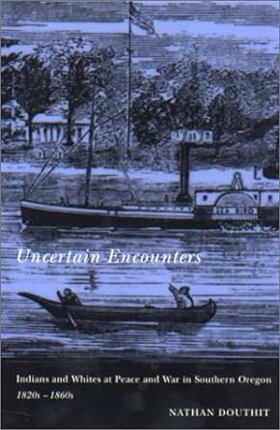
A major contribution to the study of Indian-white relations in the Pacific Northwest, Uncertain Encounters provides a comprehensive view of relations in southern Oregon over a 50-year period beginning in the fur-trade era and ending with the Rogue River War and its aftermath. Nathan Douthit's meticulously researched study offers a complex view of Indian-white relations in the region. Rather than focus mainly on well-documented incidents of conflict and federal Indian policy as other historians have done, Douthit directs attention to peaceful interactions as well. He shows that in the years leading up to the Rogue River War, Indians and whites interacted with uncertainty, alternating between acts of friendship and hostility. Uncertain Encounters begins with a critical investigation of the Hudson's Bay Company's fur-trade relations with southern Oregon Indians, emphasizing its responsibility for Indian hostility. It turns next to exploration of the region by white Americans and to early encounters between Indians and white miners and settlers. It re-examines the tragic Rogue River War, providing the first detailed picture of Indian casualties and the war's impact on the Indian population. Finally, it describes the removal of Indians to the Siletz and Grand Ronde reservations as told from the perspective of Indian oral narratives as well as white accounts. As a major aspect of the story, Douthit highlights the development of a little-known middle ground of relationships between Indian women and white men during and after removal. viii, 248 pages : illustrations, maps ; 23 cm CIRC [ 1 ]
|
2002 |
|
Contested empire Peter Skene Ogden and the Snake River expeditions by John Phillip Reid 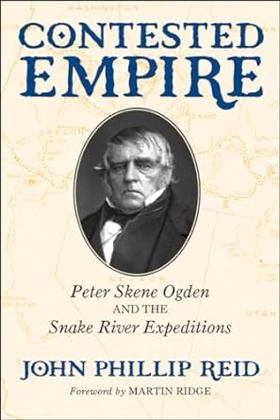
"Do law and legal procedures exist only so long as there is an official authority to enforce them? Or do we have an unspoken sense of law and ethics?" "To answer these questions, John Phillip Reid's Contested Empire explores the implicit notions of law shared by American and British fur traders in the Snake River country of Idaho and surrounding areas in the early nineteenth century. Both the United States and Great Britain had claimed this region, and passions were intense. Focusing mainly on Canadian explorer and trader Peter Skene Ogden, Reid finds that both sides largely avoided violence and other difficulties because they held the same definitions of property, contract, conversion, and possession." "In 1824, the Hudson's Bay Company directed Ogden to decimate the fur-bearing animal population of the Snake River country, thus making the region a "fur desert." With this mandate, Great Britain hoped to neutralize any interest American furtrappers could have in the area. Such a mandate set British and American fur men on a collision course, but Ogden and his American counter-parts implicity followed a kind of law and procedure and observed a mutual sense of property and rights even as the two sides vied for control of the fur trade." "Failing to take legal culture into consideration, some previous accounts have depicted these conflicts as mere episodes of lawless frontier violence. Reid expands our understanding of the West by considering the unspoken sense of law that existed, despite the lack of any formalized authorities, in what has otherwise been considered a "lawless" time."--Jacket xiii, 258 pages : illustrations, maps ; 24 cm CIRC [ 1 ]
|
2002 |
|
How Coupeville grew a short history of town development : excerpts from the Town of Coupeville's Historic Preservation Plan by Mimi Sheridan , McConnell/Burke, United States National Park Service, Ebey's Landing National Historical Reserve (Wash) 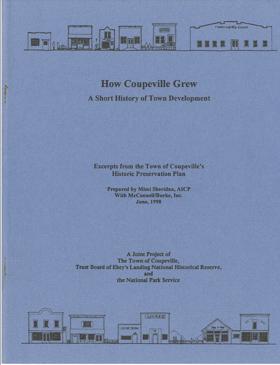
Authored by preservation planner Mimi Sheridan in collaboration with McConnell/Burke, the National Park Service, and Ebey's Landing National Historical Reserve, How Coupeville Grew: A Short History of Town Development charts the architectural and spatial evolution of Washington’s second-oldest European settlement. Excerpted from the town's Historic Preservation Plan, the work traces Coupeville's transformation from a mid-19th-century maritime trading post and donation land claim into a preserved historic district defined by 19th-century New England-style architecture. Through municipal records, planning documents, and spatial analysis, the text details how maritime commerce and geographic isolation shaped the town's compact, pedestrian-oriented urban fabric. A keen insight drawn from the work is how modern historic preservation can intentionally weaponize municipal planning against suburban sprawl; by codifying vernacular architecture and historic spatial layouts into law, Coupeville successfully turned its historic isolation into an economic and cultural asset that safeguards its 19th-century character from modern erasure. 58 pages : illustrations ; 28 cm CIRC [ 1 ]
|
2002 |
|
Boom towns & relic hunters of northeastern Washington a comprehensive guide to ghost towns in six historic counties by Jerry Smith 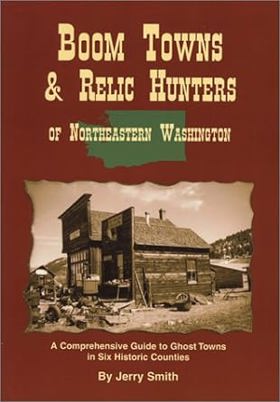
Hold on to your hats! Jerry's second edition of Boom Towns & Relic Hunters of Washington State has hit the news stands and book shelves. Interested in reading about long-lost forgotten ghost towns, million-dollar mines, boomtown mining camps and historical sites in Washington State? Find out more about these histories and mysteries in this second edition book, Boom Towns & Relic Hunters of Washington State....Exploring Washington's Historic Ghost Towns & Mining Camps, your complete guide to ghost towns and historical sites in Washington State by noted local author, tour guide, historian and famed ghost town and treasure hunter Jerry Smith. Jerry's book is a comprehensive and detailed history of ghost towns, mining camps and picturesque locations in six historic counties, which include: Okanogan, Chelan, Ferry, Kittitas, Pend-Oreille, and Stevens. The book s author transports one back in time to the boomtown days of yesteryear, bringing back to life the ageless Old West mining-era days of prosperous boomtowns, miners, prospectors, pioneers and million-dollar gold and silver mines. Here is a literary work chalked full of rich concentrates of history. Jerry has prospected and sluiced out the hardships and tragedies of those early pioneering and prospecting days, literally filling one s reading cache with hours of high-grade pleasure and fascinating relics from his well-researched and personal treasure trove. Don t miss out! This second edition book is back by popular demand and provides over one hundred ghost town and mining camp locations, 137 of Jerry s rare and historic award-winning photographs, 23 rare and one-of-a-kind historic mining documents, 32 new adventure stories, 250 pages, and is complete with exact GPS coordinates. In one reader s words, This is a must for ghost town and gold prospecting buffs. In addition, the book, loaded with information and directions, makes a great self-guided ghost town tour book to carry in one s automobile. For those planning a trip to Washington State, the guide will provide advanced information for a greater appreciation of the historic sites and their relics which one can experience upon arrival. The book also serves as a wonderful educational tool for students and teachers prospecting the history of this unique part of Washington State. The chapter, Information on Metal Detecting and Relic Hunting, is an added bonus. The chapter includes several chapters on how to search out and locate long-lost, valuable treasures from the past. In the literal sense of the word, arming one s self with a little knowledge about using a metal detector, one s research can actually lead to pay-dirt. As a reader, if you re not looking to strike it rich, but would like to visit those colorful Old West days and relive some of Washington State's history, excitement is awaiting you in Jerry s new book. xi, 124 pages : illustrations, maps ; 26 cm CIRC [ 1 ]
|
2002 |
|
Northwest native arts basic forms by Robert E. Stanley 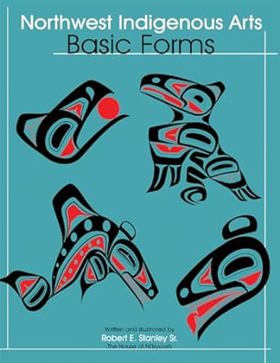
Learn how to draw the Wolf, the Eagle, the Killer Whale and other powerful illustrations of the native arts with help from this step-by-step guide. The second coloring book in the Northwest Indigenous Arts Series. Learn about some of the real and legendary creatures revered by the natives of the West Coast by using these templates to create spectacular pictures. Over 80 instructional drawings of indigenous art. Learn to draw indigenous art! First Nations artist Robert E. Stanley Sr. shares his knowledge and technique in rendering classic northwest native drawings. Now you too, can learn to draw some of the legendary animals of the First Nations tribes, by learning Robert's techniques passed down to him from generation to generation. 64 pages : illustrations (some color) ; 28 cm CIRC [ 1 ]
|
2002 |