Catalog of British Columbiana and Pacific Northwest Americana
Encyclopedia Cascadia Catalog contains book titles of mostly non-fiction Pacific Northwest Coast of North America Titles (primarially British Columbia, Idaho, Oregon and Washington State) in an easy-to-understand title catalog. If you see a link with this badge ONLINE CIRC it means that there is an online institution that provides free access to that title. In some cases there may be more than one institution hosting the title digitally.
| Catalog Title | Published |
|---|---|
|
Dawson Creek, past and present an historical sketch by M. E. Coutts
|
1958 |
|
Davis country H.L. Davis's Northwest by H. L. Davis, Brian Booth, Glen A. Love 
Davis Country collects the best writings of H. L. Davis, one of the Northwest's premier authors and the only Oregonian to receive the Pulitzer Prize for fiction. Born in southern Oregon's Umpqua Valley in 1894, Davis grew up in Antelope and The Dalles. He began as a poet, receiving the prestigious Levinson Prize at age twenty-five. With the encouragement of H. L. Mencken, he turned to fiction, winning the Pulitzer Prize for his 1935 novel Honey in the Horn, which Mencken called the best first novel ever published in America. Full of humor and humanity, Davis's work displays a vast knowledge of Pacific Northwest history, lore, and landscape. His instinctive feel for the Northwest – the weather, trees, plants, animals, the varieties of Oregon rain, the smell of forest winds and high-desert heat – is unmatched. This volume gathers many of Davis's finest stories, essays, poems, and letters, as well as excerpts from his most famous novels. An introduction by editors Brian Booth and Glen Love, a brief autobiography, and an afterword on Davis's final, unfinished novel provide for a better understanding of this truly original Northwest voice. 320 pages : illustrations ; 23 cm. CIRC [ 0 ]
|
2009 |
|
David Douglas a naturalist at work : an illustrated exploration across two centuries in the Pacific Northwest by Jack Nisbet 
"During a meteoric career that spanned from 1825 to 1834, David Douglas made the first systematic collections of flora and fauna over many parts of the greater Pacific Northwest. Despite his early death, colleagues in Great Britain attached the Douglas name to more than 80 different species, including the iconic timber tree of the region. David Douglas, a Naturalist at Work is a colorfully illustrated collection of essays that examines various aspects of Douglas's career, demonstrating the connections between his work in the Pacific Northwest of the 19th century and the place we know today"--Amazon xv, 191 pages : illustrations (some color), color maps ; 23 cm CIRC [ 1 ]
|
2012 |
|
Darrington, mining town/timber town by Elizabeth S. Poehlman 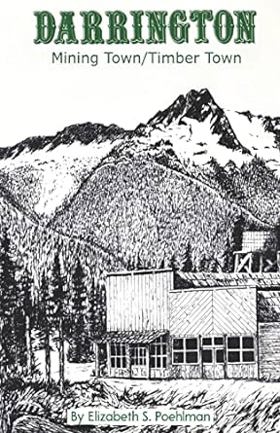
The cast of characters in Elizabeth Poehlman’s book, Darrington: Mining Town/Timber Town reads like a Wild West novel set in Paul Bunyan country. But this is no novel – Poehlman has written a memorable small-town history. The book starts in the late 1800s with the struggles of Chief Wawetkin and the Sauk-Suiattle Indians to deal with the onset of miners and settlers throughout their homelands deep in what would soon be renamed the North Cascades mountains in the new state of Washington. Subsequent chapters feature gold-fevered miners (and a revenge murder); a hotel owner who asked to be deputized for a half hour to deal with a knife-wielding drunk the sheriff couldn’t handle; the town doctor who kept a bear cub as a pet; the “sky pilot” minister who was too scared to preach in the rough railroad logging camps, opting to show slides instead; the Tarheels who followed the timber industry from North Carolina and brought their love of bluegrass and moonshine; the Depression-era housewife who distrusted banks and stashed her family’s savings around her waist in a hidden money belt – enough to almost pay off their land and house. Darrington, as Poehlman learned while living there, may be backwoods, but never boring. 176 pages : illustrations ; 21 cm CIRC [ 1 ]
|
1995 |
|
Dark rose organized crime and corruption in Portland by Robert C. Donnelly 
In April 1956, Portland Oregonian investigative reporters Wallace Turner and William Lambert exposed organized crime rackets and rampant corruption within Portland’s law enforcement institutions. The biggest scandal involved Teamsters officials and the city’s lucrative prostitution, gambling, and bootlegging operations. Turner and Lambert blew the cover on the Teamsters’ scheme to take over alcohol sales and distribution and profit from these fringe enterprises. The Rose City was seething with vice and intrigue. The exposé and other reports of racketeering from around the country incited a national investigation into crime networks and union officials headed by the McClellan Committee, or officially, the U.S. Senate Select Committee on Improper Activities in the Labor or Management Field. The commission discovered evidence in Portland that helped prove Teamsters president Dave Beck’s embezzlement of union funds and union vice president Jimmy Hoffa’s connection to the mob. Dark Rose reveals the fascinating and sordid details of an important period in the history of what by the end of the century had become a great American city. It is a story of Portland’s repeated and often failed efforts to flush out organized crime and municipal corruption - a familiar story for many mid-twentieth-century American cities that were attempting to clean up their police departments and municipal governments. Dark Rose also helps explain the heritage of Portland’s reform politics and the creation of what is today one of the country’s most progressive cities. xiii, 202 pages : illustrations ; 22 cm CIRC [ 0 ]
|
2011 |
|
Dangerous subjects James D. Saules and the rise of black exclusion in Oregon by Kenneth R. Coleman , Oregon State University Press (Issuing body) 
"Dangerous Subjects describes the life and times of James D. Saules, a black sailor who was shipwrecked off the coast of Oregon and settled there in 1841. Before landing in Oregon, Saules traveled the world as a whaleman in the South Pacific and later as a crew member of the United States Exploring Expedition. Saules resided in the Pacific Northwest for just two years before a major wave of Anglo-American immigrants arrived in covered wagons. In Oregon, Saules encountered a multiethnic population already transformed by colonialism--in particular, the fur industry and Protestant missionaries. Once the Oregon Trail emigrants began arriving in large numbers, in 1843, Saules had to adapt to a new reality in which Anglo-American settlers persistently sought to marginalize and exclude black residents from the region. Unlike Saules, who adapted and thrived in Oregon's multiethnic milieu, the settler colonists sought to remake Oregon as a white man's country. They used race as shorthand to determine which previous inhabitants would be included and which would be excluded. Saules inspired and later had to contend with a web of black exclusion laws designed to deny black people citizenship, mobility, and land. In Dangerous Subjects, Kenneth Coleman sheds light on a neglected chapter in Oregon's history. His book will be welcomed by scholars in the fields of western history and ethnic studies, as well as general readers interested in early Oregon and its history of racial exclusion."-- Provided by publisher x, 202 pages : illustrations ; 23 cm CIRC [ 0 ]
|
2017 |
|
Čáw pawá láakni = They are not forgotten Sahaptian place names atlas of the Cayuse, Umatilla, and Walla Walla by Eugene S. Hunn , E. Thomas Morning Owl , Phillip Cash Cash , Jennifer Karson Engum , Daniel B. Haug , Roberta Conner , Bruce Rigsby , John M. Chess , Modesta J. Minthorn 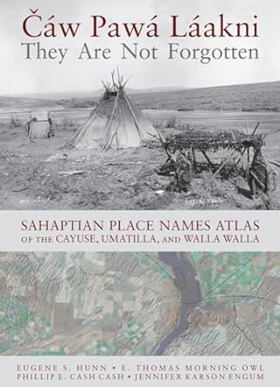
Cáw Pawá Láakni / They Are Not Forgotten is a book like none other. This ethnogeographic atlas of Native place names presents a compelling account of interactions between a homeland and its people. A project of the Tamástslikt Cultural Institute at the Confederated Tribes of the Umatilla Indian Reservation - composed of the Cayuse, Umatilla, and Walla Walla Tribes in eastern Oregon - Cáw Pawá Láakni documents and describes more than four hundred place names. The full-color, detailed maps and the narrative that introduces and supports them paint a picture of a way of life. This meticulous assemblage of memory and meaning echoes cultural and geographical information that has all but disappeared from common knowledge. To create this historical and cultural atlas of the Cayuse, Umatilla, and Walla Walla homeland, which spans the Columbia River and its tributaries from southeastern Washington to northeastern Oregon, ethnographic, traditional, and institutional knowledge was gathered together and incorporated into a GIS database to produce customized maps that present this knowledge. Many of the accounts are from the individuals who traveled on horseback, lived in and saw these places, and possessed knowledge that can no longer be replicated. In presenting these place-names, the Tribes strive to ensure the vitality of this communal knowledge into the future. In Cáw Pawá Láakni, places named in Indian languages are juxtaposed with sites that are central to the colonial period in the West, such as those described by the Lewis and Clark Expedition and those given to fur-trading posts, missions, and places on the Oregon Trail. The atlas adds a needed and vivid Native perspective to the written history and geography of Oregon and the West. xxi, 248 pages : illustrations (some color), color maps ; 30 cm CIRC [ 1 ]
|
2015 |
|
Crossing Puget Sound from Black Ball steamer to Washington State Ferries by Steven J. Pickens 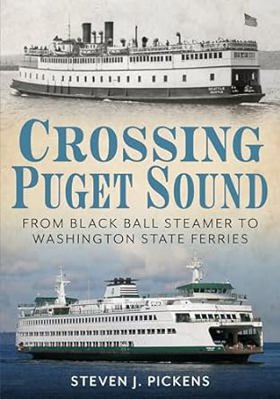
For over a century, water has connected the communities on Puget Sound, starting with days of the iron-hulled steamers of the Black Ball Line and continuing to the vessels of Washington State Ferries. Puget Sound continues to be a vital link between cities, well into the era of smart phones and self-driving cars. From the recycled ferries of San Francisco Bay to the elegant pocket liners of the Canadian Pacific Railway, transporting people from one isolated community to another has grown to carrying 25 million commuters and tourists every year. Modern ferry travel on Puget Sound begins with the converted passenger steamers at the early part of the twentieth century. Built in the days before cars became the main mode of travel, these small steamers morphed into the blueprint of today's largest double-ended ferries in the United States. Ferry travel today is as scenic as in the days of Model Ts and steamships. Puget Sound remains a nautical highway as much now as it was in the era of high button shoes and derby hats. 143 pages : illustrations (chiefly color), facsimiles ; 24 cm CIRC [ 1 ]
|
2019 |
|
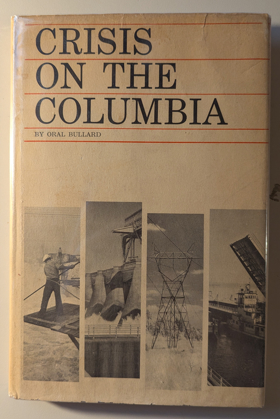
Crisis on the Columbia by Oral Bullard
|
1968 |
|
Crater Lake National Park a history by Rick Harmon 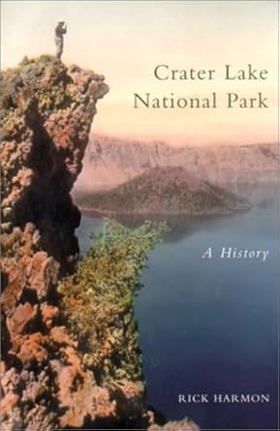
A lively and perceptive new look at twentieth-century Pacific Northwest writing, The Arbutus/Madrone Files explores the dynamics of this cross-border region using resonant quotations, poetry, song lyrics, and art to demonstrate and enhance author Laurie Ricou's critical readings and ideas. The Arbutus/Madrone Files is a wide-ranging, deeply felt meditation on the land, people, and literature of the U.S. and Canadian Pacific Northwest, gathered into twelve thematic essays or "files," including the Island File, Salmon File, Woodswords File, Sasquatch File, and, of course, the Rain File. A longtime student of literary regions, Ricou moves in this book from a scholarly perspective toward more personal and lyrical reflections about what constitutes "home" and "region." He explores the work of such Northwest authors as Emily Carr, H.L. Davis, David Guterson, Jack Hodgins, John Keeble, Ken Kesey, Joy Kogawa, Ursula Le Guin, John Okada, Kim Stafford, and David Wagoner, among others. This unique, stylishly written book will appeal to Pacific Northwest book-lovers interested in exploring the region's rich homegrown literature and art, and will be of great interest to scholars and students of regional literature, eco-criticism, and Pacific Northwest culture. 280 pages, 8 unnumbered pages of plates : illustrations (some color), maps ; 23 cm CIRC [ 0 ]
|
2002 |
|
Craigdarroch Castle in 21 treasures by Moira Dann 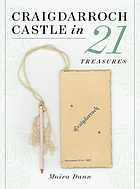
"Craigdarroch Castle, built by coal baron Robert Dunsmuir for his wife, Joan, and their family, was completed in 1890. Following Joan's death, the castle was put up for sale in 1908, and later housed a military hospital and the nascent University of Victoria. Since 1979 the castle has operated as a museum and is one of the top tourist attractions in the city, a prime example of a 'bonanza castle' and a rich repository of Victorian-era furnishings and décor, as well as objects evoking the hospital and college eras. Author Moira Dann offers the reader 21 selections from the castle's collection, using each artifact as a portal into the history of the building and life in Victorian and more recent times. The Black Forest clock, acquired by Joan on a trip to Europe; the telescope used by the eldest Dunsmuir son, James, aboard his yacht the Dolaura; the castle's famous stained-glass windows; a nineteenth-century intercom system known as a speaking tube--these and 17 more are described with detail and enthusiasm, and accompanied by photographs. Dann provides careful research into each object's provenance and manufacture, while inviting readers to join her imaginative journeys into the lives of the castle's occupants through the years."-- Provided by publisher 142 pages : illustrations (some color) ; 23 cm CIRC [ 0 ]
|
2021 |
|
Coyote was going there Indian literature of the Oregon country by Jarold Ramsey (Compiler, Editor) 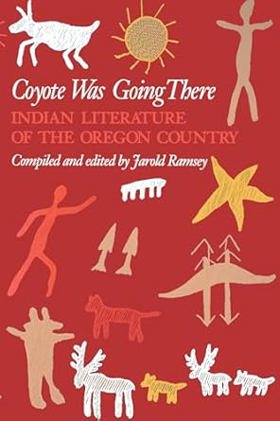
The vivid imagination, robust humor, and profound sense of place of the Indians of Oregon are revealed in this anthology, which gathers together hitherto scattered and often inaccessible legends originally transcribed and translated by scholars such as Archie Phinney, Melville Jacobs, and Franz Boas. xxxvii, 295 pages : illustrations ; 24 cm CIRC [ 0 ]
|
1980 |
|
Cowlitz County, Washington, 1854-1947 by Hattie Barlow Olson
|
1947 |
|
Cowlitz corridor by John M. McClelland, Albert Gustav Kletsch 
I. First came explorers -- II. Canoe and bateau -- III. Came religion and government -- IV. Terrible road but beautiful -- V. Commerce comes to Cowlitz -- VI. N.P. lays its first rails -- VII. Monticello steamboat enterprise -- VIII. Opening of Kellogg era -- IX. Steamboating in its heyday -- X. Close of steamboat era -- XI. Good roads at last 64 pages : illustrations, map ; 23 cm ONLINE CIRC [ 1 ]
|
1953 |
|
Courage to speak honouring ancestors voices by Siyamtelot 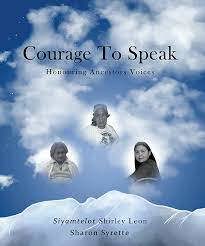
Courage to Speak shares the story of the early efforts of a handful of Elders to develop a written form of their Halq'emeylem language that could easily be learned. Working with Brent Galloway, a trained linguist, the Coqualeetza Elders adopted a modified and illustrated alphabet, recorded thousands of words and created a dictionary. Their early curriculum work presented experiential teaching methods and rusulted in publication of seven teaching stories based on traditional life experiences and knowledge. Capturing the experience of three strong Elders - Qwe'et'osiya Nancy Joe Phillips, Siyamiya Amelia Aleck Douglas and Xwiy'alemot Matilda Jackson Gutierrez influenced by leaders in Sto:lo communities in the upper Fraser River, these stories will entertain and inspire today's generations of teachers and learners 147 pages : illustrations, portraits ; 25 cm CIRC [ 0 ]
|
2020 |
|
|
1952 |
|
County government in Washington State by Washington State Association of County Commissioners, Barbara Byers
Presented by the Association to the high school students of Washington in commemoration of the Association's fiftieth annual convention, held in Bellingham, May 30, 31, June 1, 1956 218 pages 24 cm CIRC [ 1 ]
|
1957 |
|
Counties of the state of Washington a book of illustrations and documentary facts on important sights and scenes across the State of Washington by Richard Hashagen 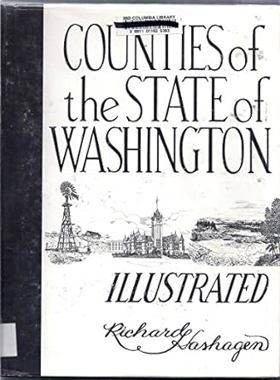
Counties of the State of Washington: A Book of Illustrations and Documentary Facts on Important Sights and Scenes Across the State of Washington by Spokane-native artist Richard Hashagen is a limited-edition 1986 historical and artistic survey, self-published by the author. The book features Hashagen's detailed pen-and-ink illustrations showcasing the civic architecture and historic landmarks across Washington's 39 counties, with a particular foundational focus on the state's historic county courthouses. Accompanied by documentary facts and regional lore, the volume ultimately serves as a unique visual tribute and an engaging, grassroots architectural record of Washington's local heritage and civic history. 222, [1] pages : illustrations ; 29 cm CIRC [ 1 ]
|
1986 |
|
Cottardi Station, Wahkiakum County, Washington by Carlton E. Appelo 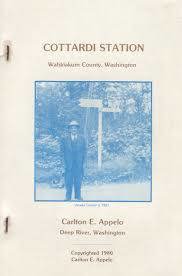
By Carlton Appelo: Whenever the local phone book was printed there was always a wonderful historical book in the back. This one is about Cottardi Station, Washington located on the north side of the Columbia River near Altoona. Now just a memory not even a Ghost Town. 80 pages : illustrations ; 24 cm CIRC [ 1 ]
|
1980 |
|
Corvallis trails exploring the heart of the valley by Margie C. Powell 
Situated in the heart of the Willamette Valley and nestled against the rolling hills of the Coast Range, Corvallis is an outdoor enthusiast's paradise, renowned for its abundance of parks and natural areas, easily accessed within a few minutes from downtown. This informative, well-organized guide introduces nearly sixty trails, all either in Corvallis or within an hour's drive, and many suited for casual hikers and families with children. In Corvallis Trails, you'll discover close-in recreational opportunities, including walks and short hikes in Corvallis city parks and McDonald Forest. Most of these are easily accessible by foot, bicycle, or public transportation. trails outside of Corvallis but still within easy reach, including Marys Peak, four National Wildlife Refuges, two waterfall walks, and nearby Coast Range outings. The detailed trail descriptions include directions, maps, the length and difficulty of each trail, and a wealth of information on the plants, wildlife, and natural attractions to be found. Also included are accounts of area history and local conservation efforts. Walkers, hikers, runners, mountain bikers, equestrians, and outdoor enthusiasts of all kinds will find this comprehensive guidebook an essential companion as they explore the miles of well-known - and not so well-known - trails in Corvallis and environs. 161 pages : illustrations, maps ; 24 cm CIRC [ 0 ]
|
2006 |
|
Coos, an illustrative sketch by Leo Joachim Frachtenberg, Franz Boas
Co-authored by pioneering anthropologists Leo Joachim Frachtenberg and Franz Boas, Coos, an Illustrative Sketch provides a rigorous, structural analysis of the severely endangered Hanis Coos language native to the southern Oregon coast. Published as part of Boas’s monumental initiative to map North American Indigenous linguistics, the text meticulously breaks down the complex phonology, morphology, and syntactic architecture of a tribal language heavily decimated by forced relocation and settler encroachment. By formally diagramming these intricate grammatical rules directly from the region's last fluent speakers, the authors produced a vital ethnographic artifact that preserved the mechanical brilliance of coastal oral traditions. A keen insight drawn from the work is how the rigorous application of Boasian linguistics functioned as a subtle but powerful critique of pioneer-era racial hierarchies; by scientifically demonstrating that the Coos language possessed a structural logic and grammatical complexity equal to or surpassing European tongues, the text implicitly dismantled the self-serving settler myth that the region's Indigenous populations were culturally or intellectually primitive. 1 preliminary leaf, pages 297-429. 25 cm ONLINE CIRC [ 1 ]
|
1914 |
|
Coos River echoes a story of the Coos River Valley by Charlotte L. Mahaffy
|
1965 |
|
Coos narrative and ethnologic texts by Melville Jacobs
|
1939 |
|
Coos County agriculture a short history by Bill Mast 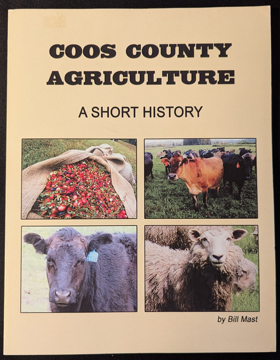
Coos County began the transition from a hunter-gatherer to an agrarian society with the first permanent white settlement in 1853. This book is an attempt to document the next 160 years of that process. The first agriculture in Coos County consisted of subsistence farms marketing their surplus production to logging camps and mining operations. As the farm economy grew, an export market to San Francisco developed. By the late 19th century, shipments of cheese, butter, cattle, hogs, sheep, wool, leather, apples, and potatoes sailed from Coos Bay and the Coquille River. In later decades, blackberries, loganberries, cranberries, and various vegetable crops joined the shipments. Coos County ranked third out of Oregon's 36 counties for apple production and near the top for dairy products by 1910. 87 pages : illustrations (1 color) ; 28 cm CIRC [ 1 ]
|
2014 |
|
Coos Bay Plundertown, USA by Al Sandine 
Published in local editions by Al Sandine, Coos Bay Plundertown, USA is a blistering polemical history examining the corporate exploitation and environmental degradation of Oregon’s largest coastal port. The book chronicles how powerful timber and industrial interests, in collusion with local political figures, systematically gutted the region's natural resources and bypassed community oversight to maximize short-term profits. Through sharp critique and detailed local documentation, the text exposes the severe economic and ecological fallout left in the wake of unchecked industrial ambition. A keen insight drawn from the work is how resource-dependent towns are frequently treated by outside corporate forces as disposable sacrifice zones; the narrative reveals that "plundertown" status is not an accidental policy failure, but the predictable end-result of an extractive economic model that privatizes public wealth while socializing long-term environmental ruin. 175 pages : illustrations, maps, portraits ; 22 cm CIRC [ 1 ]
|
2003 |