Catalog of British Columbiana and Pacific Northwest Americana
The Encyclopedia Cascadia Catalog indexes mostly non-fiction literature covering the Pacific Northwest coast of North America, with an emphasis on British Columbia, Idaho, Oregon, and Washington State.
| Catalog Title | Published |
|---|---|
|
The Lummi Indians of northwest Washington by Bernhard J. Stern 
Bernhard J. Stern’s The Lummi Indians of northwest Washington explores the profound environmental adaptation and deeply rooted social cohesion of the indigenous communities residing along the intricate maritime networks of the northern Puget Sound and the Nooksack River basin. The narrative illustrates how the dynamic environmental realities of this coastal landscape—defined by the complex tidal rhythms of the Salish Sea, dense cedar forests, and the vital seasonal migrations of Pacific salmon—required immense ingenuity, resilience, and a profound, localized ecological knowledge from the Lummi people. By detailing the careful anthropological record of their collaborative kinship structures, specialized aquatic harvesting techniques, and rich ceremonial traditions, the text highlights how this society flourished by thoughtfully harmonizing their daily lifeways and shared community networks with the region's natural abundance. Ultimately, the account demonstrates that collaboratively managing these shared maritime resources and patiently sustaining robust oral and civic traditions were essential elements in cultivating a vibrant, enduring indigenous culture deeply connected to the coastal environment of the Pacific Northwest. 127, [1] p. front., plates, map. 26 cm. Non-circulating [ 1 ]
|
1934 |
|
Boise, the peace valley by Annie Laurie Bird
Published in 1934 by Idaho educator and regional historian Annie Laurie Bird, Boise, the Peace Valley is a localized civic history charting the evolution of the Boise River basin from a prominent fur-trade waypoint into the urban and agricultural epicenter of the state. Drawing upon early explorer journals, pioneer diaries, and territorial records, Bird chronicles the expeditions of Wilson Price Hunt, the establishment of the original Hudson's Bay Company Fort Boise, the massive migrations along the Oregon Trail, and the eventual 1862 gold rush that catalyzed permanent American settlement. The narrative leans heavily into the romantic motif of the valley as an idyllic, timbered sanctuary—an essential oasis of respite for weary overland emigrants navigating the punishing, arid expanses of the Snake River Plain. Operating as a classic regional monument, the book is designed to immortalize the pioneer endurance and capitalist enterprise that transformed an untamed geographic resting stop into a prosperous, irrigated metropolis. A keen insight drawn from the work is how the strategic branding of the region as a "peace valley" functions to fundamentally depoliticize a fiercely contested landscape. By defining the basin primarily as an innate, natural sanctuary destined by geography to nurture and shelter Anglo-American travelers, Bird’s narrative effectively recharacterizes a vital Indigenous homeland—traditionally managed and defended by the Shoshone, Bannock, and Northern Paiute peoples—as a passive, welcoming haven awaiting colonial occupancy. This historiographical maneuver subtly sanitizes the violent realities of the era, notably the 1863 establishment of a United States military fort specifically designed to crush Native resistance and enforce territorial enclosure. By framing the landscape as inherently cooperative to pioneer settlement, the text allows readers to view the subsequent systemic displacement of Indigenous populations not as a hostile military invasion, but as the peaceful, inevitable inheritance of a valley practically begging for American cultivation. 408 pages illustrations 20 cm Non-circulating [ 1 ]
|
1934 |
|
Echoes of the Grande Ronde by Bert Huffman, Eldridge Huffman (Compiler)
Published in 1934 in La Grande, Oregon, and compiled by Eldridge Huffman, Echoes of the Grande Ronde is a collection of regional poetry and prose by Bert Huffman, a prominent newspaperman widely celebrated by his contemporaries as the "Poet Laureate of Eastern Oregon". The volume operates as a literary tribute to the landscapes and pioneer heritage of the Grande Ronde Valley and the broader Inland Empire. Through highly romanticized verse, Huffman mythologizes the overland migrations, the rugged endurance of early homesteaders, and the region's sweeping transition from "untamed" wilderness to a productive agricultural basin. Frequently appropriating Indigenous mythology and historical figures—such as his framing of Sacagawea as a "patron saint" of American empire—the collection weaves the narrative of westward expansion into a grand, almost biblical epic of Manifest Destiny. A keen insight drawn from the work is how regional poetry and romantic literature functioned as a profound emotional mechanism to naturalize colonial displacement. By heavily utilizing the "Vanishing Indian" trope—most notably in wistful verses lamenting the fading presence of the Umatilla, Cayuse, and Nez Perce peoples—Huffman's poetry effectively aestheticizes the violence of settler colonialism. This literary maneuver transforms active, systemic territorial dispossession into a tragic, natural, and inevitable melancholic fading, akin to the passing of the seasons. Consequently, the text allows the descendants of white settlers to indulge in a sentimental, guiltless nostalgia for the region's original inhabitants, all while morally validating the permanent agricultural enclosure of the Grande Ronde Valley as the glorious, divinely ordained triumph of American civilization. 87 pages illustrations (portrait) 24 cm Non-circulating [ 1 ]
|
1934 |
|
Forty years a pioneer business life of Dorsey Syng Baker,1848-1888 by W. W. Baker 
W. W. Baker’s Forty Years a Pioneer: Business Life of Dorsey Syng Baker 1848-1888 chronicles the ambitious frontier engineering that catalyzed the agricultural and industrial boom of the Inland Northwest. The biography details how Dr. Dorsey S. Baker constructed the region’s first railroad—the narrow-gauge Walla Walla and Columbia River line—by mapping its thirty-two miles of track directly onto the ancient Columbia Basin trade corridors long navigated by the Walla Walla, Cayuse, and Umatilla peoples. To overcome severe material shortages and sheer geographic isolation, Baker's enterprise relied on interdependent alliances and relentless cooperative labor, famously utilizing wooden rails temporarily capped with strap iron to successfully connect the inland agricultural settlements with the vital steamboat docks at Wallula. Ultimately, this historical account captures the intense physical reality of nineteenth-century pioneer development, demonstrating how the rapid superimposition of modern freight infrastructure onto established indigenous geography permanently transformed a remote inland territory into a massive wheat-exporting hub. While the book traces his early origins in Illinois and his journey west via the Oregon Trail to an initial seven-year residence in Portland, Oregon, the vast majority of the narrative centers on Walla Walla, Washington. This is where "Doc" Baker eventually settled and built his regional business empire, which included agriculture, mercantilism, the first bank in Washington Territory, and the famous Walla Walla and Columbia River Railroad. 6 preliminary leaves, 257, [1] pages : illustrations, map (on lining papers) portraits 24 cm Desiderata
|
1934 |
|
Legends of the Klickitats a Klickitat version of the story of the bridge of the gods by Clarence Orvel Bunnell 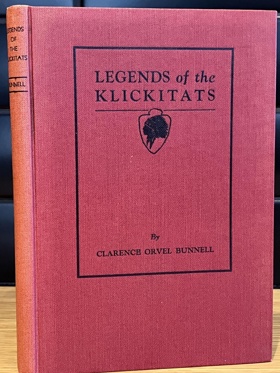
Published in 1933 by Clarence Orvel Bunnell, Legends of the Klickitats: A Klickitat Version of the Story of the Bridge of the Gods presents an adaptation of regional Native oral traditions concerning the great landslide and natural stone arch that once spanned the Columbia River Gorge. Written as a dramatic, quasi-mythological narrative, Bunnell frames the text as a faithful preservation of tribal lore passed down through the Klickitat people, detailing the titanic mythological battles of the creator spirit Tyee Sahale and the cataclysmic destruction of the land bridge. Rather than an academic transcription, the work is heavily stylized for a popular white readership, blending Euro-American literary conventions with romanticized Indigenous motifs to capture the dramatic antiquity of the Pacific Northwest landscape. A keen insight drawn from the work is how the cultural appropriation of Indigenous oral tradition functioned to safely domesticate and re-conquer the landscape for the settler-colonial imagination. By filtering Native creation narratives through a heavily romanticized, melodramatic literary lens, Bunnell effectively stripped the local tribes of their living political sovereignty and contemporary existence, reducing them to legendary phantoms tethered exclusively to geological deep time. This historiographical and literary maneuver allowed white settlers to emotionally colonize the Columbia River Gorge; by absorbing local Indigenous mythology into the regional folklore of the American frontier, the settler state could claim a deep, quasi-spiritual ancestry in the territory while simultaneously erasing the actual, displaced descendants who continued to inhabit the landscape. 48 pages, 1 unnumbered leaf of plates : illustrations ; 23 cm Non-circulating [ 2 ]
|
1935 |
|
History of Oregon literature by Alfred Powers , Bernard Hinshaw (Illustrator)
Alfred Powers’s History of Oregon literature explores the gradual cultural maturation and collaborative intellectual development that defined the pioneer settlement of the Pacific Northwest. The narrative illustrates how the profound environmental realities of this vast landscape—spanning from the isolated, rain-swept coastal enclaves to the fertile, expansive reaches of the Willamette Valley—initially required immense physical resilience, leaving early homesteaders with limited time and resources for formal artistic expression. By detailing the steady transition from the rich oral traditions of indigenous communities and the practical, utilitarian diaries of overland pioneers to the cooperative establishment of early frontier printing presses and regional literary societies, the text highlights how the state's cultural prosperity relied on community-driven adaptation. Ultimately, the account demonstrates that patiently cultivating a shared literary voice and thoughtfully documenting the unique, demanding environment were essential steps in bridging geographic isolation and transforming a distant frontier into a cohesive, deeply rooted, and culturally vibrant commonwealth. 7 preliminary leaves, [3]-809 pages (including frontispiece) : portraits, plates, facsimiles ; 23 cm ONLINE Circulation [ 1 ]
|
1935 |
|
History of Oregon literature by Alfred Powers , Bernard Hinshaw (Illustrator)
7 preliminary leaves, [3]-809 pages (including frontispiece) : portraits, plates, facsimiles ; 23 cm Non-circulating [ 1 ]
|
1935 |
|
Honey in the horn by H. L. Davis 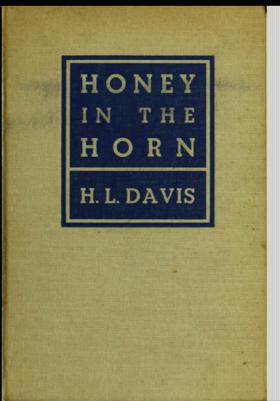
H.L. Davis' earthy and humorous look at a young man learning self-reliance in the Oregon wilderness after family complications and problems from a jailhouse delivery push him out on his own among horse traders, jail breakers, fortune hunters, suspected murderers, and wide-eyed innocents. His tale of regional history is the story of our American culture. Set in Oregon in the early years of the twentieth century, H. L. Davis’s Honey in the Horn chronicles the struggles faced by homesteaders as they attempted to settle down and eke out subsistence from a still-wild land. With sly humor and keenly observed detail, Davis pays homage to the indomitable character of Oregon’s restless people and dramatic landscapes without romanticizing or burnishing the myths. Clay Calvert, an orphan, works as a hand on a sheep ranch until he stumbles into trouble and is forced to flee. Journeying throughout the state, from the lush coastal forests, to the Columbia Gorge, to the golden wheat fields east of the Cascades, he encounters a cast of characters as rich and diverse as the land, including a native Tunne boy and a beautiful girl named Luce. Originally published in 1935, Honey in the Horn reveals as much about the prevailing attitudes and beliefs during H. L. Davis’s lifetime as it does about the earlier era in which it is set. It transcends the limitations of its time through the sheer power and beauty of Davis’s prose. Full of humor and humanity, Davis’s first novel displays a vast knowledge of Pacific Northwest history, lore, and landscape. The only Oregon book that has ever won a Pulitzer Prize for fiction, this classic coming-of-age novel has been called the “Huckleberry Finn of the West.” With a new introduction by Richard W. Etulain, this important work from one of Oregon’s premier authors is once again available for a new generation. 380 pages ; 22 cm Desiderata
|
1935 |
|
A pictorial history of the state of Washington by Ralph Ernest Downie
Ralph Ernest Downie’s A pictorial history of the state of Washington explores the visual record of early pioneer settlement and the enduring collaborative development of the commonwealth’s remarkably diverse landscapes. The narrative illustrates how the profound environmental realities of this expansive topography—spanning the intricate maritime channels of the Puget Sound, the dense, towering timber of the coastal mountains, and the fertile, sun-drenched plains of the eastern interior—required immense resilience and shared daily adaptation from early communities. By detailing the steady transition from isolated frontier encampments and nascent logging operations to the thoughtful integration of robust rail networks, ferry routes, and thriving urban centers, the text highlights how the state's prosperity relied on the community-driven stewardship of its rich natural resources. Ultimately, the photographic account demonstrates that cooperatively bridging the immense geographic divides of the Pacific Northwest and patiently documenting these shared civic milestones were essential steps in cultivating a cohesive, deeply rooted cultural identity across the state. 157, ii pages including color frontispiece, illustrations plates, portraits, folded map 26 cm Non-circulating [ 1 ]
|
1937 |
|
Nature rambles in the Wallowas sketches of the natural history of northeastern Oregon by Elmo Nall Stevenson 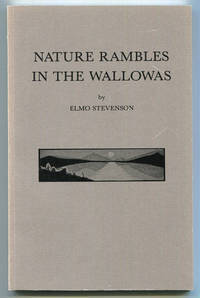
Elmo Nall Stevenson’s Nature rambles in the Wallowas: sketches of the natural history of northeastern Oregon explores the profound ecological richness and thoughtful human appreciation of the dramatic, high-altitude landscapes of the state's northeastern corner. The narrative illustrates how the demanding yet majestic environmental realities of this alpine topography—defined by the sheer granite peaks of the Wallowa Mountains, deep glacial valleys, and vibrant, diverse biological zones—encouraged a deep, localized ecological awareness. By detailing the careful observation and natural history of the region's unique flora, fauna, and geological formations, the text highlights how developing a profound respect and scientific understanding of this rugged wilderness was essential for sustainable interaction with the land. Ultimately, the account demonstrates that collaboratively documenting these biological networks and fostering a patient, community-driven stewardship of the Wallowas were vital steps in cultivating an enduring cultural and environmental heritage that harmonizes with the awe-inspiring realities of the Pacific Northwest's interior alpine ecosystems. 100 pages including plates : illustrations, map ; 23 cm Non-circulating [ 1 ]
|
1937 |
|
By Juan de Fuca's strait pioneering along the northwestern edge of the continent by James G. McCurdy 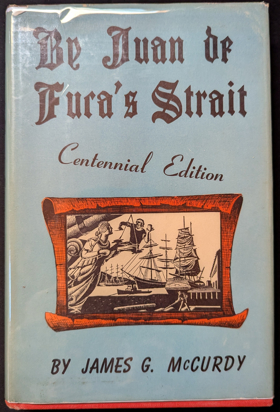
In this provocative and illuminating book, Marianna Torgovnick explores the psychology of our profound attraction to cultures we call "primitive." Whether located in Africa, the South Pacific, or the American Southwest, the primitive has become synonymous in the Western imagination with a range of emotions and experiences thought to be lost in modern life: reverence for the land and for nature; strong communal bonds; sexual plentitude; and, perhaps most intriguing, and ecstatic sense of connection to the universe and the life force. Torgovnick investigates the numerous ways we have turned toward the primitive out of spiritual hunger for such deeply human experiences - a hunger that could once be satisfied within the West's own mystical traditions but that often no longer can be. Brilliantly encompassing religion, art, psychology, literature, and other aspects of our culture, Primitive Passions offers new insight into our ideas of spirituality and gender, and, ultimately, into the hidden but vital parts of ourselves 312 pages frontispiece (map), illustrations (including portraits, facsimiles) 22 cm Non-circulating [ 1 ]
|
1937 |
|
San Juan Islands, the Cronstadt of the Pacific by Archie W. Shiels 
Archie W. Shiels’s San Juan Islands, the Cronstadt of the Pacific explores the profound strategic importance and the remarkable diplomatic resolution that secured the intricate maritime borders of the northern Puget Sound. The narrative illustrates how the dynamic environmental realities of this coastal archipelago—defined by the deep, vital transit channels weaving between the forested communities of Orcas, Lopez, Shaw, and San Juan islands, and their crucial position linking mainland ports like Anacortes to the broader Pacific—initially created a highly contested geopolitical landscape. By detailing the prolonged joint military occupation of the islands during the mid-nineteenth century boundary dispute, the text highlights how local resilience, pragmatic daily adaptation, and genuine cross-cultural cooperation on the ground steadily diffused international tensions. Ultimately, the account demonstrates that thoughtfully navigating these complex maritime boundaries and embracing patient, peaceful international arbitration were essential steps in preserving the enduring tranquility and cohesive civic development of these unique island communities. 275 p. : incl. front. (map) 24 cm. Non-circulating [ 1 ]
|
1938 |
|
History of Alturas and Blaine counties, Idaho by George A. McLeod
George A. McLeod’s History of Alturas and Blaine counties, Idaho explores the steady pioneer settlement and enduring civic adaptation within the rugged, mineral-rich landscapes of central Idaho. The narrative illustrates how the challenging environmental realities of this topography—defined by the sheer peaks of the Pioneer and Smoky mountains, the vital riverine corridors of the Wood River Valley, and the profound seasonal shifts of the high-elevation climate—initially required immense resilience and cooperative effort from early miners and homesteaders. By detailing the gradual transition from isolated, transient silver and lead mining camps to the collaborative establishment of enduring agricultural communities and the thoughtful integration of early regional rail networks, the text highlights how the area's prosperity relied on community-driven adaptation to a demanding environment. Ultimately, the account demonstrates that cooperatively harnessing the valley's waterways for irrigation and patiently building cohesive, responsive local institutions were essential steps in transforming a remote, mountainous frontier into a thriving, deeply rooted civic and economic heartland of the intermountain West. iv, 192, v-xx pages : plate, portraits ; 20 cm Non-circulating [ 1 ]
|
1938 |
|
Told by the pioneers tales of frontier life as told by those who remember the days of the Territory and early statehood of Washington. Vol. II by Washington Pioneer Project
The Washington Pioneer Project’s Told by the pioneers: tales of frontier life (Vol. II) explores the deeply personal endurance and collaborative community building that defined everyday life during Washington’s territorial era and early statehood. The narrative illustrates how the diverse and challenging environmental realities of the Pacific Northwest—from the dense, rain-soaked timberlands of the western coastal basins to the expansive, arid plains of the eastern plateaus—required immense resilience and profound daily adaptation from ordinary homesteaders. By meticulously preserving a rich tapestry of firsthand oral histories, pioneer diaries, and localized memories, the text highlights the steady transition from isolated, vulnerable land claims to cohesive, mutually supportive settlements. It emphasizes the shared labor of communal harvests, the cooperative establishment of early frontier schools, and the thoughtful, everyday cross-cultural interactions necessary for survival. Ultimately, the collection demonstrates that patiently relying on neighborly cooperation and collaboratively adapting to the formidable geographical divides of the frontier were the essential, human-scale steps in cultivating the enduring civic foundation of Washington state. 222 pages : illustrations, portraits ; 26 cm Non-circulating [ 1 ]
|
1938 |
|
Odd place names and their origin by United States Works Progress Administration, Federal Writers' Project (Or), Historical Records Survey (Or), Oregon State Board of Control
The Federal Writers’ Project’s Odd place names and their origin explores the linguistic footprint and enduring civic identity forged during the pioneer settlement of the diverse Oregon landscape. The narrative illustrates how the challenging environmental realities of this vast topography—spanning from the rugged, rain-swept coastal estuaries to the arid expanses of the eastern high desert—required early communities to intimately familiarize themselves with their surroundings, a process fundamentally reflected in how they named their environment. By detailing the gradual linguistic evolution from indigenous place names to the idiosyncratic, practical designations of overland pioneers, the text highlights the complex cultural intersections and shared daily adaptations required to map and organize the frontier. Ultimately, the account demonstrates that thoughtfully documenting these local toponyms provides a profound, community-driven record of how early settlers cooperatively anchored themselves to a demanding geography and cultivated a shared, enduring regional heritage. 1 online resource (5 pages) ONLINE Circulation [ 1 ]
|
1938 |
|
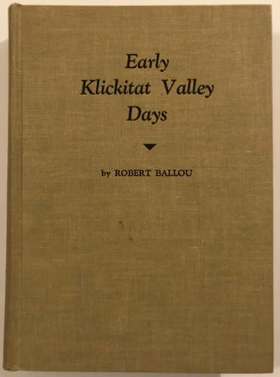
Early Klickitat Valley days by Robert Ballou
|
1938 |
|
Coos narrative and ethnologic texts by Melville Jacobs 
Melville Jacobs’s Coos narrative and ethnologic texts explores the deep oral traditions and profound environmental adaptation of the indigenous Coos people along the intricate coastal estuaries of southern Oregon. The narrative illustrates how the dynamic environmental realities of this maritime landscape—defined by shifting tidal bays, dense coastal timberlands, and the vital, rhythmic abundance of marine and riverine resources—required immense resilience and a deeply localized ecological knowledge from its inhabitants. By detailing the careful ethnological preservation of ancestral stories, daily lifeways, and specialized aquatic harvesting techniques, the text highlights how the Coos society flourished by thoughtfully harmonizing their cultural practices with the ocean's seasonal rhythms. Ultimately, the account demonstrates that collaboratively passing down these rich oral histories and maintaining a profound, respectful stewardship of the coastal bays were essential elements in sustaining a vibrant, enduring indigenous culture deeply rooted in the rugged Pacific shoreline long before European settlement. 125 p. 26 cm. ONLINE Circulation [ 1 ]
|
1939 |
|
From Frontier Village To World Metropolis: Seattle by Lancaster Pollard, Durwood Lapham, Lloyd Spencer
|
1939 |
|
Oregon, end of the trail by Writers' program. Oregon
The Writers’ Program’s Oregon, end of the trail explores the comprehensive pioneer settlement, cultural integration, and enduring civic development across the remarkably diverse landscapes of the Pacific Northwest. The narrative illustrates how the profound environmental realities of this vast topography—spanning the storm-battered Pacific coastline, the deeply fertile alluvial soils of the Willamette Valley, the imposing volcanic barrier of the Cascade Range, and the expansive, arid plateaus of the eastern high desert—required immense resilience and multifaceted adaptation from those who journeyed to the end of the overland routes. By detailing the steady transition from the initial, grueling migrations to the collaborative establishment of thriving timber, maritime, and agricultural communities, the text highlights how the state's prosperity relied on thoughtful, community-driven responses to its varied ecological zones. Ultimately, the account demonstrates that cooperatively bridging these immense geographical divides, patiently cultivating the rich valleys, and thoughtfully integrating regional infrastructure were essential steps in transforming a distant, challenging frontier into a cohesive, culturally vibrant, and deeply rooted commonwealth. xxxii, 549 p. : plates, maps (1 fold.in pocket) ONLINE Circulation [ 1 ]
|
1940 |
|
Building a state Washington, 1889-1939 by Washington State Historical Society, Charles Miles , Ottis Bedney Sperlin
Charles Miles and Ottis Bedney Sperlin’s Building a State: Washington, 1889-1939, compiled for the Washington State Historical Society, explores the dynamic civic maturation and collaborative infrastructure development that defined the commonwealth's first fifty years. The narrative illustrates how the profound environmental realities of this expansive landscape—spanning the intricate maritime networks of the Puget Sound, the towering forested barrier of the Cascade Mountains, and the fertile, sun-drenched basins of the eastern plateaus—required immense adaptability and cooperative governance to unite disparate regional interests. By detailing the steady transition from isolated territorial enclaves to the thoughtful integration of robust rail corridors, enduring maritime ferry routes, and vital agricultural institutions, the text highlights how the state's prosperity relied on community-driven responses to its varied ecological zones. Ultimately, the account demonstrates that cooperatively bridging the immense geographic divides of the Pacific Northwest and patiently cultivating shared political and educational frameworks were essential steps in transforming a rugged frontier into a cohesive, culturally vibrant, and deeply interconnected society. xi, [1], 607, [19] pages : illustrations, map, portraits ; 24 cm Non-circulating [ 1 ]
|
1940 |
|
Idaho civics by Deborah Davis
Deborah Davis’s Idaho civics explores the thoughtful development and enduring structural resilience of the state's political and community institutions across a profoundly divided landscape. The narrative illustrates how the challenging environmental realities of Idaho—defined by the sheer geographic barrier of the central mountain ranges, the vast arid plains of the Snake River basin, and the dense timberlands of the northern panhandle—initially required immense political adaptability and cooperative governance to unify disparate, isolated regional interests. By detailing the gradual evolution of the state legislature, localized municipal frameworks, and vital resource management policies, the text highlights how Idaho's civic machinery was specifically engineered to collaboratively mediate the distribution of essential natural resources, such as agricultural water rights and public lands. Ultimately, the account demonstrates that cooperatively forging a shared political identity and designing responsive, adaptive civic infrastructure were essential steps in bridging the state's formidable topographical divides and transforming a fragmented frontier into a cohesive, enduring democratic community. vii, 197 pages ; 20 cm Non-circulating [ 1 ]
|
1941 |
|
Narcissa Whitman pioneer of Oregon by Jeanette Eaton , Woodi Ishmael (Illustrator), Cairns Collection of American Women Writers
Jeanette Eaton’s Narcissa Whitman pioneer of Oregon explores the profound personal endurance and complex cultural transitions that defined the earliest American homesteading efforts in the inland Pacific Northwest. The narrative illustrates how the demanding environmental realities of this vast landscape—spanning the grueling overland expanse of the Rocky Mountains and the isolated, arid plains of the Walla Walla Valley—required immense resilience and deep daily adaptation from the region's first pioneer families. By detailing Whitman’s foundational work to establish the Waiilatpu mission and the immense logistical challenges of sustaining an agrarian and medical outpost far from established supply lines, the text highlights the sheer determination necessary to cultivate a supportive community on the frontier. Ultimately, the account demonstrates that patiently enduring the profound geographic isolation of the Columbia Plateau and attempting to thoughtfully navigate the delicate, deeply complex cross-cultural intersections with the indigenous Cayuse people were defining elements in the early efforts to bridge the continental divide. 5 unnumbered preliminary leaves of plates, pages 3-318 : illustrations, map ; 23 cm Non-circulating [ 1 ]
|
1941 |
|
Living high by June Burn 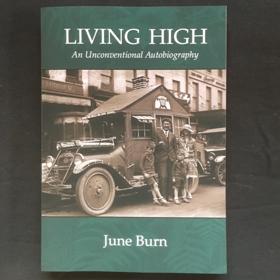
By June BurnCourage, gaiety, and a fresh approach to live are reflected in this "unconventional autobiography." It is a story of a twentieth-century pioneers as resourceful as ever they were in the days of the old frontier. June Burn and her husband Farrar determined to go their own sweet way, enjoying "first hand living" and not surrounding to the routines of a workday world. Through the years they had some high and glorious adventures, which included homesteading a "gumdrop" in the San Juan Islands, of the Pacific Northwest, teaching Eskimos near Siberia, and exploring the United States by donkey cart with a baby aboard. - Living High, 1958 edition book jacket 292 pages ; 23 cm Non-circulating [ 1 ]
|
1941 |
|
A history of Latah County to 1900 by Lawrence Ray Harker
Lawrence Ray Harker’s A history of Latah County to 1900 explores the gradual pioneer settlement and enduring agricultural development of the uniquely fertile, rolling topography of the Palouse region in northern Idaho. The narrative illustrates how the specific environmental realities of this landscape—defined by vast expanses of deep, wind-blown loess soils, the dense white pine timberlands of the eastern foothills, and the seasonal rhythms of the inland climate—required immense resilience and thoughtful cultivation from early homesteaders. By detailing the steady transition from isolated mining camps and early subsistence claims to the collaborative establishment of robust dry-land farming networks and the eventual integration of vital rail corridors, the text highlights how the county's prosperity relied on community-driven adaptation to its rich natural resources. Ultimately, the account demonstrates that cooperatively harnessing the immense agricultural potential of the Palouse hills and patiently building cohesive civic and educational institutions, such as those in early Moscow, were essential steps in transforming a remote frontier into a thriving, deeply rooted agrarian and cultural heartland of the inland Pacific Northwest. 83 leaves ; 28 cm Desiderata
|
1941 |
|
The treaty of Washington, 1871 a study in imperial history by Goldwin Smith 
Goldwin Smith’s The Treaty of Washington, 1871: A study in imperial history provides a macro-geopolitical analysis of the diplomatic agreements that permanently finalized the maritime borders of the Pacific Northwest. While the text broadly addresses the reconciliation between the United States and Great Britain, for regional historians, its crucial focus lies in its documentation of the resolution to the San Juan Islands boundary dispute. Smith details how distant diplomats utilized international arbitration to draw a rigid federal border through the Haro Strait, artificially dividing a complex archipelago that had long functioned as a unified, ancient maritime crossroads for the Coast Salish peoples. The treaty's ratification officially validated the civic claims and frontier infrastructure of early island pioneers, who had relied heavily on deep community bonds and interdependent alliances with both indigenous populations and occupying military garrisons to survive the precarious, decades-long standoff of the "Pig War." Ultimately, this institutional study illustrates how federal treaties forcefully superimposed sweeping imperial maps directly onto established indigenous aquatic networks, transforming a fluid, culturally managed seascape into a strictly delineated frontier of American maritime logistics. xiii, 134 pages ; 24 cm. ONLINE Circulation [ 1 ] Non-circulating [ 1 ]
|
1941 |