Catalog of British Columbiana and Pacific Northwest Americana
Encyclopedia Cascadia Catalog contains book titles of mostly non-fiction Pacific Northwest Coast of North America Titles (primarially British Columbia, Idaho, Oregon and Washington State) in an easy-to-understand title catalog. If you see a link with this badge ONLINE CIRC it means that there is an online institution that provides free access to that title. In some cases there may be more than one institution hosting the title digitally.
| Catalog Title | Published |
|---|---|
|
The Pig War the last Canada-US border conflict by Rosemary Neering 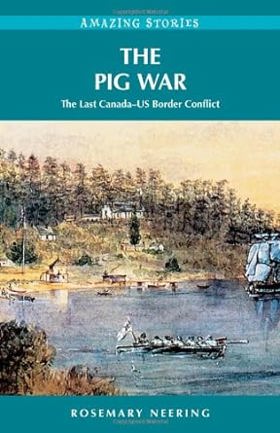
On May 15, 1859, an American settler on San Juan Island shot a pig belonging to the Hudsons Bay Company. This seemingly insignificant act was the spark that almost set aflame the strangest of many confrontations between Britain and the United States on the northwest coast of North America. On one side of the border dispute over the strategically located San Juan Islands was Governor James Douglas, determined to protect the interests of the Hudsons Bay Company and prove the military superiority of Britain. On the other side was General William Selby Harney, spoiling for a fight and believing in Americas manifest destiny to rule the continent. In this lively account of the conflict that became known as the Pig War, Rosemary Neering traces the events that led to the standoff in the San Juans and brings to life the memorable characters who played leading roles in the drama. The book is an excellent travel companion to anyone visiting the San Juans and the original American and British camps that are open to the public. 142 p. : ill., maps, ports. ; 22 cm. CIRC [ 1 ]
|
2011 |
|
New land, north of the Columbia historic documents that tell the story of Washington State from territory to today by Lorraine McConaghy 
New Land North of the Columbia features an 1860 letter protesting the escape of an Olympia slave to Victoria on the Puget Sound Underground Railroad. There's also territorial Governor Pickering's telegram to Abraham Lincoln sent on the brand-new telegraph--and Lincoln's hand-signed response. Other ephemera include posters and letters that support and condemn women's right to vote, prohibition of the sale of alcohol, and aid to the unemployed during the Great Depression. Here are documents about the massive, secret Hanford Engineering Works that was Washington's Manhattan Project. The book includes an ad for the first Lame Fest concert featuring Mudhoney and Nirvana, the original box that contained Windows 95, and a poster calling all protesters to the 1999 WTO conference. Historian Lorraine McConaghy has traversed the state and sifted through the files of three dozen archives to cull the 400 fascinating documents that bring to life Washington's last 150 years. vi, 153 pages : illustrations (some color), maps (some color) ; 25 x 29 cm CIRC [ 1 ]
|
2011 |
|
Portland in three centuries the place and the people by Carl Abbott 
A compact and comprehensive history of Portland from first European contact to the twenty-first century, Portland in Three Centuries introduces the women and men who have shaped Oregon’s largest city. The expected politicians and business leaders appear, but Carl Abbott also highlights workers and immigrants, union members and dissenters, women at work and in the public realm, artists and activists, and other movers and shakers. Incorporating social history and contemporary scholarship in his narrative, Abbott examines current metropolitan character and issues, giving close attention to historical background. He explores the context of opportunities and problems that have helped to shape the rich mosaic that is Portland. This revised and updated second edition includes greater attention to the Indigenous peoples of the Portland region, Portland’s communities of color, and the challenges of recent years that have thrust Portland into the national spotlight. A highly readable character study of a city, and enhanced by more than sixty historic and contemporary images, Portland in Three Centuries will appeal to readers interested in Portland, in Oregon, and in Pacific Northwest history. 192 pages : illustrations, maps ; 26 cm CIRC [ 1 ]
|
2011 |
|
Human impacts on seals, sea lions, and sea otters integrating archaeology and ecology in the northeast Pacific by Todd J. Braje, Torben C. Rick 
Brings together archaeologists, biologists, and other scientists to consider how archaeology can inform the conservation and management of pinnipeds and other marine mammals along the Pacific Coast. viii, 320 pages : illustrations, maps ; 27 cm CIRC [ 0 ]
|
2011 |
|
Nl̳ekèpmxcín Thompson River Salish speech by Steven M. Egesdal , M. Terry Thompson , Mandy N. Jimmie 
Published in 2011 by Steven M. Egesdal, M. Terry Thompson, and Mandy N. Jimmie, Nl̳ekèpmxcín: Thompson River Salish Speech is a comprehensive linguistic and cultural collection documenting the traditional language of the Nlaka'pamux people of British Columbia. The massive volume compiles dozens of authentic narratives, traditional orations, prayers, and conversations gathered from fluent speakers, complete with detailed interlinear morphological glosses and English translations. By bridging raw oral recordings with rigorous academic analysis, the text preserves complex grammatical structures and cultural knowledge directly from the source. A keen insight drawn from the work is how meticulous documentation of this caliber transcends traditional academic linguistics; by capturing spoken oral history in the native tongue, the book functions as a vital, community-rooted lifeline for language revitalization against the pressures of generational attrition xiv, 596 pages : illustrations, map ; 29 cm. CIRC [ 0 ]
|
2011 |
|
San Juan Island by Mike Vouri , Julia Vouri, San Juan Historical Society 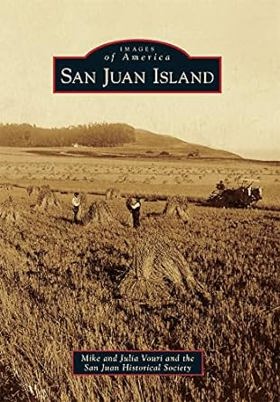
With sheltered harbors, open prairies, and secluded woodlands, San Juan Island has been a magnet for human habitation for thousands of years. Settlers and Indians sometimes intermarried, and many of their descendants remain to this day. San Juan Islanders of all generations have worked hard to preserve their home, thus maintaining a sense of place that is as evident today as it was when the first canoes came ashore 127 pages : illustrations, maps, portraits ; 24 cm. CIRC [ 1 ]
|
2010 |
|
Lopez Island by Susan Lehne Ferguson, Lopez Island Historical Society and Museum (Lopez Island, Wash) 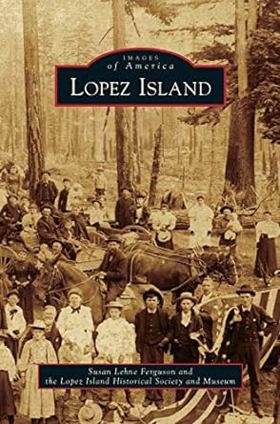
The story of Lopez Island is a story of community. Skilled, brave, generous people like Sampson Chadwick, Mother Brown, Captain Barlow, and Amelia Davis carved a spirited, nurturing community out of seaside wilderness. Homesteaders cleared forests, built farms, grew food, and raised large families, surviving then thriving together. The hamlets of Port Stanley, Richardson, and Lopez emerged, creating hubs with stores, post offices, and schools as well as thriving fishing, canning, and shipping industries. The community fostered education, music, writing, dances, chivarees, baseball, quilting, a birthday club, and grand Fourth of July celebrations. Living self-reliant lives while helping friends, neighbors, and newcomers, Lopezians created a unique community character that abides today 127 pages : chiefly illustrations, map ; 24 cm. CIRC [ 1 ]
|
2010 |
|
Vancouver exposed a history in photographs by Donald E. Waite 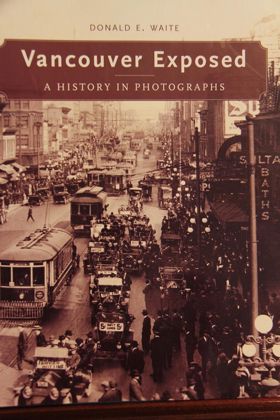
Vancouver has experienced many dramatic changes since its beginnings on the edge of the frontier. Once an almost inaccessible logging town, it has grown to be a major North American urban centre, and a jewel of the Pacific Rim. Within a mere century, it has metamorphosed from a little ventured rainforest to a thriving and cosmopolitan metropolis. This book tells the extraordinary story of that coming of age. 150 striking images, carefully reproduced, capture Vancouver in every phase of its growth. See the boomtown created by the coming of the railway. The land of mansions and motor car bought by the Roaring Twenties. The lean city of the Depression and the war years. The scene of intense urban expansion since the fifties. An entertaining chronicle, this Vancouver photo history is essential for every visitor and resident. 272 p. : ill. (some col.), maps, ports. ; 29 cm. CIRC [ 1 ]
|
2010 |
|
Legendary Lake Pend Oreille Idaho's wilderness of water by Jane Fritz, Kevin Davis, Hazel Hall, Francis Cullooyah 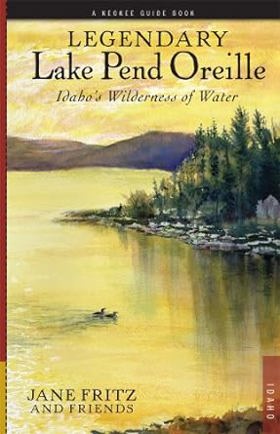
Experience Lake Pend Oreille, Idaho's wilderness of water. Sprawling 43 miles long with 111 miles of shoreline, Idaho's largest natural lake is truly awe-inspiring. At more than 1,100 feet deep, it's the fifth-deepest lake in the nation. During the last ice age, it was the nexus of the most cataclysmic floods ever to scour the planet. For the native Kalispel Indians, it was the cradle of creation. It was the site of the first trading post in Idaho, built in 1809 by vayageur David Thompson. The lake has also yielded the world-record Kamloops trout. Add the lake's spectacular setting amid three major ranges of the Rocky Mountains, and it's no wonder Lake Pend Oreille inspires such awe. This book captures the lake's incredible features with comprehensive guides to: - All public recreations sites for swimming, picnicking, camping and watercraft access - Resources and advice for boaters and sailors - Complete guide to over 30 hiking trails - Paddle routes for kayakers and canoeists Legendary Lake Pend Oreille is far more than a recreationist's directory. Rich with sketches about biology and botany, loaded with fascinating historical lore, and abundantly illustrated, this is a bible for Lake Pend Oreille ix, 406 pages : illustrations (some color), maps (1 folded color), portraits ; 23 cm CIRC [ 1 ]
|
2010 |
|
A guide to the Indian tribes of the Pacific Northwest by Robert H. Ruby, John A. Brown, Cary C. Collins, M. Dale Kinkade, Sean O'Neill 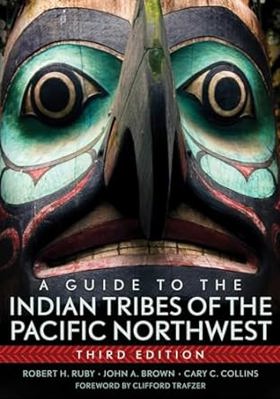
This third edition includes the recent economic, political, and cultural developments that affect the native communities, as well as other contemporary issues such as Indian gaming and the Native American Graves Protection and Repatriation Act. All entries include information on tribal history, location, demographics, and cultural traditions xliv, 415 pages : illustrations, maps ; 24 cm. CIRC [ 1 ]
|
2010 |
|
Astoria an Oregon history by Karen L. Leedom 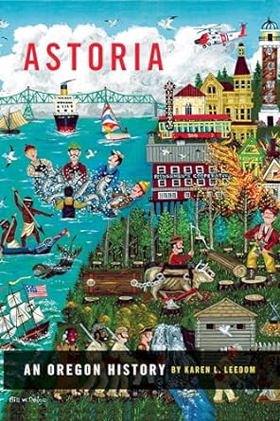
The rest of the country is just beginning to discover Astoria, Oregon, that historic gem of a town at the mouth of the Columbia River west of Portland, and the oldest European-American settlement west of the Rockies. The author provides a chronological look dating back to the 1500s, including European exploration, Native American life, logging, fishing, Chinese laborers in the salmon industry, a giant cheese in the Civil War, Oregon’s first female surgeon, Victorian architecture, and valiant Coast Guard rescues. vi, 218 pages : illustrations, maps ; 23 cm CIRC [ 1 ]
|
2010 |
|
Oregon and the collapse of Illahee U.S. empire and the transformation of an indigenous world, 1792-1859 by Gray H. Whaley 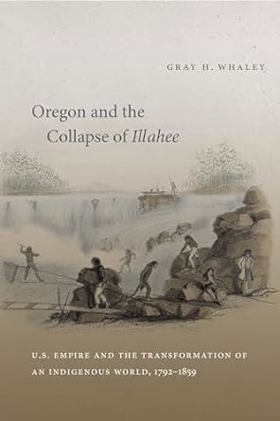
Modern western Oregon was a crucial site of imperial competition in North America during the formative decades of the United States. Whaley examines relations among newcomers and between newcomers and Native peoples--focusing on political sovereignty, religion, trade, sexuality, and the land--from initial encounters to Oregon's statehood. He argues that the process of Oregon's founding is best understood as a contest between the British empire and a nascent American one, with Oregon's Native people and their lands at the heart of the conflict xi, 303 pages : illustrations, maps ; 24 cm CIRC [ 1 ]
|
2010 |
|
Edward Sheriff Curtis visions of the first Americans by Don Gulbrandsen, Edward S. Curtis 
Contains over 300 photographs by Edward Sheriff Curtis from his inspirational work on the North American Indian. The book includes many regions, tribes and ages of people, and in some ways even some of the more negative aspects of his photographs are invaluable because they informed much of the mainstream American (worldwide, really) mythology that surrounds First Nations peoples of North America. The photos are somewhere between documentary and romanticism. Where he could have taken straight documentary photos of poverty and tattered Western/white clothing, he instead staged warrior meetings on horseback and the like. 256 pages : chiefly illustrations, color map, portraits ; 25 x 36 cm CIRC [ 1 ]
|
2010 |
|
Secret beaches of southern Vancouver Island Qualicum to the Malahat by Theo Dombrowski 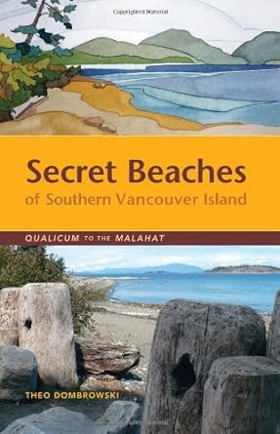
This is your guide to dozens of spectacular and often hidden beaches on the eastern coast of Vancouver Island between Qualicum and the Malahat. While some of them are well used by people living nearby, many are virtually impossible to find without combing through official maps and back-road guides. From tiny rocky coves to broad sandy beaches, these public-access spots are enormously diverse. Just as important as finding these spots is knowing what to expect. Thus each location is accompanied by detailed information that any beach explorer should know before setting out. Is the beach a few level steps from a vehicle or down a high, steep bank? Is the beach suitable for children? Large groups? Kayakers? 255 pages : illustrations (chiefly color), maps ; 22 cm CIRC [ 0 ]
|
2010 |
|
Voices from two rivers harnessing the power of the Peace and Columbia by Meg Stanley , BC Hydro Power Pioneers 
Stories of those who lived and worked around the building of large dams and powerhouses that would turn the "Two Rivers Policy" into megawatts vii, 312 pages : illustrations (some color) ; 29 cm CIRC [ 0 ]
|
2010 |
|
The graveyard of the Pacific shipwreck tales from the depths of history by Anthony Dalton 
On January 22, 1906, the passenger ship Valencia lost her way in heavy fog and rain and rammed into the deadly rocks at Pachena Point on the west coast of Vancouver Island. As the wreck was shattered by the pounding waves, the survivors clung desperately to the rigging. Few made it the short distance to shore through the frigid and turbulent waves—117 of the 164 souls aboard perished. A year earlier, the King David had been wrecked on Bajo Reef near Nootka Sound. The fate of her sailors was much more mysterious. Today, the magnificent Pacific coastline of Vancouver Island draws hikers, surfers and storm-watchers to marvel at its natural splendour. But the ghosts of the Valencia, King David, Janet Cowan, Pacific, Soquel and dozens of other lost ships still haunt the rugged shores of the Graveyard of the Pacific. Anthony Dalton tells the incredible stories of many of these ships and their courageous crews, who often discovered that their nightmares had only begun once they made it ashore. These true tales of disaster and daring rescues are a fascinating adventure into British Columbia maritime history. 124 pages : illustrations ; 22 cm CIRC [ 0 ]
|
2010 |
|
Historic shipwrecks of the central coast of British Columbia by Rick James , Jacques F. Marc , Underwater Archaeological Society of British Columbia 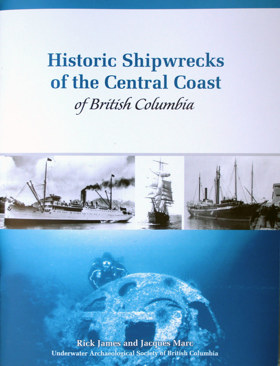
In this latest UASBC publication a fascinating marine history of BC's Central Coast is reflected in the stories of 13 shipwrecks surveyed by the UASBC over a 10 year period. The latest publication examines the area between Cape Caution and Prince Rupert. Each shipwreck story is illustrated with a site plan and photographs. 8.5" x 11", 76 pages. 76 p. : ill., maps ; 28 cm CIRC [ 0 ]
|
2010 |
|
The people are dancing again the history of the Siletz tribe of western Oregon by Charles F. Wilkinson 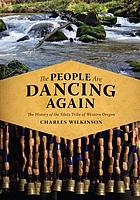
The history of the Siletz is in many ways the history of all Indian tribes in America: a story of heartache, perseverance, survival, and revival. It began in a resource-rich homeland thousands of years ago and today finds a vibrant, modern community with a deeply held commitment to tradition. The Confederated Tribes of Siletz Indians—twenty-seven tribes speaking at least ten languages—were brought together on the Oregon Coast through treaties with the federal government in 1853–55. For decades after, the Siletz people lost many traditional customs, saw their languages almost wiped out, and experienced poverty, killing diseases, and humiliation. Again and again, the federal government took great chunks of the magnificent, timber-rich tribal homeland, a reservation of 1.1 million acres reaching a full 100 miles north to south on the Oregon Coast. By 1956, the tribe had been “terminated” under the Western Oregon Indian Termination Act, selling off the remaining land, cutting off federal health and education benefits, and denying tribal status. Poverty worsened, and the sense of cultural loss deepened. The Siletz people refused to give in. In 1977, after years of work and appeals to Congress, they became the second tribe in the nation to have its federal status, its treaty rights, and its sovereignty restored. Hand-in-glove with this federal recognition of the tribe has come a recovery of some land--several hundred acres near Siletz and 9,000 acres of forest--and a profound cultural revival. This remarkable account, written by one of the nation’s most respected experts in tribal law and history, is rich in Indian voices and grounded in extensive research that includes oral tradition and personal interviews. It is a book that not only provides a deep and beautifully written account of the history of the Siletz, but reaches beyond region and tribe to tell a story that will inform the way all of us think about the past. xvi, 564 pages : illustrations, maps ; 26 cm CIRC [ 0 ]
|
2010 |
|
Mexicanos in Oregon their stories, their lives by Erlinda Gonzales-Berry, Marcela Mendoza 
This important volume sheds new light on the stories and lives of mexicanos in Oregon: why migrants come to Oregon fields, construction sites, and warehouses; what their experiences are when they settle here; and how they adapt to life in the United States. Building on the work of earlier scholars and providing new and original research, Gonzales-Berry and Mendoza draw from the disciplines of history, anthropology, sociology, and gender and cultural studies to present a comprehensive view of the experiences of the Mexican-origin population in Oregon. The number of Latinos residing in Oregon has increased dramatically in the last two decades, leading to increased diversity across the state, particularly visible in the public school system and in agricultural and service occupations. This, however, is not a new phenomenon. There has been a settled Mexican-origin population in Oregon since the mid-nineteenth century. Mexicanos in Oregon explores this history of migration and settlement of mexicanos, highlighting their sustained practices of community building, their struggles for integration, and their contributions to the economic and cultural life of the state. Using archival records, primary and secondary scholarly works, demographic statistics, and personal testimonies, the authors create a picture of the economic, political, social, and cultural conditions that have shaped the lives of mexicanos. The blend of scholarly research and individual stories reflect the very human dimension and complex forces that make up the whole story of Mexican migration and settlement in Oregon. It is an essential resource for immigration scholars, historians, students, and for all Oregonians. 287 pages : illustrations ; 23 cm CIRC [ 0 ]
|
2010 |
|
Idaho wine country by Alan Minskoff, Paul Hosefros 
Writer Alan Minskoff and photographer Paul Hosefros took to the back roads of Idaho for fifteen months, interviewing and photographing more than fifty winemakers and grape growers and documenting all stages of grape and wine production. Their book, the first full-length exploration of the state s emerging wine industry, chronicles an enterprise on the verge of discovery. xv, 188 pages : illustrations (chiefly color), color maps ; 26 cm CIRC [ 0 ]
|
2010 |
|
Eminent Astorians from John Jacob Astor to the salmon kings by Karen Kirtley, Stephen Dow Beckham 
Marks the bicentennial of Astoria in 2011. Each of nine essays presents a literary biography of a figure who looms large in Astoria's history, from Comcomly, the powerful, one-eyed leader of the Chinook Tribe when Lewis and Clark arrived at the mouth of the Columbia River in 1805, to the “Salmon Kings”, who capitalized on the region's natural bounty from the 1870s to the 1910s. 272 pages : illustrations, map ; 23 cm CIRC [ 0 ]
|
2010 |
|
Astorians, eccentric and extraordinary by Karen Kirtley 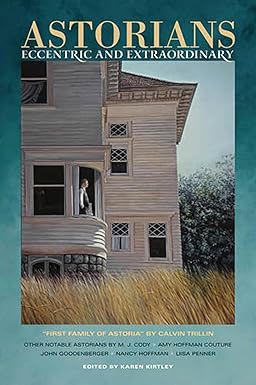
In 1993, The New Yorker published Calvin Trillin’s memorable article on the eccentric Flavel family of Astoria, the descendants of Captain George Flavel, whose ornate Queen-Anne-style mansion is a tourist draw today. With Trillin’s gracious consent, “First Family of Astoria” is reprinted in Part One of Astorians, Eccentric and Extraordinary, making its first appearance in book form. Part Two carries on the theme with portraits of fifty-five other notable Astorians. Five Oregon writers have captured the essence and the flavor of vivid personalities that include the notorious shanghaier Bridget Grant; the charming scoundrel Mayor Francis Clay Harley; the elusive English “barmaid” Jane Barnes, the first white woman in the Pacific Northwest; and Rolf Klep, who believed he could create a major maritime museum in an economically depressed town—and made it happen. In biology, it is said that the richest life forms reside at the edge of the ecosystem. Astoria epitomizes edges—the edge of the country, the edge of a great river, the edge of the Pacific Ocean, and the edge of our American culture. This book celebrates the larger-than-life quality that has appeared with regularity in the town’s two-hundred-year history. As Steve Forrester, publisher of The Daily Astorian, notes in the book’s introduction: “Extraordinary people are not necessarily eccentric. But eccentrics are driven to do extraordinary things.” 224 pages : illustrations, maps ; 23 cm CIRC [ 0 ]
|
2010 |
|
No small potatoes how a family potato salad recipe is fast becoming a billion dollar business by Al Reser, Kerry Tymchuk, Oregon State University Alumni Association 
In 1960 when twenty-five-year-old Al Reser became president of the potato salad manufacturing business which his parents began in their Oregon farmhouse kitchen ten years earlier, the company had a dozen or so part-time employees and annual sales of $300,000. Accountants told Al that the business was a likely candidate for bankruptcy. What the balance sheets didn’t account for, however, was the perseverance, hard work, and ingenuity of Al Reser. Today, Reser’s Fine Foods is one of the most respected and admired companies in the food industry, boasting over 2,600 employees and annual sales approaching one billion dollars. Reser’s salads, side dishes, dips, Mexican food specialties, snack foods, and desserts are familiar sights in kitchens in all fifty states, as well as in Canada and Mexico. The philanthropy of Al and his family has also made the Reser name familiar to America’s college football fans, as the Oregon State University Beavers play their home football games at Reser Stadium. In No Small Potatoes, Al Reser not only shares the inspiring story of his rise from poverty to the top of the business world, he also recounts the tough decisions that spurred Reser’s phenomenal growth, and the values that have guided his steps. It is a book that will inspire anyone who hopes to grow a small business into something bigger, and is proof that small potatoes and big dreams are a perfect recipe for success. 132 pages : illustrations ; 23 cm CIRC [ 0 ]
|
2010 |
|
The final forest big trees, forks, and the Pacific Northwest by William Dietrich 
"Before Forks, a small town on Washington's Olympic Peninsula, became famous as the location for Stephenie Meyer's Twilight book series, it was the self-proclaimed "Logging Capital of the World" and ground zero in a regional conflict over the fate of old-growth forests. Since Pulitzer Prize-winning journalist William Dietrich first published The Final Forest in 1992, logging in Forks has given way to tourism, but even with its new fame, Forks is still a home to loggers and others who make their living from the surrounding forests. The new edition recounts how forest policy and practices have changed since the early 1990s and also tells us what has happened in Forks and where the actors who were so important to the timber wars are now."--Pub. desc 336 pages : maps ; 23 cm CIRC [ 0 ]
|
2010 |
|
Maple Ridge & Pitt Meadows a history in photographs by Donald E. Waite 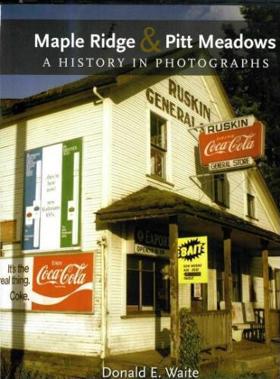
This a colorful history of this particular area in the lower Mainland of British Columbia, dealing with the families who first settled there, the First Nations peoples who were the original inhabitants and the businesses that developed. It is liberally illustrated with B&W, sepia and colourful photos as well as maps. Scattered throughout are tasteful advertisements from local businesses that have sponsored the publication of this book. 304 p. : ill. (some col.), ports. (some col.) ; 29 cm. CIRC [ 0 ]
|
2010 |