Catalog of British Columbiana and Pacific Northwest Americana
Encyclopedia Cascadia Catalog contains book titles of mostly non-fiction Pacific Northwest Coast of North America Titles (primarially British Columbia, Idaho, Oregon and Washington State) in an easy-to-understand title catalog. If you see a link with this badge ONLINE CIRC it means that there is an online institution that provides free access to that title. In some cases there may be more than one institution hosting the title digitally.
| Catalog Title | Published |
|---|---|
|
|
1976 |
|
San Juan Papers by John N. Rupp
|
1981 |
|
San Juan Islands, the Cronstadt of the Pacific by Archie W. Shiels
|
1938 |
|
San Juan Islands by Ed Cooper, Ruth Kirk
|
1983 |
|
San Juan Island by Mike Vouri , Julia Vouri, San Juan Historical Society 
With sheltered harbors, open prairies, and secluded woodlands, San Juan Island has been a magnet for human habitation for thousands of years. Settlers and Indians sometimes intermarried, and many of their descendants remain to this day. San Juan Islanders of all generations have worked hard to preserve their home, thus maintaining a sense of place that is as evident today as it was when the first canoes came ashore 127 pages : illustrations, maps, portraits ; 24 cm. CIRC [ 1 ]
|
2010 |
|
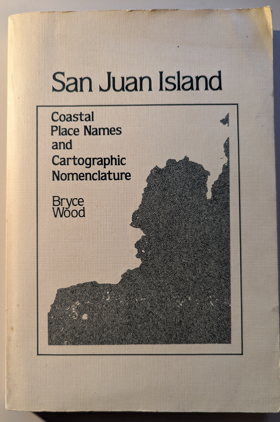
San Juan Island coastal place names and cartographic nomenclature by Bryce Wood, Washington State Historical Society
|
1980 |
|
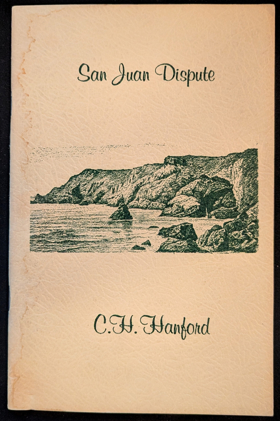
San Juan dispute by C. H. Hanford
|
1971 |
|
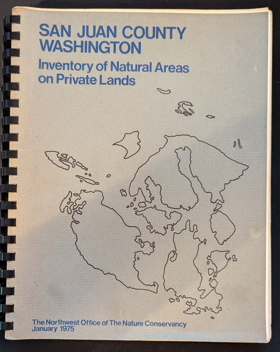
San Juan County, Washington, inventory of natural areas on private lands by Nature Conservancy (U.S.)., San Juan County (Wash). Planning Department
|
1975 |
|
San Juan and secession possible relation to the War of the Rebellion by Granville O. Haller 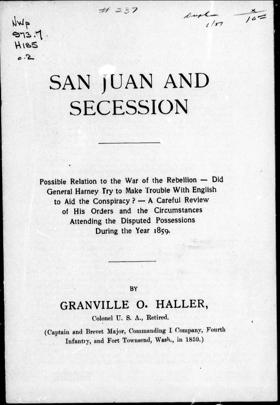
Published in 1896 by Major Granville O. Haller, this historical pamphlet re-examines the 1859 "Pig War" boundary dispute over San Juan Island between the United States and Great Britain. A keen insight drawn from the text is Haller's controversial thesis that the aggressive military escalations by Captain George Pickett and General William S. Harney were not merely localized bravado, but rather a deliberate conspiracy by Southern sympathizers to provoke a unifying national war with Britain to distract from the impending American Civil War. The author leverages his firsthand military experience during the crisis to reframe this bizarre frontier standoff as a high-stakes geopolitical gambit tied directly to the secessionist movement. Ultimately, the work transforms a seemingly comical regional squabble into a fascinating exploration of pre-Civil War political machinations in the Pacific Northwest. 15 pages ; 23 cm ONLINE CIRC [ 1 ]
|
1896 |
|
San Juan the powder-keg island : the settlers' own stories by Jo Bailey, Al Cummings , Beach Combers, Inc (Publisher) 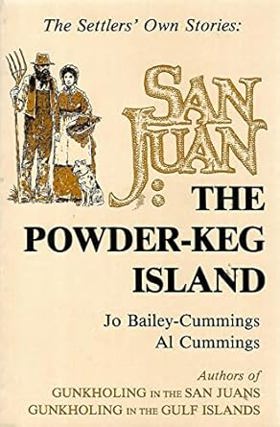
This book tells the history of San Juan Island mostly through the diaries and letters of the original settlers plus newspaper accounts of various newsworthy events that happened on the island. x, 194 pages : illustrations, portraits ; 22 cm CIRC [ 1 ]
|
1987 |
|
Same river twice the politics of dam removal and river restoration by Peter Brewitt 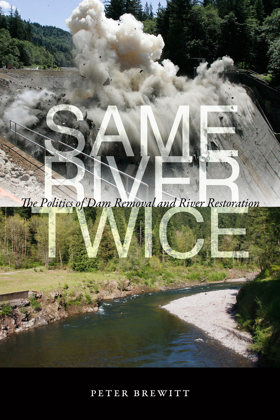
Dam removal was not a realistic option in the twentieth century, and people who suggested it were dismissed as radical dreamers, but in recent decades dam removal has become increasingly common, with dozens of removals now taking place each year nationwide. How did this happen? Same River Twice answers this question by telling the stories of three major Northwestern dam removals—the politics, people, hopes, and fears that shaped three rivers and their communities. Author Peter Brewitt begins each story with the dam’s construction, shows how its critics gained power, details the conflicts and controversies of removal, and explores the aftermath as the river re-established itself. Each dam removal offers a unique case study. On the Elwha and Rogue Rivers, dam removal was a multi-decade political brawl; on the Sandy River it was swift and amicable. A key controversy in every case was the loss of the recreational lake created by the dam. Local communities loved their lakes and felt that they were natural, public spaces rather than industrial creations. They fought dam removal with passion and ingenuity. To be successful, dam removal advocates had to learn to build mega-coalitions that embraced most interest groups and moved forward together. While the dams profiled here are all in the Pacific Northwest, dam removal is a national and international phenomenon, and Brewitt’s findings apply everywhere. Written for both a scholarly and a general audience, Same River Twice presents invaluable case studies for scholars of environmental politics, wildlife and public land professionals, environmental activists, and anyone interested in the intersection of politics, public policy, and dam removal. xii, 274 pages ; 23 cm CIRC [ 0 ]
|
2019 |
|
Saltwater City an illustrated history of the Chinese in Vancouver by Paul Richard Yee 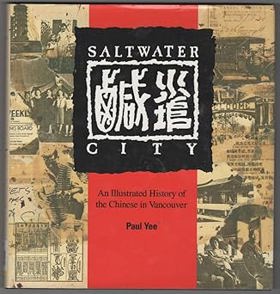
Saltwater City pays tribute to those who went through the hard times, to those who swallowed their pride, to those who were powerless and humiliated, but who still carried on. They all had faith that things would be better for future generations. They have been proven correct.Canada’s first Chinese arrived in British Columbia in 1858 from California. Almost all men—merchants, peasants, and laborers — and almost all from eight rural counties in the Pearl River delta in what is now Guangdong province — they came in search of gold and better fortune, escaping the rebellions, flood and drought of their homeland.By 1863 over 4,000 Chinese lived in B.C., filling jobs shunned by miners, road builders, teamsters, laundry men, restaurateurs, domestic servants and cannery workers. Between 1881 and 1885, thousands more arrived, most imported to build the transcontinental railway. They were to create, in Vancouver, Canada’s largest and most dynamic Chinese Community, known to its original inhabitants as Saltwater City. 174 p. : ill., fac-sim CIRC [ 1 ]
|
1988 |
|
Salt Spring Island, British Columbia by Edward F. Wilson 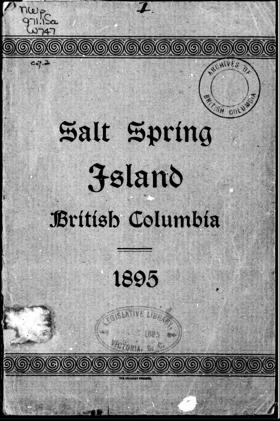
Originally marked on the naval charts of 1858 as "Admiral Island," it has of late years altogether dropped that name, and is now known both popularly, and also in the more recently published maps, as Salt Spring Island^ — the saline springs, of which there are some 14 or 15 on the island, being sufficient reason for its present name 30 pages : illustrations, map ONLINE CIRC [ 1 ]
|
1895 |
|
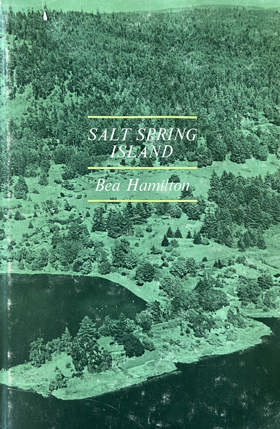
Salt Spring Island by Bea Hamilton
|
1969 |
|
Salt Spring the story of an island by Charles Kahn 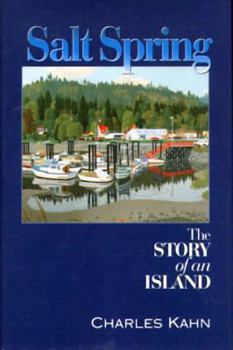
The largest of BC's southern Gulf Islands, beautiful Salt Spring Island has long been a favoured holiday destination and a prized real-estate area for those in search of an idyllic rural residence. Now available in trade paper, Salt Spring: The Story of an Island chronicles the island's rich history from the days when Coast Salish people inhabited Salt Spring's shores, through some 150 years of settlement by many diverse groups. Because of the island's rugged geography, the early story of Salt Spring is largely the story of hard-working people in small isolated communities industriously carving farms out of rough terrain. Many of the settlers who followed came to find a place where they could live their lives free of the constraints of most societies. This was as true for the African-Americans, many of whom were among the first non-aboriginal settlers to arrive in 1859, as it was for those fleeing conventional middleclass life and for Americans seeking to avoid the Vietnam War. And it's true of almost every new islander who arrives today with a unique personal dream. 344 pages : illustrations, maps, portraits ; 24 cm CIRC [ 1 ]
|
1998 |
|
Salmon, people, and place a biologist's search for salmon recovery by Jim Lichatowich 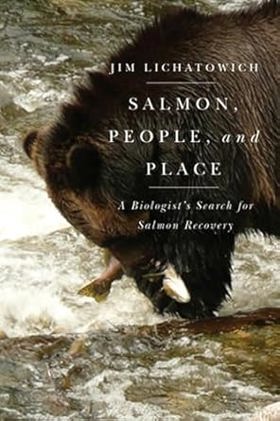
Each year wild Pacific salmon leave their oceanic feeding grounds and swim hundreds of miles back to their home rivers. The salmon’s annual return is a place-defining event in the Pacific Northwest, with immense ecological, economic, and social significance. However, despite massive spending, efforts to significantly alter the endangered status of salmon have failed. In Salmon, People, and Place, acclaimed fisheries biologist Jim Lichatowich eloquently exposes the misconceptions underlying salmon management and recovery programs that have fueled the catastrophic decline in Northwest salmon populations for more than a century. These programs will continue to fail, he suggests, so long as they regard salmon as products and ignore their essential relationship with their habitat. But Lichatowich offers hope. In Salmon, People, and Place he presents a concrete plan for salmon recovery, one based on the myriad lessons learned from past mistakes. What is needed to successfully restore salmon, Lichatowich states, is an acute commitment to healing the relationships among salmon, people, and place. A significant contribution to the literature on Pacific salmon, Salmon, People, and Place: A Biologist’s Search for Salmon Recovery is an essential read for anyone concerned about the fate of this Pacific Northwest icon. xi, 242 pages ; 23 cm CIRC [ 0 ]
|
2013 |
|
Salmon River saga by Kenneth B. Platt
|
1978 |
|
Salmon is everything community-based theatre in the Klamath watershed by Theresa J. May 
After a devastating fish kill on the Klamath River, tribal members and theatre artist Theresa May developed a play to give voice to the central spiritual and cultural role of salmon in tribal life. Salmon Is Everything presents the script of that play, along with essays by artists and collaborators that illuminate the process of creating and performing theatre on Native and environmental issues. This revised and expanded second edition includes a new introduction by the author, and new chapters by Kirby Brown and Marta Lu Clifford. xvi, 174 pages : illustrations, map ; 23 cm. CIRC [ 0 ]
|
2014 |
|
Salmon fishers of the Columbia by Courtland L. Smith 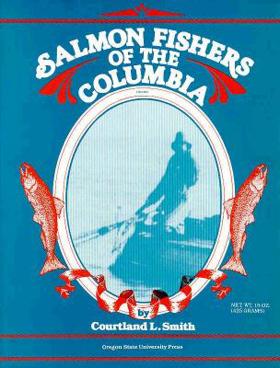
A comprehensive historical, social, and economic picture of the Columbia River salmon industry which noted environmental historian Richard White has described as "the best introduction to Columbia River salmon fishing." ix, 117 pages : illustrations, charts, maps, portraits ; 29 cm CIRC [ 1 ]
|
1979 |
|
Salish myths and legends one people's stories by M. Terry Thompson , Steven M. Egesdal 
The storytelling traditions of Salish-speaking peoples in the Pacific Northwest of North America are showcased in this anthology of story, legend, song, and oratory. From the Bitterroot Mountains to the Pacific Ocean, Salish-speaking communities such as the Bella Coola, Shuswap, Tillamook, Quinault, Colville-Okanagan, Coeur d'Alene, and Flathead have always been guided and inspired by the stories of previous generations. Many of the most influential and powerful of those tales appear in this volume. Salish Myths and Legends features an array of Trickster stories centered on Coyote, Mink, and other memorable characters, as well as stories of the frightening Basket Ogress, accounts of otherworldly journeys, epic cycles such as South Wind's Journeys and the Bluejay Cycle, tales of such legendary animals as Beaver and Lady Louse from the beginning of time, and stories that explain why things are the way they are. The anthology also includes humorous traditional tales, speeches, and stories of encounters with whites. --From publisher's description xlviii, 445 pages : maps ; 23 cm CIRC [ 0 ]
|
2008 |
|
Salem, a pictorial history of Oregon's capital by Harry H. Stein
|
1981 |
|
Sails, steamships & sea captains settlement, trade, and transportation of Island County between 1850-1900 by Island County Historical Society 
Published by the Island County Historical Society, Sails, Steamships & Sea Captains: Settlement, Trade, and Transportation of Island County Between 1850-1900 chronicles the maritime foundation of Washington’s Whidbey and Camano islands during the late nineteenth century. The book details the pivotal role played by mosquito fleet steamers, schooners, and daring sea captains in binding together isolated homesteads, timber camps, and agricultural outposts across Puget Sound long before the era of bridges and highways. Through archival photographs and pioneer accounts, the text captures a watery frontier where daily commerce, mail delivery, and social survival depended entirely on wind, tide, and vessel navigation. A keen insight drawn from the work is how insular geography in the Pacific Northwest inverted modern transportation logic; rather than land acting as the primary territory and water as the barrier, the interconnected waterways of Puget Sound served as the region's true main street, dictating the economic rise and fall of early island communities based entirely on their access to passing steamship docks. vii, 137 pages : illustrations, maps ; 21 cm CIRC [ 1 ]
|
1993 |
|
Sailing with Vancouver a modern sea dog, antique charts and a voyage through time by Sam McKinney 
As Sam McKinney retraced the explorations of Captain George Vancouver and his men from Puget Sound to Queen Charlotte Sound he wondered, "Could I have been one of them?" In the 1790s, Vancouver's crew rowed for long hours day after day, and camped on rocky beaches in all weathers to chart the intricate coastline for European colonial exploits. Two hundred years later, McKinney followed their ancient path in his 25-foot sailboat, anchoring where they did, meeting the same winds and waves, and sharing "the link of vulnerability that is the ever-present condition of all people who go to sea." McKinney offers insightful comparisons of what sailors saw and experienced, in the 18th century and today, around the Inland Sea. At the end of his trip he, like Vancouver, claimed the area he had explored, "not by deed of ownership but out of love for the place, its staggering beauty [and] the memories of the people and cultures who have found homes along its shores." McKinney invites readers along on a perceptive voyage through time and along the magnificent, storied west coast.-- Provided by publisher 1 online resource (xiii, 209 pages) : illustrations, maps CIRC [ 1 ]
|
2004 |
|
Sagebrush collaboration how Harney County, Oregon, defeated the takeover of the Malheur National Wildlife Refuge by Peter Walker 
Every American is co-owner of the most magnificent estate in the world—federal public forests, grazing lands, monuments, national parks, wildlife refuges, and other public places. The writer Wallace Stegner famously referred to public lands as “America’s best idea,” but there have always been some who oppose the idea for ideological reasons, or because they have a vested economic interest. In the current decade, federal public lands have been under physical threat as never before, with armed standoffs and takeovers that the US government has proved stunningly unsuccessful at prosecuting in federal courts. One such incident was the takeover of the Malheur National Wildlife Refuge in Harney County, Oregon, in 2016. Armed militants seized the headquarters of the refuge for forty-one days and occupied the community for three months. Militants threatened and harassed local residents, pledging to “give back” the land to unnamed “rightful owners” in their effort to enact a fringe interpretation of the US Constitution. Drawing on more than two years of intensive fieldwork, Sagebrush Collaboration shows that the militants failed in their objectives because the sensible and hardworking citizens of Harney County had invested decades in collaboratively solving the very problems that the militia used to justify their anti–federal government revolution. In Sagebrush Collaboration, Peter Walker offers the first book-length study of why the 2016 takeover of the Malheur National Wildlife Refuge failed. His nuanced and deeply researched account provides the full context for the takeover, including the response from local and federal officials and the grassroots community resistance. It will be essential reading for years to come for anyone who wants to understand the ongoing battle over the future of America’s public lands. xvii, 238 pages : illustrations ; 23 cm CIRC [ 0 ]
|
2018 |
|
Saga of the Coeur d'Alene Indians an account of Chief Joseph Seltice by Joseph Seltice, Edward J. Kowrach, Thomas E. Connolly
|
1990 |