Catalog of British Columbiana and Pacific Northwest Americana
The Encyclopedia Cascadia Catalog indexes mostly non-fiction literature covering the Pacific Northwest coast of North America, with an emphasis on British Columbia, Idaho, Oregon, and Washington State.
| Catalog Title | Published |
|---|---|
|
|
1983 |
|
Regionalism and the Pacific Northwest by William G. Robbins , Robert J. Frank , Richard E. Ross
|
1983 |
|
Tall tales of British Columbia by Michael Taft
|
1983 |
|
Floodland and forest memories of the Chilliwack Valley by Imbert Orchard 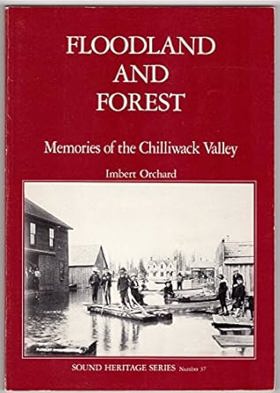
This book is based upon 15 tape recorded interviews with people of the Chilliwack area conducted in the early 1960s. Well-illustrated with historical photos and maps. iv, 92 pages : illustrations ; 27 cm. Non-circulating [ 1 ]
|
1983 |
|
A great good country a guide to historic Moscow and Latah County, Idaho by Lillian Woodworth Otness, Latah County Historical Society (Publisher)
|
1983 |
|
This old town city of Victoria central area heritage conservation report by Victoria (B.C.)., Les D. Mazer, Martin Segger, Brian Murray Sikstrom 
This Old Town: City of Victoria Central Area Heritage Conservation Report by the City of Victoria, Les D. Mazer, Martin Segger, and Brian Murray Sikstrom is a comprehensive 1983 urban planning and heritage inventory focused on preserving the city's historic downtown core. The report catalogs the architectural and historical significance of buildings in Victoria's "Old Town," providing a foundational framework for municipal conservation policies. Ultimately, it served as a critical guide for city planners working to protect the area's rich late 19th- and early 20th-century built environment from modern redevelopment. 95 p. : ill., maps ; 22 x 28 cm. Non-circulating [ 1 ]
|
1983 |
|
The Company on the coast by E. Blanche Norcross, Morag Maclachlan, Nanaimo Historical Society, Malaspina College
|
1983 |
|
Historical sketches of the Catholic Church in Oregon by Francis Norbert Blanchet, Edward J. Kowrach 
Originally published: Portland, Ore., 1878 163 pages : illustrations, maps, portraits ; 27 cm Non-circulating [ 1 ]
|
1983 |
|
Maimed by the sea erosion along the coasts of Oregon and Washington : a documentary by Bert Webber, Margie Webber
|
1983 |
|
Ainsworth, a railroad town by Bette Eunice Meyer, Barbara Kubik
|
1983 |
|
Growing up with Lake Forest Park the early decades in "North Seattle" : Vol I by Barbara L. Drake Bender
|
1983 |
|
Old Town the story of Union Gap by Maurice Helland
|
1983 |
|
Ferryboats a legend on Puget Sound by M. S. Kline, G. A. Bayless 
The intriguing story of Puget Sound's ferry boats and the men and women who operated them. xi, 401 pages, 1 folded leaf of plates : illustrations (some color) ; 27 cm Non-circulating [ 1 ]
|
1983 |
|
100 days in the San Juans a 1946 voyage through the San Juan Islands by June Burn, Theresa Morrow, Nancy Prindle 
June Burn, born Inez Chandler Harris (1893-1969), began her writing career in 1917 for McCall's. In 1919 she married Farrar Burn (1888-1974), and over the next fifty years they traveled extensively around the United States. They raised their two sons North (1921-1980) and South (1924-1994) in Washington's San Juan Islands. Burn's 1941 autobiography "Living High: An Unconventional Autobiography," documents much of her early life story, particularly their time on Waldron Island. 163 pages : illustrations, map, portraits ; 27 cm Non-circulating [ 1 ]
|
1983 |
|
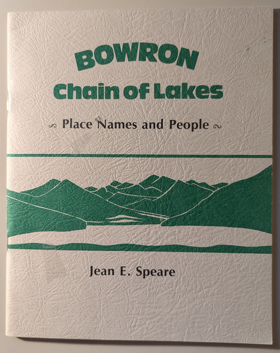
Bowron chain of lakes place names and people by Jean E. Speare
|
1983 |
|
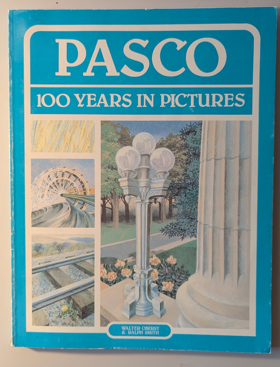
Pasco, 100 years in pictures by Walter Oberst, Ralph Smith
|
1983 |
|
Virgil T. McCroskey giver of mountains by Mary E. Reed, Keith C. Petersen , Washington State University Department of History (Publisher) 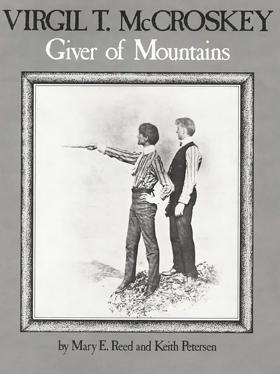
This booklet was produced as part of a traveling exhibit on Virgil McCroskey that toured eastern Washington and northern Idaho between November 1983 and January 1985. McCroskey was instrumental in the permanent conservation of Steptoe Butte State Park in eastern Washington and Mary Minerva McCroskey in north Idaho. 1 preliminary leaf, 14 pages : illustrations, portraits ; 28 cm Desiderata
|
1983 |
|
Francis Rattenbury and British Columbia architecture and challenge in the Imperial Age by Anthony Barrett, Rhodri Windsor Liscombe 
Yorkshire-born Francis Mawson Rattenbury (1867-1935) emigrated to British Columbia as a young architect in 1892. Within months of his arrival in Victoria he launched his brilliant, if abbreviated, career by winning an international competition to design the legislative buildings. While his life was marred by controversy, scandal and, in the end, tragedy, Rattenbury's architecture had an enduring impact on the Canadian landscape and his commercial ventures were important to the economic development of the West. Richly illustrated with over 200 drawings and photographs, Francis Rattenbury and British Columbia is the first major critical study of a Canadian architect in the context of his times. Using unpublished primary sources, including his recently discovered private letters, the authors document Rattenbury's professional career and the evolution of his architectural style. Detailed descriptions are given of some of his most famous projects, notably the legislative buildings and the Empress Hotel in Victoria. Besides working on a number of government commissions, Rattenbury became chief architect for the Canadian Pacific Railway and designed "chateau-like" buildings for C.P.R.hotels in the Rockies, Vancouver, and Victoria. Other projects such as the Vancouver and Nanaimo Courthouses and Bank of Montreal branches set the pattern for institutional architecture in British Columbia. His buildings not only drew attentionto the growing importance of the province, but also lent dignity and character to its major centres. Filled with the vigour and confidence of the imperial age, Rattenbury initiated a number of commercial ventures. These included the founding of a transportation system to the Yukon goldfields and extensive land speculations. As the authors point out, these investments were perhaps not undertaken solely for monetary gain but reflected Rattenbury's firm belief in the future of British Columbia and his desire to play an active role in its growth. Unfortunately, his entrepreneurial adventures involved heavy financial losses, among which were ruinous lawsuits involving the provincial government. This pioneering work on Western Canadian architecture will serve asa valuable design source for both the specialist and lay reader. It also includes an important account of the part played by major Canadian companies and government patronage in the development of British Columbia. This professional biography reveals new facets of Rattenbury's life and character which have been the subject of both public and literary controversy. xii, 391 pages : illustrations ; 24 cm Desiderata
|
1983 |
|
Snow war an illustrated history of Rogers Pass, Glacier National Park, B.C. by John G. Woods 
John G. Woods’s Snow War: An Illustrated History of Rogers Pass, Glacier National Park, B.C. chronicles the high-stakes engineering battles fought to maintain transcontinental transportation links through the heart of the Selkirk Mountains. Woods traces the initial 1881–1882 rail surveys by Major A.B. Rogers through the Illecillewaet and Beaver river valleys, documenting how engineers struggled against some of North America’s heaviest snowfall and slide paths. The narrative details the devastating March 4, 1910 avalanche that killed sixty-two railway workmen, leading directly to the abandonment of surface timber snowsheds and the 1916 excavation of the five-mile Connaught Tunnel. The volume further examines the mid-twentieth-century construction of the Trans-Canada Highway through Rogers Pass and Canyon Hot Springs, highlighting the pioneering mobile artillery avalanche-control programs established to safeguard the mountain corridor. 56 pages : illustrations, maps ; 28 cm Desiderata
|
1983 |
|
Camp Douglas the gold of Wells, B.C. by Fred W. Ludditt
Fred W. Ludditt’s Camp Douglas: The Gold of Wells, B.C. chronicles the twentieth-century hard-rock gold mining boom that established the planned company town of Wells in the Cariboo Mountains. Ludditt details how industrial mining promoter Fred Wells spearheaded the development of the Cariboo Gold Quartz Mining Company and Island Mountain Mines during the Great Depression, extracting rich gold veins deeply embedded in the mountain bedrock above Jack of Clubs Lake. The volume documents the systematic platting of the Wells townsite, the construction of modern community halls, schools, and hospitals, and the turbulent 1937 miners' strike that shaped local union politics. By contrasting the deep-shaft industrial technology of Wells with the nineteenth-century placer operations at adjacent Barkerville and Stanley, the narrative captures the final major corporate mining era of the Cariboo region. 168 pages : illustrations, portraits ; 23 cm Desiderata
|
1983 |
|
Splatsin Spallumcheen Indian Band history by Splatsin Tribe
Compiled and published directly by the Splatsin people, Splatsin: Spallumcheen Indian Band History articulates the cultural sovereignty, oral histories, and territorial presence of the southernmost tribe of the Secwépemc Nation. Rooted in traditional spetékwll and Secwepemctsín language documentation, the text maps ancient hunting trails, fishing encampments, and camas-harvesting grounds spanning the Shuswap and Salmon river watersheds, including sites across Enderby, Mara, Grindrod, and Ashton Creek. The chronicle details the profound disruptions caused by nineteenth-century settler pre-emptions, the arbitrary reduction of tribal lands under colonial reserve commissions, and the impacts of the residential school system. The work stands as an essential legal and historical record detailing continuous Splatsin territorial stewardship and sovereign land title assertions across the North Okanagan. 76 pages : illustrations, maps ; 28 cm Desiderata
|
1983 |
|
Panoramas of promise Pacific Northwest cities and towns on nineteenth-century lithographs by John William Reps, David H. Stratton 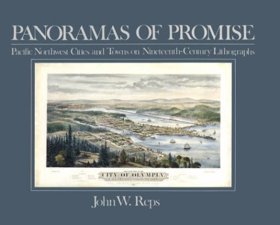
"Beginning with Henry James Warre's view of Oregon City in 1846 and concluding with highly technical panoramas of Seattle and Portland by artists like E. S. Glover and Augustus Koch, John Reps demonstrates what lithographs of Pacific Northwest communities can tell us about the past. The text is illustrated by 44 beautiful, detailed drawings, eight in color. Source: Publisher." -- Google Books viewed August 7, 2020 11 unnumbered preliminary pages, 93 pages : illustrations (some color) ; 21 x 26 cm Non-circulating [ 1 ]
|
1984 |
|
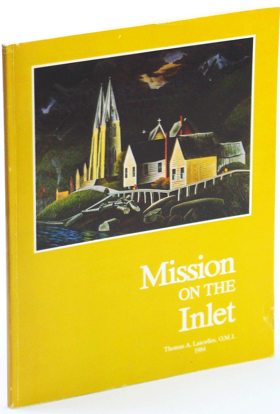
Mission on the Inlet St. Paul's Indian Catholic Church, North Vancouver, B.C., 1863-1984 by Thomas A. Lascelles, Oblates of Mary Immaculate St Paul's Vice Province
|
1984 |
|
History of St. Charles, Idaho 1864-1984 by St. Charles Centennial Book Committee
The St. Charles Centennial Book Committee’s History of St. Charles, Idaho: 1864–1984 documents the settlement and community evolution of the agrarian village located near the northern shore of Bear Lake. Named in honor of Apostle Charles C. Rich, the volume chronicles how early Mormon pioneers established farmsteads along St. Charles Creek, engineering ditch systems to water hay pastures and grain fields. The work details the town's distinction as the birthplace of Mount Rushmore sculptor Gutzon Borglum, tracing the development of early district schools, church wards, cheese factories, and cooperative stores. Richly illustrated with pioneer portraits and property maps, the chronicle captures the rural endurance of families who weathered severe mountain frosts to maintain an enduring agricultural presence. 214 pages : illustrations, portraits ; 29 cm Desiderata
|
1984 |
|
The lower Columbia a history of Clatskanie and its people by Irene L. Barr, Clatskanie Historical Society
Irene L. Barr’s The Lower Columbia: A History of Clatskanie and Its People stands as the definitive local chronicle of the riverine lowlands and dikes of northwestern Columbia County. Barr chronicles how early nineteenth-century settlers entered the ancestral territory of the Tlatskanai (Clatskanie) people, establishing donation land claims along the tidal sloughs where the Clatskanie River enters the Columbia. The narrative traces the monumental cooperative labor required to construct protective earthen dikes and drainage tide gates, which transformed flood-prone marshlands into rich agricultural and peppermint-producing acreage across Marshland, Quincy, and Mayger. The volume details the maritime trade of pioneer steamships, the industrial operations of riverfront shingle mills, the development of Clatskanie Heights and Delena, and the commercial evolution of the City of Clatskanie. 310 pages : illustrations, maps, portraits ; 29 cm Desiderata
|
1984 |