Catalog of British Columbiana and Pacific Northwest Americana
Encyclopedia Cascadia Catalog contains book titles of mostly non-fiction Pacific Northwest Coast of North America Titles (primarially British Columbia, Idaho, Oregon and Washington State) in an easy-to-understand title catalog. If you see a link with this badge ONLINE CIRC it means that there is an online institution that provides free access to that title. In some cases there may be more than one institution hosting the title digitally.
| Catalog Title | Published |
|---|---|
|
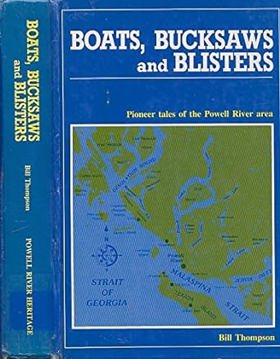
Boats, bucksaws, and blisters pioneer tales of the Powell River area by G. W. Thompson, Powell River Heritage Research Association
|
1990 |
|
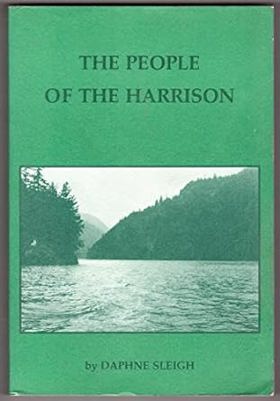
The people of the Harrison by Daphne Sleigh
|
1990 |
|
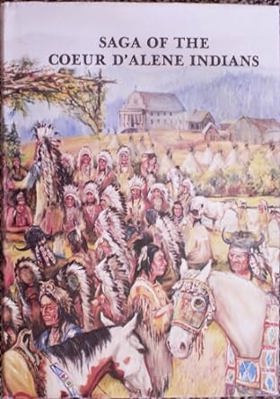
Saga of the Coeur d'Alene Indians an account of Chief Joseph Seltice by Joseph Seltice, Edward J. Kowrach, Thomas E. Connolly
|
1990 |
|
Astoria & empire by James P. Ronda 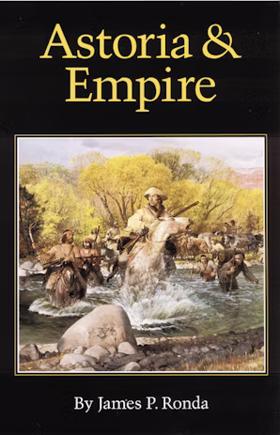
In late December 1788 a worried Spanish official in Mexico City set down his fears about a new and aggressive northern neighbor. Viceroy Manuel Antonio Florez offered a gloomy prediction about the future of Spanish-United States relations in the West. He already knew about the steady march of frontiersmen toward St. Louis and now came troubling word of Robert Gray's ship Columbia on the Northwest coast. All this seemed to fit a pattern, a design for Yankee expansion. "We ought not to be surprised," warned the viceroy, "that the English colonies of America, now being an independent Republic, should carry out the design of finding a safe port on the Pacific and of attempting to sustain it by crossing the immense country of the continent above our possessions of Texas, New Mexico, and California." Canadian fur merchants and Russian bureaucrats also viewed the young republic as a potential rival in the struggle for western dominion. The viceroy's vision of the future proved startlingly accurate. Within the next two decades an American president would authorize a federally funded expedition to find just the sort of transcontinental route Florez imagined. Equally important, a New York entrepreneur would propose and put into motion an ambitious plan to make the Northwest an American political and commercial empire. John Astor's Pacific Fur Company, with Astoria as its central post on the Columbia River, was Florez's nightmare come true. Astoria had long represented either a daring overland adventure or simply a failed trading venture. The Astorians surely had their share of adventure. And the Pacific Fur Company never brought its founder the profits he expected. But all those involved in the extensive enterprise knew it meant more. Thomas Jefferson once described Astoria as the "germ of a great, free and independent empire," believing that the entire American claim to the lands west of the Rockies rested on "Astor's settlement at the mouth of the Columbia." And John Quincy Adams, the expansionist-minded secretary of state, labeled then entire Northwest as "the empire of Astoria." This book seeks to explore Astoria as part of a large and complex struggle for national sovereignty in the Northwest. The Astorians and their rivals were always engaged in more than trading and trapping. They were advance agents of empire. -- from Preface xiv, 400 pages : illustrations, maps ; 23 cm CIRC [ 1 ]
|
1990 |
|
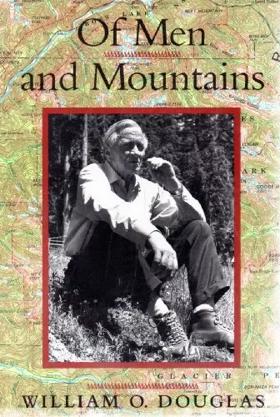
Of men and mountains by William O. Douglas
|
1990 |
|
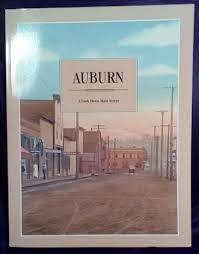
Auburn--a look down Main Street by Josephine Emmons Vine
|
1990 |
|
|
1990 |
|
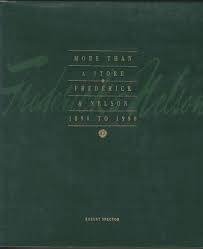
More than a store Frederick & Nelson, 1890 to 1990 by Robert Spector
|
1990 |
|
Helen Dawe's Sechelt by Helen Dawe 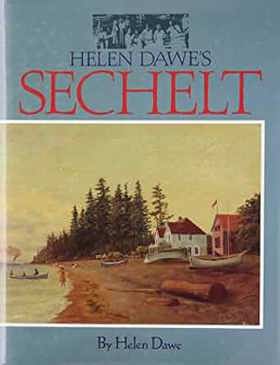
As we enter the 1990s, we mark the 100th anniversary of the decade which saw the establishment of a white settlement at Sechelt, British Columbia. The first of those settlers, Thomas John Cook, was the grandfather of Helen Dawe, who established for herself a reputation as the foremost chronicler of Sechelt history. Helen Dawe's Sechelt brings together her work on the founding and development of a community that has since become the hub of the Sunshine Coast. The book features a personal and anecdotal view of many of Secheit's founders, both white and Indian, and contains over 120 vintage photographs, taken from one of the most impressive private collections in the province. The result is much more than a local history. It is both a case study of how modem British Columbia was built, and a personal introduction to some of the people who were its builders. 150 pages : illustrations ; 29 cm CIRC [ 1 ]
|
1990 |
|
Skookum an Oregon pioneer family's history and lore by Shannon Applegate 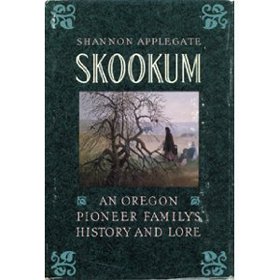
"'Skookum' is the startlingly original narrative rendering of the experiences of a prominent westering family from 1843 to the present. The remarkable story of the Applegate family encompasses many of the predominant themes of the early American West: the overland crossing via the old Oregon Tail in 1843, the quirky restlessness of Applegate men who, after reaching the 'promised land, ' permitted their travel- worn families to rest only for a while, the effects of the intermit- tent gold rushes that continued to upset family lifre long after 1849, the troubled relations between the settler and the Indian ... Shannon Applegate is interested not only in what happemned to her family, but in what it meant to them. How did it feel to be a mother witnessing the death of her child on the way to Oregon, or to be a settler's son watching his Indian friends and old playmates rounded up in the dead of winter and marched off to the reserves? What did it do to the course of a young woman's life when she learned that her father has scratched her name from the family Bible? What sort of world was it where an old blue sugar bowl filled with gold dust could be unconcernedly set out in plain sight?"--Paper dustcover 460 pages : illustrations, maps ; 24 cm CIRC [ 0 ]
|
1990 |
|
Aboriginal peoples and politics the Indian land question in British Columbia, 1849-1989 by Paul Tennant 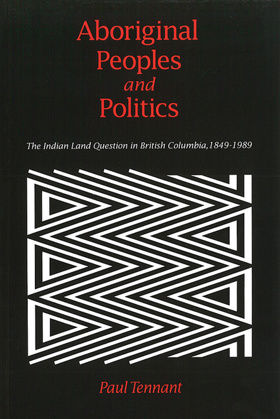
Aboriginal claims remain a controversial but little understood issue in contemporary Canada. British Columbia has been, and remains, the setting for the most intense and persistent demands by Native people, and also for the strongest and most consistent opposition to Native claims by governments and the non-aboriginal public. Land has been the essential question; the Indians have claimed continuing ownership while the province has steadfastly denied the possibility. This book presents the first comprehensive treatment of the land question in British Columbia and is the first to examine the modern political history of British Columbia Indians. It covers the land question from its very beginnings and gives detailed attention to the most recent court decisions, government policies, land claim developments, and Indian protest blockades. Providing a new interpretation of Governor James Douglas, Paul Tennant views him as less generous to the Indians than have most other historians and demonstrates how Douglas was largely responsible for the future course of the land question. In contrast to what many non-Indians are assuming, the Indians of British Columbia began their land claims at the start of white settlement and persevered despite the massive efforts of missionaries and government officials to suppress Indian culture and despite Parliament's outlawing of claim-related activities. The Indians emerge in this book as political innovators who maintained their identity and ideals and who today have more strength and unity than ever before. The author has conducted extensive interviews with many Indian leaders and has examined the inner workings of government agencies and Indian political organizations. While sympathetic to Native claims, he focuses as much on failures and deficiencies as on strengths and successes. xvi, 305 pages ; 24 cm CIRC [ 0 ]
|
1990 |
|
Ninstints, Haida world heritage site by George F. MacDonald 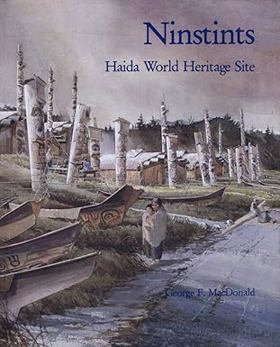
Ninstints, located on Anthony Island, one of the smallest and most southerly of the Queen Charlotte chain, contains the vestiges of the great wooden structures and houses of the Kunghit Haida people who abandoned the village in the late 1800s. George MacDonald combines archival material and scientific and photographic evidence to record what is known of the history of Ninstints and its people. Details are given of their houses, of their great chiefs, and finally of their exodus from Ninstints. 60 pages : illustrations (some color) ; 26 cm CIRC [ 0 ]
|
1990 |
|
A northwest rail pictorial II by Warren W. Wing 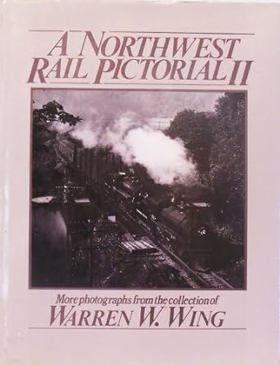
Handsomely done collection of black and white (and a very few color) photos showcasing the railways and streetcars of the Pacific Northwest. Includes vintage photos by James Turner as well as modern ones showing the end of steam and first generation of diesels, such as Northern Pacific Baldwins, Milwaukee Road Alcos, Great Northern F-units and Geeps from all the major roads. Includes rare construction photos showing the Milwaukee Road being built across the Snoqualmie Pass as well as Milwaukee Road steam, diesel and electric locomotives. There are logging railroads and shorelines and even glimpses of streetcars in Portland and Seattle. The Pacific Coast Railway, one of Mr. Wing's favorites, is covered in an expanded section highlighting its wooden trestles, small locomotives, waterfront facilities, and truss-rod rolling stock. 192 pages with index. 190 pages : chiefly illustrations ; 29 cm CIRC [ 1 ]
|
1991 |
|
Chief Seattle's unanswered challenge spoken on the wild forest threshold of the city that bears his name by John Martin Rich, Seattle 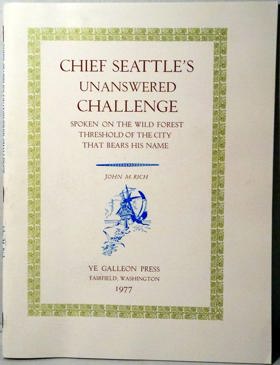
A fragment of Chief Seattle's speech, delivered at Seattle, Washington in the fall of 1854 in response to address of Hon. Isaac Stevens, commissioner of Indian affairs for Washington Territory, from the notes of Dr. Henry A. Smith; published in the Seattle Sunday Star on October 29, 1887: p. 32-42Listed in: The Washington 89 / by George H. Tweney 60 pages : illustrations ; 29 cm CIRC [ 1 ]
|
1991 |
|
In mountain shadows a history of Idaho by Carlos A. Schwantes 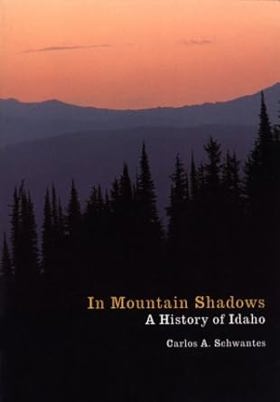
Idaho is now seen as one of the most intriguing and attractive states in the Union. Any view of the Gem State is likely to be broadened and deepened by this superbly written history of it, In Mountain Shadows. Carlos A. Schwantes illustrates the extent to which Idahoans have always been divided by geography, transportation patterns, religion, and history. Although the state motto should have been "Divided We Stand," as he says in affectionate jest, it is also true that Idahoans come together on some basics—on avoiding crowds and maintaining the good life close to scenic mountains and streams. Schwantes reaches back to 1805, when Lewis and Clark were among the first white men to enter present-day Idaho. He describes the Indians then living in the Great Basin and Plateau, and proceeds through layers of history to show how fur traders, missionaries, and overland emigrants defined the land that became a territory in 1863 and, finally, a state in 1890. The vigilantism, Indian wars, mining booms and busts, and an-imosity toward Mormons and Chinese immigrants that marked the territorial years gave way to more troubles in the early years of statehood: an economic downturn, industrial violence, political protest. The arrival of automobiles promised to end isolation, but the formidable terrain slowed the building of north-south highways, just as it had railroads. Nevertheless, future Idaho would be a product of engineering and witness the coming of irrigation systems and hydroelectric plants. Schwantes brings his history through the Great Depression, World War II, and the Cold War, noting everyday life, colorful personalities, political and economic cycles, raging controversies, and current trends. xii, 292 pages, 16 unnumbered pages of plates : illustrations (some color), maps, portraits ; 26 cm CIRC [ 1 ]
|
1991 |
|
Valley of the red hand a western historical novel by Lowell Thomas Clay 
Authored by Lowell Thomas Clay, Valley of the Red Hand is a sweeping western historical novel that plunges readers into the rugged, lawless frontier of the American West. The story follows hardened frontiersmen, desperate outlaws, and resilient settlers as they clash over disputed territory, valuable resources, and survival in an unforgiving landscape. Through vivid descriptive prose and fast-paced dramatic tension, the narrative captures the visceral danger and moral ambiguity of frontier expansion. A keen insight drawn from the work is how popular western fiction encodes historical anxiety; by framing territorial conquest through personal vendettas and blood feuds, the novel dramatizes the psychological toll of a violent nation-building process where justice was routinely forged outside the bounds of civilized law. 352 pages : illustrations ; 22 cm. CIRC [ 1 ]
|
1991 |
|
The voyage of Sutil and Mexicana, 1792 the last Spanish exploration of the northwest coast of America by John Kendrick, Dionisio Alcalá-Galiano, Cayetano Valdés Flores Bazán y Peón, Josef Espinosa y Tello, José Cordero 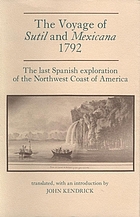
The Sutil and Mexicana sailed along the coast of the Pacific Northwest in 1792, their stated mission to put to rest the persistent rumors of the mythical strait connecting the Pacific and Atlantic in the neighborhood of the Strait of Juan de Fuca, the present-day border of Canada and the United States. This would be the last Spanish exploration along the Pacific Coast after 250 years of primacy in charting those waters 260 pages : illustrations, maps ; 25 cm. CIRC [ 1 ]
|
1991 |
|
Brief presence Spain's activity on America's northwest coast, 1774-1796 by Tomas Bartroli 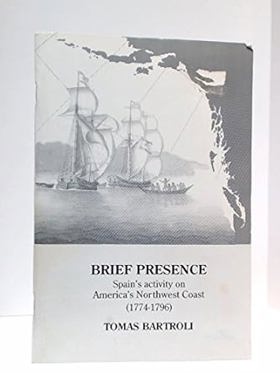
Authored by historian Tomás Bartroli, Brief Presence: Spain's Activity on America's Northwest Coast, 1774–1796 chronicles Spain's aggressive late-18th-century maritime expeditions and territorial assertions along the Pacific Northwest coast. The book details pioneering voyages led by explorers like Juan Pérez, Bruno de Heceta, and Salvador Fidalgo who mapped uncharted waters, established short-lived outposts like Fort San Miguel, and traded with Indigenous nations in a desperate bid to secure the region against British and Russian encroachment. Drawing heavily from Spanish naval archives and primary logs, the text illuminates the logistical hurdles and geopolitical anxieties that characterized Madrid's fleeting imperial footprint in the North Pacific. A keen insight drawn from the work is how imperial overextension doomed Spain's Pacific ambitions; by trying to police a vast, distant coastline with limited supply lines and sparse settlers, the Spanish crown ultimately transformed its maritime explorations into an expensive reconnaissance mission that inadvertently paved the way for British and American dominance. 62 pages : illustrations ; 22 cm CIRC [ 1 ]
|
1991 |
|
Otter skins, Boston ships, and China goods the maritime fur trade of the Northwest coast, 1785-1841 by James R. Gibson 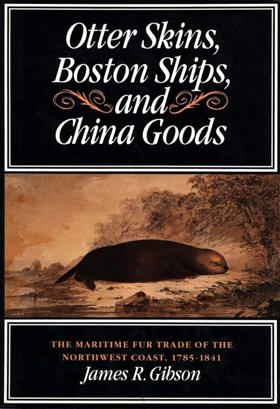
The first comprehensive account of the maritime fur trade on the Northwest Coast of North America. James Gibson's thoroughly researched and highly detailed study is the first comprehensive account of the maritime fur trade on the Northwest Coast of North America. Before Euro-American contact, the native peoples of the Northwest Coast had traded amongst themselves and with other indigenous people farther inland, but by the end of the 1780s, when Russian coasters had penetrated the Gulf of Alaska and British merchant ships were frequenting Nootka Sound, trade had become the dominant economic activity in the area.The Tlingit, Haida, Tsimshian, Nootka, Salish, and Chinook spent much of their time hunting fur-bearing animals and trading their pelts - especially the highly prized "black skins" of sea otters - to Russian, British, Spanish, and American traders for metals, firearms, textiles, and food. The Northwest Coast Indians used their newly acquired goods in intertribal trade, while the Euro-Americans traded their skins at Canton for tea, silk, and porcelain which they then sold in Europe and America. This traffic continued for more than half a century until, in the early 1840s, the Northwest trade declined significantly with depletion of the fur-bearing animals due to overhunting, depopulatlon of the Natives by disease and warfare, and depression of the market for furs.While previous studies have concentrated on the boom years of the fur trade, before the War of 1812, Gibson reveals that the maritime fur trade persisted into the 1840s and shows that the trade was not solely or even principally the domain of American traders. He gives an account of Russian, British, Spanish, and American participation, describes the market in South China, and outlines the evolution of the coast trade. He also assesses the physical and cultural effects of this trade on the Northwest Coast and Hawaiian Islands and on the industrialization of the New England states. Gibson's new interpretations derive from his use of Western primary sources that have been largely ignored by previous investigators; Russian-language sources not consulted by others; the records of the Russian-American, East India, and Hudson's Bay companies; the unpublished logs and journals of a number of American ships; and the business correspondence of several New England shipowners 1 online resource (xiii, 422 pages) : illustrations CIRC [ 1 ]
|
1991 |
|
Hood Canal--splendor at risk by Jeff Brody , Christopher Dunagan 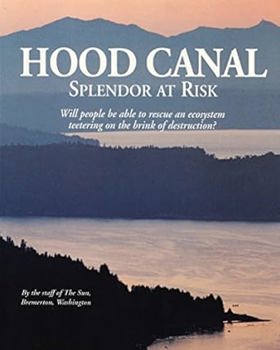
Will people be able to rescue an ecosystem teetering on the brink of destruction? -- front cover viii, 264 pages : illustrations ; 28 cm CIRC [ 1 ]
|
1991 |
|
A time of gathering native heritage in Washington State by Robin Kathleen Wright, Thomas Burke Memorial Washington State Museum 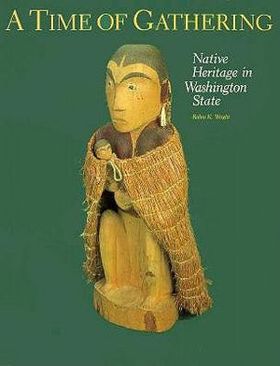
Published by the Burke Museum and edited by art historian Robin Kathleen Wright, A Time of Gathering: Native Heritage in Washington State serves as a profound celebration and catalog of Indigenous art, culture, and enduring sovereignty across the Pacific Northwest. The volume brings together tribal elders, artists, and scholars to document centuries of rich material culture, including intricate basketry, carved wooden regalia, and contemporary artistic expressions that defy historical erasure. Through stunning photographic plates and deeply contextual essays, the text emphasizes that Native communities are not relics of a static past, but dynamic, living cultures actively revitalizing their ancestral traditions. A keen insight drawn from the work is how museum archives can be radically decolonized through collaborative curation; by returning interpretive authority to the descendant communities who created these sacred objects, the publication transforms a traditional anthropological collection into a powerful instrument of indigenous self-determination. 280 pages : illustrations (some color), maps, portraits ; 29 cm CIRC [ 1 ]
|
1991 |
|
Whitewater mailmen the story of the Rogue River mail boats by Gary Meier, Gloria Meier 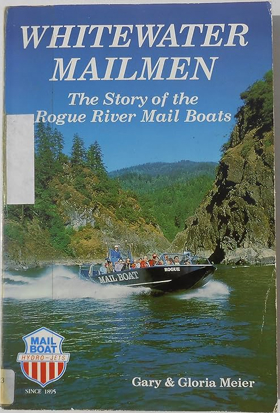
Authored by regional historians Gary Meier and Gloria Meier, Whitewater Mailmen: The Story of the Rogue River Mail Boats chronicles the perilous and essential maritime service that kept Oregon's remote canyon settlements connected to the outside world. The book details the history of the daring pilots who navigated the treacherous rapids, submerged boulders, and churning white water of the lower Rogue River to deliver mail, supplies, and passengers to isolated homesteaders. Drawing on archival photographs and firsthand interviews, the text captures the mechanical evolution from wooden skiffs to specialized jet boats that conquered an unforgiving aquatic highway. A keen insight drawn from the work is how postal delivery infrastructure served as the true lifeblood of geographic integration in the American West; by transforming a dangerous wilderness river into a dependable federal mail route, these boatmen proved that modern state control and community survival in the rugged backcountry depended entirely on mastering wild, untamed waters. xii, [187] pages : illustrations ; 23 cm CIRC [ 1 ]
|
1991 |
|
Northwest bastion the U.S. Army barracks at Vancouver, 1849-1916 by Ted Van Arsdol, Heritage Trust of Clark County (Wash) 
The U.S. Army, obeying the command, arrived May 13, 1849, to establish a military presence north of the Columbia River. The Hudson's Bay Co. moved from the Bastion to Victoria on Vancouver Island and slowly sold or abandoned its holding below the 49th parallel. A new chapter began in American history that year, as the bugle call was heard up and down the Columbia River. The United States extended from "sea to shining sea" and the country began to develop fully its economic, social, and cultural identity. Ch. 1 speaks of the Ninth Regiment stationed at Fort Vancouver and the famous Shanghai drill that was performed daily. The Indian Frontier (1849-1860) is the title of the first chapter. Ch. 2 talks of Volunteers Take Over (1861-1866) because the Civil War was beginning, and an early effect of that war was the removal of most regular Army units. Trained soldiers were required in the East. Some officers resigned and joined the Confede rates. This era at the fort was called the volunteer era. They had to let go of men like Sheridan, Augur, an Ingalls, and a Grant. Ch. 3 is about Pacifying The Natives (1867-1882) and the worry for Indian Tribes in the area. The troops at Vancouver were called out to curb tribes in the surrounding area. By 1882 the last Indian war of the Pacific NW was fought, and transition was under way into a different era. Ch. 4 speaks of Marking Time (1883-1898) because during this time the life of the fort was a round of dinner parties, dances, and theatricals. Ch. 5 is all about preparing troops for overseas duty, hence, Troops For Overseas (1898-1906). They were going "to the front" - artillery troops were leaving for Cuba from Vancouver. And later for the Philippines. Ch. 6 is called, Heading to Armageddon (1907-1916). Germany was exercising an expanding role in Europe at this time. Initially there were no big concerns about building up armed forces. 7 yrs. later this all changed. xii, 110 pages : illustrations, facsimiles, map ; 22 x 28 cm CIRC [ 1 ]
|
1991 |
|
Vancouver's Chinatown racial discourse in Canada, 1875-1980 by Kay Anderson 
Popular wisdom maintains that the colourful Chinese quarters of Canadian, American, and Australian cities owe their existence to the generations of Chinese immigrants who have made their lives there. The restaurants, pagodas, and neon lights are seen as intrinsically connected to the Chinese and their immigrant experience in the West. Kay Anderson argues, however, that "Chinatown" is a Western construction, illustrative of a process of cultural domination that gave European settlers in North America and Australia the power to define and shape the district according to their own images and interests. -- From publisher's description x, 323 pages : illustrations, maps ; 24 cm CIRC [ 1 ]
|
1991 |
|
Land of destiny the golden age of British Columbia by Charles Lillard, Michael Gregson 
Co-authored by Charles Lillard and Michael Gregson, Land of Destiny: The Golden Age of British Columbia captures the vibrant, optimistic, and often turbulent era of early 20th-century development in Canada's westernmost province. The book chronicles an age of rapid railway expansion, booming resource extraction, and ambitious town-building that promised to transform the Pacific wilderness into an economic empire. Through rich historical anecdotes, vintage photographs, and archival documents, the authors reconstruct a time when pioneers and speculators viewed the landscape as an unexhausted horizon of boundless wealth. A keen insight drawn from the work is how the cultural obsession with a "golden age" relied on willful blindness toward ecological and human costs; by framing aggressive resource exploitation as a heroic destiny, society masked the rapid depletion of local forests and fisheries behind a glittering facade of unstoppable progress. 162 pages : illustrations ; 23 x 28 cm CIRC [ 0 ]
|
1991 |