Catalog of British Columbiana and Pacific Northwest Americana
The Encyclopedia Cascadia Catalog indexes mostly non-fiction literature covering the Pacific Northwest coast of North America, with an emphasis on British Columbia, Idaho, Oregon, and Washington State.
| Catalog Title | Published |
|---|---|
|
To Tacoma by trolley the Puget Sound Electric Railway by Warren W. Wing 
Wonderful history of the Puget Sound Electric Railway, part of Stone & Webster's empire of west coast interurbans. With beautiful black and white photos on almost every page plus 8 pages in color. Includes 200 photos, maps and complete equipment roster. 144 pages. 144 pages : illustrations (some color), maps ; 29 cm Non-circulating [ 1 ]
|
1995 |
|
Just east of sundown the Queen Charlotte Islands by Charles Lillard 
"The Queen Charlotte Islands have always been a half-legendary land of mists and mystery, set off and seemingly different from the rest of the coast. Human occuption goes back some 9,000 years, with intriguing hints of a people there before the Haida. Although the islands were "discovered" by Juan Perez, a Spaniard, in 1774, records indicate that voyagers from Asia had arrived much earlier. This is a story of people - Edenshaw, Weah, Davidson, Dawson, Collison and others - from Haida chiefs and carvers to European explorers and settlers xii, 180 pages : illustrations, map ; 22 cm Non-circulating [ 1 ]
|
1995 |
|
Magic islands a treasure-trove of San Juan Islands lore by David Richardson 
Since its first appearance in 1964 this delightful little book on the magic San Juan Islands has gone through several editions and numerous reprintings to become a real classic. Newly revised and up-to-date for today's generation of readers, this affectionate survey of the San Juans - replete with the legends and romance that make the Islands such a special place - is still the very best book of its kind. Magic Islands will add to the fun of every visitor and island-dweller. It contains descriptions of the San Juan as they are today, adds a bit of the Islands' history for flavor and hazards a peek at what the future may hold for this special place many call "paradise." 95 pages : illustrations, map ; 22 cm Non-circulating [ 1 ]
|
1995 |
|
The land that slept late the Olympic Mountains in legend and history by Robert L. Wood 
As stated, "When the first group of pioneers explored the rugged Olympic mountain range during the harsh winter of 1889, they encountered both breathtaking beauty and cruel acts of nature. In subsesuent years, numeruous expeditions followed, and with the gripping tales of these trailblazers, collected here for the first time". This book includes never-before published historical photos and features detailed maps of explorers' routes. 175 pages : illustrations, maps ; 16 x 23 cm Non-circulating [ 1 ]
|
1995 |
|
Rogue River War speech of Dr. A.G. Henry, of Yamhill, delivered before the citizens of Corvallis, on the evening of Dec. 3d, 1855 by Anson G. Henry 
Delivered by pioneer physician and politician Anson G. Henry, Rogue River War Speech captures a fiery public address given in Corvallis, Oregon, in December 1855 to rally support for military action against Indigenous tribes during the height of the Rogue River Wars. The speech plays upon frontier anxieties, detailing alleged atrocities and framing the violent subjugation of local native populations as an urgent, righteous defense of American settlers. Through contemporary rhetorical appeals, the text preserves the raw, unmasked political panic and racial animosity that drove territorial policy during the Pacific Northwest's Indian wars. A keen insight drawn from the work is how wartime rhetoric deliberately inverted the roles of aggressor and victim; by casting preemptive military campaigns of displacement as defensive humanitarian rescue missions, pro-war leaders successfully mobilized civilian volunteers and legitimized state-sanctioned violence under the banner of civic protection. 41 pages : illustrations ; 19 cm Non-circulating [ 1 ]
|
1995 |
|
The story of Eugene by Lucia W. Moore, Nina W. McCornack, Gladys W. McCready 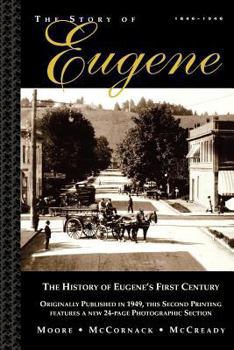
Authored by Lucia W. Moore, Nina W. McCornack, and Gladys W. McCready, The Story of Eugene chronicles the founding and growth of Oregon’s third-largest city from its humble beginnings as a remote Willamette Valley settlement in the mid-19th century. The book draws on pioneer diaries, local records, and oral histories to trace the community's evolution from a muddy river crossing named after Eugene Skinner into a bustling agricultural and educational hub anchored by the University of Oregon. Through its detailed civic narrative, the text highlights the entrepreneurial drive and social institutions that transformed a fragile frontier outpost into a thriving urban center. A keen insight drawn from the work is how the intentional integration of higher education served as a vital urban survival strategy; by aggressively lobbying to secure the state university, early town leaders successfully insulated Eugene from the boom-and-bust cycles of purely resource-dependent timber and rail economies, cementing the city's long-term cultural and economic resilience. 277 pages : illustrations ; 23 cm Non-circulating [ 1 ]
|
1995 |
|
The Great Columbia Plain a historical geography, 1805-1910 by D. W. Meinig 
Dismissed in early years as a wasteland, the rolling open country that covers the interior parts of Washington, Oregon, and Idaho is today one of the richest farmlands in the nation. This work is the story of its transformation. Meinig traces all of the aspects of its development by combining geographic description with historical narrative xxiv, 576 pages, [1] folded leaf : illustrations, maps ; 24 cm. Non-circulating [ 1 ]
|
1995 |
|
The Great North Road and other stories by Ann Briley 
Authored by Pacific Northwest writer Ann Briley, The Great North Road and Other Stories presents a evocative collection of regional fiction exploring the emotional landscapes and quiet struggles of individuals living along the rugged northern fringes of Washington State. The book weaves together poignant narratives of isolation, family dynamics, and community ties against the backdrop of dense evergreen forests, misty coastlines, and remote rural highways. Through sensitive character studies, the text captures the nuanced human experiences that unfold far away from bustling urban centers. A keen insight drawn from the work is how geographical isolation acts as a magnifying glass for personal conflict; by setting her character-driven dramas along quiet frontier routes where escape is physically difficult, Briley reveals how regional remoteness forces individuals to confront their deepest emotional truths rather than outrun them. 182 pages : illustrations ; 24 cm Non-circulating [ 1 ]
|
1995 |
|
Darrington, mining town/timber town by Elizabeth S. Poehlman 
The cast of characters in Elizabeth Poehlman’s book, Darrington: Mining Town/Timber Town reads like a Wild West novel set in Paul Bunyan country. But this is no novel – Poehlman has written a memorable small-town history. The book starts in the late 1800s with the struggles of Chief Wawetkin and the Sauk-Suiattle Indians to deal with the onset of miners and settlers throughout their homelands deep in what would soon be renamed the North Cascades mountains in the new state of Washington. Subsequent chapters feature gold-fevered miners (and a revenge murder); a hotel owner who asked to be deputized for a half hour to deal with a knife-wielding drunk the sheriff couldn’t handle; the town doctor who kept a bear cub as a pet; the “sky pilot” minister who was too scared to preach in the rough railroad logging camps, opting to show slides instead; the Tarheels who followed the timber industry from North Carolina and brought their love of bluegrass and moonshine; the Depression-era housewife who distrusted banks and stashed her family’s savings around her waist in a hidden money belt – enough to almost pay off their land and house. Darrington, as Poehlman learned while living there, may be backwoods, but never boring. 176 pages : illustrations ; 21 cm Non-circulating [ 1 ]
|
1995 |
|
There is only one Enumclaw pioneer history and early years by Louise Ross Poppleton 
Authored by local historian Louise Ross Poppleton, There Is Only One Enumclaw: Pioneer History and Early Years chronicles the establishment and agricultural development of the plateau community nestled beneath Mount Rainier in western Washington. The book draws on early homestead records, family journals, and vintage photographs to trace how rugged pioneers cleared dense timberlands to build dairy farms and small-town institutions at the gateway to the Cascades. Through these localized archives, the text preserves the grit and mutual dependence required to tame a damp, heavily forested frontier. A keen insight drawn from the work is how geographical positioning at the foot of a major mountain pass shaped the town's unique identity; by acting as the mandatory staging ground for travelers and resource extraction moving into the high country, Enumclaw forged an enduring commercial resilience rooted entirely in its role as a transitional hub between wilderness and civilization. v, 123 pages : illustrations, maps ; 28 cm Non-circulating [ 1 ]
|
1995 |
|
Wapato heritage the history of the Chelan and Entiat Indians by Tom Hackenmiller 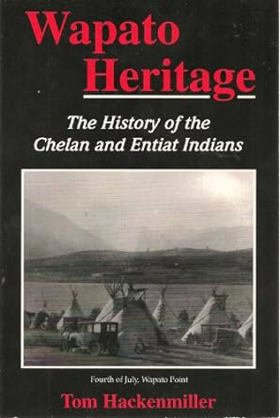
Authored by historian Tom Hackenmiller, Wapato Heritage: The History of the Chelan and Entiat Indians documents the traditional lifeways, displacement, and survival of Indigenous bands native to the dramatic river valleys and lake shores of north-central Washington. The book draws on oral histories, government documents, and ethnographic records to trace how native communities harvested abundant wapato roots and salmon runs before facing rapid encroachment by Euro-American miners, orchardists, and homesteaders. Through these documented accounts, the text chronicles the severe pressures of forced reservation confinement and the systematic erasure of native geography along the Columbia River watershed. A keen insight drawn from the work is how botanical and food-gathering sites served as the true geopolitical anchors of Indigenous sovereignty; by documenting how the loss of specific seasonal root-digging grounds like wapato beds dismantled native self-sufficiency far more effectively than military defeat, the book reveals that colonial land dispossession was fundamentally an assault on a people's nutritional and ecological autonomy. 187 pages : illustrations, maps ; 23 cm Non-circulating [ 1 ]
|
1995 |
|
Rufus Woods, the Columbia River & the building of modern Washington by Robert E. Ficken 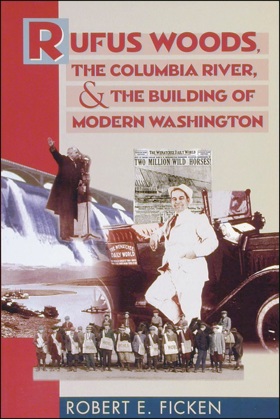
Rufus Woods, for more than forty years the publisher of the Wenatchee Daily World, has often been called the "High Priest of the Columbia River." No person deserves the title more. From the editorial platform of the World, Woods tirelessly promoted Wenatchee and north central Washington. For decades he pegged his brightest hopes for the region's future on a huge Columbia River dam in the isolated Grand Coulee region. From 1918 through Grand Coulee's completion in 1941, Woods enthusiastically promoted the largest dam-building project in American history xvi, 312 pages, 16 unnumbered pages of plates : illustrations, map portraits ; 24 cm Non-circulating [ 1 ]
|
1995 |
|
Guide to Northeast Oregon by Robert H. Dreisbach 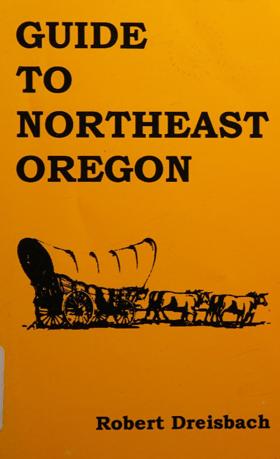
Authored by regional writer Robert H. Dreisbach, Guide to Northeast Oregon provides a comprehensive travel companion and historical handbook exploring the rugged canyons, high desert plateaus, and forgotten mining towns of Oregon's Blue Mountains and Wallowa country. The book details backroad itineraries, local geological anomalies, and the fascinating remnants of frontier settlement scattered across the state's most isolated eastern terrain. Through precise route descriptions and historical context, the text encourages travelers to look past the damp Willamette Valley to discover a radically different, arid landscape defined by deep gorges and pioneer grit. A keen insight drawn from the work is how regional geography directly dictates historical consciousness; by guiding modern explorers through a landscape shaped by ancient basalt flows and grueling wagon trails, the book illustrates how northeastern Oregon's vast, unforgiving topography has preserved a sense of frontier time that more densely populated urban centers have long since paved over. 156 pages ; 22 cm Non-circulating [ 1 ]
|
1995 |
|
The pioneers of Lake View a guide to Seattle's early settlers and their cemetery by Robert L. Ferguson 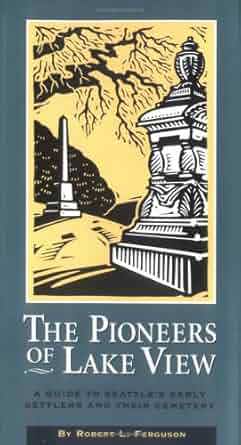
Authored by regional historian Robert L. Ferguson, The Pioneers of Lake View: A Guide to Seattle's Early Founders and Their Cemetery provides a compelling biographical and historical tour of Lake View Cemetery, the final resting place for many of the Emerald City's most prominent 19th-century figures. The book connects the physical monuments and headstones to the turbulent lives of the lumber barons, politicians, and ordinary settlers who laid the foundational infrastructure of frontier Seattle. Through meticulous research into pioneer genealogies, the text unearths the personal triumphs and tragedies hidden beneath manicured urban turf. A keen insight drawn from the work is how historic urban cemeteries function as subterranean archives of class stratification and civic myth-making; by examining who was granted prominent burial plots versus who was relegated to unmarked ground, the book reveals how city founders carefully engineered their own posthumous legacies to sanitize the brutal corporate ruthlessness of early Pacific Northwest capitalism. 119 pages : illustrations ; 20 cm Non-circulating [ 1 ]
|
1995 |
|
A municipal mother Portland's Lola Greene Baldwin, America's first policewoman by Gloria E. Myers 
On April 1, 1908, Lola G. Baldwin, aged forty-eight, was sworn in "to perform Police Service" for the city of Portland, Oregon. She was the first woman hired by an American municipality to carry out regular enforcement duties. In telling Lola Baldwin's story, Gloria Myers examines the social and cultural impulses that gave rise to the policewoman idea. The Progressive Era redefined the role of women in society; Baldwin's career benefited from the Progressive belief that women could ameliorate urban evil as they had earlier civilized the household. The need for the urban policewoman arose out of concern for the moral and physical welfare of families, single working women, and children living in the cities. Supported by socially active women's organizations and informed by the ideals of "social hygiene," the first policewoman led a crusade against urban vice, deviance, and corruption in the Rose City. Preventive policing strategies developed by "municipal mothers" like Baldwin aid and influence policing policies to this day viii, 232 pages : illustrations ; 24 cm Desiderata
|
1995 |
|
Fool's hill a kid's life in an Oregon coastal town by John Quick 
Port Orford, Oregon, in the 1930s and 40's. Here a curious, blabbermouth boy learns more at the bottom of a ditch than in kindergarten and finds real home in a booth at Red's Bar holding hands with Dorothy, who he is never supposed to talk to. With a little help from his friends, young Johnny learns about life and death and sex and Indians. And, with his help, we remember what it is to be a kid viii, 304 pages : illustrations ; 24 cm Desiderata
|
1995 |
|
Cohassett Beach chronicles World War II in the Pacific Northwest by Kathy Hogan, Klancy Clark De Nevers, Lucy Hart 
In 1940, the Grays Harbor Post in Aberdeen, Washington, introduced its readers to "The Kitchen Critic," a new column chronicling life in nearby Cohassett Beach. Within a year the U.S. was at war, and columnist Kathy Hogan's weekly dispatches turned to soldiers, rationing, and the barbed wire that lined the sand dunes around her weathered cottage. 50 years later, Kathy Hogan's writings provide a window onto how one Pacific Northwest community responded to World War II. Cohassett Beach Chronicles, a collection of Hogan's columns from the war years, offers a remarkable social history of the war at home. The attack on Pearl Harbor brought U.S. troops to Cohassett Beach and to towns up and down the West Coast. With wit and perception, Hogan writes of civilians valiantly coping with this friendly occupation and wartime scarcity. Her neighbors — loggers, commercial fishermen, Finnish cranberry farmers — learn to live with blackouts, blimps, and a ban on beachcombing. Hogan's weekly descriptions of life on the home front capture America's wartime mood. Together, her columns document the war's tremendous impact at home, from the internment of Japanese Americans and the spread of government regulations to the changing role of women. They also reveal that in spite of the war effort life, in many ways, continued as it always had. There was still time to pick blackberries, gossip at the local tavern, and attend the occasional Friday night dance. As children, the editors spent summers in the Cohassett Beach cottages that still, in the late 1940s, bore scars of the Army's occupation. xxx, 290 pages : illustrations, maps ; 27 cm Desiderata
|
1995 |
|
The politics of righteousness Idaho Christian patriotism by James A. Aho 
From their home bases in Idaho and neighboring areas of the Northwest, organizations such as the Order, the Aryan Nations Church, the Posse Comitatus, and the Golden Mean Society have drawn national attention and spread the gospel of a “constitutionally pure, Christian homeland.” For the reader who knows these groups only from a selection of inflammatory quotes and violent deeds, this compelling work presents the first disciplined exploration of the backgrounds and belief systems of the Christian patriot movement. Using information gathered from interviews and direct observation of patriot gatherings, Aho replaces the stereotype of solitary crazies from the fringes of society with more complex and disturbing realities. x, 323 pages : illustrations ; 25 cm Desiderata
|
1995 |
|
Rites of passage a memoir of the sixties in Seattle by Walt Crowley 
On a hot summer night in 1963, a teenager named Walt Crowley hopped off a bus in Seattle’s University District, and began his own personal journey through the 1960s. Four years later at age 19, he was installed as “rapidograph in residence” at the Helix, the region’s leading underground newspaper. His cartoons, cover art, and political essays helped define his generation’s experience during that tumultuous decade. Rites of Passage: A Memoir of the Sixties in Seattle weaves Crowley’s personal experience with the strands of international, intellectual, and political history that shaped the decade. As both a member and in-house critic of the New Left and counter-culture, the author offers a unique perspective in explaining why the experiments and excess of the period “made sense at the time.” Anti-war marches, human be-ins, rock festivals, psychedelic drugs, underground newspapers, free universities, light shows, inner-city riots, radical skirmishes, and hippie antics are chronicled with personal anecdotes, contemporary accounts, and historical insights. In the pages of Rites of Passage, the reader will encounter Black (and White) Panthers, the Seattle and Chicago Seven, Weathermen and Radical Women, and many more remarkable characters. As an engaging blend of history and personal reminiscence, Rites of Passage places the sixties in a context unavailable to its participants at the time. In addition to his text, Crowley has assembled a chronology of the decade beginning with its harbingers in the forties and fifties and continuing through its aftermath. This compilation covers political, social, and cultural events, and provides the most complete synopsis of sixties history now in print. xiv, 351 pages : illustrations ; 25 cm Desiderata
|
1995 |
|
Reptiles of Washington and Oregon by Herbert A. Brown, Robert M. Storm, William P. Leonard, Seattle Audubon Society 
"A guide to turtles, lizards, and snakes. Each species entry includes: description, distribution, ranges, habits, comparison to similar species, and remarks regarding the uniqueness of the species. Also the only field guide to cover all marine and freshwater turtles in the region" --back cover viii, 176 pages : illustrations (chiefly color), maps ; 22 cm. Desiderata
|
1995 |
|
Forest dreams, forest nightmares the paradox of old growth in the Inland West by Nancy Langston 
Across the inland West, forests that once seemed like paradise have turned into an ecological nightmare. Fires, insect epidemics, and disease now threaten millions of acres of once-bountiful forests. Yet no one can agree what went wrong. Was it too much management—or not enough—that forced the forests of the inland West to the verge of collapse? Is the solution more logging, or no logging at all? In this gripping work of scientific and historical detection, Nancy Langston unravels the disturbing history of what went wrong with the western forests, despite the best intentions of those involved. Focusing on the Blue Mountains of northeastern Oregon and southeastern Washington, she explores how the complex landscapes that so impressed settlers in the nineteenth century became an ecological disaster in the late twentieth. Federal foresters, intent on using their scientific training to stop exploitation and waste, suppressed light fires in the ponderosa pinelands. Hoping to save the forests, they could not foresee that their policies would instead destroy what they loved. When light fires were kept out, a series of ecological changes began. Firs grew thickly in forests once dominated by ponderosa pines, and when droughts hit, those firs succumbed to insects, diseases, and eventually catastrophic fires. Nancy Langston combines remarkable skills as both scientist and writer of history to tell this story. Her ability to understand and bring to life the complex biological processes of the forest is matched by her grasp of the human forces at work—from Indians, white settlers, missionaries, fur trappers, cattle ranchers, sheep herders, and railroad builders to timber industry and federal forestry managers. The book will be of interest to a wide audience of environmentalists, historians, ecologists, foresters, ranchers, and loggers—and all people who want to understand the changing lands of the West. xii, 368 pages : illustrations, maps ; 25 cm. Desiderata
|
1995 |
|
Sm'algyax a reference dictionary and grammar for the Coast Tsimshian language by John Asher Dunn 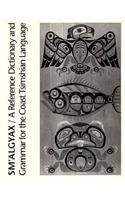
In the mid-1970s, Sm’algyax, the language of the Coast Tsimshian people, came under the protection of Canada’s Urgent Ethnology Programme, which commissioned a dictionary by linguist John Dunn. With the help of many Tsimshian consultants, Dunn completed the dictionary in 1978 and the first written grammar of the language in 1979. The dictionary quickly became the spelling authority for teachers, and together with the grammar has established a standard writing system for Sm’algyax that is in use throughout Alaska and British Columbia. This 1995 publication, with a new preface and revisions by John Dunn, brings these two classic works back into print in a single volume. part I-- “A Practical Dictionary of the Coast Tsimshian Language”--includes for each word a transcription, morphological information, English glosses, and phonetic transcriptions showing local variants of the entry. Part II-- “A Reverence Grammar for the Coast Tsimshian Language”-- is a nontechnical introduction to phonology, morphology, and syntax. It includes summaries showing the basic sentence types and their grammatical relationships. The new one-volume format of the dictionary and grammar will facilitate their use by teachers, students, and the Tsimshian community for years to come. xii, x, 145, xiii, 79 pages ; 28 cm Desiderata
|
1995 |
|
Salmon Arm's historic routes and the people behind the names by Denis Marshall
Denis Marshall’s toponymic study, Salmon Arm’s Historic Routes and the People Behind the Names, details the spatial distribution, evolution, and biographical origins of named trails, wagon routes, and surveyed corridors across Salmon Arm, Canoe, South Canoe, and Silver Creek. Marshall documents how nineteenth- and twentieth-century colonial road systems—often memorializing pioneer pre-emptors, orchardists, and civic officials—were mapped directly across ancient Indigenous trail networks and seasonal portages navigated by the Secwépemc. The text traces the development of early transit links prior to the adoption of a standardized municipal numbered grid system, preserving the vital geographic history of early homestead routes and valley settlement corridors. 72 pages : illustrations, maps ; 28 cm Desiderata
|
1995 |
|
Trails to gold roadhouses of the Cariboo by Branwen C. Patenaude
Branwen C. Patenaude’s Trails to Gold: Roadhouses of the Cariboo provides an exhaustive spatial and architectural study of the numbered mileposts, stagecoach stations, and agricultural roadhouses that anchored the Cariboo Wagon Road. Patenaude traces how early freighting routes and colonial supply networks were superimposed directly over ancient Indigenous footpaths and fishing trails used by the Secwépemc and St'át'imc peoples along the Fraser River canyon and interior plateau. The work systematically documents each vital waypoint along the historic route—including 93 Mile, 100 Mile House, 105 Mile House, 108 Mile Ranch, 111 Mile House, 114 Mile House, 122 Mile House, 127 Mile House, 141 Mile House, and 150 Mile House—chronicling how early roadhouse proprietors managed freight barns, stagecoach relays, and blacksmith shops to supply thousands of prospectors bound for the northern goldfields. Through archival photographs, route maps, and settler family records, the narrative illustrates how these roadside waypoints fostered permanent agrarian enclaves and livestock operations around Lac la Hache and Soda Creek. 2 volumes : illustrations, maps, portraits ; 23 cm Desiderata
|
1995 |
|
Too good to be true the story of the Gang Ranch by Bev Christensen
Bev Christensen’s Too Good to Be True: The Story of the Gang Ranch provides an extensive corporate and social history of the iconic Gang Ranch, one of the largest and most legendary cattle operations in North America. Christensen details how the ranch was founded in the 1860s by the Harper brothers along the dramatic river breaks where the Chilcotin and Fraser rivers converge, expanding across hundreds of thousands of acres of deeded and leased rangeland traditionally stewarded by the Secwépemc and Tsilhqot'in. The work chronicles the management regimes, international financial ownerships, and grueling cowboy logistics required to run massive cattle herds across the rugged benchlands of Dog Creek, Empire Valley, Alkali Lake, and Big Creek. Christensen captures both the romanticized lore and the complex financial cycles that shaped this massive pastoral empire across more than a century of interior ranching. 240 pages : illustrations, maps, portraits ; 23 cm Desiderata
|
1995 |