Catalog of British Columbiana and Pacific Northwest Americana
Encyclopedia Cascadia Catalog contains book titles of mostly non-fiction Pacific Northwest Coast of North America Titles (primarially British Columbia, Idaho, Oregon and Washington State) in an easy-to-understand title catalog. If you see a link with this badge ONLINE CIRC it means that there is an online institution that provides free access to that title. In some cases there may be more than one institution hosting the title digitally.
| Catalog Title | Published |
|---|---|
|
Modernism in the Pacific Northwest the mythic and the mystical : masterworks from the Seattle Art Museum by Seattle Art Museum (Issuing body), Patricia A. Junker 
"Few regions of the country produced such a distinctive group of artists with such a particular view on the modern world as did the Pacific Northwest in the 1930s and 1940s. Capitalizing on their particular geographical position at what was a modern art outpost--working free from the strong influences of New York and Europe, and sitting at the portal to the Far East--a close-knit group of artists sought to address the global political, social, and economic ills of their time. The seminal figures in this group--Mark Tobey and Morris Graves especially--quickly garnered critical attention in New York for their uncommon imagery and expressive technique, which drew upon spiritual tenents ranging from Zen Buddhism to the Persian Bahai faith and their mastery of Asian calligraphy. Modernism in the Pacific Northwest presents an overview drawn from SAM's unparalleled collection of the key figures of this generation: painters Mark Tobey, Morris Graves, Guy Anderson, Kenneth Callahan, Leo Kenney, Paul Horiuchi, and George Tsutakawa, and sculptors Phil McCracken and James Washington. Patricia Junker is the Ann M. Barwick Curator of American Art at the Seattle Art Museum and is the author of Albert Bierstadt and Edward Hopper"-- Provided by publisher ix, 102 pages : illustrations ; 32 cm CIRC [ 0 ]
|
2014 |
|
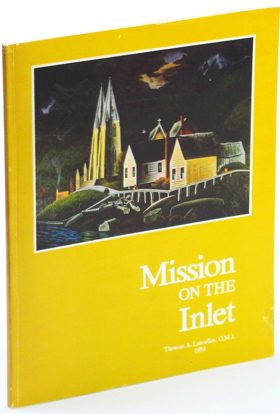
Mission on the Inlet St. Paul's Indian Catholic Church, North Vancouver, B.C., 1863-1984 by Thomas A. Lascelles, Oblates of Mary Immaculate St Paul's Vice Province
|
1984 |
|
Mining engineers and the American West the lace-boot brigade, 1849-1933 by Clark C. Spence 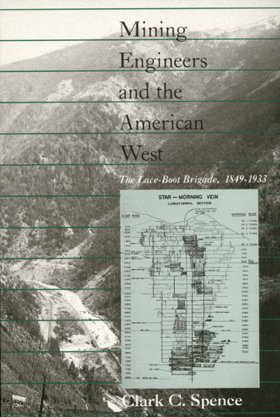
Even though they were key figures in the development of western mining, mining engineers have received little attention until publication of Dr. Clark Spence's volume. At once a technological and social history, Dr. Spence examines the professional mining engineer in terms of his education, lifestyle, actual work, and impact on the environment beyond the Mississippi. xii, 407 pages : illustrations, maps ; 23 cm CIRC [ 0 ]
|
1993 |
|
Minidoka an American concentration camp by Teresa Tamura 
On February 19, 1942, President Franklin D. Roosevelt signed Executive Order 9066, authorizing U.S. Armed Forces to remove citizens and noncitizens from “military areas.” The result was the abrupt dislocation and imprisonment of 120,000 Japanese and Japanese American citizens in the western United States. In Minidoka: An American Concentration Camp, Teresa Tamura documents one of ten such camps, the Minidoka War Relocation Center in Jerome County, Idaho. Her documentation includes artifacts made in the camp as well as the story of its survivors, uprooted from their homes in Alaska, Washington, Oregon, and California. The essays are supplemented by 180 black-and-white photographs and interviews that fuse present and past. Tamura began her project after President Bill Clinton designated part of the Minidoka site as the 385th unit of the National Park Service. Her work furthers the tradition of socially inspired documentary photojournalism, illuminating the cultural, sociological, and political significance of Minidoka. Ultimately, her book reminds us of what happens when fear, hysteria, and racial prejudice subvert human rights and shatter human lives. vii, 305 pages : illustrations ; 23 x 28 cm CIRC [ 0 ]
|
2013 |
|
Millican memories by Jo Smith Southworth
|
1977 |
|
Mill town footlights the theaters of Everett, Washington by David Dilgard, Everett Public Library 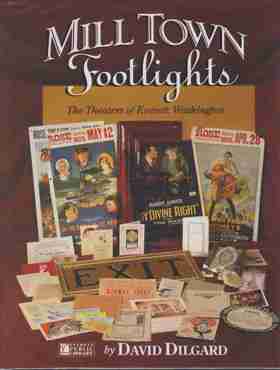
Published in local editions by historian David Dilgard and the Everett Public Library, Mill Town Footlights: The Theaters of Everett, Washington chronicles the vibrant, bustling entertainment history of a booming turn-of-the-century industrial city. The book details the rise and fall of Everett’s historic playhouses, vaudeville houses, and nickelodeons, illustrating how cultural institutions thrived amidst the grit, smoke, and labor strife of a quintessential Pacific Northwest mill town. Drawing on rich archival photographs and local ephemera, the text traces how early residents sought out sophisticated theatrical escapism as a vital counterbalance to grueling industrial labor. A keen insight drawn from the work is how the rapid emergence of high-culture entertainment in an isolated timber hub demonstrates that rough-edged frontier economies were deeply hungry for civic refinement, using the performing arts to rapidly project an image of metropolitan permanence and respectability onto a raw landscape iv, 116 pages : illustrations ; 29 cm CIRC [ 0 ]
|
2001 |
|
Mill town a social history of Everett, Washington, from its earliest beginnings on the shores of Puget Sound to the tragic and infamous event known as the Everett Massacre by Norman H. Clark 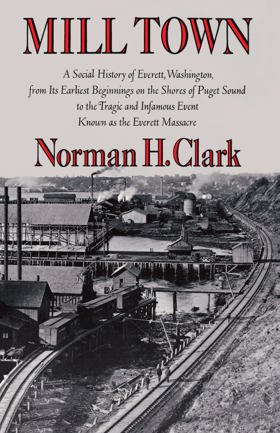
A social history of Everett, Washington, from its earliest beginnings to the tragic and infamous event on November 5, 1916, which came to be known as the Everett Massacre viii, 267 pages, 12 unnumbered pages of plates : illustrations ; 21 cm CIRC [ 1 ]
|
1970 |
|
|
1958 |
|
Milestones on the mighty Fraser by C. P. Lyons
|
1958 |
|
Mexicanos in Oregon their stories, their lives by Erlinda Gonzales-Berry, Marcela Mendoza 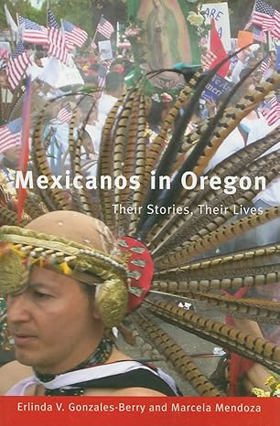
This important volume sheds new light on the stories and lives of mexicanos in Oregon: why migrants come to Oregon fields, construction sites, and warehouses; what their experiences are when they settle here; and how they adapt to life in the United States. Building on the work of earlier scholars and providing new and original research, Gonzales-Berry and Mendoza draw from the disciplines of history, anthropology, sociology, and gender and cultural studies to present a comprehensive view of the experiences of the Mexican-origin population in Oregon. The number of Latinos residing in Oregon has increased dramatically in the last two decades, leading to increased diversity across the state, particularly visible in the public school system and in agricultural and service occupations. This, however, is not a new phenomenon. There has been a settled Mexican-origin population in Oregon since the mid-nineteenth century. Mexicanos in Oregon explores this history of migration and settlement of mexicanos, highlighting their sustained practices of community building, their struggles for integration, and their contributions to the economic and cultural life of the state. Using archival records, primary and secondary scholarly works, demographic statistics, and personal testimonies, the authors create a picture of the economic, political, social, and cultural conditions that have shaped the lives of mexicanos. The blend of scholarly research and individual stories reflect the very human dimension and complex forces that make up the whole story of Mexican migration and settlement in Oregon. It is an essential resource for immigration scholars, historians, students, and for all Oregonians. 287 pages : illustrations ; 23 cm CIRC [ 0 ]
|
2010 |
|
Mexican labor and World War II braceros in the Pacific Northwest, 1942-1947 by Erasmo Gamboa 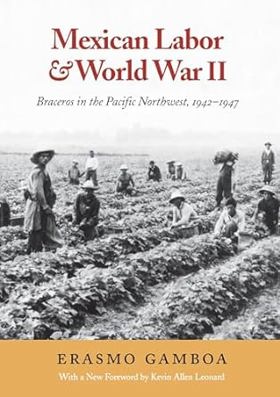
"Although Mexican migrant workers have toiled in the fields of the Pacific Northwest since the turn of the century, and although they comprise the largest work force in the region s agriculture today, they have been virtually invisible in the region s written labor history. Erasmo Gamboa s study of the bracero program during World War II is an important beginning, describing and documenting the labor history of Mexican and Chicano workers in Oregon, Washington, and Idaho and contributing to our knowledge of farm labor."--Oregon Historical Quarterly xiv, 178 pages, 16 unnumbered pages of plates : illustrations ; 24 cm CIRC [ 1 ]
|
1990 |
|
Mercer's belles the journal of a reporter by Roger Conant, Lenna A. Deutsch 
Originally published in 1960 and long out of print, Mercer's Belles is a classic of Northwest history and even inspired a television series, "Here Come the Brides." Roger Conant's 1866 report of his shipboard travels with the "Mercer Girls" on their three-month voyage from New York to San Francisco and Seattle is here republished in its entirety, including Lenna Deutsch's invaluable reference material and the original photographs. A new foreword by Northwest historian Susan Armitage places the journal in historical perspective. Civil War losses had created a surplus of unattached women on the eastern seaboard. In the new western territories, women were sought as wives and teachers. Asa Mercer, president of the territorial university in Seattle, organized a project for female emigration. To a group of men in the West he promised, for a fee, to bring a suitable wife of good moral character and reputation. To the women of the East he offered free passage to Washington Territory. People greeted Mercer's plans with mixed feelings, and he never recruited the number of women he originally anticipated would make the long journey west. The story of "Mercer's Belles" came to occupy an important and interesting niche in regional history. Never has the story been told as thoroughly, as entertainingly, or as well as in Roger Conant's journal, accompanied by Lenna Deutsch's insightful reference material. It is fitting that Mercer's Belles now be made available for a new generation of readers. 1 online resource (xvii, 147 pages) : illustrations CIRC [ 1 ]
|
1992 |
|
Mercer Island heritage by Judy Gellatly
|
1989 |
|
Men, mules, and mountains Lieutenant O'Neil's Olympic expeditions by Robert L. Wood 
Accounts of an 1885 expedition led by Lt. Joseph P. O'Neil to make a reconnaissance of the northeastern section of the Olympics and an 1890 expedition that explored the region more in depth. Based mainly on O'Neil's manuscripts and and a hand-written account by Private Harry Fisher xx, 483 pages, 11 unnumbered leaves of plates : illustrations ; 21 cm CIRC [ 1 ]
|
1976 |
|
Men of Champoeg a record of the lives of the pioneers who founded the Oregon government by Caroline C. Dobbs
Published in 1932 by Caroline C. Dobbs, Men of Champoeg: A Record of the Lives of the Pioneers Who Founded the Oregon Government is a highly romanticized biographical encyclopedia dedicated to the region's Anglo-American founding fathers. The text meticulously catalogs the lives of the fifty-two men who famously voted on May 2, 1843, at the Champoeg meetings to establish the Provisional Government of Oregon, a critical political maneuver that helped secure the territory for the United States against the interests of the British Hudson's Bay Company. Through glowing pioneer hagiography, Dobbs compiles their genealogies, overland migration struggles, and civic achievements, deliberately elevating a makeshift, ad-hoc frontier assembly into a sacred, foundational moment of democratic destiny on par with the American Revolution. A keen insight drawn from the work is how the meticulous cultivation of a localized founding myth functioned to legally and morally erase pre-existing Indigenous sovereignty. By hyper-focusing the narrative of Oregon's political genesis exclusively on a singular, dramatic legislative vote between white American settlers and French-Canadian trappers, Dobbs conceptually redefines the Willamette Valley as a vacant geopolitical chessboard contested only by European powers. This historiographical maneuver successfully transforms the establishment of the Provisional Government into the miraculous birth of civilization out of an imagined wilderness, actively demanding that readers revere the architects of the pioneer state while completely obscuring the systemic dispossession of the Kalapuya people, whose ancestral lands served as the very stage for this celebrated frontier democracy. 6 preliminary leaves, 218 pages, 1 leaf, 9 unnumbered pages of plates : frontispiece, illustrations, portraits ; 21 cm CIRC [ 1 ]
|
1932 |
|
Memory lanes of Old Everett and its East Riverside by Helmer Malstrom, David Dilgard
|
1986 |
|
Memories of the Skeena by Walter Wicks
|
1976 |
|
Memories of old Alturas County, Idaho by Lucille Hathaway Hall
|
1956 |
|
Memories of Clear Lake by Charles R. Hyatt, Clear Lake Historical Association 
Published by the Clear Lake Historical Association and compiled by Charles R. Hyatt, Memories of Clear Lake presents a nostalgic and detailed chronicle of the historic logging, rail, and community developments around the Skagit County settlement in northwest Washington. The book compiles vintage photographs, local newspaper excerpts, and personal reminiscences to trace how a bustling timber outpost grew and shifted alongside the changing regional economy. Through these collected records, the text preserves the domestic and industrial rhythms of families who built their lives amidst towering old-growth forests and local waters. A keen insight drawn from the work is how single-industry towns experienced a unique form of community permanence even after their primary resource vanished; by documenting how residents repurposed old logging infrastructure and community spaces for long-term rural living, the narrative reveals that the true legacy of these settlements was not the timber they exported, but the stubborn social bonds forged in the shadow of the mill. vi, 105 pages : illustrations ; 22 cm CIRC [ 1 ]
|
1998 |
|
Memoirs of Puget Sound early Seattle, 1853-1856 : the letters of David & Catherine Blaine by David Blaine, Catherine Blaine , Richard A. Seiber 
David Blaine was the first Christian minister in Seattle, Washington Territory, and founder of the Methodist Episcopal Church (now First United Methodist Church) in that city 220 pages, 2 unnumbered leaves of plates : illustrations ; 29 cm CIRC [ 1 ]
|
1978 |
|
Memoir, historical and political, of the Northwest coast of North America And the adjacent territories: illustrated by a map and a geographical view of those countries. by Robert Greenhow
"The Memoir relates principally to the southern and middle portions of the northwest coast of this continent and the adjoining territories, which have for many years formed the subjects of discussions between the Governments of the United States, Great Britain, and Russia; and it is designed to show the origin, nature, and extent of the several claims, in order to afford the means of correctly estimating the justice of each"--Page iv xi, 228 pages : folded map ; 24 cm ONLINE CIRC [ 1 ]
|
1840 |
|
Meander scars reflections on healing the Willamette River by Abby P. Metzger 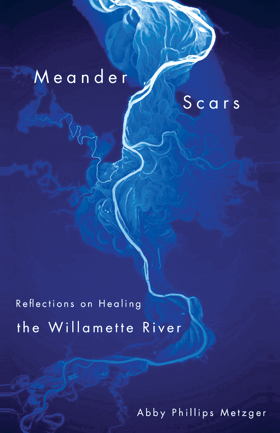
“Metzger’s keen insights spring from a lifetime of direct observation while growing up along the river and recording its most subtle changes and the impact of the scarring in the eco-region it passes through. Written with passion and grace, the book is, in a sense, a love story for a once-wild river now tamed. Metzger asks, ‘Who gives us permission to intervene?’ She concludes that in the great web of history, nature will ultimately decide, and that we humans are left only to imagine.” —Carol Ann Bassett, author of Galápagos at the Crossroads: Pirates, Biologists, Tourists, and Creationists Battle for Darwin’s Cradle of Evolution. Abby Phillips Metzger’s book of personal stories recounts a forgotten Oregon river, the Willamette, as it was before white settlement. Once a rich network of channels and sloughs, the Willamette today bears the scars of development and degradation. Yet, through canoe trips and intimate explorations of the river, Metzger discovers glints of resiliency: a beaver trolling through a slough, native fish in quiet backwaters, and strong currents that carry undertones of the wild Willamette. Together with tales from farmers and scientists alike, these experiences lead Metzger to ask whether something scarred can fully heal, and whether a disjointed river can be whole again. A story of re-discovery as told by a learner, Meander Scars will appeal to readers of literary nonfiction, river advocates, naturalists, and outdoor enthusiasts interested in sustaining healthy river systems for themselves, their children, and beyond. 142 pages ; 22 cm CIRC [ 0 ]
|
2013 |
|
McMurray-- gone with the trees by Varee A. Bandazy
McMurray and Medina are former logging towns in Skagit County, Washington ix, 181 pages : illustrations, maps, portraits ; 21 cm CIRC [ 1 ]
|
1976 |
|
McClure of Idaho by William L. Smallwood 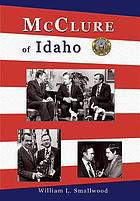
Smallwood presents a biography of Senator Jim McClure, covering his career as a Congressman in Idaho to his 18 years of service in the US Senate until 1991. The biography is based on interviews with McClure and those who worked with him. It begins with how the Republican candidate for Idaho's 1st Congressional District seat died in a plane crash, leaving the possibility open for McClure, and goes back to McClure's family history and childhood, followed by his education as a law student and the period when he was a practicing lawyer, and his work as a politician during the terms of six presidents. --Publisher xvii, 485 pages : illustrations ; 24 cm CIRC [ 0 ]
|
2007 |
|
Mazama the past 100 years : life and events in the upper Methow Valley & Early Winters by Doug Devin
Authored by local historian Doug Devin, Mazama the Past 100 Years: Life and Events in the Upper Methow Valley & Early Winters chronicles the century-long social and environmental evolution of an isolated high-country community in north-central Washington. The book draws on oral histories, diaries, and archival photographs to document the arduous lives of early homesteaders, miners, and trappers who braved deep winter snows and rugged mountain terrain along the eastern slopes of the Cascade range. Through these collected records, the text captures how a sparse population of self-reliant outdoorsmen gradually transformed into a tight-knit recreational and residential valley. A keen insight drawn from the work is how seasonal isolation acts as a powerful community filter; the extreme winter climate of the upper Methow Valley routinely weeded out casual settlers, leaving behind a resilient population whose social cohesion was entirely dependent on mutual survival tactics and an enduring tolerance for wilderness seclusion. 155 pages : illustrations, maps ; 28 cm CIRC [ 1 ]
|
1997 |