Catalog of British Columbiana and Pacific Northwest Americana
Encyclopedia Cascadia Catalog contains book titles of mostly non-fiction Pacific Northwest Coast of North America Titles (primarially British Columbia, Idaho, Oregon and Washington State) in an easy-to-understand title catalog. If you see a link with this badge ONLINE CIRC it means that there is an online institution that provides free access to that title. In some cases there may be more than one institution hosting the title digitally.
| Catalog Title | Published |
|---|---|
|
Boats, bucksaws, and blisters pioneer tales of the Powell River area by G. W. Thompson, Powell River Heritage Research Association
|
1990 |
|
The people of the Harrison by Daphne Sleigh
|
1990 |
|
Saga of the Coeur d'Alene Indians an account of Chief Joseph Seltice by Joseph Seltice, Edward J. Kowrach, Thomas E. Connolly
|
1990 |
|
Astoria & empire by James P. Ronda 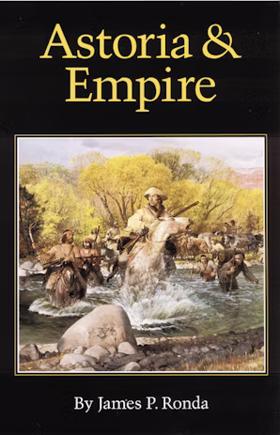
In late December 1788 a worried Spanish official in Mexico City set down his fears about a new and aggressive northern neighbor. Viceroy Manuel Antonio Florez offered a gloomy prediction about the future of Spanish-United States relations in the West. He already knew about the steady march of frontiersmen toward St. Louis and now came troubling word of Robert Gray's ship Columbia on the Northwest coast. All this seemed to fit a pattern, a design for Yankee expansion. "We ought not to be surprised," warned the viceroy, "that the English colonies of America, now being an independent Republic, should carry out the design of finding a safe port on the Pacific and of attempting to sustain it by crossing the immense country of the continent above our possessions of Texas, New Mexico, and California." Canadian fur merchants and Russian bureaucrats also viewed the young republic as a potential rival in the struggle for western dominion. The viceroy's vision of the future proved startlingly accurate. Within the next two decades an American president would authorize a federally funded expedition to find just the sort of transcontinental route Florez imagined. Equally important, a New York entrepreneur would propose and put into motion an ambitious plan to make the Northwest an American political and commercial empire. John Astor's Pacific Fur Company, with Astoria as its central post on the Columbia River, was Florez's nightmare come true. Astoria had long represented either a daring overland adventure or simply a failed trading venture. The Astorians surely had their share of adventure. And the Pacific Fur Company never brought its founder the profits he expected. But all those involved in the extensive enterprise knew it meant more. Thomas Jefferson once described Astoria as the "germ of a great, free and independent empire," believing that the entire American claim to the lands west of the Rockies rested on "Astor's settlement at the mouth of the Columbia." And John Quincy Adams, the expansionist-minded secretary of state, labeled then entire Northwest as "the empire of Astoria." This book seeks to explore Astoria as part of a large and complex struggle for national sovereignty in the Northwest. The Astorians and their rivals were always engaged in more than trading and trapping. They were advance agents of empire. -- from Preface xiv, 400 pages : illustrations, maps ; 23 cm CIRC [ 1 ]
|
1990 |
|
Washington's wild rivers the unfinished work by Tim McNulty, Pat O'Hara (Photographer), Douglass A. North 
"Prose and full-color photos of Northwest rivers." -- Publisher 144 pages : color illustrations, maps ; 30 cm CIRC [ 1 ]
|
1990 |
|
Of men and mountains by William O. Douglas
|
1990 |
|
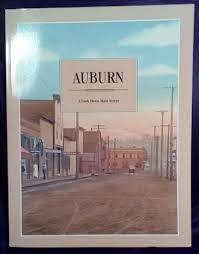
Auburn--a look down Main Street by Josephine Emmons Vine
|
1990 |
|
|
1990 |
|
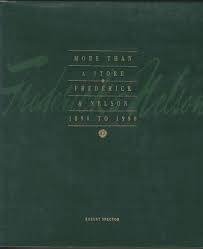
More than a store Frederick & Nelson, 1890 to 1990 by Robert Spector
|
1990 |
|
Helen Dawe's Sechelt by Helen Dawe 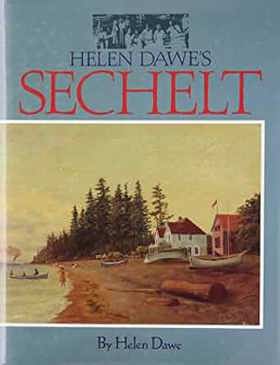
As we enter the 1990s, we mark the 100th anniversary of the decade which saw the establishment of a white settlement at Sechelt, British Columbia. The first of those settlers, Thomas John Cook, was the grandfather of Helen Dawe, who established for herself a reputation as the foremost chronicler of Sechelt history. Helen Dawe's Sechelt brings together her work on the founding and development of a community that has since become the hub of the Sunshine Coast. The book features a personal and anecdotal view of many of Secheit's founders, both white and Indian, and contains over 120 vintage photographs, taken from one of the most impressive private collections in the province. The result is much more than a local history. It is both a case study of how modem British Columbia was built, and a personal introduction to some of the people who were its builders. 150 pages : illustrations ; 29 cm CIRC [ 1 ]
|
1990 |
|
Skookum an Oregon pioneer family's history and lore by Shannon Applegate 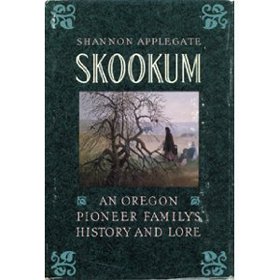
"'Skookum' is the startlingly original narrative rendering of the experiences of a prominent westering family from 1843 to the present. The remarkable story of the Applegate family encompasses many of the predominant themes of the early American West: the overland crossing via the old Oregon Tail in 1843, the quirky restlessness of Applegate men who, after reaching the 'promised land, ' permitted their travel- worn families to rest only for a while, the effects of the intermit- tent gold rushes that continued to upset family lifre long after 1849, the troubled relations between the settler and the Indian ... Shannon Applegate is interested not only in what happemned to her family, but in what it meant to them. How did it feel to be a mother witnessing the death of her child on the way to Oregon, or to be a settler's son watching his Indian friends and old playmates rounded up in the dead of winter and marched off to the reserves? What did it do to the course of a young woman's life when she learned that her father has scratched her name from the family Bible? What sort of world was it where an old blue sugar bowl filled with gold dust could be unconcernedly set out in plain sight?"--Paper dustcover 460 pages : illustrations, maps ; 24 cm CIRC [ 0 ]
|
1990 |
|
Aboriginal peoples and politics the Indian land question in British Columbia, 1849-1989 by Paul Tennant 
Aboriginal claims remain a controversial but little understood issue in contemporary Canada. British Columbia has been, and remains, the setting for the most intense and persistent demands by Native people, and also for the strongest and most consistent opposition to Native claims by governments and the non-aboriginal public. Land has been the essential question; the Indians have claimed continuing ownership while the province has steadfastly denied the possibility. This book presents the first comprehensive treatment of the land question in British Columbia and is the first to examine the modern political history of British Columbia Indians. It covers the land question from its very beginnings and gives detailed attention to the most recent court decisions, government policies, land claim developments, and Indian protest blockades. Providing a new interpretation of Governor James Douglas, Paul Tennant views him as less generous to the Indians than have most other historians and demonstrates how Douglas was largely responsible for the future course of the land question. In contrast to what many non-Indians are assuming, the Indians of British Columbia began their land claims at the start of white settlement and persevered despite the massive efforts of missionaries and government officials to suppress Indian culture and despite Parliament's outlawing of claim-related activities. The Indians emerge in this book as political innovators who maintained their identity and ideals and who today have more strength and unity than ever before. The author has conducted extensive interviews with many Indian leaders and has examined the inner workings of government agencies and Indian political organizations. While sympathetic to Native claims, he focuses as much on failures and deficiencies as on strengths and successes. xvi, 305 pages ; 24 cm CIRC [ 0 ]
|
1990 |
|
Ninstints, Haida world heritage site by George F. MacDonald 
Ninstints, located on Anthony Island, one of the smallest and most southerly of the Queen Charlotte chain, contains the vestiges of the great wooden structures and houses of the Kunghit Haida people who abandoned the village in the late 1800s. George MacDonald combines archival material and scientific and photographic evidence to record what is known of the history of Ninstints and its people. Details are given of their houses, of their great chiefs, and finally of their exodus from Ninstints. 60 pages : illustrations (some color) ; 26 cm CIRC [ 0 ]
|
1990 |
|
A history of Laurelhurst by Christine Barrett, Laurelhurst Community Club (Seattle, Wash)
|
1989 |
|
Juan Pérez on the northwest coast six documents of his expedition in 1774 by H. K. Beals 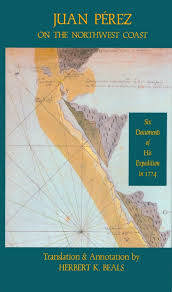
Juan Pérez on the Northwest Coast: Six Documents of His Expedition in 1774, translated and annotated by Herbert K. Beals, presents the first English translations of primary records from the earliest European voyage to reach the Pacific Northwest coast. The book compiles diaries and firsthand accounts from Pérez, his second-in-command Estéban José Martínez, and the Catholic priests aboard the Spanish frigate Santiago during their seven-month expedition. These translated documents offer vivid details of the crew's navigation along the British Columbia coastline and their unprecedented early encounters and trade with Indigenous peoples, including the Haida and Nuu-chah-nulth. By reviving these long-ignored archival materials from Mexico City and Madrid, the book restores a crucial chapter of Spanish maritime history that was largely overshadowed by later British exploration. xxvii, 270 pages : illustrations (some color), maps ; 27 cm. CIRC [ 1 ]
|
1989 |
|
Rails across the Cascades by Eva Greenslit Anderson
|
1989 |
|
By canoe and sailing ship they came a history of Whidbey's Island by Dorothy Neil, Lee Brainard
|
1989 |
|
From sojourner to citizen Chinese of the Inland Empire by Edith E. Erickson, Eddy Ng
|
1989 |
|
Origins of Pierce County place names by Gary Fuller Reese
|
1989 |
|
Campfire tales of eastern Idaho Volume I by Louis J. Clements
|
1989 |
|
University of Idaho--then, now, tomorrow the heart of a hundred by Keith C. Petersen
|
1989 |
|
The day Seattle burned June 4, 1889 by James R. Warren 
"The great fire of 1889 devoured the business heart of Seattle. The story of how it began, who actually started it, how the fire department reacted, and why the fire roared out of control make fascinating reading."--Amazon.com viewed Oct. 3, 2022 69 pages : illustrations ; 28 cm CIRC [ 1 ]
|
1989 |
|
The Gorge of summers gone a history of Victoria's inland waterway by Dennis Minaker
|
1989 |
|
The Ghostland people a documentary history of the Queen Charlotte Islands, 1859-1906 by Charles Lillard 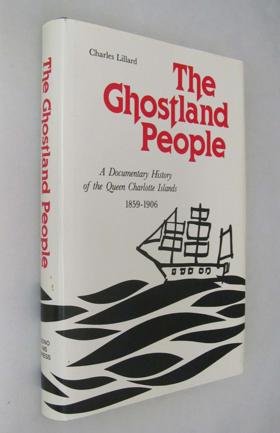
The Ghostland People was the name given by the Haida to the early white settlers. This book is a gathering of firsthand accounts of exploration and discovery in the Queen Charlotte Islands during the little-known period bordered on one side by the maritime fur traders, and on the other by the farmers and the fishermen, and the loggers and the miners. William Downie visited the islands in 1859 and filed his report with Governor James Douglas. Robert Brown made his way there aboard the Goldstream in 1866, and Judge James G. Swan made his first trip to the Charlottes in 1883/and left a fascinating yet forgotten account. In 1878 George Dawson, the “little giant,” wrote his classic study (here reproduced for the first time in 110 years) of the Islands and the Haida. Lord Dufferin and his wife, the Marchioness of Dufferin and Ava, toured the Queen Charlottes in 1876 and both left detailed accounts. So did Charles Horetzky, who was there two years earlier. The next visitor to leave important views of the Islands was George A. Dorsey, who, with James Deans, cruised the area in 1898 on the behalf of the Field Museum in Chicago. Just after the turn of the century, Charles Seldon, a professional hunter from the United States, visited the Islands to observe the long-fabled Queen Charlotte Island caribou. This is the fourth volume in the West Coast Heritage Series. In it, editor Charles Lillard has also provided the first detailed chronology of Island history, the first major bibliography, and chapters on the Islands’ mystique and prehistory. As was the case with the previous books, Lillard gathers together material which has not been accessible to the general reader for over eighty years. 318 pages : illustrations, maps ; 24 cm CIRC [ 0 ]
|
1989 |
|
The Fernwood files by John J. Ellis, Charles Lillard
|
1989 |