Catalog of British Columbiana and Pacific Northwest Americana
Encyclopedia Cascadia Catalog contains book titles of mostly non-fiction Pacific Northwest Coast of North America Titles (primarially British Columbia, Idaho, Oregon and Washington State) in an easy-to-understand title catalog. If you see a link with this badge ONLINE CIRC it means that there is an online institution that provides free access to that title. In some cases there may be more than one institution hosting the title digitally.
| Catalog Title | Published |
|---|---|
|
Across the Olympic Mountains the Press Expedition, 1889-90 by Robert L. Wood 
In 1889 Washington's then governor, Elisha Ferry, called on men of adventure to cross the Olympic Mountains, a range shrouded in mystery. The Seattle Press, the state's primary newspaper, stepped up to the challenge, sponsoring the Press Expedition.And soon departed a band of men into the mountains during one of the worst winters in recorded history. 220 pages : illustrations, maps ; 22 cm CIRC [ 1 ]
|
1989 |
|
|
1989 |
|
|
1989 |
|
The March of the mounted riflemen first United States military expedition to travel the full length of the Oregon Trail from Fort Leavenworth to Fort Vancouver, May to October, 1849 : as recorded in the journals of Major Osborne Cross and George Gibbs and the official report of Colonel Loring by Osborne Cross, George Gibbs, William Wing Loring, Raymond W. Settle 
The March Of The Mounted Riflemen, First published in 1940, is important as the only complete record of one of the longest marches ever made 378 pages : illustrations ; 21 cm CIRC [ 1 ]
|
1989 |
|
We claimed this land Portland's pioneer settlers by Eugene E. Snyder 
A collection of biographical sketches profiling the 212 pioneers who settled the land that is now Portland, Oregon xxv, 289 pages : maps, portraits ; 23 cm CIRC [ 1 ]
|
1989 |
|
Not on a silver platter settling the Willamette Valley and Salem, Oregon, 1858-1904 by Beatrice L. Bliss White 
"The Adams family's new life in Oregon, the Territory and the new state." 498 pages : illustrations ; 24 cm CIRC [ 1 ]
|
1989 |
|
Bayocean the Oregon town that fell into the sea by Bert Webber, Margie Webber 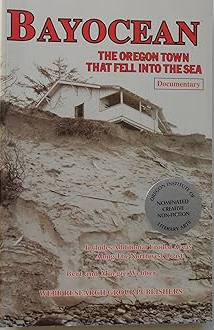
This documentary shows the erosion that took place in Bayocean, Oregon with dozens of historic and current photographs, maps, unique cartoons, bibliography, index. The book also Salishan, Nestucca, Cape Lookout State Park, Newport and Jump-Off Joe, the Southern Oregon Coast, Washington's "wash-away" beach, the total destruction of Cape Showalter, and other places. vi, 206 pages ; 22 cm CIRC [ 1 ]
|
1989 |
|
One hundred years of the "waterland" community a history of Des Moines, Washington by Richard T. Kennedy, Grechen F. Schmidt
|
1989 |
|
With angels to the rear an informal portrait of early Meadowdale by Delmar H. Caryl
|
1989 |
|
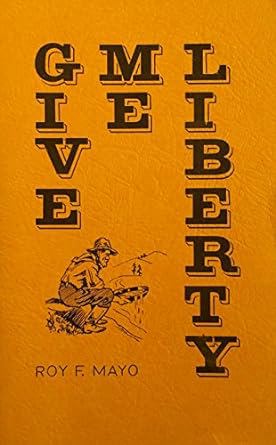
Give me Liberty by Roy F. Mayo
|
1989 |
|
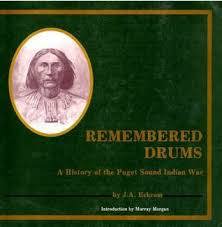
Remembered drums a history of the Puget Sound Indian War by J. A. Eckrom
|
1989 |
|
Mercer Island heritage by Judy Gellatly
|
1989 |
|
Sine die a guide to the Washington State legislative process by Edward D. Seeberger 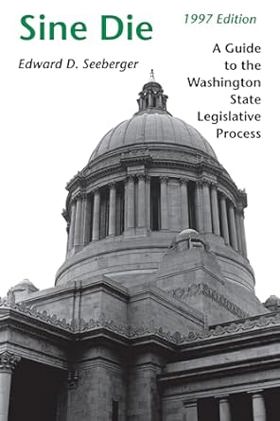
This 1997 edition of Sine Die is a completely new book. Since the first edition of Sine Die was published in 1987, there have been dramatic changes in the Washington State Legislature and in state politics. Limits have been placed on campaign contributions and reporting requirements are expanded; ethics laws were passed following revelations of improper use of caucus staff; Initiative 601 was passed by the voters imposing limitations on state taxing and spending powers; the legislative process has been computerized and information is now easily and quickly accessible electronically to all; and term limits, passed in 1992, start taking their toll on state legislators in 1998. Even more significant, there has been a gender revolution in the legislature. Women are on the verge of having an equal place in numbers and power and are having a dramatic effect on the legislative climate and on state policy. Sine Die is a clear and up-to-date description of how the Washington State Legislature works. Presenting substantially more information on women in the legislature, the role of the governor, and the various origins of legislation, the 1997 edition explains the process by which thousands of proposed laws are introduced each year and are culled down to the approximately twenty percent that are eventually enacted. xiii, 203 pages : illustrations ; 23 cm CIRC [ 1 ]
|
1989 |
|
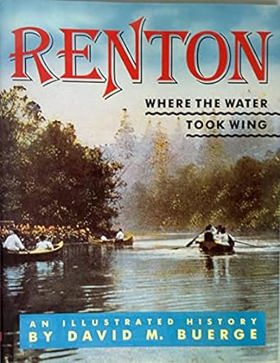
Renton, where the water took wing an illustrated history by David M. Buerge, Cynthia Barker, Nada Oakley
|
1989 |
|
Dictionary of Oregon history by Howard McKinley Corning
|
1989 |
|
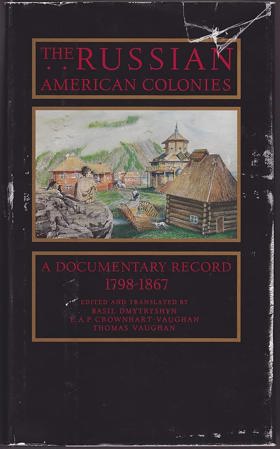
The Russian American colonies, 1798-1867 a documentary record by Basil Dmytryshyn, E. A. P. Crownhart-Vaughan, Thomas Vaughan
|
1989 |
|
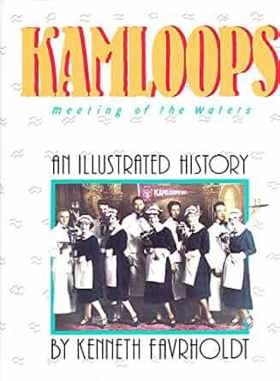
Kamloops meeting of the waters : an illustrated history by Ken Favrholdt, Lynne Schuyler Bracewell, Greater Kamloops Chamber of Commerce
|
1989 |
|
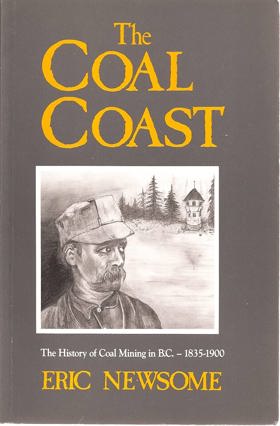
The coal coast the history of coal mining in B.C., 1835-1900 by Eric Newsome
|
1989 |
|
Henry J. Kaiser builder in the modern American West by Mark S. Foster, William H. Goetzmann 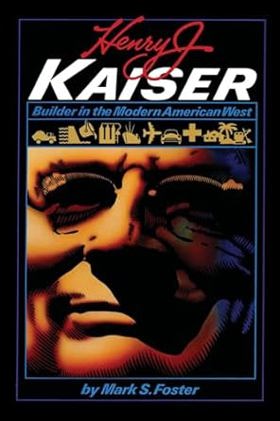
In the 1940s Henry J. Kaiser was a household name, as familiar then as Lee Iacocca and Donald Trump are now. Like a Horatio Alger hero, Kaiser rose from lower-middle-class origins to become an enormously wealthy entrepreneur, building roads, bridges, dams, and housing. He established giant businesses in cement, aluminum, chemicals, steel, health care, and tourism. During World War II, his companies built cargo planes and Liberty ships. After the war, he manufactured the Kaiser-Frazer automobiles. Along the way, he also became a major force in the development of the western United States, including Hawaii. Henry J. Kaiser: Builder in the Modern American West is the first biography of this remarkable man. Drawing on a wealth of archival material never before utilized, Mark Foster paints an evenhanded portrait of a man of driving ambition and integrity, perhaps the ultimate "can-do" capitalist. He covers Kaiser's entire life (1882-1967), emphasizing many business ventures. He demonstrates that Kaiser was the prototypical "frontier" entrepreneur who often used government and union support to tame the "wilderness." xiv, 358 pages, 32 unnumbered pages of plates : illustrations ; 25 cm. CIRC [ 0 ]
|
1989 |
|
A white man's province British Columbia politicians and Chinese and Japanese immigrants, 1858-1914 by Patricia Roy 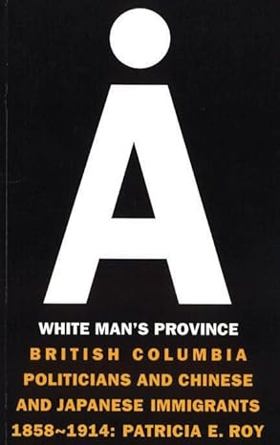
A White Man’s Province examines how British Columbians changed their attitudes towards Asian immigrants from one of toleration in colonial times to vigorous hostility by the turn of the century and describes how politicians responded to popular cries to halt Asian immigration and restrict Asian activities in the province. White workingmen objected to Asian sojourning habits, to their low living standards and wages, and to their competition for jobs in specific industries. Because employers and politicians initially supported Asian immigrants, early manifestations of antipathy often appeared just as another dispute between capital and labour. But as their number increased, complaints about Asians became widespread, and racial characteristics became the nucleus of such terms as a “white man’s province” – a “catch phrase” which, as Roy notes, “covered a wide variety of fears and transcended particular economic interests.” The Chinese were the chief targets of hostility in the nineteenth century; by the twentieth, the Japanese, more economically ambitious and backed by a powerful mother country, appeared more threatening. After Asian disenfranchisement in the 1870s, provincial politicians, freed from worry about the Asian vote, fueled and exploited public prejudices. The Asian question also became a rallying cry for provincial rights when Ottawa disallowed anti-Asian legislation. Although federal leaders such as John A. Macdonald and Wilfrid Laurier shared a desire to keep Canada a “white man's country,” they followed a policy of restraint in view of imperial concerns. The belief that whites should be superior, as Roy points out, was then common throughout the Western world. Many of the arguments used in British Columbia were influenced by anti-Asian sentiments and legislation emanating from California, and from Australia and other British colonies. Drawing on almost every newspaper and magazine report published in the province before 1914, and on government records and private manuscripts, Roy has produced a revealing historical account of the complex basis of racism in British Columbia and of the contribution made to the province in these early years by its Chinese and Japanese residents. xvii, 327 pages : illustrations ; 24 cm CIRC [ 0 ]
|
1989 |
|
Kashpar the saga of the Basque immigrants to North America by Joseph Eiguren, Basque Museum and Cultural Center of the Basques in Idaho and the West 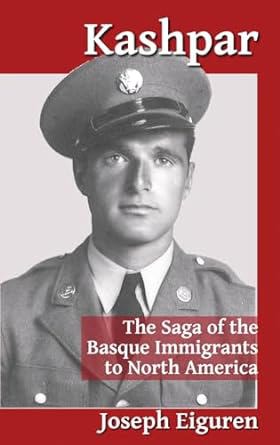
Joe “Kashpar” Eiguren was raised in the Basque Country during very difficult times. During his childhood he experienced the dictatorship of King Alfonso XII, who persecuted Basque (as many Spanish leaders had done before and did afterward as well). Joe felt strongly about the Basque cause, and when he came to the United States in 1934 it remained very much part of his life. And he continued to fight totalitarianism by serving in combat in the American army in World War II. After the war, together with Pete Cenarrusa and Pat Bieter, Joe advocated for the Basques, and supported Basque freedom and independence. Joe, though never formally educated, loved to write when he found something of interest to him. That was how he began writing Kashpar. Joe was very knowledgeable about Basque history, the Basque language, and Basque politics as well as a terrific storyteller. He belonged to a generation of the Basque immigrants who were very fluent in the Basque language and had undergone the political and socioeconomic crises provoked by long-lasting dictatorships in his homeland. Here, in his own words, Joe writes about leaving his home, coming to a foreign land, making a full life, serving his new country selflessly, and becoming a community leader and energetic promoter of Basque culture. viii, 186 pages : illustrations ; 23 cm CIRC [ 1 ]
|
1988 |
|
On the Northwest commercial whaling in the Pacific Northwest, 1790-1967 by Robert Lloyd Webb 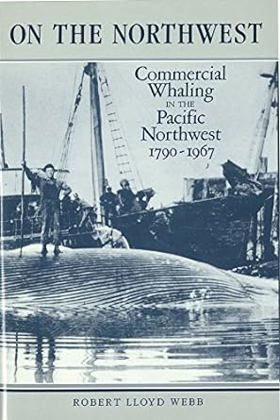
On the Northwest is the first complete history of commercial whaling in the Pacific Northwest from its shadowy origins in the late 1700s to its demise in western Canada in 1967. Whaling in the eastern North Pacific represented a century and a half of exploration and exploitation which involved the entrepreneurs, merchants, politicians, and seamen of a dozen nations. The results of the whaling effort mirrored the outcome of whaling throughout the world. By exploiting the large whales without considering their finite numbers or reproductive capacity, the industry drove its prey to commercial extinction. It was the seamen themselves, however, who gave substance to the business of whaling. On the Northwest focuses on the working lives of these men: the shellbacks 'before the mast,' the colourful harpoon gunners who chased the whales from spray-soaked gun platforms, and shore-station workers who preserved the international flavour of the Pacific Northwest whaling industry until its demise only two decades ago. xxi, 425 pages : illustrations ; 24 cm CIRC [ 1 ]
|
1988 |
|
Bound for Idaho the 1864 trail journal of Julius Merrill by Julius Merrill, Irving R. Merrill
|
1988 |
|
The exploring expedition to the Rocky Mountains by John Charles Frémont
|
1988 |
|
Kid on the river by Dean Nichols 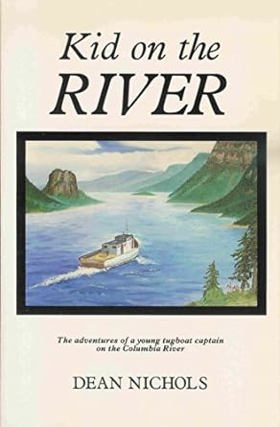
Narrow escapes, hilarious predicaments, and grim disasters are all part of the rich and varied experiences of a young tugboat captain on the Columbia River during the era between the grand old sternwheelers and the multi-thousand horsepower tugboats of today. The author had captured the excitement o this episode in his life and presented it in and informal manner that will appeal to a wide audience. 5 1/2 x 8 1/2. 128 pages. Map. x, 118 pages : illustrations ; 22 cm CIRC [ 1 ]
|
1988 |