Catalog of British Columbiana and Pacific Northwest Americana
Encyclopedia Cascadia Catalog contains book titles of mostly non-fiction Pacific Northwest Coast of North America Titles (primarially British Columbia, Idaho, Oregon and Washington State) in an easy-to-understand title catalog. If you see a link with this badge ONLINE CIRC it means that there is an online institution that provides free access to that title. In some cases there may be more than one institution hosting the title digitally.
| Catalog Title | Published |
|---|---|
|
Idaho mountain ranges by George Wuerthner 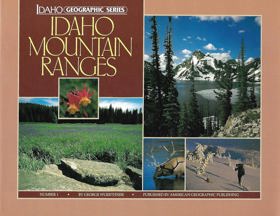
Idaho Mountain Ranges by George Wuerthner is a 1986 geographic and photographic survey, originally published by American Geographic Publishing, that explores the spectacular and rugged topography of the state. The book combines striking imagery with detailed natural history to examine the diverse geology, ecological systems, and remote wilderness areas that define Idaho's numerous distinct mountain chains. Ultimately, it serves as an engaging tribute to the region's physical geography, offering a valuable resource for outdoor enthusiasts, conservationists, and anyone interested in the natural heritage of the Inland Northwest and the Northern Rockies. 104 pages : color illustrations ; 22 x 28 cm. CIRC [ 1 ]
|
1986 |
|
Seven shillings a year the history of Vancouver Island by Charles Lillard, Ellen J. Lehman (Donor) 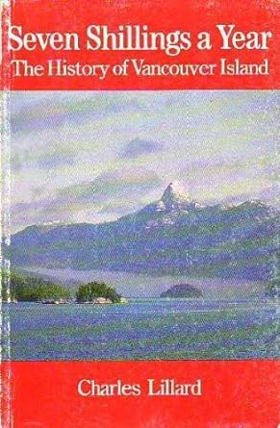
Seven Shillings a Year: The History of Vancouver Island by Charles Lillard is a 1986 popular history—awarded the Lieutenant Governor’s Medal for Historical Writing—that offers a sweeping narrative of the island from pre-contact Indigenous cultures through the end of World War II. The title references the modest annual rent the Hudson's Bay Company paid the British Crown for the island upon establishing Fort Victoria. The book chronicles the early Spanish and English maritime explorations, the subsequent influx of miners, loggers, and farmers, and the evolution of Victoria from a rowdy frontier outpost to a cosmopolitan capital. Ultimately, it serves as an accessible, engaging, and pioneering single-volume overview of Vancouver Island's colonial and civic development, though modern scholars often contextualize it within the historiographical perspectives of its time. viii, 248 pages : illustrations ; 22 cm CIRC [ 1 ]
|
1986 |
|
A pioneer scrapbook of the Columbia River North-Shore communities Wahkiakum and Pacific Counties, Washington, 1900-1985 by Carlton E. Appelo 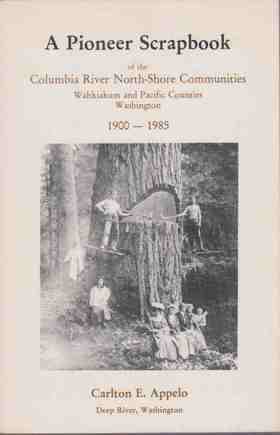
A Pioneer Scrapbook of the Columbia River North-Shore Communities: Wahkiakum and Pacific Counties, Washington, 1900-1985 by Carlton E. Appelo is a richly detailed local history compilation that captures the everyday life and grassroots heritage of the lower Columbia River basin. Structured as an expansive historical scrapbook, the volume gathers a wealth of archival photographs, family anecdotes, newspaper clippings, and regional lore to chronicle the development of the area's vital logging, fishing, and agricultural communities over an 85-year span. Ultimately, it serves as an invaluable, community-driven resource for genealogists and regional historians seeking a highly personal and visual record of the resilient pioneer families who shaped the rural coastal landscapes of southwestern Washington. 132 pages : illustrations ; 24 cm CIRC [ 1 ]
|
1986 |
|
Washington mountain ranges by Robert Steelquist, Pat O'Hara (Illustrator) 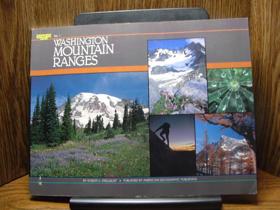
Washington Mountain Ranges by Robert Steelquist, featuring the striking landscape photography of Pat O'Hara, is a 1986 geographic and visual survey originally published as part of the Washington Geographic Series. The book combines detailed natural history with sweeping imagery to explore the complex topography, ecological zones, and rugged wilderness areas that define the state's prominent massifs, particularly the Cascade and Olympic ranges. Ultimately, it serves as a highly engaging and visually rich tribute to the region's physical geography, offering a valuable resource for outdoor enthusiasts, conservationists, and anyone captivated by the natural heritage of the Pacific Northwest. 104 pages : illustrations (some color), maps ; 22 x 28 cm CIRC [ 1 ]
|
1986 |
|
Strathcona a history of British Columbia's first provincial park by Wallace Baikie, Rosemary Phillips 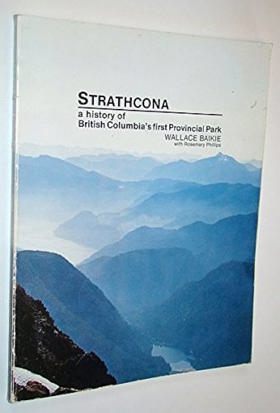
Strathcona: A History of British Columbia's First Provincial Park by Wallace Baikie and Rosemary Phillips is a 1986 regional environmental history that chronicles the exploration, establishment, and preservation of this rugged, mountainous wilderness reserve located in the geographic center of Vancouver Island. The book details the park's origins from its legislative founding in 1911—making it the oldest provincial park in British Columbia—through decades of early mountaineering expeditions, resource use conflicts, and the evolving conservation efforts required to protect its pristine alpine lakes, ancient forests, and glaciated peaks. Ultimately, it serves as an invaluable resource for outdoor enthusiasts and environmental historians seeking to understand the recreational development and the enduring legacy of land preservation in the Canadian Pacific Northwest. vi, 137 pages : illustrations, maps, portraits ; 28 cm CIRC [ 1 ]
|
1986 |
|
On the shady side Vancouver, 1886-1914 by Betty Keller 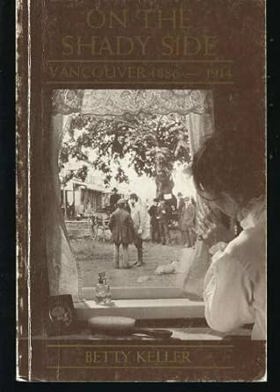
On the Shady Side: Vancouver, 1886-1914 by Betty Keller is a 1986 historical account published by Horsdal & Schubart that explores the gritty, illicit underbelly of British Columbia's largest city during its formative decades. The book chronicles Vancouver's rapid evolution from a rowdy frontier sawmill settlement into a booming Pacific port, focusing specifically on the vice, crime, and political corruption that accompanied this explosive growth. Keller meticulously details the world of bootleggers, gamblers, opium dens, and brothels, alongside the often-complicit early police forces and municipal officials operating prior to World War I. Ultimately, it serves as an entertaining and highly informative social history that looks beyond traditional civic boosterism to reveal the rugged, colorful, and controversial realities of early urban development in the Canadian Pacific Northwest. ix, 121 pages : illustrations ; 22 cm CIRC [ 1 ]
|
1986 |
|
The mightiest of them all memories of Grand Coulee Dam by Leonhard Vaughn Downs 
The Mightiest of Them All: Memories of Grand Coulee Dam by Leonhard Vaughn Downs is a detailed historical memoir and engineering retrospective, published in 1986 by the American Society of Civil Engineers, that chronicles the monumental construction of the largest concrete structure in the United States. Written by a Bureau of Reclamation engineer who spent decades working intimately on the Columbia Basin Project, the book offers a rare insider's perspective on the massive Depression-era public works endeavor. It details the formidable technical challenges, the massive labor force, and the daily realities of taming the Columbia River to generate hydroelectric power and provide regional irrigation. Ultimately, it serves as an invaluable firsthand account and a tribute to the ingenuity, grit, and colossal scale of federal infrastructure development that fundamentally transformed the landscape and economy of eastern Washington. 186 Seiten : Illustrationen CIRC [ 1 ]
|
1986 |
|
Renegade tribe the Palouse Indians and the invasion of the inland Pacific Northwest by Clifford E. Trafzer, Richard D. Scheuerman 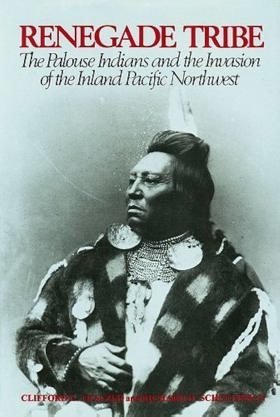
Renegade Tribe: The Palouse Indians and the Invasion of the Inland Pacific Northwest by Clifford E. Trafzer and Richard D. Scheuerman is a seminal 1986 ethnohistory published by Washington State University Press that chronicles the complex heritage and fierce resistance of the Palus people. The book meticulously details the traditional culture of this often-misunderstood Indigenous group and their pivotal role in defending their ancestral homelands across the Columbia Plateau against the rapid influx of white miners, settlers, and the U.S. military. By focusing on the mid-19th-century conflicts—particularly the Yakima War and the devastating 1858 punitive campaigns led by Colonel George Wright—the authors dismantle the federal government's historical labeling of the Palouse as mere "renegades," instead framing their actions as a desperate and deeply rooted defense of their sovereignty. Ultimately, it serves as an essential, critically acclaimed scholarly resource that provides a crucial Indigenous perspective on the violent colonization and subsequent displacement that reshaped the Inland Pacific Northwest. xv, 224 pages, 16 unnumbered pages of plates : illustrations, maps ; 24 cm CIRC [ 1 ]
|
1986 |
|
The History of Baker County, Oregon by Baker County Historical Society (Or) 
The History of Baker County, Oregon, compiled and published in 1986 by the Baker County Historical Society, is a comprehensive local history and genealogical reference detailing the development of this expansive region in northeastern Oregon. The volume chronicles the county's defining eras, from its roots along the Oregon Trail and the transformative 1860s gold rush that birthed early boomtowns like Auburn, to its enduring agricultural and timber industries. Ultimately, featuring extensive pioneer biographies, community profiles, and an every-name index, it serves as an invaluable, community-driven resource for researchers and descendants seeking to understand the grassroots heritage and resilient pioneer legacy that shaped Eastern Oregon. 360 pages : illustrations ; 29 cm CIRC [ 1 ]
|
1986 |
|
Island origins trappers, traders & settlers by J. D. Cleaver 
Island Origins: Trappers, Traders & Settlers by J. D. Cleaver is a 1986 regional history, published by the Oregon Historical Society Press as the inaugural volume of the Sauvie Island Heritage Series. The book meticulously examines the early history and geological formation of this significant river island—located at the confluence of the Willamette and Columbia rivers near Portland—during the initial stages of Euro-American contact and settlement from 1792 to 1865. Cleaver chronicles the era of early maritime explorers, the establishment of the region's lucrative fur trade, and the arrival of the first pioneer homesteaders who began transforming the landscape. Ultimately, it serves as a foundational and highly focused resource for understanding the complex ecological and colonial forces that shaped one of Oregon's most historically vital trading and agricultural hubs. vii, 40 pages : illustrations ; 23 cm. CIRC [ 1 ]
|
1986 |
|
Spirit Lake people memories of Mount St. Helens by Alan Guggenheim, James Mortland 
Spirit Lake People: Memories of Mount St. Helens by Alan Guggenheim and James Mortland is a poignant 1986 oral history and photographic collection that preserves the heritage of the tightly knit communities surrounding Spirit Lake prior to the catastrophic May 1980 eruption of Mount St. Helens. The book gathers personal recollections, anecdotes, and imagery to document the lives of the individuals who lived, worked, and recreated in this pristine alpine environment. By focusing on the human element rather than just the geological disaster, the authors capture the region's vibrant lodge culture and the deep connection residents shared with the mountain. Ultimately, it serves as an invaluable, nostalgic tribute and a vital historical record of a unique Pacific Northwest landscape that was permanently erased by one of the most destructive natural events in modern U.S. history. 140 pages : illustrations ; 23 cm CIRC [ 1 ]
|
1986 |
|
There must have been a tree by Max C. McClellan, Roy McClellan 
There Must Have Been a Tree by Max C. McClellan, co-authored with his late brother Roy McClellan, is a 1986 biographical and local history book published by Walkers Printing in Bellingham, Washington. The memoir chronicles the pioneer heritage and early 20th-century experiences of the McClellan family as they settled and worked in the rugged communities around Whatcom and Skagit counties, particularly focusing on their deep ties to the local timber industry and their early days in Alger. Rich with personal anecdotes from Max’s time logging and purchasing timber before he eventually co-founded the well-known Bellingham business Hardware Sales, the book ultimately serves as an intimate, grassroots account of rural family life, foundational grit, and the evolving logging landscape of the northwestern Washington frontier. vi, 240 pages : illustrations ; 22 cm CIRC [ 1 ]
|
1986 |
|
The Siwash their life, legends, and tales : Puget Sound and Pacific Northwest by Joseph A. Costello 
The Siwash: Their Life, Legends, and Tales: Puget Sound and Pacific Northwest by Joseph A. Costello is an 1895 historical and folkloric compilation that provides an early settler's perspective on the Indigenous peoples of the Puget Sound region. Originally published in Seattle by the Calvert Company (and heavily referenced in later regional republications), the book gathers the myths, cultural practices, and daily realities of the area's Native American tribes, primarily the Coast Salish. While its title employs the Chinook Jargon term "Siwash"—a historically common but now widely recognized as derogatory adaptation of the French word for "savage"—the work reflects the complex, often paternalistic and romanticized attitudes prevalent among late-19th-century white pioneers. Ultimately, it serves as a valuable primary source document for regional ethnographers and historians, offering a critical window into early cross-cultural observations, the recording of Indigenous oral traditions, and the social zeitgeist of the Pacific Northwest frontier. 177 pages : color illustrations ; 29 cm CIRC [ 1 ]
|
1986 |
|
Counties of the state of Washington a book of illustrations and documentary facts on important sights and scenes across the State of Washington by Richard Hashagen 
Counties of the State of Washington: A Book of Illustrations and Documentary Facts on Important Sights and Scenes Across the State of Washington by Spokane-native artist Richard Hashagen is a limited-edition 1986 historical and artistic survey, self-published by the author. The book features Hashagen's detailed pen-and-ink illustrations showcasing the civic architecture and historic landmarks across Washington's 39 counties, with a particular foundational focus on the state's historic county courthouses. Accompanied by documentary facts and regional lore, the volume ultimately serves as a unique visual tribute and an engaging, grassroots architectural record of Washington's local heritage and civic history. 222, [1] pages : illustrations ; 29 cm CIRC [ 1 ]
|
1986 |
|
British Columbia place names by George Philip Vernon Akrigg, Helen Brown Manning Akrigg
British Columbia Place Names by the distinguished historical research team of George Philip Vernon (G.P.V.) Akrigg and Helen B. Akrigg is a definitive toponymic reference work—with a significantly expanded and widely cited edition published in 1986—that catalogs the origins of the province's geographic names. The book meticulously documents the fascinating stories and linguistic roots behind the naming of British Columbia's cities, towns, rivers, mountains, and coastal features. It traces these designations through various eras of the region's past, highlighting Indigenous terminology, the navigational records of early Spanish and British maritime explorers, and the legacies of fur traders, gold rush prospectors, and pioneer settlers. Ultimately, it serves as an indispensable and highly engaging resource for regional historians, genealogists, and geographers, offering a unique linguistic lens through which to explore the complex cultural and colonial heritage of Canada's Pacific coast. 195p CIRC [ 1 ]
|
1986 |
|
City of dreams a guide to Port Townsend by Peter Simpson, Robin Biffle 
City of Dreams: A Guide to Port Townsend, edited by Peter Simpson in collaboration with Robin Biffle and other local writers, is a 1986 regional history and cultural guide published by Bay Press. The book explores the vibrant heritage of this prominent Olympic Peninsula seaport, famously nicknamed the "City of Dreams" due to early pioneer speculation that it would become the largest harbor on the West Coast. Blending local history, architectural appreciation, and community lore, the volume chronicles Port Townsend's boom-and-bust economic cycles, its preservation of late 19th-century Victorian architecture, and its enduring maritime traditions. Ultimately, it serves as an engaging and comprehensive resource for understanding the historical forces and distinct cultural identity that shaped one of Washington's most picturesque and architecturally significant coastal cities. 330 pages : illustrations, maps ; 24 cm CIRC [ 1 ]
|
1986 |
|
Treaties on trial the continuing controversy over Northwest Indian fishing rights by Fay G. Cohen , Joan La France , Vivian L. Bowden , Andy Fernando (Writer of introduction), American Friends Service Committee (Issuing body) 
This book examines treaty fishing rights and the effects of the Boldt Decision on the Northwest tribes in western Washington state, and along the Columbia River. It is based primarily on research conducted between 1979 and 1981 in the Northwest corner of the US, and in Washington, D.C. It draws upon interviews with more than a hundred persons directly involved with the Indian fishing rights controversy: tribal leaders, tribal biologists, and Indian fisherman; state officials and biologists; attorneys on both sides of the issue; federal officials: and non-Indian commercial and sports fishermen. Government documents, newspaper accounts, public opinion data, legal records, and historical and anthropological references are also used xxvi, 229 pages, 8 unnumbered pages of plates : illustrations ; 23 cm CIRC [ 0 ]
|
1986 |
|
Experiences in a promised land essays in Pacific Northwest history by G. Thomas Edwards, Carlos A. Schwantes 
The Pacific Northwest, like many other regions of the United States, has been touted as the Promised Land. As early as the 1830s, “Oregon fever” brought missionaries, promoters, speculators, politicians, and settlers to the nation’s far West. Spared the ravages of the Civil War and the scars of rapid northern industrialization, the region continued to offer Golden Opportunity. Its promise encompassed the bounties of sea and land, a mild and healthful climate, and an unusually homogeneous population. Practically since the turn of the century, the Northwest has been a region of paradoxes. Women, who in Washington had acquired suffrage and lost it in the 1880s, regained it and later elected a woman mayor of Seattle. Exploitation of workers, despite, or perhaps because of, abundance has been extreme-- and has engendered some of America’s most radical labor movements. Both racial backlash and enlightened reforms characterize the region. Until now, no single-volume history has taken up the modern issues of women, minorities, radicalism and environment. The editors of Experiences in the Promised Land, G. Thomas Edwards and Carlos Schwantes, themselves teachers and writers of Northwest history, have carefully compiled a selection of essays that treats the full scope of the region’s history, with a special emphasis on 20th century topics. They have gathered together the best of recent scholarship: the work of regional authorities as well as contributions by some of the most promising of the new generation of scholars. A variety of writing styles and approaches, subjects ranging from individual biographies to studies of broad policies and movements, a chronological organization enhanced by concise, insightful chapter commentaries, and an extensive bibliography make this volume indispensable for teachers, students, and the general reader of Northwest history. xvi, 397 pages ; 24 cm CIRC [ 0 ]
|
1986 |
|
Grubstaking the Palouse gold mining in the Hoodoo Mountains of North Idaho, 1860-1950 by Richard C. Waldbauer 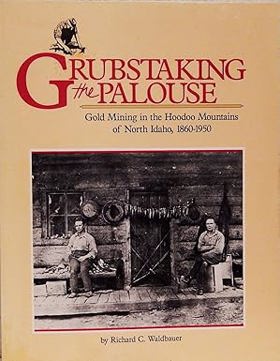
Richard C. Waldbauer's book is the story of a small, almost forgotten Pacific Northwest mining area, the Hoodoos of north Idaho. It describes the activities of mining promoters, adventurers, community boosters, and how their boundless enthusiasm affected settlement in the Palouse Hills, one of the Pacific Northwest's most important agricultural regions. Grubstaking the Palouse captures the excitement that accompanied the opening of the nineteenth-century Northwest frontier, revealing how a handful of fortune-seeking miners inspired others to have visions of homesteads, farms, factories, churches, and schools. Using documents, archaeological findings, ethnographic studies, and his keen understanding of regional geology, Waldbauer has created a masterpiece of local and regional history. As he unravels the social fabric of a bygone era, he offers insights into the ways frontier society shaped Pacific Northwest culture. 9 preliminary leaves, 75 pages : illustrations, maps, portrait ; 28 cm CIRC [ 0 ]
|
1986 |
|
A guide to Oregon south coast history including an account of the Jedediah Smith Exploring Expedition of 1828 and its relations with the Indians by Nathan Douthit 
A Guide to Oregon South Coast History: Including an Account of the Jedediah Smith Exploring Expedition of 1828 and Its Relations with the Indians by Nathan Douthit is a 1986 regional history published by River West Books in Coos Bay. The book provides a detailed historical overview of the rugged southern Oregon coastal frontier, centering heavily on the pivotal 1828 overland expedition led by the renowned fur trapper and mountain man Jedediah Smith. Douthit meticulously examines the expedition's grueling journey north from California, culminating in the violent and tragic clash with the Kalawatset (Lower Umpqua) Native Americans. Ultimately, it serves as an essential and highly focused scholarly resource for understanding the complex dynamics of early Euro-American exploration, cultural misunderstandings, and the devastating impact of frontier contact on the Indigenous populations of the Pacific Northwest. xvii, 157 pages : illustrations ; 28 cm CIRC [ 0 ]
|
1986 |
|
Chief Pocatello, the "White Plume" by Brigham D. Madsen 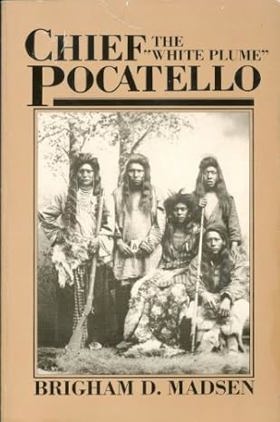
Dedicated to a people who faced starvation and destitution as white emigrating settlers continued to flock through his homeland, Pocatello was committed to preserving the life of his people. Even as game and land resources were severely depleted, he sought little other than to provide for his Shoshoni tribe. x, 142 pages : illustrations, maps, portraits ; 22 cm. CIRC [ 0 ]
|
1986 |
|
Historical celebrations a handbook for organizers of Diamond Jubilees, Centennials, and other community anniversaries by Keith C. Petersen 
This book is full of suggestions and checklists as well as sample press releases and a list of resources. A handbook for organizers of Diamond Jubilees, Centennials, and other community anniversaries. xxiv, 118 pages : illustrations ; 23 cm CIRC [ 0 ]
|
1986 |
|
History of Adams County, Washington by Adams County Historical Society (Wash) (Publisher) 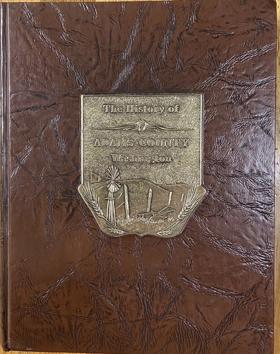
History of Adams County, Washington by the Adams County Historical Society is a comprehensive 1986 local history compiled to preserve the pioneer heritage and development of this east-central Washington region. The substantial volume offers detailed accounts of the county's agricultural roots, the growth of its civic institutions, and the enduring legacies of its founding residents. Ultimately, featuring extensive family genealogies, historical photographs, and records of early schools and churches, it serves as an invaluable, community-driven resource for genealogists and researchers seeking to understand the grassroots legacy and rural settlement of the Columbia Basin. 2 volumes : illustrations, portraits ; 29 cm CIRC [ 0 ]
|
1986 |
|
UniverCity the city within city, the story of the University District by Roy G. Nielsen 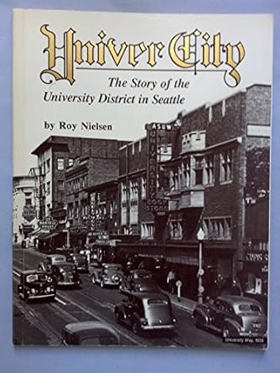
UniverCity: The City Within a City, The Story of the University District by Roy G. Nielsen is a detailed 1986 local history published by the University Lions Club Foundation that chronicles the evolution of Seattle's vibrant U-District. The book traces the neighborhood's dramatic transformation from a remote, wooded pioneer settlement originally known as Brooklyn into a bustling, self-sufficient urban enclave deeply intertwined with the 1895 relocation and subsequent expansion of the University of Washington. Nielsen meticulously details the commercial growth of "The Ave" (University Way), the establishment of local civic enterprises, and the unique social dynamic forged by the convergence of academics, students, and long-term residents. Ultimately, it serves as an invaluable, community-focused resource for regional historians seeking to understand the architectural, economic, and cultural forces that shaped one of Seattle's most distinct and historically rich neighborhoods. 167 pages : illustrations, maps ; 28 cm CIRC [ 1 ]
|
1986 |
|
Sandon, the mining centre of the silvery Slocan by Dave May 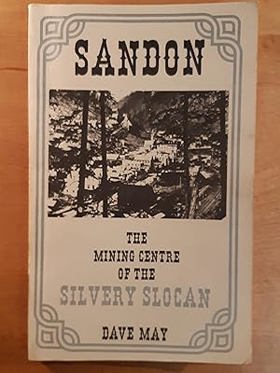
Sandon, the Mining Centre of the Silvery Slocan by Dave May is a 1986 regional history (self-published in Nelson, B.C.) that chronicles the dramatic rise, catastrophic decline, and resilient legacy of one of British Columbia's most famous mining boomtowns. The book traces Sandon's explosive 1890s transformation into a wealthy, fully electrified civic hub—often dubbed the "Monte Carlo of North America"—following massive silver-lead ore strikes in the West Kootenay region's Selkirk Mountains. May meticulously details the opulent business district and fierce local sports rivalries, alongside the grueling, hazardous working conditions faced by the miners, and the subsequent fires, labor strikes, and floods that ultimately reduced the bustling city to a renowned ghost town. Ultimately, it serves as an invaluable, grassroots record of the sheer grit, ambition, and tragic boom-and-bust cycles that defined Canada's legendary "Silvery Slocan" district. viii, 216 p. : ill., maps, ports. ; 24 cm. CIRC [ 0 ]
|
1986 |