Catalog of British Columbiana and Pacific Northwest Americana
Encyclopedia Cascadia Catalog contains book titles of mostly non-fiction Pacific Northwest Coast of North America Titles (primarially British Columbia, Idaho, Oregon and Washington State) in an easy-to-understand title catalog. If you see a link with this badge ONLINE CIRC it means that there is an online institution that provides free access to that title. In some cases there may be more than one institution hosting the title digitally.
| Catalog Title | Published |
|---|---|
|
Orcas Island by Orcas Island Historical Society, Orcas Island Historical Museum 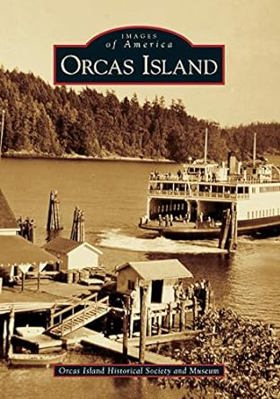
Presents a selection of vintage images culled from the archives of the Orcas Island Historical Society and Museum and a short history of Orcas Island. Orcas Island, the largest of the 172 islands in San Juan County, lies in the Salish Sea north of Puget Sound 128 pages : illustrations, map ; 24 cm. CIRC [ 1 ]
|
2007 |
|
Forgotten Cusheon Cove, Salt Spring Island by Charles Kahn, C. T. Hatfield 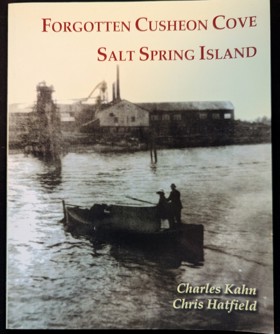
Imagine it's 1915 and you're on a small island in the Strait of Georgia with a population of just over 900. Now imagine a large sawmill with what was then state-of-the-art machinery on an isolated cove on the southeast side of the island. The mill employs up to 150 workers, many of them non-resident Norwe-gians, Swedes, Japanese, and Chinese. This is only a fragment of the story Chris Hatfield researched after he acquired the 100-acre site in 1984 and began finding items discarded by the different communities that had once lived there. Chris partly donated and partly sold most of the land to BC Parks in 2006. This little book explores the property's history. 53 p. : ill., maps, ports. ; 26 cm. CIRC [ 1 ]
|
2007 |
|
Soul of the city the Pike Place Public Market by Alice Shorett, Murray Morgan 
Pike Place Market is a space that annually draws more people than any of the city's major sporting and cultural events. It has a reputation among American markets that is comparable to Les Halles in Paris and Convent Garden in London - the difference being that it has survived. This book illustrates the many people who have fought to sustain it. 175, [1] pages : illustrations, map ; 26 cm CIRC [ 1 ]
|
2007 |
|
The first Oregonians by Laura Berg , Oregon Council for the Humanities (Issuing body) 
Originally published in 1991, The First Oregonians has been revised and expanded for a new generation of Oregonians. It provides a comprehensive view of Oregon's native peoples from the past to the present. In this remarkable volume, Oregon Indians tell their own stories—more than half of the chapters are written by members of Oregon's nine federally recognized tribes. Using oral histories and personal recollections, these chapters vividly depict not only a history of decimation and decline, but also a contemporary view of cultural revitalization, renewal, and continuity. The First Oregonians also includes essays by prominent Northwest scholars exploring geography, federal-Indian relations, language, and art. No other book offers as wide a variety of views and stories about the historical and contemporary experience of Oregon Indians. The First Oregonians is the definitive volume for anyone interested in the fascinating story of Oregon’s first peoples. Contributors: C. Melvin Aikens, Stephen Dow Beckham, Marilyn Couture, Douglas Deur, Yvonne Hajda, Eugene Hunn, Dell Hymes, Jennifer Karson, Robert Kentta, Bill Mercer, Brent Merrill, Wil Phinney, Michael Rondeau, Howard P. Roy, Minerva T. Soucie, Kathryn Anne Toepel, George B. Wasson, Jr., and Elizabeth Woody. xi, 348 pages : illustrations, maps, portraits ; 26 cm CIRC [ 1 ]
|
2007 |
|
The Methow Valley between home and heaven by Laura Hurwitz 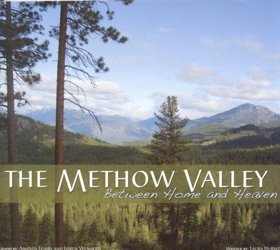
Washington's remote Methow Valley is a wild and extravagantly beautiful place that cradles an amazing diversity of wildlife, topography and people. Residents refer to this land of sparkling rivers, rugged mountains and dramatic seasons as home, while visitors, who flock to the area's unparalleled hiking, skiing, camping and biking, call it heaven. Professional, stunning photography and fluid, informative text highlight this gorgeous photo essay. For the discriminating adventurer and nature lover in everyone. vii, 88 pages : color illustrations ; 20 x 24 cm CIRC [ 1 ]
|
2007 |
|
Columbia Highlands exploring Washington's last frontier by Craig Romano, James Johnston (Illustrator) 
The beauty of the Columbia Highlands is subtle. It's measured by rays of sunlight filtering through a cathedral forest of ancient pines; a golden hillside teeming with deer; in the soft breezes that whistle through shiny snags. It's cherished for its vastness, its lack of human intervention, its rejuvenating properties, and its abundant wildlife. Columbia Highlands is a portrait of this-little known corner of the American West. It reveals its function as an important wildlife bridge between the Rockies and the Cascades for animals- including wolves, bears, moose, and lynx-who must roam to survive. It reveals the surprising coalition of people- hunters, hikers, loggers, business owners, Native people, and more-united in their love of the land and working to protect and restore it. Theirs is a new kind of conservation plan, one that preserves the health of the ecosystem while sustaining a viable rural economy and lifestyle 124 pages : illustrations (chiefly color), color maps ; 23 cm CIRC [ 1 ]
|
2007 |
|
Fortune's a river the collision of empires in northwest America by Barry M. Gough 
Finalist for the Writers' Trust Nereus Non-fiction Award. Finalist for the Roderick Haig-Brown Regional Prize, BC Book Prize. "Fortune's a River" is the most authoritative and readable account to date of just how British Columbia became British and how Oregon, Washington and Alaska became American. By the closing years of the 18th century, the stage was set for a major international confrontation over the Northwest Coast. Imperial Russia was firmly established in Alaska, Spain was extending its trade routes north from Mexico, Captain James Cook had claimed Northwest America for England and Captain Robert Gray had claimed the Columbia River region for the United States. Open warfare between Spain and England was narrowly averted during the Nootka Sound Controversy of 1789-1794, and again between Britain and the US in the War of 1812, when a British warship seized American property in Oregon. In "Fortune's a River," noted historian Barry Gough re-examines this Imperial struggle for possession of the future British Columbia and fully evokes its peculiar drama. It turned out the great powers were reluctant conquerors in this area. Russia and Spain withdrew of their own accord. Britain was in a position to dominate, but couldn't be bothered. The US vaguely wished to fulfill its manifest destiny by securing the Northwest Coast, but it was not a priority. In the end the battle was carried on by private enterprise and individuals of vision. Alexander Mackenzie established an overland route to the coast and with his partners Simon Fraser and David Thompson, set up a network of fur trading forts south to Oregon. US president Thomas Jefferson countered by sending out the Lewis and Clarkexpedition to strengthen American claims and an American entrepreneur, John Jacob Astor, established a lonely US outpost at Astoria. Gough examines each of the players in this territorial drama, bringing them fully to life and vividly recounting their hardships and struggles. "Fortune's a River" is a major historical work that reads like a wild west adventure. -- Publisher description 413 pages : illustrations, maps ; 24 cm CIRC [ 1 ]
|
2007 |
|
Can't you hear the whistle blowin' logs, lignite, and locomotives in Coos County, Oregon, 1850-1930 by William A. Lansing 
A one-of-a-kind readable history of the railroads that helped develop the timber and coal resources of Coos County, Oregon from 1850 to 1930. During the second half of the nineteenth century, the towns of Coos Bay, Oregon, grew from a few scattered homesteads to a bustling, ocean-going port. The area's phenomenal growth was fueled by timber and coal. Nothing was more important in developing these resources than railroads. Can't You Hear the Whistle Blowin' is the complete story of how these vital transportation links were built by daring entrepreneurs who drove lines of steel into the area's rugged mountains and deep canyons. From backwoods engines and wooden rails to town celebrations and bay-spanning bridges, Can't You Hear the Whistle Blowin' brings to life a time and place vital to the history of Oregon and the West. Author, William A. "Bill" Lansing has drawn upon decades of first-hand knowledge of the area, backed by hundreds of facts and figures, and countless hours of historical research, to produce a compendium of colorful stories of this robust time. 143 pages : illustrations, 1 color map ; 29 cm + 1 map (61 x 90 c.m.) in pocket CIRC [ 0 ]
|
2007 |
|
Visible bones journeys across time in the Columbia River country by Jack Nisbet 
How can you know a place? Historian and naturalist Jack Nisbet—author of Sources of the River: Tracking David Thompson Across Western North America—looks to the relics of a region to connect the present moment to the distant past. In the vast Western territory defined by the Columbia River, Nisbet tracks the stories and meaning of relics such as a trilobite fossil that points to a tropical prehistoric ecology; the nearly extinct California condor, once the largest thing in the skies, described with amazement by Meriwether Lewis; the indelible stain of the smallpox pandemic that overcame the native peoples of the West; a rare and socially potent strain of indigenous wild tobacco that reveals the presence of vestigial Indian practices; and the remains of one Jaco Finlay, a mixed-blood trapper and scout who seems to have been everywhere in the region two hundred years ago. All of these relics are the visible bones that show how past is present in the Columbia River Country. Together the stories these bones tell lays out a wholly original, hybrid history that connects nature with human endeavor, geography with the passage of time—all contribute to the biography of a place. The arrow of time travels in one direction, and this is usually how history is told: beginning to end. But Jack Nisbet is up to something else: journeys across time through a place, knitting past to present and back again to assemble a portrait of the land that marked the culmination of Lewis & Clark’s expedition, that saw the sad end of the Indian Wars with the flight of Chief Joseph, that has offered up fossil proof of mammoth species long extinct. In this western territory, the storied past is much in evidence. viii, 246 pages : illustrations, maps ; 23 cm CIRC [ 1 ]
|
2007 |
|
Let right be done Aboriginal title, the Calder case, and the future of Indigenous rights by Hamar Foster, Jeremy H. A. Webber, Heather Raven 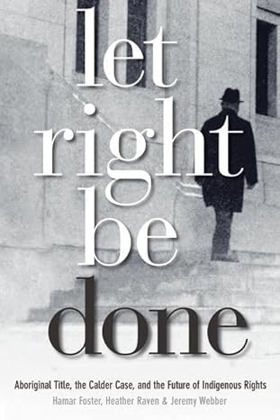
"In the early 1970s, many questioned whether Aboriginal title existed in Canada and rejected the notion that Aboriginal peoples should have rights different from those of other citizens. But in 1973 the Supreme Court of Canada issued a landmark decision in the Calder case, confirming that Aboriginal title constituted a right within Canadian law. Let Right Be Done examines the doctrine of Aboriginal title thirty years later and puts the Calder case in its legal, historical, and political context, both nationally and internationally. With its innovative blend of scholarly analysis and input from many of those intimately involved in the case, this book should be essential reading for anyone interested in Aboriginal law, treaty negotiations. and the history of the "BC Indian land question.""--Jacket viii, 337 pages : illustrations, map ; 24 cm CIRC [ 0 ]
|
2007 |
|
The Little Lucky a family geography by Gail Wells 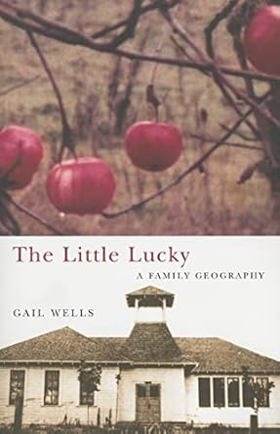
"When you live in an old house, the remodeling and rehabilitating never end. I guess the same is true when you belong to a family." A tumble-down schoolhouse and a loving, troubled family are at the heart of The Little Lucky, a reflection of the many ways in which a place can shape and be shaped by family. In discerning and nimble prose, Gail Wells tells the story of how she and her husband moved from their tiny Seattle apartment to her grandfather’s house, formerly an abandoned schoolhouse, near the Little Luckiamute River of western Oregon. They work earnestly to transform the slantwise structure into a home and discover both joy and frustration along the way. With wry clarity, Wells reveals the tangled dream of living in rural Oregon — a chronically flooded basement, mouse skeletons inside the bathroom walls, and the relentless struggle to fix the unfixable — all while raising a family and salvaging a place alive with memories. Amid the angst of tearing down and building up, Wells discovers something unexpected: a sense of honorable struggle and the grace of getting what you need rather than what you want. These stories reveal an intimate geography and the dynamic between family and a homeplace. And these are also stories of acceptance, "of doing what you can and letting the rest go; of learning what is precious and what is expendable; of the surprising solace of surrendering to the possible; and of gratitude for incredible good luck." 143 pages ; 22 cm CIRC [ 0 ]
|
2007 |
|
The prairie keepers secrets of the Zumwalt by Marcy Cottrell Houle 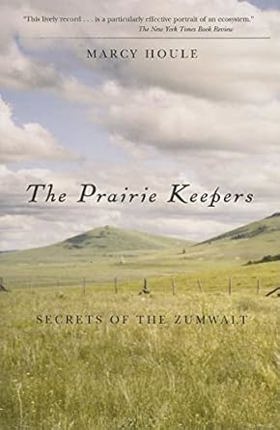
In the remote northeast corner of Oregon lies the ruggedly beautiful Zumwalt Prairie, one of the last native prairies in the United States. A wild expanse of untilled ground covering nearly two hundred square miles, the Zumwalt is almost entirely managed by cattle ranchers. It also is home to one of the highest concentrations of hawks in North America. Marcy Houle, a wildlife biologist and student, first went to the Zumwalt in 1979 to discover what attracts and sustains the hawks there in such startling abundance. Houle explores the vast prairie on foot and horseback, cataloging its hawks, studying its complex ecosystem, and meeting its people. Fueled by her youth, her spirit, her humor--and in part by her naivete--she bands birds, outruns a bull, and pulls together the factious community of ranchers, townspeople, and government employees. Her findings, eloquently reported, show that ranchers and wildlife not only can coexist, but in some instances must coexist if we are to save the last of the native prairies. In a new epilogue, Houle writes of the Zumwalt two decades later. Despite tremendous changes occurring in the American West, she finds reason for hope in the Zumwalt--in the hawks and ranchers still there, and also in new partnerships that encourage stewardship and sustainable cattle grazing. 274 pages ; 22 cm CIRC [ 0 ]
|
2007 |
|
Teaching Oregon native languages by Joan Gross 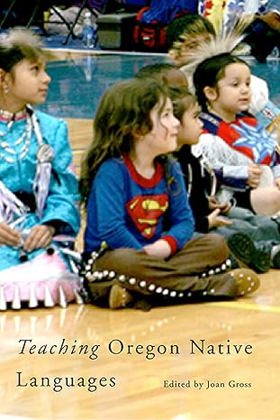
In a world where over half of the remaining 6000 languages will most likely disappear by the end of the century, attention has finally begun to focus on the struggles of indigenous people to save their languages. Lack of knowledge concerning the vast linguistic diversity of Oregon's languages has been a major obstacle to language revitalization in this state. Native peoples were subjected to disease, displacement, and forced linguistic assimilation, leaving many languages with only a few speakers. Some languages died out, but others prevailed in the privacy of homes and longhouses. This book tells the story of perseverance and survival against unbelievable odds, using the words of today's speakers and learners of Oregon's languages. Interviews with 52 native speakers provide valuable insights into how languages are lost and how a linguistic heritage can be brought to life. Teaching Oregon Native Languages discusses the role of state and federal language policies, explores how archival collections can be used in language revitalization, and describes strategies for creating a successful teaching environment. A timely and necessary resource, it will educate all readers about the important efforts underway to revitalize Oregon's first languages. viii, 168 pages : illustrations, maps ; 24 cm CIRC [ 0 ]
|
2007 |
|
To harvest, to hunt stories of resource use in the American West by Judy L. Li 
To Harvest, To Hunt reveals how diverse peoples have valued and used natural resources throughout the history of the American West. Drawing on family letters, oral traditions, historical records, and personal experience, the book's contributors offer readers new perspectives on the land they live on, the harvests they consume, and the natural resources they manage. Editor Judy Li weaves a tapestry of cultures and voices – from Pueblo tribes in the Southwest and Chinese fishermen in California to Mexican braceros in Oregon and Basque sheepherders in Idaho – as she details the region's historical dependence on the land and sea. Otter, walrus, abalone, grasslands, timber, and water are some of the vital resources discussed by writers, anthropologists, historians, and biologists in stories that tell how cultures struggle to adapt in changing environments. Spanning the last 200 years, To Harvest, To Hunt represents Native Americans, Native Alaskans, and Mexican, European, and Asian immigrants as varied in their perspectives as the landscapes the book describes. Readers will come to appreciate the region's once-abundant resources and find this book an illuminating overview of the dynamic between people and the land. Contributors: John Bieter, Dolly Garza, Erlinda Gonzales-Berry, Steven W. Hackel, David Hatch, Deanna Kingston, Jim LeMonds, Irene Martin, David Mas Masumoto, Margaret Mathewson, John Nichols, Patti Sakurai, and Charles Wilkinson. 192 pages : illustrations ; 23 cm CIRC [ 0 ]
|
2007 |
|
Forest of time a century of science at Wind River Experimental Forest by Margaret J. Herring, Sarah Greene 
The Wind River Experimental Forest has been called the cradle of forestry in the Pacific Northwest, a place of groundbreaking discoveries in forest genetics and ecology. Forest of Time follows 100 years of forest science at Wind River, as social and scientific changes transformed the 20th century and the Pacific Northwest forest itself. It is a story of discovery and blindness, of opportunities taken and missed, in a forest dedicated to long-term research. The Forest Service began research at Wind River in 1908 to learn the secrets of the giant Douglas fir. During the course of the century, generations of scientists studied the forest, and their conclusions changed through time. Initially, Wind River scientists saw the region in need of protection from fire and careless logging. They saw scorched, cutover land that required replanting. Later they saw the forest in need of improvement, needing to be freed from pests and unprofitable species and replaced with thrifty, fast-growing plantations. Wind River soon became a laboratory where foresters from around the world came to learn how to grow the best possible lumber in the shortest amount of time. As plantations replaced natural stands, scientists came to Wind River to explore the complexity of old-growth forest ecosystems. And today, Wind River is the center of a 21st century exploration of forest canopies and the global connection between forests and atmosphere. In Forest of Time, Margaret Herring and Sarah Greene show readers how science grows and changes in unexpected ways, much like a forest through time. ix, 188 pages : illustrations, maps ; 23 cm CIRC [ 0 ]
|
2007 |
|
Here there nowhere paintings by Michael Brophy, Jonathan Raban, William L. Lang, Randy Gragg 
Michael Brophy has painted the Pacific Northwest landscape for over two decades, from sumptuously rendered panoramas of clearcuts and slag heaps to comic-book-scaled noir tableaus of the characters who reshaped the region 150 years ago. This large-scale monograph brings 15 of his most historically expansive paintings to date together with writings on the artistic and cultural history of the Northwest landscape by essayist Jonathan Raban and historian William L. Lang. The influences on Brophy’s painting stretch from Goya and Velasquez to Robert Colescott and George Baselitz. He has riffed on everything from obscure Wobbly songs to Chinook jargon dictionaries to the writings of Stewart Holbrook. But Here There Nowhere marks a bold new direction in Brophy’s work. More sweeping in scope and minimalist in style, the paintings portray what he calls the "Big Empty," the dramatic, vacant spaces of the Northwest's eastern deserts and western coast but with an eye toward the coming endgame of Manifest Destiny. Raban's essay, Battleground of the Eye, traces two centuries of artistic conflict between the verdant, people-free Northwest most painters chose to portray vs. the fully populated and exploited landscape that actually existed. Lang's essay, An Insatiable Hunger: The Consuming Myth of the Northwest, probes the changing mythology of Pacific Northwest landscape as it has progressed from an apparently infinite resource for extractive industries to a playground for an expanding consumer class. Designer John Laursen has translated the sweeping power of Brophy's work to the scale of a 12-by-12-inch book with the 200-line reproductions imaged direct to plate and printed by Portland’s award-winning Millcross Litho. 49 pages : color illustrations ; 30 x 31 cm CIRC [ 0 ]
|
2007 |
|
Drawing lines in the forest creating wilderness areas in the Pacific Northwest by Kevin R. Marsh 
Drawing boundaries around wilderness areas often serves a double purpose: protection of the land within the boundary and release of the land outside the boundary to resource extraction and other development. In Drawing Lines in the Forest, Kevin R. Marsh discusses the roles played by various groups—the Forest Service, the timber industry, recreationists, and environmentalists—in arriving at these boundaries. He shows that pragmatic, rather than ideological, goals were often paramount, with all sides benefiting. After World War II, representatives of both logging and recreation use sought to draw boundaries that would serve to guarantee access to specific areas of public lands. The logging industry wanted to secure a guaranteed supply of timber, as an era of stewardship of the nation's public forests gave way to an emphasis on rapid extraction of timber resources. This spawned a grassroots preservationist movement that ultimately challenged the managerial power of the Forest Service. The Wilderness Act of 1964 provided an opportunity for groups on all sides to participate openly and effectively in the political process of defining wilderness boundaries. The often contentious debates over the creation of wilderness areas in the Cascade Mountains in Oregon and Washington represent the most significant stages in the national history of wilderness conservation since World War II: Three Sisters, North Cascades and Glacier Peak, Mount Jefferson, Alpine Lakes, French Pete, and the state-wide wilderness acts of 1984. xv, 227 pages, 16 unnumbered pages of plates : illustrations, maps ; 24 cm. CIRC [ 0 ]
|
2007 |
|
Recording their story James Teit and the Tahltan by Judy Thompson 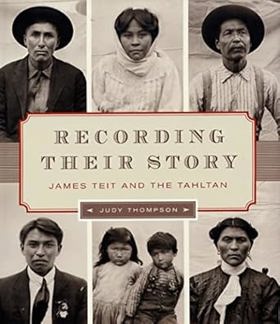
Recording Their Story describes the life of James Teit, one of Canada's earliest ethnographers, and his work among the Tahltan people of northern British Columbia almost a century ago. Teit's work collecting artifacts, taking photographs, recording songs, transcribing myths, and gathering information about social organization, ceremonial life, customs, and beliefs has proved invaluable. Today, this collection is the most important extant assemblage of the Tahltan's heritage. James Teit emigrated from the Shetland Islands to British Columbia in 1884, at the age of nineteen. He reveled in the outdoor life and became, among other things, a hunting guide, a linguist who spoke several aboriginal languages fluently, and an activist for Native rights. Teit's connection to the Canadian Museum of Civilization and his ethnographic work among the Tahltan began in 1911, when he was invited to join the staff of the new Anthropology Division of the Geological Survey of Canada. Teit then worked among the Tahltan, at their request and with the participation of many within the community, in both 1912 and 1915. Judy Thompson's examination of Teit's extensive correspondence, fieldwork notebooks, diaries, and manuscripts illustrates how James Teit's life and work impacted his major ethnographic studies. Recording Their Story is part biography and part catalog of the Tahltan ethnographic collection. The book is richly illustrated throughout with 71 rare historic photographs, 51 beautiful color images of ethnographic artifacts, six line drawings, and three maps. xi, 207 pages : illustrations (some color), maps (some color) ; 29 cm CIRC [ 0 ]
|
2007 |
|
Plowed under agriculture & environment in the Palouse by Andrew P. Duffin 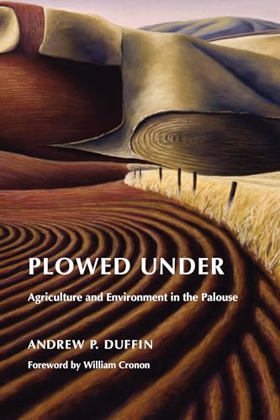
"In Plowed Under, Andrew P. Duffin traces the transformation of the Palouse region of Washington and Idaho from land thought unusable and unproductive to a wealth-generating agricultural paradise, weighing the consequences of what this progress has wrought. During the twentieth century, the Palouse became synonymous with wheat, and the landscape was irrevocably altered. At the dawn of the twenty-first century, native vegetation is almost nonexistent, stream water is so dirty that it is often unfit for even livestock, and 94 percent of all land has been converted to agriculture. Commercial agriculture also created a less noticeable ecological change: soil erosion." "Duffin argues for a candid look at the land, its people, their decisions, and the repercussions of those decisions in the hope of charting a better, more sustainable future. As he notes, the debate is not over whether to use the land, but over what that use will look like and its social and ecological results."--Jacket xv, 240 pages, 16 unnumbered pages of plates : illustrations, maps ; 24 cm. CIRC [ 0 ]
|
2007 |
|
Tales of the tract the beginnings of Twin Falls, Idaho and the "Magic" Valley by James F. Varley 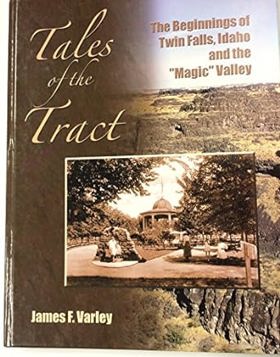
Collection of forty-six stories chronicling the events surrounding the building of the great Carey act irrigation project that has transmuted a once barren desert into what is now called the "Magic" Valley. The book tells the personal stories of pioneers who got that job done, and who founded the city of Twin Falls, and first made it prosper -- people like Ira Perrine, John Hansen, Paul Bickel, John and Anna Hayes, and many others ix, 176 pages : illustrations, maps ; 29 cm CIRC [ 1 ]
|
2008 |
|
Upriver voices tales of Skykomish by Nancy Cleveland, Anne Sekor, Jim Ojala, Skykomish Historical Society 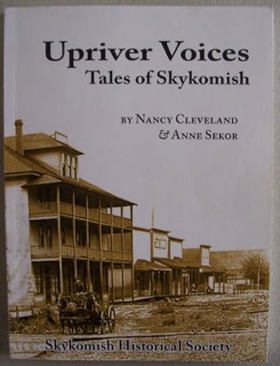
Published by the Skykomish Historical Society, Upriver Voices: Tales of Skykomish compiles local oral histories, archival photographs, and pioneer recollections to chronicle the dramatic evolution of the upper Skykomish River valley in Washington. The narrative captures the raw realities of a rugged mountain frontier shaped by the timber industry, the grueling construction of the Great Northern Railway, and the sheer grit required to carve isolated hamlets out of the Cascade foothills. Through the preserved voices of loggers, railway workers, and families, the volume documents the social fabric and daily hardships of a transient industrial community. A keen insight drawn from the text is how its grassroots, multi-author preservation approach exposes the fragile permanence of mountain boomtowns; by centering the firsthand accounts of ordinary workers rather than corporate boardrooms, the book illustrates how the relentless cycles of resource extraction left behind tight-knit communities defined just as much by communal resilience as by corporate transience. 166 pages : illustrations ; 20 cm CIRC [ 1 ]
|
2008 |
|
Out our back door Oregon south coast driving tours and day-hikes by Tom Baake 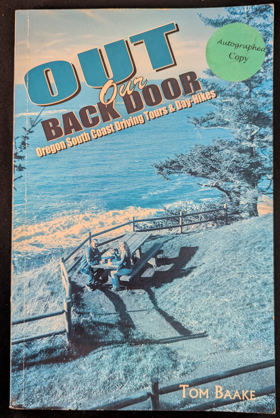
Discover the wonders of Oregon's beautiful South Coast, from unspoiled beaches and the vast Oregon Dunes, to lush river valleys and soaring forest mountaintops. Let this guidebook lead you to the region's world-famous scenery, and to some of its overlooked treasures. Coos Bay outdoor writer Tom Baake explores the region's popular scenic spots and visits the "back road" places, with an emphasis on easy day-hikes and driving loop tours. Destinations include Shore Acres State Park --spectacular seaside setting and gardens of a former lumber baron as well as Golden and Silver Falls State Park, twin cascades in a protected stand of old growth forest. Another tour takes you to South Slough, the nation's first protected estuary. With plenty of places to stop for a picnic and fun, you'll visit forest groves, see unusual geology, get inspired by waterfalls, wander the beaches and ridges, and experience life in this fascinating region. Wildflowers and wild rhododendrons line the way on many of the roads, while autumn colors are a delight. There's added information on camping, biking, paddling, boating, fishing, even a chapter on "what to do on a rainy day." Most of all, it's a book about picnics - so let's go! 183 pages : illustrations, maps ; 22 cm CIRC [ 1 ]
|
2008 |
|
Wings over Idaho an aviation history by Arthur A. Hart 
Wings Over Idaho began as a modest overview of the history of aviation in Boise, Idaho, and grew into a history embracing the whole state. The wonder of flight made Idaho's thousands of square miles of mountains and wilderness passable by plane in hours rather than weeks. 175 pages : illustrations ; 28 cm CIRC [ 0 ]
|
2008 |
|
Owyhee canyonlands by Mark Lisk, William L. Fox 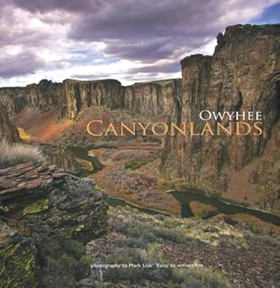
A beautifully designed book of photos celebrating the rugged Owyhee Mountain Canyonlands. The high desert of Owyhee Country contains some of the most spectacular, pristine canyonlands in the United States. A nationally recognized outdoor photographer, Mark Lisk s photographs of the Owyhees along with an essay by William Fox bring the rugged beauty of this Idaho and Oregon region to life. 120 pages : color illustrations ; 26 cm CIRC [ 0 ]
|
2008 |
|
A father and an island reflections on loss by O. Alan Weltzien 
As author Ann Ronald notes, "Simultaneously a paean to his father and a personal memoir about a changing landscape caught by a ‘rising tide of affluence,’ Alan Weltzein’s A Father and an Island:Reflections on Loss, echoes my own Pacific Northwest youth—the endless saltwater summers, the quirky behavior of a bookworm, the sweet sharp tang of blackberry cobbler, the fierce games of badminton, the beachcombing days of discovery, the blessedness of parents well loved. Anyone who’s grown up in and around Puget Sound will find familiar memories triggered on every delicious page. Some sweet,some nostalgic, some downright sad, they’re all here in this poignant remembrance of things past." Northwest author Mary Clearman Blew writes, "In this moving tribute to his father and his family’s home on a Puget Sound island,Alan Weltzein returns us to a time when summers were glorious and children played all day long on beaches that were still unexploited and unrestricted—a pleasure to read." Weltzien's memoir is an essential book for Northwest Letters. 288 pages ; 22 cm CIRC [ 1 ]
|
2008 |