Catalog of British Columbiana and Pacific Northwest Americana
Encyclopedia Cascadia Catalog contains book titles of mostly non-fiction Pacific Northwest Coast of North America Titles (primarially British Columbia, Idaho, Oregon and Washington State) in an easy-to-understand title catalog. If you see a link with this badge ONLINE CIRC it means that there is an online institution that provides free access to that title. In some cases there may be more than one institution hosting the title digitally.
| Catalog Title | Published |
|---|---|
|
Oregon, end of the trail by Writers' program. Oregon
|
1940 |
|
Building a state Washington, 1889-1939 by Washington State Historical Society, Charles Miles , Ottis Bedney Sperlin
|
1940 |
|
Coos narrative and ethnologic texts by Melville Jacobs
|
1939 |
|
San Juan Islands, the Cronstadt of the Pacific by Archie W. Shiels
|
1938 |
|
History of Alturas and Blaine counties, Idaho by George A. McLeod
|
1938 |
|
|
1938 |
|
Odd place names and their origin by United States Works Progress Administration, Federal Writers' Project (Or), Historical Records Survey (Or), Oregon State Board of Control
|
1938 |
|
A pictorial history of the state of Washington by Ralph Ernest Downie 
157, ii pages including color frontispiece, illustrations plates, portraits, folded map 26 cm CIRC [ 1 ]
|
1937 |
|
Nature rambles in the Wallowas sketches of the natural history of northeastern Oregon by Elmo Nall Stevenson 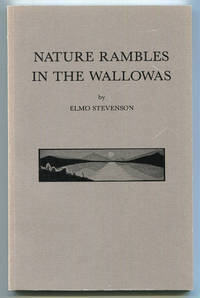
Sketches of the natural history of northeastern Oregon. 100 pages including plates : illustrations, map ; 23 cm CIRC [ 1 ]
|
1937 |
|
By Juan de Fuca's strait pioneering along the northwestern edge of the continent by James G. McCurdy 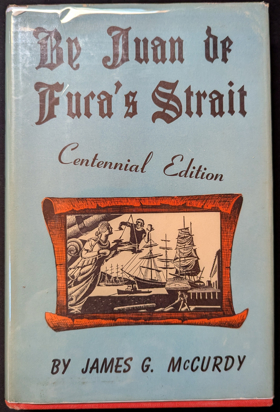
In this provocative and illuminating book, Marianna Torgovnick explores the psychology of our profound attraction to cultures we call "primitive." Whether located in Africa, the South Pacific, or the American Southwest, the primitive has become synonymous in the Western imagination with a range of emotions and experiences thought to be lost in modern life: reverence for the land and for nature; strong communal bonds; sexual plentitude; and, perhaps most intriguing, and ecstatic sense of connection to the universe and the life force. Torgovnick investigates the numerous ways we have turned toward the primitive out of spiritual hunger for such deeply human experiences - a hunger that could once be satisfied within the West's own mystical traditions but that often no longer can be. Brilliantly encompassing religion, art, psychology, literature, and other aspects of our culture, Primitive Passions offers new insight into our ideas of spirituality and gender, and, ultimately, into the hidden but vital parts of ourselves 312 pages frontispiece (map), illustrations (including portraits, facsimiles) 22 cm CIRC [ 1 ]
|
1937 |
|
Legends of the Klickitats a Klickitat version of the story of the bridge of the gods by Clarence Orvel Bunnell
Published in 1933 by Clarence Orvel Bunnell, Legends of the Klickitats: A Klickitat Version of the Story of the Bridge of the Gods presents an adaptation of regional Native oral traditions concerning the great landslide and natural stone arch that once spanned the Columbia River Gorge. Written as a dramatic, quasi-mythological narrative, Bunnell frames the text as a faithful preservation of tribal lore passed down through the Klickitat people, detailing the titanic mythological battles of the creator spirit Tyee Sahale and the cataclysmic destruction of the land bridge. Rather than an academic transcription, the work is heavily stylized for a popular white readership, blending Euro-American literary conventions with romanticized Indigenous motifs to capture the dramatic antiquity of the Pacific Northwest landscape. A keen insight drawn from the work is how the cultural appropriation of Indigenous oral tradition functioned to safely domesticate and re-conquer the landscape for the settler-colonial imagination. By filtering Native creation narratives through a heavily romanticized, melodramatic literary lens, Bunnell effectively stripped the local tribes of their living political sovereignty and contemporary existence, reducing them to legendary phantoms tethered exclusively to geological deep time. This historiographical and literary maneuver allowed white settlers to emotionally colonize the Columbia River Gorge; by absorbing local Indigenous mythology into the regional folklore of the American frontier, the settler state could claim a deep, quasi-spiritual ancestry in the territory while simultaneously erasing the actual, displaced descendants who continued to inhabit the landscape. 48 pages, 1 unnumbered leaf of plates : illustrations ; 23 cm CIRC [ 1 ]
|
1935 |
|
History of Oregon literature by Alfred Powers , Bernard Hinshaw (Illustrator)
7 preliminary leaves, [3]-809 pages (including frontispiece) : portraits, plates, facsimiles ; 23 cm ONLINE CIRC [ 1 ]
|
1935 |
|
History of Oregon literature by Alfred Powers , Bernard Hinshaw (Illustrator)
7 preliminary leaves, [3]-809 pages (including frontispiece) : portraits, plates, facsimiles ; 23 cm CIRC [ 1 ]
|
1935 |
|
Honey in the horn by H. L. Davis 
H.L. Davis' earthy and humorous look at a young man learning self-reliance in the Oregon wilderness after family complications and problems from a jailhouse delivery push him out on his own among horse traders, jail breakers, fortune hunters, suspected murderers, and wide-eyed innocents. His tale of regional history is the story of our American culture. Set in Oregon in the early years of the twentieth century, H. L. Davis’s Honey in the Horn chronicles the struggles faced by homesteaders as they attempted to settle down and eke out subsistence from a still-wild land. With sly humor and keenly observed detail, Davis pays homage to the indomitable character of Oregon’s restless people and dramatic landscapes without romanticizing or burnishing the myths. Clay Calvert, an orphan, works as a hand on a sheep ranch until he stumbles into trouble and is forced to flee. Journeying throughout the state, from the lush coastal forests, to the Columbia Gorge, to the golden wheat fields east of the Cascades, he encounters a cast of characters as rich and diverse as the land, including a native Tunne boy and a beautiful girl named Luce. Originally published in 1935, Honey in the Horn reveals as much about the prevailing attitudes and beliefs during H. L. Davis’s lifetime as it does about the earlier era in which it is set. It transcends the limitations of its time through the sheer power and beauty of Davis’s prose. Full of humor and humanity, Davis’s first novel displays a vast knowledge of Pacific Northwest history, lore, and landscape. The only Oregon book that has ever won a Pulitzer Prize for fiction, this classic coming-of-age novel has been called the “Huckleberry Finn of the West.” With a new introduction by Richard W. Etulain, this important work from one of Oregon’s premier authors is once again available for a new generation. 380 pages ; 22 cm CIRC [ 0 ]
|
1935 |
|
The Lummi Indians of northwest Washington by Bernhard J. Stern
BASED ON THE AUTHOR'S ETHNOLOGICAL RESEARCH IN 1928-1929. INTERVIEWS WERE CONDUCTED WITH JOSEPH HILLAIRE, FRANK HILLAIRE, AUGUST MARTIN, WILLIAM McCLUSKEY AND MR. AND MRS. MATT PAUL 127, [1] p. front., plates, map. 26 cm. CIRC [ 1 ]
|
1934 |
|
Boise, the peace valley by Annie Laurie Bird
Published in 1934 by Idaho educator and regional historian Annie Laurie Bird, Boise, the Peace Valley is a localized civic history charting the evolution of the Boise River basin from a prominent fur-trade waypoint into the urban and agricultural epicenter of the state. Drawing upon early explorer journals, pioneer diaries, and territorial records, Bird chronicles the expeditions of Wilson Price Hunt, the establishment of the original Hudson's Bay Company Fort Boise, the massive migrations along the Oregon Trail, and the eventual 1862 gold rush that catalyzed permanent American settlement. The narrative leans heavily into the romantic motif of the valley as an idyllic, timbered sanctuary—an essential oasis of respite for weary overland emigrants navigating the punishing, arid expanses of the Snake River Plain. Operating as a classic regional monument, the book is designed to immortalize the pioneer endurance and capitalist enterprise that transformed an untamed geographic resting stop into a prosperous, irrigated metropolis. A keen insight drawn from the work is how the strategic branding of the region as a "peace valley" functions to fundamentally depoliticize a fiercely contested landscape. By defining the basin primarily as an innate, natural sanctuary destined by geography to nurture and shelter Anglo-American travelers, Bird’s narrative effectively recharacterizes a vital Indigenous homeland—traditionally managed and defended by the Shoshone, Bannock, and Northern Paiute peoples—as a passive, welcoming haven awaiting colonial occupancy. This historiographical maneuver subtly sanitizes the violent realities of the era, notably the 1863 establishment of a United States military fort specifically designed to crush Native resistance and enforce territorial enclosure. By framing the landscape as inherently cooperative to pioneer settlement, the text allows readers to view the subsequent systemic displacement of Indigenous populations not as a hostile military invasion, but as the peaceful, inevitable inheritance of a valley practically begging for American cultivation. 408 pages illustrations 20 cm CIRC [ 1 ]
|
1934 |
|
Echoes of the Grande Ronde by Bert Huffman, Eldridge Huffman (Compiler)
Published in 1934 in La Grande, Oregon, and compiled by Eldridge Huffman, Echoes of the Grande Ronde is a collection of regional poetry and prose by Bert Huffman, a prominent newspaperman widely celebrated by his contemporaries as the "Poet Laureate of Eastern Oregon". The volume operates as a literary tribute to the landscapes and pioneer heritage of the Grande Ronde Valley and the broader Inland Empire. Through highly romanticized verse, Huffman mythologizes the overland migrations, the rugged endurance of early homesteaders, and the region's sweeping transition from "untamed" wilderness to a productive agricultural basin. Frequently appropriating Indigenous mythology and historical figures—such as his framing of Sacagawea as a "patron saint" of American empire—the collection weaves the narrative of westward expansion into a grand, almost biblical epic of Manifest Destiny. A keen insight drawn from the work is how regional poetry and romantic literature functioned as a profound emotional mechanism to naturalize colonial displacement. By heavily utilizing the "Vanishing Indian" trope—most notably in wistful verses lamenting the fading presence of the Umatilla, Cayuse, and Nez Perce peoples—Huffman's poetry effectively aestheticizes the violence of settler colonialism. This literary maneuver transforms active, systemic territorial dispossession into a tragic, natural, and inevitable melancholic fading, akin to the passing of the seasons. Consequently, the text allows the descendants of white settlers to indulge in a sentimental, guiltless nostalgia for the region's original inhabitants, all while morally validating the permanent agricultural enclosure of the Grande Ronde Valley as the glorious, divinely ordained triumph of American civilization. 87 pages illustrations (portrait) 24 cm CIRC [ 1 ]
|
1934 |
|
Four wagons west the story of seattle by Roberta Frye Watt
Published in 1931 by Roberta Frye Watt—the granddaughter of city founder Arthur A. Denny—Four Wagons West: The Story of Seattle is a deeply nostalgic, familial hagiography chronicling the pioneer origins of the Pacific Northwest’s largest metropolis. The text traces the Denny Party’s grueling overland migration, their iconic 1851 landing at Alki Point, and the subsequent establishment of the first sawmills and civic institutions on Elliott Bay. Writing the city’s history as a cherished family heirloom, Watt relies heavily on pioneer diaries and ancestral lore, detailing the pioneers' paternalistic relationship with Chief Seattle and their defense of the settlement during the Puget Sound War of 1856. The book ultimately functions to cement the original white founding families as the undisputed moral and civic aristocracy of the region. A keen insight drawn from the work is how the narrative weaponizes maternal pioneer nostalgia and domestic intimacy to sanitize the aggressive mechanics of urban colonial expansion. By framing the establishment of Seattle not as a calculated, capitalist enterprise of land speculation, but as a cozy, inevitable, and divinely guided family triumph, Watt successfully domesticates the violent dispossession of the Duwamish people. This historiographical maneuver effectively reduces Indigenous sovereignty to a romanticized backdrop, transforming figures like Chief Seattle into tragic, benevolent props who seemingly exist only to willingly bequeath the landscape to its "destined" white inheritors. Consequently, the text allows the city's pioneer elite to legally and morally absolve themselves of the ongoing, systemic erasure of the region's original inhabitants. CIRC [ 1 ]
|
1933 |
|
Spanish explorations in the Strait of Juan de Fuca by Henry R. Wagner, Fine Arts Press (Santa Ana, Calif) (Publisher)
Thorough, scholarly study of this important aspect of the exploration of the Pacific Coast of North America. The Quimper Expedition, the Eliza Expedition, and the Galiano-Valdes Expedition are among the Spanish Expeditions presented here v, 323, [1] pages : maps (some folded) ; 28 cm CIRC [ 1 ]
|
1933 |
|
Men of Champoeg a record of the lives of the pioneers who founded the Oregon government by Caroline C. Dobbs
Published in 1932 by Caroline C. Dobbs, Men of Champoeg: A Record of the Lives of the Pioneers Who Founded the Oregon Government is a highly romanticized biographical encyclopedia dedicated to the region's Anglo-American founding fathers. The text meticulously catalogs the lives of the fifty-two men who famously voted on May 2, 1843, at the Champoeg meetings to establish the Provisional Government of Oregon, a critical political maneuver that helped secure the territory for the United States against the interests of the British Hudson's Bay Company. Through glowing pioneer hagiography, Dobbs compiles their genealogies, overland migration struggles, and civic achievements, deliberately elevating a makeshift, ad-hoc frontier assembly into a sacred, foundational moment of democratic destiny on par with the American Revolution. A keen insight drawn from the work is how the meticulous cultivation of a localized founding myth functioned to legally and morally erase pre-existing Indigenous sovereignty. By hyper-focusing the narrative of Oregon's political genesis exclusively on a singular, dramatic legislative vote between white American settlers and French-Canadian trappers, Dobbs conceptually redefines the Willamette Valley as a vacant geopolitical chessboard contested only by European powers. This historiographical maneuver successfully transforms the establishment of the Provisional Government into the miraculous birth of civilization out of an imagined wilderness, actively demanding that readers revere the architects of the pioneer state while completely obscuring the systemic dispossession of the Kalapuya people, whose ancestral lands served as the very stage for this celebrated frontier democracy. 6 preliminary leaves, 218 pages, 1 leaf, 9 unnumbered pages of plates : frontispiece, illustrations, portraits ; 21 cm CIRC [ 1 ]
|
1932 |
|
A union list of manuscripts in libraries of the Pacific Northwest by Charles W. Smith, Pacific Northwest Library Association
Compiled in 1931 by University of Washington librarian Charles W. Smith and published under the auspices of the Pacific Northwest Library Association, A Union List of Manuscripts in Libraries of the Pacific Northwest serves as a foundational archival inventory designed to formalize and professionalize regional historical research. Building on his earlier bibliographies of published works, Smith meticulously aggregated and mapped the locations of unpublished primary sources—such as pioneer diaries, missionary letters, fur trade ledgers, and territorial government correspondence—scattered across various regional institutions. The catalog effectively centralized the disparate, raw textual artifacts of early Anglo-American settlement, transforming them into a cohesive, searchable database for academic historians. A keen insight drawn from the work is how the bureaucratic cataloging of unpublished archival material functioned as a profound mechanism of epistemological enclosure; by strictly defining authentic historical "manuscripts" as the written, paper artifacts generated exclusively by white settlers, bureaucrats, and missionaries, Smith’s inventory institutionalized the absolute supremacy of the colonial written word. This seemingly neutral archival project structurally barred Indigenous oral histories, material records, and active cultural memory from the realm of legitimate, academically recognized "primary sources." Consequently, it guaranteed that the definitive history of the Pacific Northwest would be researched, written, and validated almost entirely through the literal handwriting of the very people who engineered its colonization. 57 pages 23 cm. CIRC [ 0 ]
|
1931 |
|
Our Pacific County by Lewis R. Williams 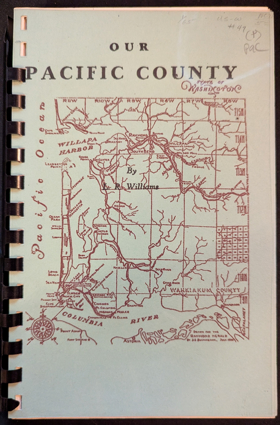
Published in 1930 by local historian Lewis R. Williams, Our Pacific County is a localized civic history detailing the American settlement and economic development of Washington State’s southwestern coast, centered primarily around the resource-rich waters of Willapa Bay (formerly Shoalwater Bay) and the Columbia River estuary. The text chronicles the region's rapid transformation from the domain of early maritime explorers to a bustling hub of pioneer commerce, focusing heavily on the highly lucrative early oyster trade that supplied Gold Rush-era San Francisco, as well as the subsequent rise of massive industrial logging and commercial salmon canning. Compiling local lore, civic milestones, and nostalgic pioneer reminiscences, the book operates as a celebratory tribute to the establishment of frontier towns like Oysterville, South Bend, and Raymond. A keen insight drawn from the work is how the narrative utilizes the romance of frontier resource extraction to morally launder the dispossession of the region's Indigenous maritime societies. By framing the aggressive, often ecologically devastating harvesting of Willapa Bay's native oysters and old-growth timber purely as a heroic tale of pioneer grit and capitalist enterprise, Williams conceptually redefines a complex, sustainably managed Indigenous homeland—historically governed by the Chinook and Chehalis peoples—into a wild, unclaimed repository of raw capital. This historiographical maneuver structurally sanitizes the colonial project, demanding that the systemic displacement of Native populations and the outright monopolization of their traditional marine resources be remembered not as an act of territorial and economic conquest, but as the spirited, inevitable triumph of American industrial progress. 104 pages : illustrations, map ; 22 cm CIRC [ 1 ]
|
1930 |
|
Sir James Douglas and British Columbia by W. N. Sage
Authored in 1930 by University of British Columbia historian Walter Noble Sage, Sir James Douglas and British Columbia is a foundational academic biography chronicling the life of the man widely heralded as the "Father of British Columbia." The text meticulously traces the geopolitical transition of the Pacific coast from the sprawling, resource-extracting corporate fiefdom of the Hudson’s Bay Company into a formal, legally structured British Crown colony. Sage emphasizes Douglas’s autocratic but stabilizing governance during the chaotic influx of tens of thousands of American miners during the 1858 Fraser River Gold Rush, framing his tenure as the critical administrative bulwark that successfully secured British sovereignty in the Pacific Northwest against the aggressive tide of American Manifest Destiny. A keen insight drawn from the work is how the academic reliance on the "Great Man" theory of history functions to morally validate the mechanics of imperial state formation. By framing Douglas as a pragmatic, enlightened patriarch who single-handedly imposed civilized British law upon an unruly frontier of rowdy prospectors and "untamed" Native populations, Sage effectively sanitizes the inherent violence of colonization. This historiographical maneuver subtly recasts the systemic dispossession of First Nations peoples—including Douglas's own highly contested, paternalistic land policies and inadequate reserve allocations—not as acts of territorial theft, but as necessary, sober administrative burdens managed by a benevolent British bureaucracy. Consequently, the establishment of the modern province is memorialized as a triumph of dignified imperial order over wilderness, structurally obscuring the profound colonial trauma embedded in its legal foundation. 398 pages folded map 25 cm. ONLINE CIRC [ 1 ]
|
1930 |
|
A history of central Washington including the famous Wenatchee, Entiat, Chelan and the Columbia Valleys with an index and eighty scenic-historical illustrations by Lindley M. Hull
Published in 1929 and compiled by Lindley M. Hull for the Pioneer Association of Central Washington, A History of Central Washington is a massive, 624-page regional chronicle detailing the settlement of the Wenatchee, Entiat, Chelan, and Columbia valleys. Divided into two primary sections—"The Story of Pioneer Settlements" and "The Development Period"—the volume combines eighty scenic-historical illustrations with exhaustive biographical sketches of early white homesteaders. The text meticulously documents the physical transformation of the region, emphasizing the construction of irrigation ditches, the establishment of commercial orchards, and the founding of local civic institutions. Like many pioneer-driven histories of the era, the book operates as a triumphalist civic monument celebrating the rugged endurance and capitalist successes of the region's Anglo-American founders. A keen insight drawn from the work is how the narrative conceptually weaponizes agricultural "development" to morally legitimize colonial displacement. By framing the region's history fundamentally around the engineering of irrigation canals and the cultivation of profitable cash crops, Hull’s compilation equates valid land ownership exclusively with industrial-scale agrarian capitalism. This historiographical maneuver effectively reduces the original Indigenous inhabitants and their complex, pre-existing territorial claims to mere background frontier trivia, occasionally noting them only as transient obstacles or linguistic curiosities. Consequently, the aggressive ecological enclosure and demographic replacement of the region is structurally sanitized, demanding that readers view the settlement of central Washington not as an act of territorial conquest, but as the righteous, inevitable unlocking of a previously "wasted" landscape's true economic destiny. 624 pages : illustrations ; 23 cm CIRC [ 1 ]
|
1929 |
|
History of the Columbia River Valley from the Dalles to the sea by Fred Lockley
Authored in 1928 by prominent Oregon journalist and historian Fred Lockley, History of the Columbia River Valley from the Dalles to the Sea is an exhaustive, multi-volume subscription history detailing the commercial and civic maturation of the region's most vital geographic artery. Tracing the lower Columbia corridor's evolution from the era of maritime exploration and the fur trade to the booming industrialization of Portland and Astoria, Lockley leverages his extensive career interviewing early settlers to weave personal pioneer reminiscences into a broader narrative of regional development. Like many commercial histories of its era, the primary historical account is heavily subsidized by subsequent volumes of flattering biographical sketches profiling local merchants, industrialists, and pioneer descendants, serving as a sprawling civic monument to the capitalist triumph of the local elite. A keen insight drawn from the work is how Lockley’s narrative structurally redefines the Columbia River itself, conceptually transforming it from an ancient, highly complex network of Indigenous civilization and sustenance into a mere logistical conduit for Anglo-American capitalism. By framing the "history" of the river valley almost exclusively around the establishment of trading posts, the advent of steamboat navigation, and the extraction of timber and salmon for global markets, the text actively erases millennia of Chinookan and other Native sovereignties. This historiographical maneuver successfully commodifies the landscape, validating the colonial project by teaching readers that the true destiny of the great river was not to sustain the Indigenous societies that had managed it for centuries, but to serve as a passive, exploitable highway for modern industrial empire. 3 volumes : frontispiece, illustrations, plates, portraits ; 27 cm ONLINE CIRC [ 1 ]
|
1928 |