Catalog of British Columbiana and Pacific Northwest Americana
The Encyclopedia Cascadia Catalog indexes mostly non-fiction literature covering the Pacific Northwest coast of North America, with an emphasis on British Columbia, Idaho, Oregon, and Washington State.
| Catalog Title | Published |
|---|---|
|
Along the way by Margaret Lang Hastings
|
1981 |
|
Along the waterfront a history of Gig Harbor and Key Peninsula areas by Goodman Middle School, Gig Harbor, Wash 
Along the waterfront: a history of Gig Harbor and Key Peninsula areas chronicles the grueling pioneer settlement and early resource extraction across the deeply indented, heavily forested aquatic terrain of the southern Puget Sound. The students and contributors of Goodman Middle School detail how the region's formidable physical barriers—specifically the treacherous, violent tidal currents of the Tacoma Narrows, the dense, impenetrable coastal temperate rainforests, and the labyrinthine aquatic topography of the deeply incised peninsulas—strictly dictated the margins of early human survival and economic expansion. By mapping the immense physical labor required to establish precarious maritime enclaves, carve massive timber from the steep coastal bluffs, and construct specialized commercial fishing fleets directly within the sheltered deepwater bays, the narrative highlights the monumental effort necessary to anchor permanent communities in this demanding maritime environment. The utter lack of viable overland routes to the mainland initially forced these remote, waterbound homesteads into an absolute reliance on the marine highway, completely anchoring their commercial existence and social connectivity to the precarious navigation of the Puget Sound "mosquito fleet" and the severe tidal hydrology of the inland sea. Ultimately, this educational and civic historical record serves as a deeply localized spatial history, demonstrating how the complex, highly fractured aquatic geography and immense forested shorelines of this Pacific Northwest frontier fundamentally shaped the fiercely resilient, strictly maritime-dependent character of the Gig Harbor and Key Peninsula communities. Compiled and written by students of 1974-1975 Goodman Middle School. Gig Harbor, Washington. 130 pages : illustrations ; 21 cm Non-circulating [ 1 ]
|
1976 |
|
Along the E&N a journey back to the historic hotels of Vancouver Island by Glen Mofford 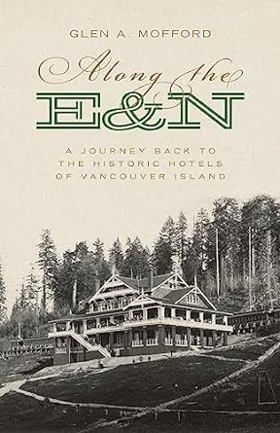
"An exploration of the fascinating history of more than thirty historic hotels--with some still in operation--nestled along Vancouver Island's E&N Railway, spanning from Esquimalt to Campbell River. In 1886, Vancouver Island's E&N rail service was established to carry coal to smelters and ships, and the towns in the railway's path prospered as the tracks expanded and passenger travel flourished. Along the E&N celebrates the historic and still-surviving hotels and roadhouses that sprung up near the E&N. Within this carefully researched historical narrative, you'll find stories of the Halfway House in the Esquimalt District, the murder and suicide at the Mt Sicker Hotel, and the iconic Quinsam Hotel in Campbell River, burned down in 2017. This book chronicles the history of more than thirty hotels--many long gone, destroyed by fire, or simply demolished, like the Lorne Hotel in Comox, and others that have been remodelled into modern-day neighbourhood pubs--such as the Rod & Gun in Parksville and the Waverley Hotel in Cumberland. Peppered with the fascinating stories of patrons and proprietors alike, Along the E&N resonates with the haunting echoes of the train's iconic whistle."-- Provided by publisher 263 pages : illustrations, maps, portraits ; 22 cm Non-circulating [ 1 ]
|
2019 |
|
Almost out of the world scenes from Washington Territory: the Strait of Juan de Fuca, 1859-61 by James G. Swan, William A. Katz 
Almost out of the world scenes from Washington Territory: the Strait of Juan de Fuca, 1859-61 examines the profoundly isolated frontier outposts and complex indigenous maritime cultures situated along the storm-battered northwestern edge of the Olympic Peninsula. Swan and Katz detail how the region's formidable coastal macro-geography—specifically the turbulent, wind-swept marine corridor of the Strait of Juan de Fuca, the treacherous rocky promontories of Cape Flattery, and the dense, impenetrable temperate rainforests that entirely precluded overland transit—strictly dictated the margins of early Euro-American settlement and the highly specialized marine subsistence of the indigenous Makah people. By mapping Swan’s immersive observations of a frontier enclave clinging to the very edge of the continent, functioning completely independent of the territorial mainland through a total reliance on precarious coastal schooners and indigenous canoe networks, the narrative highlights how this specific edge-of-the-world geography anchored a deeply entrenched, water-bound society. Ultimately, this ethnographic and historical record serves as a localized spatial history, demonstrating how the extreme overland isolation, immense oceanic exposure, and rich marine ecology of this Pacific Northwest coastline fundamentally shaped the highly resilient, fiercely independent character of the early Strait of Juan de Fuca settlements. xxiii, 126 pages, 3 unnumbered leaves of plates : map (on lining papers), portraits ; 24 cm Non-circulating [ 1 ]
|
1971 |
|
All the leavings by Laurie Easter 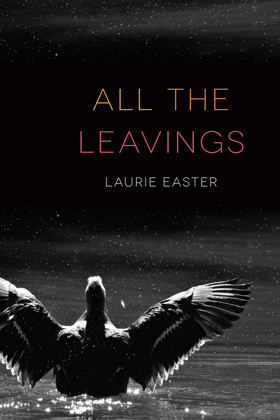
"In this nonlinear, loosely chronological memoir, Laurie Easter deftly navigates the rugged terrain of living off the grid in rural southern Oregon, along with the many hazards of the human heart. In quiet, searching, and sometimes experimental essays, she bravely explores the liminal spaces between guilt and forgiveness, life and death, grief and love, human society and the natural world. Whether recounting the home birth of her second child, encounters with cougars, the fraught dynamics of mother-daughter relationships, the destructive power of wildfires, or the community bonds challenged by a tragic suicide, Easter's writing is firmly grounded in place. She takes readers deep into the heart of a still-wild Oregon, perilous yet rich with natural beauty. Written from one woman's perspective as a mother, wife, and friend, All the Leavings is ultimately a book about love-for the child who faces a health crisis, for the friend dying of AIDS, for the one entangled by addiction who then disappears. Long after the final page is turned, it will resonate with readers interested in essays, memoir, alternative lifestyles, and the literature of the West"-- Provided by publisher xi,164 pages ; 23 cm Desiderata
|
2021 |
|
All about Victoria, British Columbia by Alfred Emberson 
Originally published in the late nineteenth and early twentieth centuries, Alfred Emberson’s All About Victoria, British Columbia serves as a comprehensive travel guide and promotional handbook for the rapidly modernizing provincial capital. The book meticulously catalogs the city’s geography, local customs, transportation networks, and burgeoning hospitality industry, effectively marketing Victoria to tourists and potential investors as a sophisticated enclave of British gentility on the edge of the Pacific wilderness. A keen insight drawn from the work is how the early travel guide actively commodified a highly sanitized version of colonial settlement; by charting hotels and scenic attractions while completely omitting the ongoing displacement of the region's Coast Salish peoples, the guidebook sold Victoria not as a contested frontier, but as an exclusive, fully conquered playground designed solely for Anglo-American leisure. 104 pages illustrations 16 cm ONLINE Circulation [ 1 ]
|
1916 |
|
Alexander Robb and the making of British Columbia the life and letters home of an Ulster-Scots pioneer by B. R. D. White , Ulster Historical Foundation (Publisher) 
In 1862 Alexander Robb (1839-1910) was one of a group of young men from County Down, Ireland, who travelled to British Columbia. They were among the thousands seeking to make their fortunes in the goldfields of the Cariboo. Finding no gold and lucky not to starve, Alex got work among the labourers building the Cariboo wagon road. After several years struggling to make a living, he and an Englishman were the first two Europeans to homestead in the Nicola Valley of central British Columbia. Later, appointed by the province as superintendent, he oversaw building the first roads in the valley. In a series of letters to those at home in County Down, Alex told of his experiences as a labourer, rancher and public servant in a young colony that was transitioning into a province of the new Canada. Illness and death in his family took him back to Ireland where he steered the Robb farm successfully through a period of agricultural recession and major political change while continuing his commitment to public service. Alexander Robb’s remarkable story of hardship and perseverance is told along with a full revision of his unique letters. The book also contains insights into the lives of his comrades from County Down and elsewhere who had sought their fortunes in the Cariboo. xi pages, 1 unnumbered page, 177 pages, 20 unnumbered pages of plates : illustrations (some color), maps, portraits ; 24 cm Desiderata
|
2023 |
|
Alberni prehistory archaeological and ethnographic investigations on Western Vancouver Island by Alan D. McMillan, Denis E. St Claire, Alberni Valley Museum
|
1982 |
|
Air, sunlight, and a bit of land by Marian Lowe Quackenbush
|
1982 |
|
Ainsworth, a railroad town by Bette Eunice Meyer, Barbara Kubik
|
1983 |
|
Agents of empire the First Oregon Cavalry and the opening of the interior Pacific Northwest during the Civil War by James Robbins Jewell 
Agents of Empire expands the historiographical scope of Civil War studies to include the war’s intersection with the history of the American West, demonstrating how the war was transcontinental in scope. Much more than a traditional Civil War regimental history, James Robbins Jewell’s work delves into the operational and social conditions under which the First Oregon Cavalry Regiment was formed. In response to ongoing tensions and violent interactions with Native peoples determined to protect their way of life and lands, Colonel George Wright, head of the military’s District of Oregon, asked the governor of Oregon to form a voluntary cavalry unit to protect white settlers and farmers. By using local volunteers, and later two additional regiments of infantry from the region, the federal government was able to draw from the majority of Regular Army troops stationed in the Pacific Northwest, who were eventually sent to fight Confederate forces east of the Mississippi River. Had the First Oregon Cavalry failed to fulfill its responsibilities, the federal government would have had to recall Union forces from other threatened areas and send them to Oregon and Washington Territory to quell secessionist unrest and Indigenous resistance to land theft, resource appropriation, and murder. The First Oregon Cavalry ensured settlers’ security in the Union’s farthest northwest corner, thereby contributing to the Union cause. xxvi, 326 pages : illustrations, maps ; 24 cm Desiderata
|
2023 |
|
Afloat in time by James Sirois 
James Sirois’s Afloat in time explores the unique mobile resilience and profound environmental adaptation of early industrial communities within the remote coastal canyons and deep fjords of central British Columbia. The narrative illustrates how the demanding maritime realities of this isolated topography—defined by labyrinthine ocean channels, towering temperate rainforests, and the centralized pulp-mill hub of Ocean Falls—required immense physical ingenuity and constant, shared adaptation from early "gyppo" logging families who lived and operated entirely on water. By detailing the complex transition from traditional land-based settlements to an entire industrial enterprise and childhood conducted on shifting log rafts, the text highlights how the region's resource-driven economy relied heavily on tight-knit, cooperative community networks. Ultimately, the autobiographical account demonstrates that patiently navigating these severe maritime conditions and collaboratively sustaining the intricate, floating infrastructure of the logging frontier were essential steps in forging the rugged, enduring cultural identity of British Columbia's coastal working communities. 271 p., [28] p. of plates : ill., geneal. table, map, ports. ; 22 cm. Non-circulating [ 1 ]
|
1998 |
|
Ross Cox was a fur trader for the Pacific Fur Company. In 1811 he sailed form New York, around the Horn, to Hawaii, and on to the Columbia River, exploring inland to Montana along the Clark Fork and Flathead Rivers. For six years he lived on the frontier--and beyond--in a violent world of white and red men, bears and wolves, frostbite, and starvation. He wasn't a hero, but he was a survivor, and a sharp observer who wrote one of the best firsthand accounts of the fur trapper's life. 340 pages ONLINE Circulation [ 1 ]
|
1832 |

Four years after Lewis and Clark stimulated American interest in the far western reaches of the continent, John Jacob Astor, a New York businessman, dispatched an overland expedition to establish a fur-trading post on the Columbia River. A second group traveled by sea aboard the Tonquin, among them Alexander Ross, a clerk in Astor's Pacific Fur Company. Adventures of the First Settlers is a vivid account of the expedition and its struggles to establish a successful trading venture. Ross details the Tonquin's dangerous voyage and documents the Astorians' painstaking struggles to clear the land and build a new trading post. Their settlement, Astoria, became the first American outpost on the Pacific Slope. Although the Astorians were aggressive in expanding their presence in the Columbia River country, their enterprise was short-lived. Ross chronicles their competition with the rival North West Company for furs and empire, the colorful and hazardous exploits of the fur trappers, and the eventual transfer of Astoria to the north West Company in the midst of the War of 1812. His detailed descriptions of the Columbia River Indians reveal Ross to be an astute and informed observer. In a new introduction to a book he calls "one of the charter literary documents for the Pacific Northwest," historian William Robbins considers the relationship between exploration, commerce, and empire in the Astorians' experience. An appendix containing a Chinook vocabulary and a table of weather conditions at Astoria in 1811. xv, 352 pages, 1 unnumbered folded leaf of plates + 16 pages advertisements : 1 map ; 19 cm ONLINE Circulation [ 1 ]
|
1849 |
|
Adventures of Captain Bonneville by Washington Irving, Benjamin Louis Eulalie de Bonneville 
This is the deluxe Klickitat edition of this great classic a hundred and seventeen years after the first edition. It has come by its popularity, far beyond that of most books, even of most good books, by it having the frontier fur trade for a subject, by being a first hand record, by receiving a final enchantment from the one who could write Rip Van Winkle and the Legend of Sleepy Hollow. The "father of American literature" tells with gusto and charm the amazing travels of a picturesque soldier of fortune in the Far West during 1832-1835. Robert Reynolds, talented Northwest artist, did the original illustrations which make this book a collector's item. Adventures of Captain Bonneville is a companion volume to our Astoria 375pp. 357 pages illustrations Non-circulating [ 1 ]
|
1954 |
|
Adventures in Seattle in 1851-53 by Katharine Berry Judson
Katharine Berry Judson’s brief archival manuscript, Adventures in Seattle in 1851-53, offers a distilled, localized account of the initial Euro-American encampments along the densely forested shores of Elliott Bay. The text outlines how the foundational pioneer enterprise—most notably the Denny Party's relocation from Alki Point and the establishment of Henry Yesler’s steam sawmill—was mapped directly onto the established coastal maritime routes and winter villages long utilized by the Duwamish and Suquamish peoples. Judson captures the profound physical and logistical vulnerability of these early territorial claims, demonstrating how the isolated settlers relied entirely on deep community bonds, intense cooperative labor, and interdependent alliances with local indigenous leaders to survive their precarious first winters. Ultimately, this concise historical snapshot illustrates the rapid superimposition of frontier timber infrastructure onto an ancient indigenous geography, catalyzing Seattle's emergence as the primary civic anchor of the Puget Sound region. 6 leaves ; 28 cm Desiderata
|
1853 |
|
Adventure roads of BC’s Northwest Heartland by Liz Bryan 
"An off-the-beaten track exploration of Interior BC, full of scenic photography, maps, and fascinating information for tourists and armchair travellers alike. From lush forests to majestic mountains, sleepy ghost towns to pastoral farmland, Adventure Roads of BC’s Northwest Heartland captures the beauty, history, and unexpected twists and turns of a region often overlooked by tourists and ideal for would-be road trippers. Fuelled by the philosophy that any road can lead to adventure—not always of the visceral sort, but of the mind and heart—travel writer, historian, and photographer Liz Bryan takes readers on a virtual tour. Taking scenic routes from Merritt to Barkerville, Kamloops to Bella Coola, and into the valleys of the Bulkley and Skeena Rivers, Bryan tells the story of this land, its peoples, and their history. With stunning photography and fascinating prose, this book will compel anyone to follow their own adventure road, wherever it may take them."-- Provided by publisher 221 pages : color illustrations, color maps ; 23 cm Desiderata
|
2022 |
|
Across the Olympic Mountains the Press Expedition, 1889-90 by Robert L. Wood 
In 1889 Washington's then governor, Elisha Ferry, called on men of adventure to cross the Olympic Mountains, a range shrouded in mystery. The Seattle Press, the state's primary newspaper, stepped up to the challenge, sponsoring the Press Expedition.And soon departed a band of men into the mountains during one of the worst winters in recorded history. 220 pages : illustrations, maps ; 22 cm Non-circulating [ 1 ]
|
1989 |
|
Abraham Lincoln and the Washington Territory by H. D. Smiley 
Abraham Lincoln and the Washington Territory by H. D. Smiley is a 1987 historical study published by Ye Galleon Press that explores the 16th president's political and administrative relationship with the remote Pacific Northwest. The book delves into Lincoln's federal appointments, policies, and the legislative actions during the Civil War era that shaped the region, including the 1863 creation of the Idaho Territory that established Washington's modern boundaries. Ultimately, it provides a specialized look at how national wartime leadership and federal governance influenced the early frontier development of the Washington Territory. 38 pages : illustrations ; 25 cm Non-circulating [ 1 ]
|
1987 |
|
Above the falls an oral and folk history of the Upper Glenn Creek, Coos County, Oregon by Lionel Youst 
Thousands of visitors have been enthralled by the beauty and grandeur of the 378-foot Golden Falls of Glenn Creek, about 25 miles east of Coos Bay. They are part of the Golden and Silver Falls State Park, one of the treasures of western Oregon. Very few of the visitors have had any idea of the land, nor of the history of the land above those falls. Above the Golden and Silver Falls is a lovely valley about three miles long. For 60 years a few families lived their lives in that remote and idyllic location. In 1958 the bridge at the base of Silver Falls was removed and the road was closed. The land above the falls became uninhabited timberland, inaccessible to the public. This book contains scores of verbatim interviews from the survivors and their descendants, 160 photographs, and exhaustive research into original documents. Fully indexed, bibliography, maps, and charts. viii, 320 pages : illustrations, maps, portraits ; 28 cm Non-circulating [ 1 ]
|
1992 |
|
About those King County place-names an informal history by Doug Cardle 
Doug Cardle’s About Those King County Place-Names: An Informal History provides an accessible yet granular toponymic chronicle documenting the origins, evolution, and spatial distribution of geographic names across Washington’s central Puget Sound region. The text traces how nineteenth- and twentieth-century Euro-American monikers—commemorating pioneer homesteaders, timber barons, and corporate surveyors—were systematically superimposed over the ancestral Lushootseed place-names, riverine networks, and overland foot trails of the Duwamish, Snoqualmie, Muckleshoot, and Suquamish peoples. Cardle details the logistical mechanics of frontier expansion, illustrating how civic and geographic designations coalesced around early timber mills, coal mining encampments in Newcastle and Black Diamond, and railroad junctions that engineered the drainage basins of the Green, Cedar, and Snoqualmie rivers. Ultimately, the volume captures the cartographic and linguistic transformation of the landscape, illustrating how industrial resource extraction and municipal settlement codified a new administrative geography across King County while obscuring its foundational Indigenous domain. v, 118 pages : illustrations, maps ; 28 cm Non-circulating [ 1 ]
|
1989 |
|
Aboriginal peoples and politics the Indian land question in British Columbia, 1849-1989 by Paul Tennant 
Aboriginal claims remain a controversial but little understood issue in contemporary Canada. British Columbia has been, and remains, the setting for the most intense and persistent demands by Native people, and also for the strongest and most consistent opposition to Native claims by governments and the non-aboriginal public. Land has been the essential question; the Indians have claimed continuing ownership while the province has steadfastly denied the possibility. This book presents the first comprehensive treatment of the land question in British Columbia and is the first to examine the modern political history of British Columbia Indians. It covers the land question from its very beginnings and gives detailed attention to the most recent court decisions, government policies, land claim developments, and Indian protest blockades. Providing a new interpretation of Governor James Douglas, Paul Tennant views him as less generous to the Indians than have most other historians and demonstrates how Douglas was largely responsible for the future course of the land question. In contrast to what many non-Indians are assuming, the Indians of British Columbia began their land claims at the start of white settlement and persevered despite the massive efforts of missionaries and government officials to suppress Indian culture and despite Parliament's outlawing of claim-related activities. The Indians emerge in this book as political innovators who maintained their identity and ideals and who today have more strength and unity than ever before. The author has conducted extensive interviews with many Indian leaders and has examined the inner workings of government agencies and Indian political organizations. While sympathetic to Native claims, he focuses as much on failures and deficiencies as on strengths and successes. xvi, 305 pages ; 24 cm Desiderata
|
1990 |
|
Aboard the Portland a history of the Northwest Steamers by Rebecca Harrison 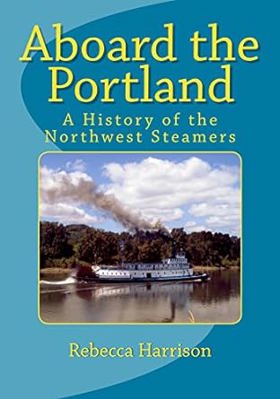
In her latest book, Rebecca Harrison takes you back in time over 150 years to ride the grand Columbia and Willamette Rivers on the the sternwheelers of the mid 1800's. Meticulously researched, Aboard the Portland: A history of the Northwest Steamers tells the exciting story of these trade and transport ships, and explores how the Portland survived time and harsh work to become one of the last operating steam sternwheelers in America 1 online resource (171 pages : black and white illustrations) Non-circulating [ 1 ]
|
2016 |
|
A year right here adventures with food and family in the great nearby by Jess Thomson , Hannah Viano (Illustrator) 
Armed with “The Here List” and a Type-A personality, Seattle-based writer and cookbook author Jess Thomson sets out to spend a year exploring the food of the Pacific Northwest with her family. Planning to revel in the culinary riches of the region and hoping to break her son, Graham, of his childhood pickiness, the adventures into the great nearby include building a backyard chicken coop, truffle hunting in Oregon, and razor clamming on the Washington coast. Her plans to spend “a year right here” are complicated by efforts to help Graham overcome some of the mobility limitations of cerebral palsy, and thwarted further by her own limitations that come to the fore when she attempts the “Gourmet Century,” a hilly one-hundred-kilometer bike ride with gourmet food stops along the way. With touching, funny, sometimes devastating stories that we all can relate to, Jess pulls the reader in as she abandons “The Here List” and learns that letting go can be just as important as holding on. xii, 304 pages : illustrations ; 23 cm Desiderata
|
2017 |
|
A Yankee on Puget Sound pioneer dispatches of Edward Jay Allen, 1852-1855 by Karen L. Johnson, Dennis M. Larsen 
In 1852 twenty-two-year-old Edward Jay Allen completed a difficult overland trek to Oregon. His exploits during a three-year stay in Washington Territory featured unique twists and left a distinct, indelible mark. The young Yankee traveled north from the Columbia River to Cowlitz Landing and was promptly drafted as a delegate to the Monticello Convention. After claiming donation land north of Olympia, he led survey and construction teams laying out the Naches Pass wagon road, initiated relief efforts for Longmire wagon train families, explored Puget Sound on a whaleboat, ran for the Territorial Council, and with two others, made the first documented ascent of Mount Adams. Allen recorded his adventures in letters and a diary, deftly weaving in descriptive passages, humor, and poetry while eloquently reflecting social, political, racial, and religious views of his time. His hometown newspaper, the Pittsburgh Daily Dispatch, published his correspondence. Pasted into a recently-discovered scrapbook, his observations deliver new insight into Pacific Northwest history. xviii, 188 pages : illustrations ; 28 cm Non-circulating [ 1 ]
|
2013 |