Catalog of British Columbiana and Pacific Northwest Americana
Encyclopedia Cascadia Catalog contains book titles of mostly non-fiction Pacific Northwest Coast of North America Titles (primarially British Columbia, Idaho, Oregon and Washington State) in an easy-to-understand title catalog. If you see a link with this badge ONLINE CIRC it means that there is an online institution that provides free access to that title. In some cases there may be more than one institution hosting the title digitally.
| Catalog Title | Published |
|---|---|
|
The wild edge Clayoquot, Long Beach & Barkley Sound by Jacqueline Windh 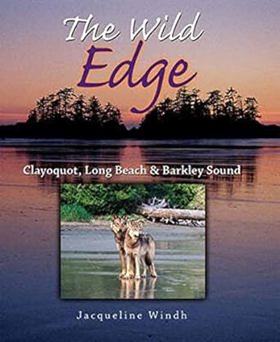
"The Pacific Rim region of Vancouver Island - including the Clayoquot wilderness, Long Beach, Barkley Sound and the communities of Tofino, Ucluelet and Port Alberni - has become one of western Canada's prime tourist destinations, drawing over a million visitors a year." "This photographic study of the region will go far toward revealing its legendary charms both to actual visitors and armchair travellers. Author Jacqueline Windh has spent ten years photographing the Clayoquot-Pacific Rim area in all its seasons and moods, studying its history and getting to know its people. In The Wild Edge: Clayoquot, Long Beach & Barkley Sound, she shares her findings in images and words, supplementing her unforgettable scenic photographs with a light-hearted but informative text that blends history and science with essential visitor guidance."--BOOK JACKET 167 pages : color illustrations, map ; 29 cm CIRC [ 1 ]
|
2004 |
|
The whole dam story the drowning and rising of a river city in the West by Ella Marie Rast 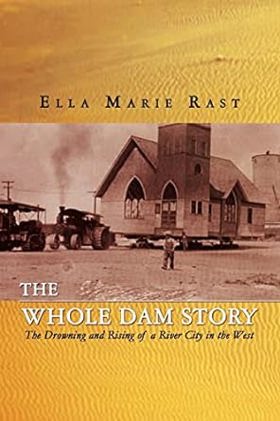
The primary focus of the book is the happenings during the past two hundred years at the water fall on the Snake River, the American Falls. This includes the European influence on the natural Western wilderness by explorers, fur trappers, gold miners, pioneers, cattle barons, sheep men, farmers, engineers and politicians.Southern Idaho's story is about mountains, rivers, the Snake River Plain and the harsh reality of drought in the desert. The natives had learned it was essential to preserve the fragile environment for their own survival. The newcomers lacked this awareness.Speculators and promoters found no value in the sagebrush forest. However, the soil was exceptionally fertile; all it needed was water. Water represented economic potential and that possibility encouraged entrepreneurs to descend with irrigation schemes. Few succeeded. Settlers found themselves caught in a web of broken promises, promoters, speculators, and failed banks.Probably the most publicized town in the nation in the twenties is American Falls! This is the story of hydroelectricity, railroad, a city, a dam and includes greed, power, intrigue, determination and commitment. It is a story our nation should know and not forget. vi, 175 pages : illustrations ; 23 cm CIRC [ 1 ]
|
2004 |
|
The Whitman Massacre by E. M. Saunders 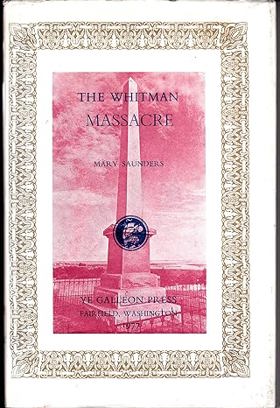
Authored by E. M. Saunders, The Whitman Massacre provides a dramatic narrative account of the tragic 1847 attack on the Cayuse Indian mission at Waiilatpu by members of the Cayuse tribe, resulting in the deaths of Marcus and Narcissa Whitman and twelve others. The book explores the mounting racial tensions, cultural misunderstandings, and devastating epidemics—particularly measles—that fueled Indigenous resentment against encroaching American settlers. Drawing on historical documents and period accounts, the text examines how the missionary enterprise inadvertently triggered a catastrophic clash of worlds in southeastern Washington. A keen insight drawn from the work is how medical disparities served as the ultimate catalyst for frontier violence; because traditional Cayuse healing practices failed against introduced European diseases while white missionaries survived, the tribe perceived the plague as targeted biological warfare, turning a public health disaster into a fatal geopolitical flashpoint. 56 pages CIRC [ 1 ]
|
1997 |
|
The white tide by Ruth Dunbar 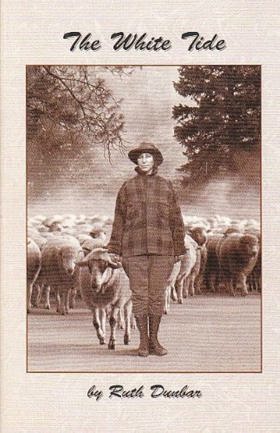
Published by regional presses, The White Tide by Ruth Dunbar explores the dramatic social and environmental transformations accompanying early settlement and resource exploitation in the Pacific Northwest. The book traces the rapid influx of pioneers, industrial loggers, and speculators whose arrival fundamentally altered indigenous landscapes and traditional ways of life across the region's river valleys and coastal frontiers. Through narrative character studies and historical context, the text highlights the heavy human and ecological costs borne by a rapidly commercialized wilderness. A keen insight drawn from the work is how the metaphor of a "white tide" captures the overwhelming, impersonal force of frontier expansion; settlement was experienced not merely as a gradual migration, but as an encroaching, high-tide wave that permanently submerged native ecosystems and historical land-use patterns under an unyielding tide of industrial modernity. v, 248 pages : illustrations ; 22 cm CIRC [ 1 ]
|
1993 |
|
The white cascade the Great Northern Railway disaster and America's deadliest avalanche by Gary Krist 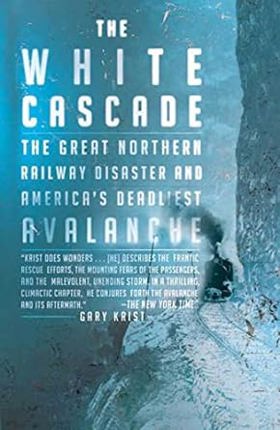
In February 1910, a monstrous blizzard hit the Northwest. High in the Cascade Mountains, near the tiny town of Wellington, two trainloads of cold, hungry passengers and their crews found their railcars marooned, buried in rising drifts on the edge of a steep ravine. Days later, with the effort to rescue the trains continuing, a colossal avalance tumbled down, sweeping the trains over the steep slope and down the mountainside xii, [6], 315, [2] pages, 16 unnumbered pages of plates : illustrations, maps, portraits ; 21 cm CIRC [ 1 ]
|
2007 |
|
The Western shore Oregon country essays honoring the American Revolution by Thomas Vaughan
|
1975 |
|
The west coast of Vancouver Island including Bunsby Islands & the Broken group by Anne Yeadon-Jones , Laurence Yeadon-Jones 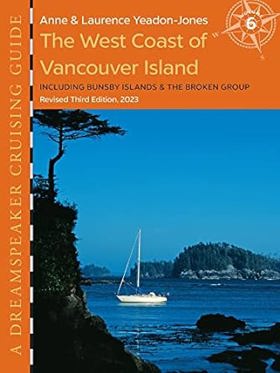
With its rugged, rock-studded shoreline, relentlessly crashing ocean swells, miles of sandy beaches, diversity of wildlife and countless coves and bays, Vancouver Island’s western shoreline presents a challenging and thrilling adventure. Volume 6 covers the best spots from Cape Scott to Sooke, including Bull Harbour, the Bunsby Islands and Barclay Sound. This new revised edition presents updated information along with Laurence’s charming hand-drawn shoreline plans of selected marinas and small boat anchorages, ranging from safe all-weather havens to secluded picnic spots and marine parks. With charts, tips and helpful data, this guide will enhance the enjoyment and safety of any voyage to the wild West Coast. 191 pages : color illustrations, color maps ; 31 cm. CIRC [ 1 ]
|
2017 |
|
The West beyond the West a history of British Columbia by Jean Barman 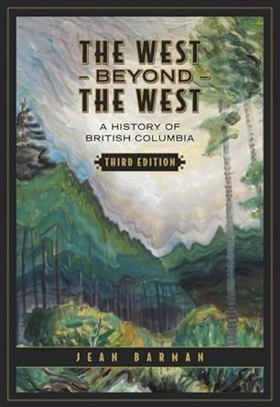
"British Columbia is regularly described in superlatives both positive and negative - most spectacular scenery, strangest politics, greatest environmental sensitivity, richest Aboriginal cultures, most aggressive resource exploitation, closest ties to Asia. Jean Barman's The West beyond the West presents the history of the province in all its diversity and apparent contradictions. This critically acclaimed work is the premiere book on British Columbian history, with a narrative beginning at the point of contact between Native peoples and Europeans and continuing into the twenty-first century." "First published in 1991 and revised in 1996, this third edition of The West beyond the West, has been supplemented by statistical tables incorporating the 2001 census, two more extensive illustration sections portraying British Columbia's history in images, and other new material bringing the book up to date. Barman's deft scholarship is readily apparent and the book demands to be on the shelf of anyone with an interest in British Columbian or Canadian history."--Jacket xx, 539 pages, 48 unnumbered pages of plates : illustrations, maps, portraits ; 25 cm CIRC [ 1 ]
|
2007 |
|
The Wenatchee Valley and its first peoples thrilling grandeur, unfulfilled promise by Richard D. Scheuerman, John Clement, Clifford E. Trafzer, Wenatchee Valley Museum and Cultural Center 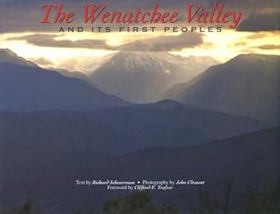
Published by the Wenatchee Valley Museum and Cultural Center, The Wenatchee Valley and its First Peoples: Thrilling Grandeur, Unfulfilled Promise by Richard D. Scheuerman, John Clement, and Clifford E. Trafzer examines the complex cultural history of Washington's mid-Columbia region. The book juxtaposes the awe-inspiring geography of the high-desert river valley with the tragic history of displacement experienced by its original indigenous inhabitants, particularly the Wenatchi people. Through historical accounts, archival photographs, and cultural analysis, the authors trace how rapid Euro-American settlement and irrigation projects transformed the landscape while frequently breaking solemn treaties. A keen insight drawn from the text is how the subtitle's reference to "unfulfilled promise" operates as a poignant critique of manifest destiny; it highlights how the modern agricultural bounty of the Wenatchee apple capital was built directly upon the unfulfilled legal and moral guarantees made to the valley's original stewards. xxii, 145 pages : color illustrations, map, portraits ; 23 x 29 cm CIRC [ 1 ]
|
2005 |
|
The Weiser Indians Shoshoni peacemakers by Hank Corless 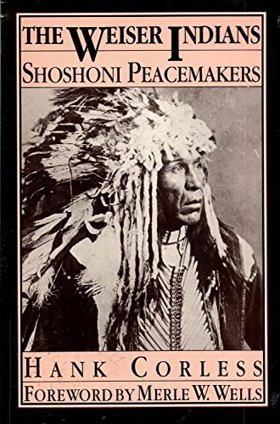
This book documents Indian-white relations in southwestern Idaho during the time of initial white encroachment onto Indian lands.--Provided by publisher xix, 170 pages : illustrations ; 23 cm CIRC [ 0 ]
|
1990 |
|
The weather of the Pacific Northwest by Cliff Mass 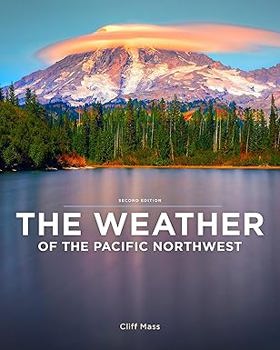
""Fridays at ten of four is when we listen to our favorite person ever, Cliff Mass. If you don't know who Cliff Mass is, well, he's this thing me and Mom have, this awesome weather geek who loves weather so much you have no choice but to love him in return." - from Maria Semple's novel, Where'd You Go, Bernadette? This is a lavishly illustrated guide to making sense of the region's unique atmospheric and geographic forces. For the new edition of this contemporary classic, Cliff Mass has extensively revised and updated, as well as expanding his coverage of British Columbia as well as considering the impact of wildfires on the region's meteorology. A fascinating read, the book is indispensable to anyone who seeks a deeper understanding of the region's is weather"-- Provided by publisher ix, 299 pages : illustrations (chiefly color), maps (chiefly color) ; 26 cm CIRC [ 0 ]
|
2021 |
|
The way we ate Pacific Northwest cooking, 1843-1900 by Jacqueline B. Williams, Ruth Kirk 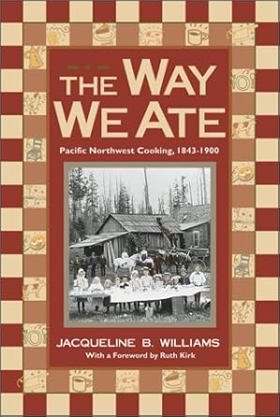
Probing diaries, letters, business journals, and newspapers for morsels of information, food historian Jackie Williams here follows pioneers from the earliest years of settlement in the Northwest to the time when railroads brought Pacific Northwest cooks the latest ingredients and implements. Like she did in her earlier acclaimed volume, Wagon Wheel Kitchens: Food on the Oregon Trail, Williams sheds important new light on a little-understood aspect of our past xix pages, 1 leaf, 215 pages, 8 unnumbered pages of plates : illustrations, map ; 24 cm CIRC [ 0 ]
|
1996 |
|
The way to the western sea Lewis and Clark across the continent by David Lavender 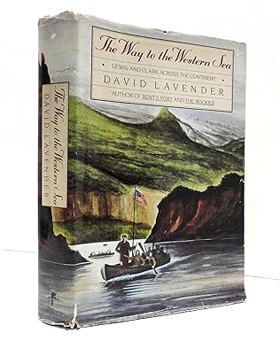
Lavender sets the stage with an account of the imperial rivalries between England, Spain, France, and the United States, and their role in Thomas Jefferson's decision to sponsor an expedition that might strengthen the young country's claims to lands it had purchased but never seen. Lavender then takes us through the steps that led to the selection of Meriwether Lewis as the Corps of Discovery's leader with William Clark as coleader. From there the great adventure story unfolds, and we follow Lewis and Clark and their company on their journey through vast, uncharted territory as they seek a transcontinental route to the Pacific. x, 444 pages, 1 unnumbered leaf of plates : illustrations, maps ; 25 cm CIRC [ 1 ]
|
1988 |
|
The Washington story a history of our State by Ruth Pelz, Seattle Public Schools 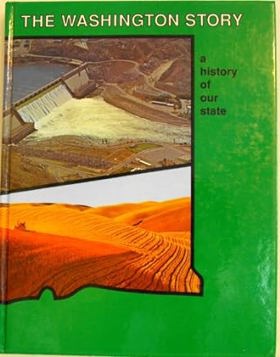
Published by Seattle Public Schools and authored by educator Ruth Pelz, The Washington Story: A History of Our State provides an engaging regional overview designed to introduce students to the complex political, economic, and social heritage of the Pacific Northwest. The book traces the region's trajectory from ancestral Indigenous stewardship and the maritime fur trade through the eras of industrial logging, hydroelectric dam construction, and the rise of modern aerospace and technology hubs. By centering diverse voices and grassroots perspectives, the text moves beyond traditional pioneer narratives to examine how ordinary workers, immigrants, and native nations shaped local communities. A keen insight drawn from the work is how civic education textbooks function as blueprints for regional identity; by intentionally highlighting labor strikes, environmental struggles, and social justice milestones alongside economic triumphs, the book teaches young citizens that Washington's modern prosperity is inextricably tied to an ongoing, contentious negotiation between corporate ambition and grassroots resistance. 303 pages : illustrations, maps ; 27 cm CIRC [ 1 ]
|
1993 |
|
The Washington apple orchards and the development of industrial agriculture by Amanda L. Van Lanen 
In the nineteenth century, most American farms had a small orchard or at least a few fruit-bearing trees. People grew their own apple trees or purchased apples grown within a few hundred miles of their homes. Nowadays, in contrast, Americans buy mass-produced fruit in supermarkets, and roughly 70 percent of apples come from Washington State. So how did Washington become the leading producer of America’s most popular fruit? In this enlightening book, Amanda L. Van Lanen offers a comprehensive response to this question by tracing the origins, evolution, and environmental consequences of the state’s apple industry. Washington’s success in producing apples was not a happy accident of nature, according to Van Lanen. Apples are not native to Washington, any more than potatoes are to Idaho or peaches to Georgia. In fact, Washington apple farmers were late to the game, lagging their eastern competitors. The author outlines the numerous challenges early Washington entrepreneurs faced in such areas as irrigation, transportation, and labor. Eventually, with crucial help from railroads, Washington farmers transformed themselves into “growers” by embracing new technologies and marketing strategies. By the 1920s, the state’s growers managed not only to innovate the industry but to dominate it. viii, 286 pages : illustrations, maps ; 24 cm. CIRC [ 0 ]
|
2022 |
|
The warden's son growing up at the Idaho State Penitentiary by Jerry Clapp 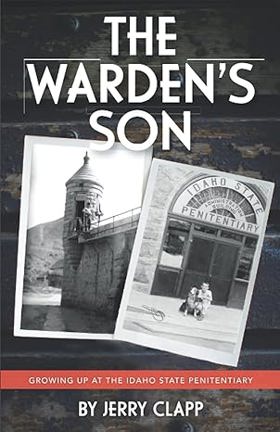
"When Jerry Clapp’s father became warden of the Idaho State Penitentiary in 1945, the young boy quickly learned the rules and boundaries of roaming one of the most dangerous grounds in the West. Through his school years, Jerry would become the confidante to many a wild tale from friendly inmates—an old man serving life for multiple assassinations, a beautiful teenager in the women’s prison, and an incarcerated war hero who became a lifelong role model. These are the stories Jerry would tell his grandchildren—from chilling recollections of riots, escapes, and hangings to the profound remembrances of inmates, guards, and the warden. This fascinating “family portrait” truly brings the Old Idaho Penitentiary roaring back to life" -- from publisher 151 pages : illustrations ; 22 cm CIRC [ 0 ]
|
2021 |
|
The Wallowas coming of age in the wilderness by William Ashworth 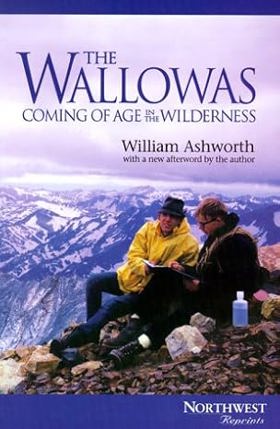
Part adventure story and part spiritual memoir, William Ashworth's The Wallowas recounts a young man's search for the challenges and the solace that the wilderness offers. It's the story of how as a student at Whitman College, Ashworth discovered the Wallowa Mountains in remote northeast Oregon. From that time on, the Wallowas were an obsession. Weekends and vacations were dedicated to exploring a rugged country roughly the size of Los Angeles and home to 126 peaks, each over 8,000 feet high. In language vivid and precise, Ashworth describes as he and a coterie of climbing buddies attempt ascents of Eagle Cap, Pete's Point, Sacajaweja, and the Matterhorn. Climbing and camping in summer rain and winter blizzards, they face the challenge of the Wallowa high country and the humility it teaches. The book tracks the author's coming of age in the wilderness from a need to conquer mountains to an awareness of the redemptive qualities found in these wild places and the need to preserve the last of them. "We need wilderness not only for what it can do for us but for what it can mean to us," writes Ashworth. "We need the wilderness — to grow up in." Twenty years after its original publication, the Oregon State University Press is pleased to introduce William Ashworth's classic memoir to a new generation of readers. 174 pages : 1 map ; 23 cm. CIRC [ 0 ]
|
1998 |
|
The voyage of Sutil and Mexicana, 1792 the last Spanish exploration of the northwest coast of America by John Kendrick, Dionisio Alcalá-Galiano, Cayetano Valdés Flores Bazán y Peón, Josef Espinosa y Tello, José Cordero 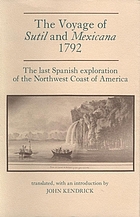
The Sutil and Mexicana sailed along the coast of the Pacific Northwest in 1792, their stated mission to put to rest the persistent rumors of the mythical strait connecting the Pacific and Atlantic in the neighborhood of the Strait of Juan de Fuca, the present-day border of Canada and the United States. This would be the last Spanish exploration along the Pacific Coast after 250 years of primacy in charting those waters 260 pages : illustrations, maps ; 25 cm. CIRC [ 1 ]
|
1991 |
|
The voyage of George Vancouver, 1791-1795 by George Vancouver, W. Kaye Lamb 
Four of the greatest maritime exploring expeditions were crammed into two decades late in the 18th century - Cook's third voyage, the French expedition commanded by La Pérouse, the Malaspina expedition sent out by Spain, and George Vancouver's Voyage of Discovery. All four visited the northwest coast of North America, but weather and circumstances prevented Cook from making more than what Beaglehole calls ' a magnificent, an epoch-making reconnaissance'; La Pérouse only touched the coast in a significant way at Yakutat Bay and Lituya Bay, and Malasina's memorable visits were to Yakutat Bay and Nootka Sound. Vancouver, by contrast, surveyed the enormous extent of coast from Lower California to Cook Inlet, and his meticulous survey literally set out on the map of the world the intricacies of Puget Sound and the western coast of mainland Canada. It was an achievement that places him with his mentor, Cook, in the first rank of marine surveyors. As a midshipman Vancouver had been with Cook when he discovered the Sandwich (Hawaiian) Islands in 1778. They attracted his interest, and the attention he devoted to the islands, their inhabitants and their political future when he twice later wintered there will surprise many. This is the first annotated edition of Vancouver's journal as he revised it for publication in 1798. The original manuscript has disappeared, but fortunately no fewer than 25 partial or complete logs or journals by other members of the expedition have survived. These supplement Vancouver's narrative at many points. It has been possible to identify virtually all the host of islands, channels and inlets that Vancouver encountered, and the provenance of most of the approximately 400 place names he bestowed, nine out of ten of which are still in use, is indicated. Book 1 of a new and annotated edition of A Voyage of Discovery ... (London, 1798). The main pagination of this and the following three volumes is continuous. The voyage to Australia and Tahiti, 4 volumes illustrations 1 chart CIRC [ 4 ]
|
1984 |
|
The view from Cascade Head lessons for the biosphere from the Oregon coast by Bruce A. Byers , Nora Sherwood (Illustrator) 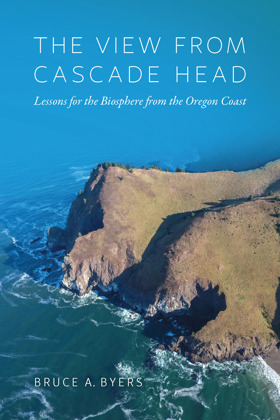
Cascade Head, on the Oregon Coast between Lincoln City and Neskowin, has stunning ocean views, abundant recreational opportunities, and a rich history of ecological research and conservation. Its landscape and seascape support a multitude of species, some of which are threatened, such as the Oregon silverspot butterfly, spotted owl, and coho salmon. In The View from Cascade Head, Bruce Byers tells the fascinating story of this special place and the people who have worked to protect it. Drawing from his lifelong relationship with the Oregon Coast and recent experience living and working at Cascade Head, Byers weaves together personal observations, ecological science, and the history and philosophy of nature conservation in a series of interconnected essays. Cascade Head is Oregon’s only biosphere reserve, part of the international network of biosphere reserves coordinated by UNESCO. Biosphere reserves around the world are laboratories for understanding how humans affect ecosystems and models for how we can heal the human-nature relationship. The View from Cascade Head illustrates three main lessons: the actions and efforts of committed individuals can make a difference; ecological mysteries still abound despite decades of scientific research; and our worldviews—how we think about our place in nature—shape our individual and collective effect on the ecosystems we inhabit. Byers helps us understand how these lessons apply everywhere and can lead us toward a more sustainable relationship with our home planet. 223 pages : illustrations, map ; 23 cm CIRC [ 0 ]
|
2020 |
|
The Victoria and Sidney railway, 1892-1919 by Darryl E. Muralt, British Columbia Railway Historical Association, British Columbia Heritage Trust 
Wonderfully written history of the ever-troubled Victoria and Sidney Railway in British Columbia. Packed with black and white photos, the book brings the railway and the people who ran it (and the long-suffering passegers) to life while providing a fascinating look at life in rural Canada at the turn of the century. With maps, equipment rosters, chronology and numerous appendices that flesh out the history of the Saanich Peninsula. 236 pages. 236 pages : illustrations, maps, portraits ; 28 cm CIRC [ 1 ]
|
1992 |
|
The Vancouver Natural History Society, 1918-1993 by Jim Peacock, Vancouver Natural History Society 
Published by the Vancouver Natural History Society and authored by Jim Peacock, The Vancouver Natural History Society, 1918–1993 chronicles seventy-five years of grassroots ecological stewardship, amateur scientific research, and outdoor exploration in southwestern British Columbia. The book details the organization's instrumental role in advocating for provincial parks, documenting regional flora and fauna, and fostering a community-wide appreciation for the natural landscapes surrounding a rapidly expanding urban center. Through archival logs, club newsletters, and biographical sketches, the text highlights how dedicated citizen scientists successfully pushed back against unbridled resource extraction to protect local wilderness. A keen insight drawn from the work is how amateur natural history societies functioned as the vanguard of early environmentalism; by mobilizing urban citizens into weekend field trips and systematic species observation, the society turned ordinary nature enthusiasts into passionate political defenders of British Columbia's imperiled ecosystems. 104 pages : illustrations ; 22 cm CIRC [ 0 ]
|
1993 |
|
The valley of youth by Charles William Holliday 
The author was born in London in 1870. At the age of 16 he went to sea, sailing around the Horn to San Francisco. In 1889, he moved to British Columbia, and engaged in ranching and other occupations in the Okanagan country. In 1937, he moved to Victoria, where he wrote this, his first book 357 pages : illustrations (some color), map (on lining-papers) ; 25 cm CIRC [ 1 ]
|
1948 |
|
The Utter disaster on the Oregon Trail the Utter and Van Ornum massacres of 1860 by Donald H. Shannon 
"In 1860 on the South Alternate Route of the Oregon Trail in the Snake River Country of present day Idaho and Oregon. A rare instance when Indians not only attempted but maintained a successful attack on encircled emigrant wagons. Attacks on the Utter wagon train and then on the survivors resulted in the greatest loss of life to an emigrant train and to the attacking Indians, of any such encounters. Survivors' starvation camp on the Owyhee River and eventual rescue by an army expedition commanded by Captain Frederick T. Dent (his sister married U.S. Grant). Discovery of the Van Ornum massacre -- the bodies "gleaming in the moonlight"--By a fast-moving dragoon force led by Lieutenant Marcus A. Reno (later with Custer at the Little Big Horn). Two-year attempt to rescue children held captive by the Shoshoni as the US Army disintegrated at the onset of the Civil War."--Cover xvii, 218 pages : illustrations, maps ; 23 cm. CIRC [ 0 ]
|
1993 |
|
The untamed Olympics the story of a peninsula by Ruby El Hult 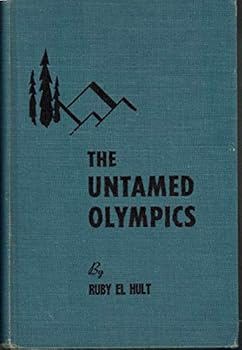
The Untamed Olympics: The Story Of A Peninsula is a non-fiction book written by Ruby El Hult. The book provides a detailed account of the Olympic Peninsula in Washington State, USA, and its history, geography, and natural beauty. The author takes the reader on a journey through the history of the region, from the early Native American tribes that lived there, to the arrival of European explorers, and the logging and fishing industries that developed in the area.The book also focuses on the unique and diverse wildlife that inhabits the Olympic Peninsula, including elk, deer, black bears, and mountain lions. The author describes the breathtaking landscapes of the region, including the Olympic Mountains, the Hoh Rainforest, and the rugged coastline.In addition to its natural beauty, the Olympic Peninsula is also home to many fascinating cultural landmarks, such as the Makah Indian Reservation, the historic town of Port Townsend, and the Victorian-era Lake Quinault Lodge.Overall, The Untamed Olympics: The Story Of A Peninsula is a comprehensive and engaging exploration of one of America's most beautiful and fascinating regions. The author's vivid descriptions and personal anecdotes make the book a must-read for anyone interested in the history and natural wonders of the Olympic Peninsula.This scarce antiquarian book is a facsimile reprint of the old original and may contain some imperfections such as library marks and notations. Because we believe this work is culturally important, we have made it available as part of our commitment for protecting, preserving, and promoting the world's literature in affordable, high quality, modern editions, that are true to their original work. This description may be from another edition of this product. 267 pages : illustrations ; 22 cm CIRC [ 1 ]
|
1954 |