Catalog of British Columbiana and Pacific Northwest Americana
Encyclopedia Cascadia Catalog contains book titles of mostly non-fiction Pacific Northwest Coast of North America Titles (primarially British Columbia, Idaho, Oregon and Washington State) in an easy-to-understand title catalog. If you see a link with this badge ONLINE CIRC it means that there is an online institution that provides free access to that title. In some cases there may be more than one institution hosting the title digitally.
| Catalog Title | Published |
|---|---|
|
Where the waters begin the traditional Nisqually Indian history of Mount Rainier by Cecelia Svinth Carpenter 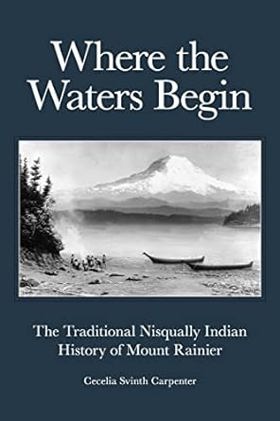
Where the Waters Begin takes us up the Nisqually side of Mount Rainier through the traditional beliefs of the Nisqually people and their relationship to the bountiful natural resources the mountain offered them. The Nisqually are the original stewards of the prairies, mountains, and rivers west of the mountain on lands that are now Thurston and Pierce Counties. Living in a more natural world, without the complexities of today, they developed a coexistence with nature that included respect and appreciation of its beneficent forces as well as fear of its darker sides. The deep connection the Nisqually people developed with the mountain they called Ta-co-bet is best related through their traditional stories. Author and Nisqually tribal historian Cecelia Svinth Carpenter brings those stories to life here in Where the Waters Begin: the Traditional Nisqually Indian History of Mount Rainier. 108 pages : illustrations, maps ; 23 cm CIRC [ 1 ]
|
2015 |
|
Where the salmon run the life and legacy of Billy Frank Jr. by Trova Heffernan, Washington State Heritage Center, Washington State Legacy Project, University of Washington Press 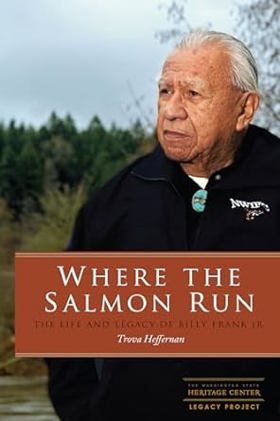
"Billy Frank Jr. was an early participant in the fight for tribal fishing rights during the 1960s. Roughed up, belittled, and arrested many times at Frank's Landing on the Nisqually River, he emerged as one of the most influential Northwest Indians in modern history. His efforts helped lead to U.S. v. Washington in 1974, in which U.S. District Judge George H. Boldt affirmed Northwest tribal fishing rights and allocated half the harvestable catch to the tribes."--Page 4 of cover ix, 322 pages : illustrations, genealogical table ; 23 cm CIRC [ 1 ]
|
2013 |
|
Where the power is indigenous perspectives on Northwest Coast art by Karen Duffek , Bill McLennan , Ellen J. Lehman (Donor), Jordan Wilson , University of British Columbia Museum of Anthropology (Issuing body) 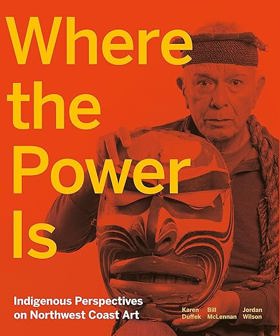
"Where the Power Is: Indigenous Perspectives on Northwest Coast Art brings together contemporary Indigenous knowledge holders with extraordinary works of historical Northwest Coast art that transcend the category of "art" or "artifact" and embody distinct ways of knowing and being in the world. Dozens of Indigenous artists and community members visited the Museum of Anthropology at the University of British Columbia to engage with these objects and learn from the hands of their ancestors. The photographs and their commentaries speak to the connections between tangible and intangible cultural belongings; how "art" remains part of Northwest Coast peoples' ongoing relationships to their territories and governance; Indigenous experiences of reconnection, reclamation, and return; and critical and necessary conversations around the role of museums."-- Provided by publisher 371 pages : illustrations (chiefly color), color maps ; 32 cm CIRC [ 0 ]
|
2021 |
|
Where the language lives Vi Hilbert and the gift of Lushootseed by Janet Yoder 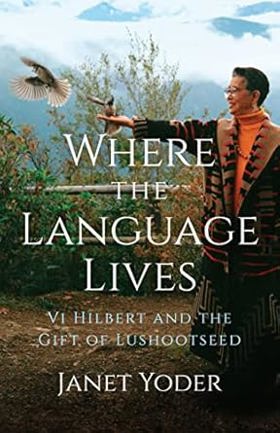
In 1978, Seattle writer Janet Yoder took a Lushootseed class at the University of Washington. She was expecting to learn a little about this Salish language, and while Yoder did begin her Lushootseed lessons, what followed was lifelong learning and lots of adventures with Skagit tribal elder Vi Hilbert. Drawn from thirty years of friendship and interviews, Where the Language Lives is a tribute to Vi Hilbert's life, work, and her quest to preserve her native language. Vi carried her culture by the example of her life as she shared her beloved Lushootseed language through her teaching, speaking, storytelling, recording, and publishing. Without her diligent research and her transcription and translation of early recordings in Lushootseed, much of the language could have been lost to the world. Her historical preservation efforts were recognized with a National Heritage Fellowship from the National Endowment for the Arts, presented by First Lady Hillary Clinton. She was also named a Washington State Living Treasure in 1989 xvii, 216 pages : illustrations ; 22 cm CIRC [ 0 ]
|
2022 |
|
Where the Crooked River rises a high desert home by Ellen Waterston 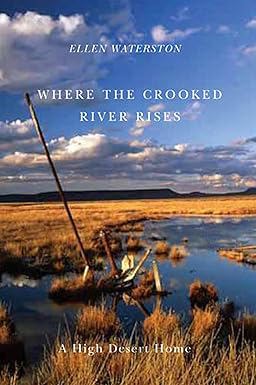
There is an otherness to the high desert, something momentous and sacred in the purity of the silence. In this compelling collection of personal essays, award-winning poet and author Ellen Waterston illuminates the people, places, and landscape of Central Oregon’s vast high desert. In Where the Crooked River Rises, Waterston reveals the blessings and challenges of decades spent as a rancher and town resident in a place that “has been, and remains,” her touchstone and crucible. The high desert is Waterston’s teacher, and she describes its lessons with grace and care, inviting readers to look at their own lives through a lens of wide-open spaces, sagebrush and juniper, pumice and rabbit brush. 142 pages : illustrations ; 22 cm CIRC [ 0 ]
|
2010 |
|
Where mountains meet the sea an illustrated history of the District of North Vancouver by Daniel Francis 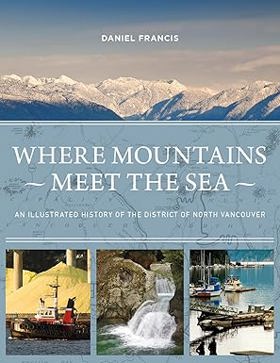
"Where Mountains Meet the Sea commemorates the 125th anniversary of the District of North Vancouver's incorporation as a municipality. Combining hundreds of illustrations with the personal accounts of residents and a lively text, the book presents the story of North Vancouver in all its colour and complexity. Instead of a conventional chronological narrative, Where Mountains Meet the Sea divides the story of North Vancouver's development into three major parts: 1) the origins of the community, its First Nations residents and the development of its waterfront; 2) the political and cultural evolution of the community; and 3) the development of the mountain resorts and the creation of the many parks which characterize the North Shore. From the District's auspicious beginnings with the sawmill at Moodyville dominating the industry of Burrard Inlet, through the postwar population boom that saw the municipality evolve from a suburb of Vancouver into a bustling community in its own right, to the District's rich legacy of outdoor recreation, the text, residents' anecdotes and photographs create a vivid portrait of the development of a thriving community. Each section of the book is richly illustrated in full colour with biographies, eyewitness memories, artifacts from the collection of the North Vancouver Museum and Archives, historic photographs, maps and charts."-- Provided by publisher ix, 245 pages : illustrations (some color), maps (some color) ; 29 cm CIRC [ 0 ]
|
2016 |
|
Where land & water meet a Western landscape transformed by Nancy Langston 
Water and land interrelate in surprising and ambiguous ways, and riparian zones, where land and water meet, have effects far outside their boundaries. Using the Malheur Basin in southeastern Oregon as a case study, this intriguing and nuanced book explores the ways people have envisioned boundaries between water and land, the ways they have altered these places, and the often unintended results. The Malheur Basin, once home to the largest cattle empires in the world, experienced unintended widespread environmental degradation in the late nineteenth and early twentieth centuries. After establishment in 1908 of Malheur National Wildlife Refuge as a protected breeding ground for migratory birds, and its expansion in the 1930s and 1940s, the area experienced equally extreme intended modifications aimed at restoring riparian habitat. Refuge managers ditched wetlands, channelized rivers, applied Agent Orange and rotenone to waterways, killed beaver, and cut down willows. Where Land and Water Meet examines the reasoning behind and effects of these interventions, gleaning lessons from their successes and failures. Although remote and specific, the Malheur Basin has myriad ecological and political connections to much larger places. This detailed look at one tangled history of riparian restoration shows how—through appreciation of the complexity of environmental and social influences on land use, and through effective handling of conflict—people can learn to practice a style of pragmatic adaptive resource management that avoids rigid adherence to single agendas and fosters improved relationships with the land. xiv, 230 pages : illustrations, maps ; 24 cm. CIRC [ 0 ]
|
2003 |
|
When the river ran wild! Indian traditions on the Mid-Columbia and the Warm Springs Reservation by George Aguilar 
"Nearly seventy-five years of my lifetime have come and gone since hearing of the sparse historical events from the old-timers," American Indian elder George Aguilar tells us. "It’s my turn now." When the River Ran Wild! is Aguilar's recounting of events he heard about while watching his grandmother make moccasins by the light of a coal-oil lamp and while strapped to the back of his aunt's horse on the way to the huckleberry grounds. He learned them at Coyote's Fishing Place, where his uncles built scaffolds and taught him how to use traditional technologies to catch salmon as they made their seasonal runs up the river. In this remarkable personal memoir and tribal history, we learn about Aguilar's people, the Kiksht-speaking Eastern Chinookans, who lived and worked for centuries connected to the rhythms and resources of the great fishing grounds of the Columbia River at Five Mile Rapids. When the River Ran Wild! is the story of a culture and a community that has undergone tremendous change since 1805, when the River People encountered Meriwether Lewis and William Clark as they traveled down the Columbia River on their way to the Pacific Ocean. To find the stories of that change, Aguilar draws on the journals and diaries of early White missionaries and settlers, such as Gabriel Franchere, Rev. Henry Perkins of Wascopum Mission, and A. B. Meacham. He found other stories in anthropological papers and historical studies that recorded the voices of people who practiced and remembered ceremonies and traditions that were lost or changed during the difficult years of removal to the Warm Springs Reservation in north-central Oregon. He heard yet others from tribal elders who have kept the history and stories of the River People in their memories. When the River Ran Wild! is the history of names and naming, of deep family connections, and of traditional customs. It is a descriptive catalogue of the plants the River People used for sustenance and medical purposes, and it is a detailed guide on how to pack out an elk and how to tan a hide. Aguilar retells the stories and myths of the river, the stories that "are now infrequent and told from books in the English language," the stories whose "body language, animal mimicry, and facial expressions are gone." Aguilar has written this book to help us know what the River People have lost on the Columbia River over the decades, but he also gives testimony to what has been conserved and enlivened by a people who love the land and who honor tradition and those who came before. He takes us, perhaps better than anyone else can, back to a time when the river ran wild. xviii, 252 pages : illustrations ; 23 cm CIRC [ 0 ]
|
2005 |
|
When Seattle was a village by Sophie Frye Bass
|
1947 |
|
When coal was king Ladysmith and the coal-mining industry on Vancouver Island by John Roderick Hinde 
"When Coal Was King illuminates the origins of the 1912-14 strike by examining the development of the coal industry on Vancouver Island, the founding of Ladysmith the experience of work and safety in the mines, the process of political and economic mobilization, and how these factors contributed to the development of identity and community. While the Vancouver Island coal industry and the strike have been the focus of a number of popular histories, this book goes beyond to emphasize the importance of class, ethnicity, gender, and community in creating the conditions for the emergence and mobilization of the working-class population. Informed by current academic debates on the matter and within the discipline, this readable history takes into account extensive archival research, and will appeal to historians and others interested in the history of Vancouver Island."--Jacket viii, 276 pages : illustrations, maps ; 24 cm CIRC [ 0 ]
|
2003 |
|
Wheat country railroad the Northern Pacific's Spokane & Palouse and competitors by Phil Beach 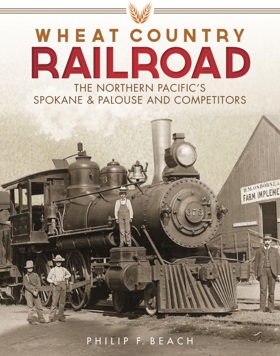
"A detailed history and reference work concerning railroads south of Spokane, Washington, and north of the Snake River."--Provided by publisher xviii, 349 pages : illustrations, maps ; 29 cm CIRC [ 0 ]
|
2018 |
|
Whatcom seascapes the influence of the sea on Whatcom County. An exhibition of the Whatcom Museum of History and Art, Bellingham, Washington, October 9, 1970--April 30, 1971 by Whatcom Museum of History and Art, Susan H. L. Barrow
|
1970 |
|
Whatcom scenes a miscellany of prose and verse by Dorothy Koert 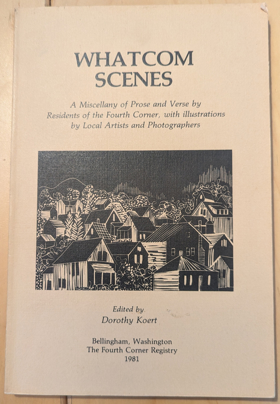
Whatcom Scenes, 1981, edited by Dorothy Koert. A miscellany of prose and verse by residents of the fourth corner, with illustrations by local artists and photographers. Paperback with 134 pages, published by The Fourth Corner Registry. xvi, 134 pages : illustrations ; 23 cm CIRC [ 1 ]
|
1981 |
|
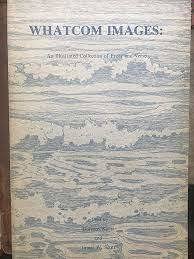
Whatcom images an illustrated collection of prose and verse by Dorothy Koert, James W. Scott
|
1982 |
|
What was said to me the life of Sti'tum'atul'wut, a Cowichan woman by Ruby Peter , Helene Demers , Royal British Columbia Museum (Issuing body) 
"A narrative of resistance and resilience spanning seven decades in the life of a tireless advocate for Indigenous language preservation. Life histories are a form of contemporary social history and convey important messages about identity, cosmology, social behaviour and one's place in the world. This first-person oral history--the first of its kind ever published by the Royal BC Museum--documents a period of profound social change through the lens of Sti'tum'atul'wut--also known as Mrs. Ruby Peter--a Cowichan elder who made it her life's work to share and safeguard the ancient language of her people: Hul'q'umi'num'. Over seven decades, Sti'tum'atul'wut mentored hundreds of students and teachers and helped thousands of people to develop a basic knowledge of the Hul'q'umi'num' language. She contributed to dictionaries and grammars, and helped assemble a valuable corpus of stories, sound and video files--with more than 10,000 pages of texts from Hul'q'umi'num' speakers--that has been described as "a treasure of linguistic and cultural knowledge." Without her passion, commitment and expertise, this rich legacy of material would not exist for future generations. In 1997 Vancouver Island University anthropologist Helene Demers recorded Sti'tum'atul'wut's life stories over nine sessions. The result is rich with family and cultural history--a compelling narrative of resistance and resilience that promises to help shape progressive social policy for generations to follow."-- Provided by publisher xviii, 167 pages, 31 pages of plates : illustrations (chiefly color), maps ; 23 cm CIRC [ 0 ]
|
2021 |
|
What happened here? stories and legends based on the history of Coos and Curry counties, Oregon by Shirley Nelson 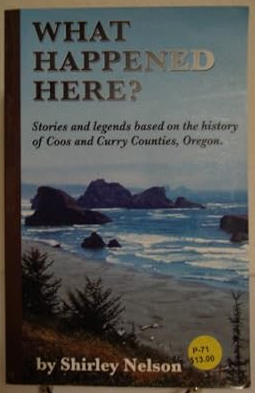
Published in local editions by Shirley Nelson, What Happened Here? Stories and Legends Based on the History of Coos and Curry Counties, Oregon weaves together local folklore, pioneer accounts, and historical research to chronicle the dramatic frontier past of Oregon's rugged southwestern coast. The book captures the dangerous realities of early coastal settlement, detailing shipwrecks along treacherous bars, gold-mining rushes in river canyons, and the often-tense interactions between Euro-American homesteaders and indigenous populations. Drawing on regional oral histories, Nelson preserves the vibrant, hard-scrabble legends that defined the daily existence of isolated coastal communities. A keen insight drawn from the text is how regional folklore functions as a vital psychological coping mechanism; by transforming the brutal isolation and constant tragedies of a perilous maritime frontier into enduring campfire legends, early settlers forged a resilient collective identity that helped them tame a deeply unforgiving landscape. 111 pages : illustrations, maps ; 22 cm CIRC [ 1 ]
|
2005 |
|
|
1989 |
|
Westward to paradise by Charles J. Munson, Kenneth B. Platt 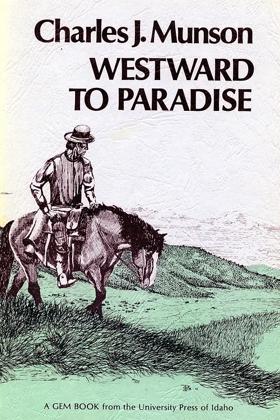
Charles Munson’s Cozy Cove Farm was the first registered farm in Latah County. He also served in Idaho’s state legislature for more than a decade, and as the state’s land commissioner from 1906 to 1909. His autobiography, Westward to Paradise, provides a firsthand account of Munson’s migration to Idaho and the early days of town building in Moscow. From the introduction by Kenneth B. Platt: “A great tale of adventure, made all the more appealing by understatement of the very real dangers encountered, hardships endured, difficulties overcome, and achievements won.” 174 pages : illustrations ; 21 cm. CIRC [ 0 ]
|
1978 |
|
Westward to Alki the story of David and Louisa Denny by Gordon R. Newell
|
1977 |
|
Western lands, western voices essays on public history in the American West by Gregory E. Smoak , Gregory C. Thompson 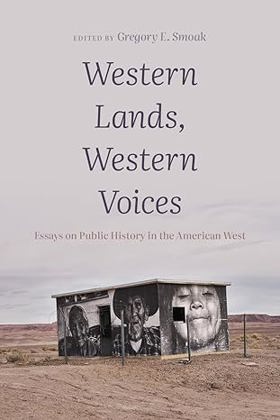
"This collection of essays explores the meanings and uses of contemporary public history in the American West"-- Provided by publisher xii, 232 pages : illustrations ; 24 cm CIRC [ 0 ]
|
2021 |
|
West Side story by Clay Eals
|
1987 |
|
West Pointers and early Washington the contributions of U.S. Military Academy graduates to the development of the Washington Territory, from the Oregon Trail to the Civil War, 1834-1862 by John A. Hemphill, Robert C. Cumbow 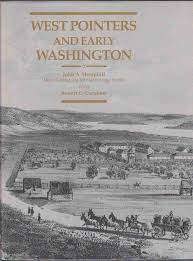
The contributions of U.S. Military Academy Graduates to the Development of the Washington Territory, from the Oregon Trail to the Civil War 1934-1862. iv, 235 pages : illustrations, maps ; 28 cm CIRC [ 1 ]
|
1992 |
|
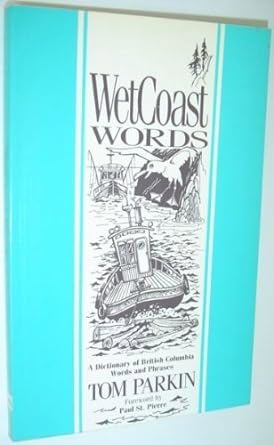
West Coast adventures shipwrecks, lighthouses, and rescues along Canada's west coast by Adrienne Mason 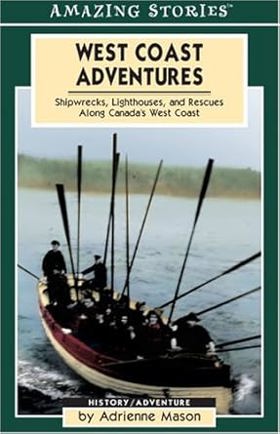
The stories of the sailors, lighthouse keepers, and linemen who have weathered the infamous west coast storms. The southwest coast of Vancouver Island is a reef-studded stretch, notorious for dramatic winter storms and thick cloaks of summer fog. Many ships have found themselves well off course, even lost, during sudden storms. This book tells the stories of the sailors, lighthouse keepers, and linemen who have weathered these west coast storms. 107 pages : illustrations, map ; 22 cm. CIRC [ 0 ]
|
2003 |
|
Wenatchee Valley images of North Central Washington by Rufus Woods, World Publishing Company, Quebecor Books 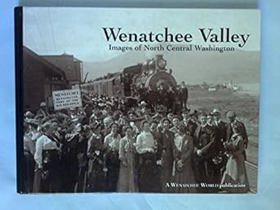
This is a photographic history of North Central Washington. Hundreds of people from the region brought photographs and the history behind the photograph. The best photos were compiled to represent the history of the region. The photographs start in the 1880s and continue until about 1959 iv, 155 pages : chiefly illustrations ; 19 x 26 cm CIRC [ 1 ]
|
2002 |
|
Wenatchee Valley images of North Central Washington. Volume II by Nancy Barnhart 
This is a photographic history of North Central Washington. Hundreds of people from the region brought photographs and the history behind the photograph. The best photos were compiled to represent the history of the region. The photographs start in the 1880s and continue until about 1969 iv, 155 pages : illustrations ; 19 x 26 cm CIRC [ 1 ]
|
2004 |