Catalog of British Columbiana and Pacific Northwest Americana
Encyclopedia Cascadia Catalog contains book titles of mostly non-fiction Pacific Northwest Coast of North America Titles (primarially British Columbia, Idaho, Oregon and Washington State) in an easy-to-understand title catalog. If you see a link with this badge ONLINE CIRC it means that there is an online institution that provides free access to that title. In some cases there may be more than one institution hosting the title digitally.
| Catalog Title | Published |
|---|---|
|
Researching local history by Mary Reed, Carole Simon-Smolinski, Idaho State Historical Society
|
1985 |
|
|
1985 |
|
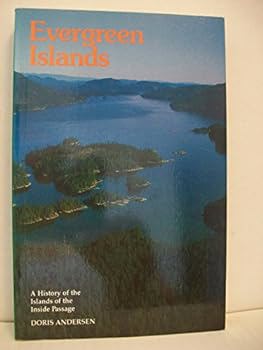
The evergreen islands a history of the islands of the Inside Passage by Doris Andersen
|
1985 |
|
Farming the frontier the agricultural opening of the Oregon country, 1786-1846 by James R. Gibson 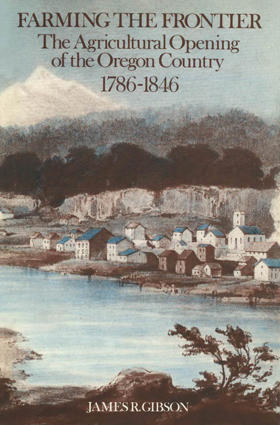
In its rich detail, this book provides the first comprehensive history of the agricultural development of the Oregon Country. Based on extensive research in Hudsons's Bay Company documents, missionary records, and military and private papers, this book traces the crucial transition of the Pacific Northwest from a fur-trading outpost to an agricultural settlement -- a process which also saw the shift from British to American jurisdiction in the area. 265 pages : illustrations, maps ; 24 cm CIRC [ 1 ]
|
1985 |
|
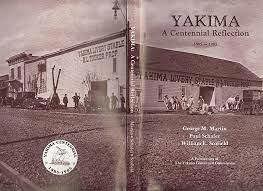
Yakima, a centennial reflection, 1885-1985 by George M. Martin, Paul Schäfer, William E. Scofield, Yakima Centennial Commission
|
1985 |
|
Phil Weyerhaeuser, lumberman by Charles E. Twining 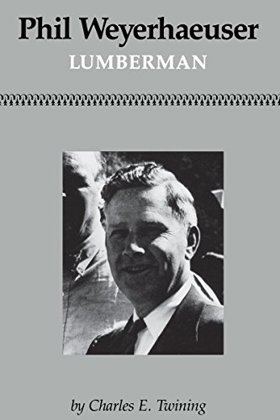
This is a rich and many-faceted personal and business biography of the main figure in the third generation of Weyerhaeusers, who led the Weyerhaeuser Timber Company through the difficult and decisive years from 1933 to 1956. Although Phil Weyerhaeuser preferred to pass over the importance of his role, he was an industry leader and as such could not escape a large public duty. The years in which he served, from the 1920s tin the Inland Empire, and from 1933 to 1956 with the Weyerhaeuser Timber Company west of the Cascades, were years of great demands and change. Within his tenure the country experience the Great Depression and World War II, the reluctant acceptance by business of New Deal and Fair Deal legislation and bureaucratic requirements, and the adjustments occasioned by the managerial revolution. In the case of the Timber Company, the period witnessed its transition from what had been primarily a dealer in timberlands to an integrated manufacturer of forest products, from a liquidator of forest resources to a managers of tree farms designed to be perpetual in their providence. Phil oversaw his responsibilities to good purpose. His quiet style is of interest and so too are the effects of just being a Weyerhaeuser. The latter, of course, had much to do with his opportunities and also influenced the manner in which he conducted himself. But it was not without its liabilities, and the family relationships are an important element in the story. The most significant feature, however, has to do with the study of a period and a place and an industry through the experiences of a very special organization and its leadership. The study brings people and events into clearer focus and gives them added meaning. This is of particular importance in an industry so given to stereotyping and disapprobation. This well-written account reveals in detail the operation of a huge family enterprise, government-industry relations at a key time in United States history, labor relations, and efforts to expand and continually revitalize a large company--dependent on natural resources--over a period of half a century. Central to these efforts was Phil’s conviction that the best way for a forest products company to operate was to own its own timberlands. he saw such holdings as necessary if the company was to engage in sustained-yield management. This biography draws extensively on primary sources--correspondence, family records, memoranda, and numerous interviews. It will be of interest to historians of the Pacific Northwest and the forest products industry, students of business history, and all readers interested in the development of a major American company. xvii, 401 pages, 40 pages of plates : illustrations ; 24 cm CIRC [ 1 ]
|
1985 |
|
Lacey, Olympia, and Tumwater a pictorial history by Shanna Stevenson 
This book gives a reader the opportunity to view the Olympia, Lacy, Tumwater in its early development stages and fills a lot of gaps. 223 pages : illustrations ; 28 cm CIRC [ 1 ]
|
1985 |
|
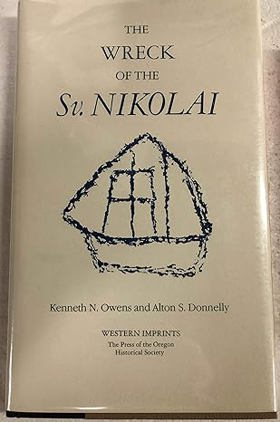
The Wreck of the Sv. Nikolai two narratives of the first Russian expedition to the Oregon country, 1808-1810 by Kenneth N. Owens, Timofeĭ. Tarakanov, Ben Hobucket
|
1985 |
|
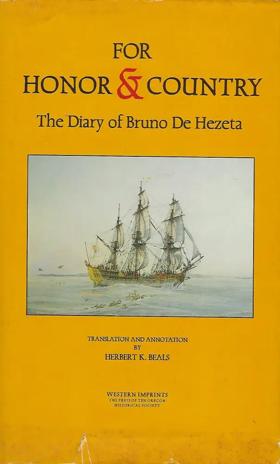
For honor & country the diary of Bruno de Hezeta by Bruno de Hezeta, H. K. Beals
|
1985 |
|
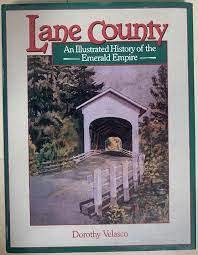
Lane County an illustrated history of the Emerald Empire by Dorothy Velasco, Dianne Donovan, Lane County Historical Society (Or)
|
1985 |
|
During my time Florence Edenshaw Davidson, a Haida woman by Margaret B. Blackman, Florence Edenshaw Davidson 
This book is the first life history of a Northwest Coast Indian woman. Florence Davidson, daughter of noted Haida carver and chief Charles Edenshaw, was born in 1896. As one of the few living Haida elders knowledgeable bout the culture of a bygone era, she was a fragile link with the past. Living in Masset on the Queen Charlotte Islands, some fifty miles off the northwest coast of British Columbia, Florence Davidson grew up in an era of dramatic change for her people. On of the last Haida women to undergo the traditional puberty seclusion and an arranged marriage, she followed patterns in her life typical of women of her generation. Florence’s narrative -- edited by Professor Blackman from more than fifty hours of tape recordings -- speaks of girlhood, of learning female roles, of the power and authority available to Haida women, of the experiences of menopause and widowhood. Blackman juxtaposes comments made by early observes of the Haida, government agents, and missionaries, with appropriate portions of the life history narrative, to portray a culture neither traditionally Haida nor fully Canadian, a culture adapting to Christianity and the imposition of Canadian laws. Margaret Blackman not only preserves Florence Davidson’s memories of Haida ways, but with her own analysis of Davidson’s life, adds significantly to the literature on the role of women in cross-cultural perspective. The book makes an important contribution to Northwest Coast history and culture, to the study of culture change, to fieldwork methodology, and to women’s studies. xvii, 172 pages : illustrations ; 23 cm CIRC [ 0 ]
|
1985 |
|
Handbook of North American Indians Volume 11, Great Basin by William C. Sturtevant, Warren L. d'. Azevedo 
Volume 11 covers the history and culture of the original inhabitants of the area which is now Nevada, Utah, western Colorado, portions of southern Oregon, Idaho, Wyoming, eastern California, Arizona and New Mexico. xvi, 852 pages CIRC [ 1 ]
|
1986 |
|
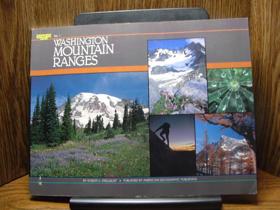
Washington mountain ranges by Robert Steelquist, Pat O'Hara (Illustrator)
|
1986 |
|
Strathcona a history of British Columbia's first provincial park by Wallace Baikie, Rosemary Phillips
|
1986 |
|
The mightiest of them all memories of Grand Coulee Dam by Leonhard Vaughn Downs
|
1986 |
|
South Whidbey and its people Volume 3: Langley, The Village by the Sea by Lorna Cherry, South Whidbey Historical Society 
Langley, The Village by the Sea: A gleam in the eye of a teen-age German boy becomes a South Whidbey village. The village becomes a town and the town becomes a city volumes : illustrations ; 26 cm CIRC [ 1 ]
|
1986 |
|
Land of the Umpqua a history of Douglas County, Oregon by Stephen Dow Beckham
|
1986 |
|
Vancouver on the Columbia an illustrated history by Ted Van Arsdol, Sheila Guenther, Greater Vancouver Chamber of Commerce (Wash)
|
1986 |
|
As the anvil rings by Geneva Bair Wilson
|
1986 |
|
The Jesuits and the Indian wars of the Northwest by Robert Ignatius Burns
|
1986 |
|
Coal towns in the Cascades a centennial history of Roslyn and Cle Elum, Washington by John C. Shideler 
From Coal Mine to Recreational In the early 1880s, the Northern Pacific Railroad discovered coal in Roslyn, Washington. By 1886, mining coal in Roslyn became the company's top priority. The coal mines attracted a diverse workforce from across America and Europe. Each group, along with their hopes and dreams for a better life, brought their own culture, cuisine and customs, many of which are still in evidence today.Coal mining operations ceased in 1963. After more than 63 million tons of coal had been mind from the Roslyn coal field, Roslyn became a town with no industry. Over time, Seattlites, seeking sunny skies and fresh mountain air stimulated an increased demand for recreational property. As people began to discover the great natural beauty of the areas close to Seattle, tourism began to grow. People became enchanted with the area's history and its four-season recreational opportunities.The resort community of Suncadia was created on a 6,300-acre piece of property, southwest of Roslyn, which includes Mines No. 9 and No. 10. Suncadia is owned by subsidiaries of JELD-WEN, PacTrust and Lowe Enterprises. The goal of Suncadia LLC was to develop a four-season destination resort, while preserving the beauty and history of the land. An important component of the resort is the Rope Rider golf course, so named as a tribute to the coal miners, who precariously balanced themselves on the coal cars that maneuvered the steep slopes of the mine shafts. The enduring legacy of the Rope Riders is woven into the design, architecture and personality of the Roper Rider Clubhouse. [8], 151 pages : illustrations, chart, portraits; 29 cm CIRC [ 1 ]
|
1986 |
|
Seattle in the 1880s by David M. Buerge, Stuart R. Grover , Historical Society of Seattle and King County (Publisher)
|
1986 |
|
Chief Pocatello, the "White Plume" by Brigham D. Madsen 
Dedicated to a people who faced starvation and destitution as white emigrating settlers continued to flock through his homeland, Pocatello was committed to preserving the life of his people. Even as game and land resources were severely depleted, he sought little other than to provide for his Shoshoni tribe. x, 142 pages : illustrations, maps, portraits ; 22 cm. CIRC [ 0 ]
|
1986 |
|
Victoria, the way it was by Michael Kluckner
|
1986 |
|
UniverCity the city within city, the story of the University District by Roy G. Nielsen
|
1986 |