Catalog of British Columbiana and Pacific Northwest Americana
Encyclopedia Cascadia Catalog contains book titles of mostly non-fiction Pacific Northwest Coast of North America Titles (primarially British Columbia, Idaho, Oregon and Washington State) in an easy-to-understand title catalog. If you see a link with this badge ONLINE CIRC it means that there is an online institution that provides free access to that title. In some cases there may be more than one institution hosting the title digitally.
| Catalog Title | Published |
|---|---|
|
Oregon historical calendar and chronology of events, 1542-1988 listing major historical events as they occurred from the Oregon country to the Oregon comeback by Glenn T. Harding 
NOTE: "The Oregon Historical Calendar & Chronology of Events contains selected information compiled from numerous published sources available in most Oregon public libraries and historical societies ..." t.p. verso 150 pages ; 27 cm CIRC [ 1 ]
|
1988 |
|
The changing Pacific Northwest interpreting its past by David H. Stratton , George A. Frykman , National Endowment for the Humanities, Washington State University Department of History 
In order to explore the unique history of the Pacific Northwest, Washington State University established the Sherman and Mabel Smith Pettyjohn Distinguished Lecture Series in 1980. Since that time a series of nationally prominent guest speakers presented numerous, original contributions to the body of information available on the region. In this volume, nine schools explore Pacific Northwest hisorty from their unique perspectives. Pacific Northwest economic, social, and political trends are examined as important parts of a rapidly emerging, regional culture. Challenges posed by women's history, Alaska's place in the Pacific Northwest, the role cultural elites have played in Pacific Northwest development, the labor movement, and other issues are discussed in detail. The Changing Pacific Northwest presents nine articles by Pettyjohn lecturers, confronting these and other important questions. In doing so, they give us much insights in the history of this region xi, 187 pages : illustrations, map ; 23 cm. CIRC [ 1 ]
|
1988 |
|
Buck Mountain poems by Anne Kennedy
|
1988 |
|
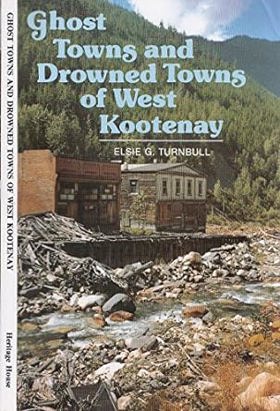
Ghost towns and drowned towns of West Kootenay by Elsie G. Turnbull
|
1988 |
|
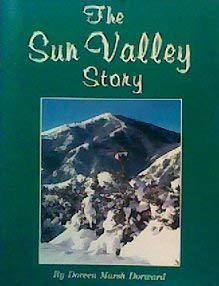
The Sun Valley story by Doreen Marsh Dorward
|
1988 |
|
Granite and gold the story of Oregon's smallest city by James Waucop Tabor
|
1988 |
|
Hard times in paradise Coos Bay, Oregon, 1850-1986 by William G. Robbins 
Blessed with vast expanses of virgin timber, a good harbor, and a San Francisco market for its lumber, the Coos Bay area once dubbed itself "a poor man's paradise." A new Prologue and Epilogue by the author bring this story of gyppo loggers, longshoremen, millwrights, and whistle punks into the twenty-first century, describing Coos Bay’s transition from timber town to a retirement and tourist community, where the site of a former Weyerhaeuser complex is now home to the Coquille Indian Tribe’s The Mill Casino. xiv, 194 pages, 16 unnumbered pages of plates : illustrations ; 23 cm CIRC [ 1 ]
|
1988 |
|
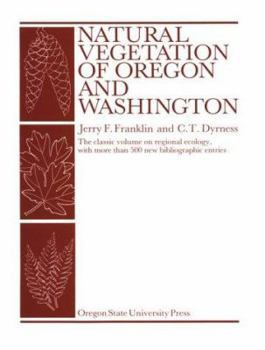
Natural vegetation of Oregon and Washington by Jerry F. Franklin, C. T. Dyrness
|
1988 |
|
Stehekin, a valley in time by Grant McConnell 
Looks at the remote community of Stehekin in Washington's Cascade mountains and describes how a pioneering style of life has become more like that of the outside world 206 pages : map ; 24 cm CIRC [ 1 ]
|
1988 |
|
Growing up with Lake Forest Park the early decades in "North Seattle" : Vol II by Barbara L. Drake Bender
|
1988 |
|
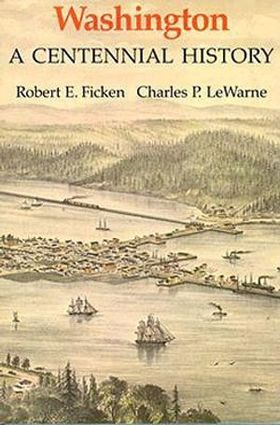
Washington a centennial history by Robert E. Ficken, Charles Pierce LeWarne, Washington Centennial Commission
|
1988 |
|
Washingtonians a biographical portrait of the state by David Brewster , David M. Buerge , Washington Centennial Commission (Sponsor)
|
1988 |
|
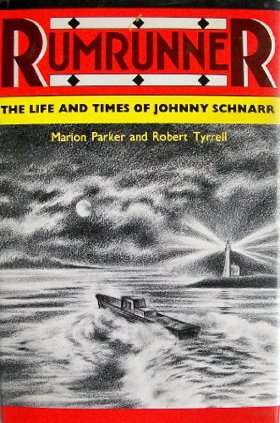
Rumrunner the life and times of Johnny Schnarr by Marion Parker, Bob Tyrrell
|
1988 |
|
They never go back to Pocatello the selected essays of Richard Neuberger by Richard L. Neuberger, Steve Neal
|
1988 |
|
People, politics & public power by Ken Billington, Washington Public Utility Districts' Association
|
1988 |
|
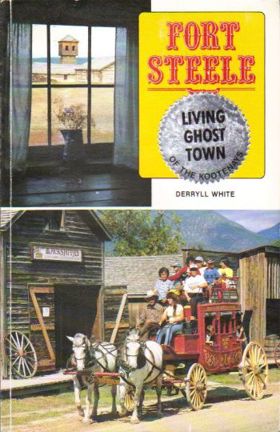
Fort Steele here history lives by Derryll White
|
1988 |
|
Saltwater City an illustrated history of the Chinese in Vancouver by Paul Richard Yee 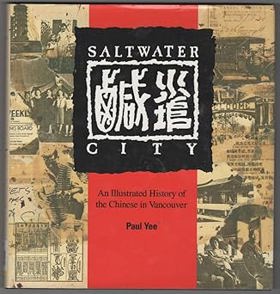
Saltwater City pays tribute to those who went through the hard times, to those who swallowed their pride, to those who were powerless and humiliated, but who still carried on. They all had faith that things would be better for future generations. They have been proven correct.Canada’s first Chinese arrived in British Columbia in 1858 from California. Almost all men—merchants, peasants, and laborers — and almost all from eight rural counties in the Pearl River delta in what is now Guangdong province — they came in search of gold and better fortune, escaping the rebellions, flood and drought of their homeland.By 1863 over 4,000 Chinese lived in B.C., filling jobs shunned by miners, road builders, teamsters, laundry men, restaurateurs, domestic servants and cannery workers. Between 1881 and 1885, thousands more arrived, most imported to build the transcontinental railway. They were to create, in Vancouver, Canada’s largest and most dynamic Chinese Community, known to its original inhabitants as Saltwater City. 174 p. : ill., fac-sim CIRC [ 1 ]
|
1988 |
|
Brooklawn reverie by Elizabeth Gamble Wahl 
Poems and short stories written by Elizabeth Gamble Wahl. From the foreword by David Wahl: “When my grandfather, Daniel Gamble, returned from Goldendale and Victoria to his homestead on Paradise Ridge, he built a new home for his family. Following Irish tradition, he gave his home a name: Brooklawn. It was here that my mother grew up on a farm with the woods nearby. She learned to love the flowers and birds of field and woodland, and the passing seasons. The seasons show themselves distinctly here in the Palouse Country, and sometimes all four seasons come on one March day. Both her father and her brother Bert could write poetry. Before she was eleven, she and her sister Lola would make up their own stories. She decided that she would like to be a writer. She payed close attention to people, seemingly ordinary people, who worked in the fields with her brothers, or helped with chores and cooking. Among these people was “Shorty Hill”, a ranch hand and a real cowboy. Although he was not a writer, he was a master storyteller, and he helped my mother learn how to write the way that people speak. The short stories are fiction, but they have the good times among the hard times, the closeness of nature, and both the mischief and the warmth and caring of real people woven into them. Our family has enjoyed her stories and poems, and it is my hope that this book will bring as much pleasure to many others. Perhaps her words will help you to see that there are no ordinary people, and that today is no ordinary day.” 30 cm : illustrations ; 28 cm CIRC [ 0 ]
|
1988 |
|
A history of Laurelhurst by Christine Barrett, Laurelhurst Community Club (Seattle, Wash)
|
1989 |
|
Rails across the Cascades by Eva Greenslit Anderson
|
1989 |
|
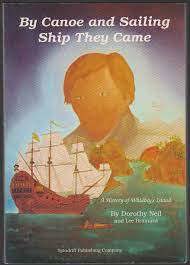
By canoe and sailing ship they came a history of Whidbey's Island by Dorothy Neil, Lee Brainard
|
1989 |
|
From sojourner to citizen Chinese of the Inland Empire by Edith E. Erickson, Eddy Ng
|
1989 |
|
The day Seattle burned June 4, 1889 by James R. Warren 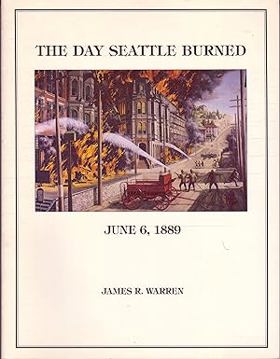
"The great fire of 1889 devoured the business heart of Seattle. The story of how it began, who actually started it, how the fire department reacted, and why the fire roared out of control make fascinating reading."--Amazon.com viewed Oct. 3, 2022 69 pages : illustrations ; 28 cm CIRC [ 1 ]
|
1989 |
|
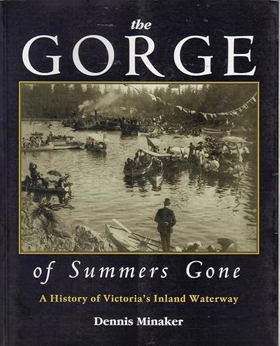
The Gorge of summers gone a history of Victoria's inland waterway by Dennis Minaker
|
1989 |
|
The Ghostland people a documentary history of the Queen Charlotte Islands, 1859-1906 by Charles Lillard 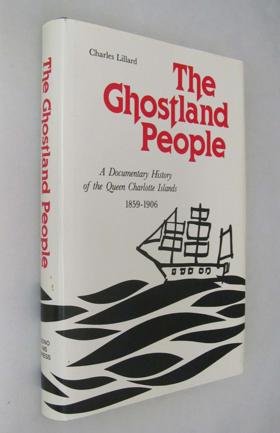
The Ghostland People was the name given by the Haida to the early white settlers. This book is a gathering of firsthand accounts of exploration and discovery in the Queen Charlotte Islands during the little-known period bordered on one side by the maritime fur traders, and on the other by the farmers and the fishermen, and the loggers and the miners. William Downie visited the islands in 1859 and filed his report with Governor James Douglas. Robert Brown made his way there aboard the Goldstream in 1866, and Judge James G. Swan made his first trip to the Charlottes in 1883/and left a fascinating yet forgotten account. In 1878 George Dawson, the “little giant,” wrote his classic study (here reproduced for the first time in 110 years) of the Islands and the Haida. Lord Dufferin and his wife, the Marchioness of Dufferin and Ava, toured the Queen Charlottes in 1876 and both left detailed accounts. So did Charles Horetzky, who was there two years earlier. The next visitor to leave important views of the Islands was George A. Dorsey, who, with James Deans, cruised the area in 1898 on the behalf of the Field Museum in Chicago. Just after the turn of the century, Charles Seldon, a professional hunter from the United States, visited the Islands to observe the long-fabled Queen Charlotte Island caribou. This is the fourth volume in the West Coast Heritage Series. In it, editor Charles Lillard has also provided the first detailed chronology of Island history, the first major bibliography, and chapters on the Islands’ mystique and prehistory. As was the case with the previous books, Lillard gathers together material which has not been accessible to the general reader for over eighty years. 318 pages : illustrations, maps ; 24 cm CIRC [ 0 ]
|
1989 |