Catalog of British Columbiana and Pacific Northwest Americana
Encyclopedia Cascadia Catalog contains book titles of mostly non-fiction Pacific Northwest Coast of North America Titles (primarially British Columbia, Idaho, Oregon and Washington State) in an easy-to-understand title catalog. If you see a link with this badge ONLINE CIRC it means that there is an online institution that provides free access to that title. In some cases there may be more than one institution hosting the title digitally.
| Catalog Title | Published |
|---|---|
|
Making history the people who shaped the San Juan Islands by Lucile Saunders McDonald 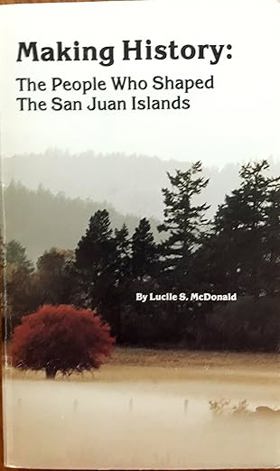
Harbor Press [Published date: 1990]. Soft cover, 214 pp. [Excerpt from rear cover] More than 1.5 million people ride the ferry each year to the San Juan Islands. Thousands more visit the archipelago by private boat or plane. All agree the San Juans are a national treasure. Stunningly beautiful, the islands have become a special place to live and visit. How did they become what they are? Who were the first settlers whose decisions shape today? What about the soldiers, the Indians, the smugglers, the pioneer families? Lucile S. McDonaId, one of Washington's most-honored historians, explores the earliest days in the islands and captures the essence of the island spirit that lives today. For those who love the islands, Making History: The People Who Shaped the San Juan Islands is a delightful, fast-paced and fascinating adventure. 214 pages : illustrations, maps ; 23 cm CIRC [ 1 ]
|
1990 |
|
A centennial history of the Kendrick-Juliaetta area by Kenrick-Juliaetta Centennial Committee (Publisher) 
Published by the Kendrick-Juliaetta Centennial Committee, A Centennial History of the Kendrick-Juliaetta Area chronicles the agricultural settlement, rugged pioneer endurance, and community-building along the steep, fertile canyon lands of north-central Idaho's Potlatch River valley. The book details how hardy homesteaders transformed an isolated wilderness into a thriving agrarian hub driven by wheat farming, timber harvesting, and the arrival of regional railroad lines. Through extensive family histories, rare photographs, and local archives, the text preserves the granular records of everyday survival in a striking canyon landscape. A keen insight drawn from the work is how topographical isolation forced early farming communities to engineer their own economic survival; by relying on narrow-gauge railroads to bridge the seemingly impassable gorges of the Palouse region, these rural settlements proved that agricultural prosperity in the Inland Northwest depended entirely on conquering hostile vertical geography. vii, [3], 246 pages : illustrations, maps, portraits ; 29 cm CIRC [ 1 ]
|
1990 |
|
Handbook of North American Indians Volume 7, Northwest Coast by Wayne P. Suttles , William C. Sturtevant , Smithsonian Institution 
Volume 7 provides background information on the native peoples of the Northwest Coastal environment, their languages, and early history. Also contains sections on mythology, art, and the Indian Shaker Church. xv, 777 pages : illustrations, maps, portraits ; 29 cm CIRC [ 1 ]
|
1990 |
|
Report from Grimes Creek after a hard winter by Nancy Stringfellow 
Authored by Nancy Stringfellow, Report from Grimes Creek After a Hard Winter captures the isolated, rugged reality of pioneer life and gold-mining culture in the mountainous backcountry of Boise County, Idaho. The book reflects on the punishing aftermath of a brutal winter season, detailing how local homesteaders, miners, and families endured freezing isolation, scarce supplies, and the grueling physical toll of sub-zero mountain living. Through evocative prose and regional historical anecdotes, the text preserves a snapshot of resilient community survival along a historic Idaho creek. A keen insight drawn from the work is how seasonal extremes served as the ultimate equalizer on the mining frontier; by demonstrating how a severe winter instantly stripped away the speculative hype of the gold rush and reduced all residents to a shared struggle for basic warmth and sustenance, the narrative reveals that true frontier survival relied far more on stubborn endurance against nature than on mineral wealth. 34 pages : illustrations ; 23 cm CIRC [ 1 ]
|
1990 |
|
Lewiston country an armchair history by Margaret Day Allen, Ladd Hamilton 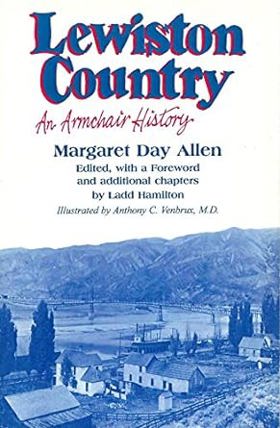
Co-authored by Margaret Day Allen and Ladd Hamilton, Lewiston Country: An Armchair History chronicles the rich heritage, geographic crossroads, and frontier development of Idaho’s first territorial capital. The book traces the region's evolution from ancestral Nez Perce homelands into a bustling steamboat and mining hub where the Clearwater and Snake rivers converge. Through engaging historical narratives and archival imagery, the text captures the colorful cast of merchants, miners, and riverboat captains who anchored civilization at the gateway to the inland empire. A keen insight drawn from the work is how river confluences function as natural magnets for geopolitical and economic control; by examining how Lewiston leveraged its strategic waterway access to dominate regional supply lines, the narrative highlights how the geography of river junctions dictated the terms of colonial dominance and urban survival across the Pacific Northwest. vi, 253 pages : illustrations, maps ; 22 cm CIRC [ 1 ]
|
1990 |
|
|
1990 |
|
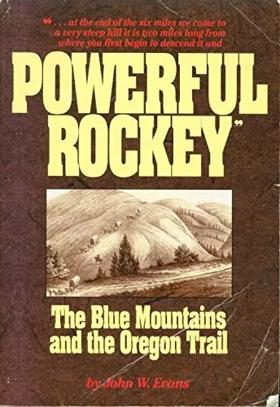
Powerful rockey the Blue Mountains and the Oregon Trail, 1811-1883 by John W. Evans, Eastern Oregon State College
|
1990 |
|
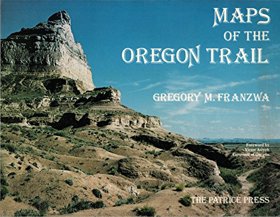
Maps of the Oregon Trail by Gregory M. Franzwa
|
1990 |
|
Place names of the Canadian Alps by William Lowell Putnam , Glen W. Boles , Roger W. Laurilla 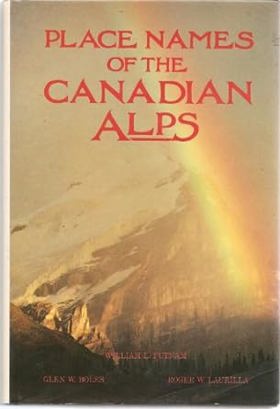
Covers the Canadian Rocky Mountains in British Columbia and Alberta xviii, 383 pages, 25 pages of plates : illustrations (some color), color map ; 24 cm CIRC [ 1 ]
|
1990 |
|
Mexican labor and World War II braceros in the Pacific Northwest, 1942-1947 by Erasmo Gamboa 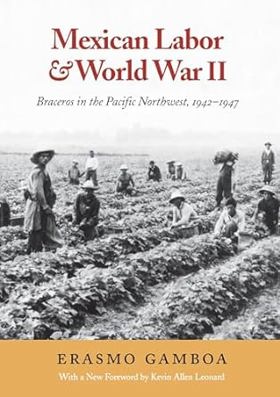
"Although Mexican migrant workers have toiled in the fields of the Pacific Northwest since the turn of the century, and although they comprise the largest work force in the region s agriculture today, they have been virtually invisible in the region s written labor history. Erasmo Gamboa s study of the bracero program during World War II is an important beginning, describing and documenting the labor history of Mexican and Chicano workers in Oregon, Washington, and Idaho and contributing to our knowledge of farm labor."--Oregon Historical Quarterly xiv, 178 pages, 16 unnumbered pages of plates : illustrations ; 24 cm CIRC [ 1 ]
|
1990 |
|
Guide to Oregon provisional and territorial government records by Oregon State Archives, Layne Sawyer
|
1990 |
|
Port Blakely the community Captain Renton built by Andrew Price
|
1990 |
|
Little history of North Bend-Snoqualmie, Washington by Jack R. Evans
|
1990 |
|
Washington's wild rivers the unfinished work by Tim McNulty, Pat O'Hara (Photographer), Douglass A. North 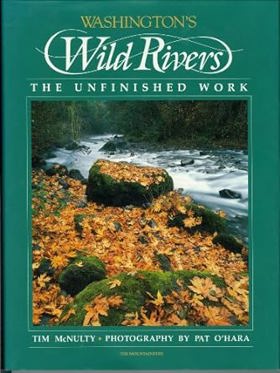
"Prose and full-color photos of Northwest rivers." -- Publisher 144 pages : color illustrations, maps ; 30 cm CIRC [ 1 ]
|
1990 |
|
In times past a history of the lower Jordan Creek communities. by Hazel R. Fretwell 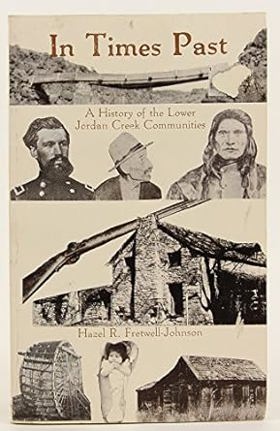
Author Hazel Danner Fretwell Johnson was a writer for the Owyhee Outpost for 21 years. An avid history buff, in this book she features the history of Arock, Danner and Rome. All are communities in Southern Malheur County. vi, 207, [4] pages : illustrations, map ; 21 cm CIRC [ 1 ]
|
1990 |
|
Atlas of Lane County, Oregon by James E. Meacham, Lane County (Or), University of Oregon, Lane Council of Governments (Or)
|
1990 |
|
The Canadian Fur Trade in the Industrial Age by Arthur Ray 
Throughout much of the nineteenth century the Hudson's Bay Company had a virtual monopoly on the core area of the fur trade in Canada. Its products were the object of intense competition among merchants on two continents – in Leipzig, New York, London, Winnipeg, St Louis, and Montreal. But in 1870 things began to change, and by the end of the Second World War the company's share had dropped to about a quarter of the trade. Arthur Ray explores the decades of transition, the economic and technological changes that shaped them, and their impact on the Canadian north and its people. Among the developments that affected the fur trade during this period were innovations in transportation and communication; increased government involvement in business, conservation, and native economic welfare; and the effects of two severe depressions (1873-95 and 1929-38) and two world wars. The Hudson's Bay Company, confronting the first of these changes as early as 1871, embarked on a diversification program that was intended to capitalize on new economic opportunities in land development, retailing, and resource ventures. Meanwhile it continued to participate in its traditional sphere of operations. But the company's directors had difficulty keeping pace with the rapid changes that were taking place in the fur trade, and the company began to lose ground. Ray's study is the first to make extensive use of the Hudson's Bay Company archives dealing with the period between 1870 and 1945. These and other documents reveal a great deal about the decline of the company, and thus about a key element in the history of the modern Canadian fur trade. xviii, 283 pages : illustrations ; 24 cm CIRC [ 0 ]
|
1990 |
|
The silicon forest High Tech in the Portland Area 1945-1986 by Gordon B. Dodds, Craig Wollner, Marshall M. Lee
|
1990 |
|
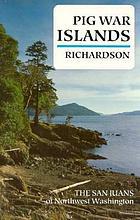
Pig War islands the San Juans of Northwest Washington by David Richardson
|
1990 |
|
Camera eye on Idaho pioneer photography, 1863-1913 by Arthur A. Hart 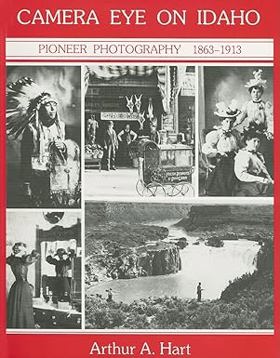
This book is a collection of the most compelling and beautiful photographs made of early Idaho people, places, and events in Idaho from 1863 through 1913. Virtually nothing had been published on Idaho’s pioneer photographers when Arthur A. Hart began his research a dozen years ago. 201 pages : illustrations ; 29 cm CIRC [ 0 ]
|
1990 |
|
The Weiser Indians Shoshoni peacemakers by Hank Corless 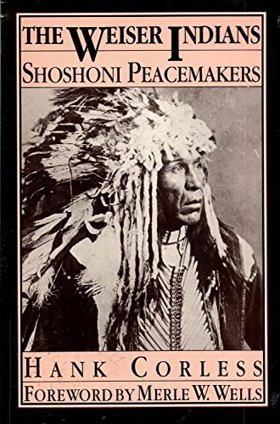
This book documents Indian-white relations in southwestern Idaho during the time of initial white encroachment onto Indian lands.--Provided by publisher xix, 170 pages : illustrations ; 23 cm CIRC [ 0 ]
|
1990 |
|
Nch'i-wána, "the big river" Mid-Columbia Indians and their land by Eugene S. Hunn, James Selam 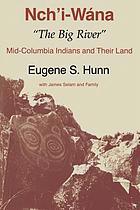
The mighty Columbia River cuts a deep gash through the Miocene basalts of the Columbia Plateau, coursing as well through the lives of the Indians who live along its banks. Known to these people as Nch’i-Wana (the Big River), it forms the spine of their land, the core of their habitat. At the turn of the century, the Sahaptin speakers of the mid-Columbia lived in an area between Celilo Falls and Priest Rapids in eastern Oregon and Washington. They were hunters and gatherers who survived by virtue of a detailed, encyclopedic knowledge of their environment. Eugene Hunn’s authoritative study focuses on Sahaptin ethnobiology and the role of the natural environment in the lives and beliefs of their descendants who live on or near the Yakima, Umatilla, and Warm Springs reservations. xi, 378 pages : illustrations, maps ; 24 cm CIRC [ 0 ]
|
1990 |
|
Their day in court a history of the Indian Claims Commission by Harvey D. Rosenthal
|
1990 |
|
Birds of Malheur National Wildlife Refuge, Oregon by Carroll D. Littlefield 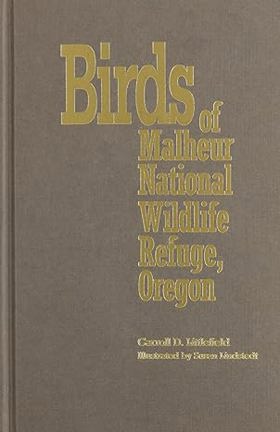
The Malheur National Wildlife Refuge in southeast Oregon is internationally known to ornithologists and birders. Throughout the year, but especially during spring and autumn migrations, hundreds of thousands of birds can be seen on the refuge. Birds of Malheur National Wildlife Refuge provides the first exhaustive report on the 312 species recorded here over the last 110 years. For each species you'll learn: how common it is on the refuge; where it is likely to be found on the refuge; dates of its earliest, latest, and most frequent sightings on the refuge. C. D. Littlefield is a legendary figure to western birders and an internationally recognized expert on the birds of Malheur, particularly the Sandhill Crane. 294 pages : illustrations ; 22 cm CIRC [ 0 ]
|
1990 |
|
Tall tales from Rogue River the yarns of Hathaway Jones by Hathaway Jones, Stephen Dow Beckham, Christina Romano
|
1990 |