Catalog of British Columbiana and Pacific Northwest Americana
Encyclopedia Cascadia Catalog contains book titles of mostly non-fiction Pacific Northwest Coast of North America Titles (primarially British Columbia, Idaho, Oregon and Washington State) in an easy-to-understand title catalog. If you see a link with this badge ONLINE CIRC it means that there is an online institution that provides free access to that title. In some cases there may be more than one institution hosting the title digitally.
| Catalog Title | Published |
|---|---|
|
Terra Pacifica people and place in the northwest states and western Canada by Paul W. Hirt 
"Ten widely-recognized historians from the United States and Canada present thought provoking insights about society, culture, and change in the great, resource-laden Northwest. Essays examine early Spanish exploration of the Northern coast; the long-term relationship of a fragile Canadian union with its powerful southern neighbor; regional novelists and literature; important aspects of black and white immigration; the iconography of nuclear energy; and the continuing interaction of the region's many Indian reservations with the dominant society's economic, conservation, and legal institutions."--BOOK JACKET xvii, 223 pages : illustrations, map ; 24 cm CIRC [ 1 ]
|
1998 |
|
Salt Spring the story of an island by Charles Kahn 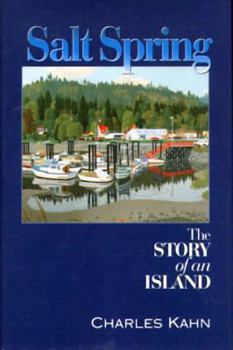
The largest of BC's southern Gulf Islands, beautiful Salt Spring Island has long been a favoured holiday destination and a prized real-estate area for those in search of an idyllic rural residence. Now available in trade paper, Salt Spring: The Story of an Island chronicles the island's rich history from the days when Coast Salish people inhabited Salt Spring's shores, through some 150 years of settlement by many diverse groups. Because of the island's rugged geography, the early story of Salt Spring is largely the story of hard-working people in small isolated communities industriously carving farms out of rough terrain. Many of the settlers who followed came to find a place where they could live their lives free of the constraints of most societies. This was as true for the African-Americans, many of whom were among the first non-aboriginal settlers to arrive in 1859, as it was for those fleeing conventional middleclass life and for Americans seeking to avoid the Vietnam War. And it's true of almost every new islander who arrives today with a unique personal dream. 344 pages : illustrations, maps, portraits ; 24 cm CIRC [ 1 ]
|
1998 |
|
Hudson's Bay to Haro Strait books on Western Canada and the Pacific Northwest : a collectors' guide by G. J. Kim Whale 
A comprehensive reference bibliography on Western Canada, including important works on the Arctic, the Klondike, Hudson's Bay, and some nautical titles relating to that area, with descriptions and price guide to approximately 1,800 of the most important books. 1,754 books described with pricing guidance. 316, xii ; 24 cm. CIRC [ 1 ]
|
1998 |
|
Afloat in time by James Sirois 
This is an autobiographical account of experiences with historical BC's logging industry. 271 p., [28] p. of plates : ill., geneal. table, map, ports. ; 22 cm. CIRC [ 1 ]
|
1998 |
|
The natural history of Puget Sound country by Arthur R. Kruckeberg 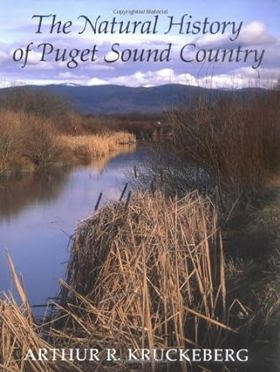
Reveals the natural history of the Puget Sound region. This book begins with a discussion of how the ice ages and vulcanism shaped the land and examines the natural attributes of the region - flora and fauna, climate, special habitats, life histories of key organisms - as they pertain to the ecosystem. It contains over three hundred photographs. Winner of the Pacific Northwest Booksellers Award. Bounded on the east by the crest of the Cascade Range and on the west by the lofty east flank of the Olympic Mountains, Puget Sound terrain includes every imaginable topograhic variety. This thoughtful and eloquent natural history of the Puget Sound region begins with a discussion of how the ice ages and vulcanism shaped the land and then examines the natural attributes of the region―flora and fauna, climate, special habitats, life histories of key organisms―as they pertain to the functioning ecosystem. Mankind's effects upon the natural environment are a pervasive theme of the book. Kruckeberg looks at both positive and negative aspects of human interaction with nature in the Puget basin. By probing the interconnectedness of all natural aspects of one region, Kruckeberg illustrates ecological principles at work and gives us a basis for wise decision-making. The Natural History of Puget Sound Country is a comprehensive reference, invaluable for all citizens of the Northwest, as well as for conservationists, biologists, foresters, fisheries and wildlife personnel, urban planners, and environmental consultants everywhere. Lavishly illustrated with over three hundred photographs and drawings, it is much more than a beautiful book. It is a guide to our future. xxiv, 468 pages : illustrations, maps ; 25 cm CIRC [ 1 ]
|
1998 |
|
Indianola a community memoir by Sarah M. Berry, Joan R. Henderson, Indianola Beach Improvement Club History Committee 
Authored by Sarah M. Berry and Joan R. Henderson alongside the Indianola Beach Improvement Club History Committee, Indianola: A Community Memoir chronicles the evolution of the historic waterfront enclave on Washington’s Kitsap Peninsula. The book traces the area’s transformation from an indigenous gathering place and a 20th-century mosquito-fleet resort destination into a tight-knit, fiercely protective seasonal and year-round community. Drawing on archival photographs, diaries, and local records, the text preserves the distinct social traditions and ferry-dependent isolation that shaped generations of cabin owners and residents. A keen insight drawn from the work is how recreational enclaves foster a unique brand of communal preservation; by relying on shared infrastructure like community docks and improvement clubs, residents turned their collective isolation into a deliberate tool for shielding their waterfront heritage from rapid commercial overdevelopment. 128 pages : illustrations, maps ; 21 x 27 cm CIRC [ 1 ]
|
1998 |
|
They came to six rivers the story of Cowlitz County by Virginia Urrutia, Cowlitz County Historical Society 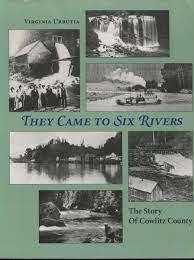
Though Cowlitz County is one of the smallest counties in Washington state, its past has been richly textured by the six rivers that flow through it: The Columbia, Kalama, Lewis, Coweeman, Toutle and Cowlitz rivers. Rivers throughout history have given rise to civilizations, so it is not surprising that Cowlitz County's rivers have lured settlers and industries. But each of these rivers had its own appeal, its own convenience or difficulty of settlement, its own methods of logging or fishing, its own vessels and bridges, and even its own scenery; each thus offered its own unique possibilities to the people who came here. Virginia Urrutia has taken these six strands and deftly woven them together with narratives of families, communities, governments, agriculture, industries, and events, creating a colorful and entertaining tapestry that will reward the attention of any reader, from the most casual tourist to the most knowledgeable citizen of the region. Book contains map of region and is illustrated with 100 photographs 223 pages : illustrations, map, portraits ; 29 cm CIRC [ 1 ]
|
1998 |
|
Mammals of the Pacific Northwest from the coast to the high Cascades by Chris Maser 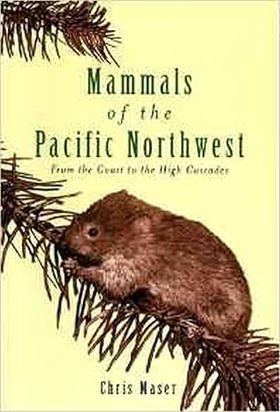
This remarkable book offers an intimate look at the life histories and habitats of mammals in the Pacific Northwest, from the coast to the high Cascades. In introducing the region's mammals, Chris Maser combines current scientific knowledge with personal accounts and anecdotes drawn from over a quarter century of fieldwork in Oregon. The book covers the natural history of 89 mammals in Oregon, 70 in Washington, 67 in British Columbia, and 83 in Northern California. For each species of mammal, the book provides a physical description and detailed information on distribution, habitat, and behavior. A keen observer of animal life, Maser relates his own encounters in the wild-from a rare, firsthand description of how shrews hunt and kill their prey to a tour of a mountain beaver's burrow-to help readers better understand the animals he has come to know. Maser delves into the secrets of how mammals live and explores the dynamic relationships between the mammals of the Pacific Northwest and their habitats. Intended for general readers and students, Mammals of the Pacific Northwest provides a fascinating natural history of the region's wildlife. The book is illustrated with over 100 photographs of mammals and their tracks, dens, nests, and young. 406 pages : illustrations ; 26 cm CIRC [ 0 ]
|
1998 |
|
Spirit of the Siskiyous the journals of a mountain naturalist by Mary Paetzel, Jacqueline Elliott, Lee Webb 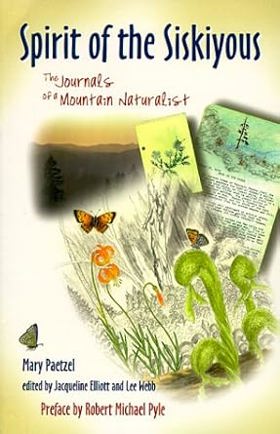
For 25 years, Mary Paetzel roamed the Siskiyou Mountains of southwest Oregon, tracking rare plants and insects. A rugged land of peaks, canyons, and rushing rivers, the Siskiyous are renowned for their unusual plant life. A self-taught naturalist, Paetzel first came to these mountains as a pollen contractor for a pharmaceutical company. Traversing logging roads in an old Volkswagen bus and hiking the high country with her beloved dog Sal, Paetzel came to know the Siskiyous — their wildflowers, butterflies, bees and wasps, lichens, and birds — as few ever have. Mary Paetzel recorded her wilderness experiences in a series of illustrated journals. Spirit of the Siskiyous gathers the best of these writings along with selections of Paetzel's paintings and drawings into a single volume. An important natural history of the Siskiyou Mountains, the book also documents a unique personal journey through a little-known, but fascinating, landscape. Although at times outspoken in her criticism of the Forest Service, Paetzel later worked for the agency conducting species surveys in the Siskiyou National Forest. During this time, she discovered a rare colony of Mariposa copper butterflies and was instrumental in establishing several protected botanical sites. It's to make readers aware of the fragile beauty of the Siskiyous and the urgent need to protect these wild places that Mary Paetzel has made her private journals — with their keen observations, fine wit, and demonstrated love of the land — available in this remarkable book. xxviii, 164 pages : illustrations (some color) ; 26 cm CIRC [ 0 ]
|
1998 |
|
Exploring Oregon's historic courthouses by Kathleen M. Wiederhold 
Courthouses are often overlooked as significant historical sites, perhaps because they are "working" buildings open to the public. As this informative and entertaining guide proves, however, Oregon courthouses are fascinating places to explore aspects of the state's history. For this first guide to Oregon's historic courthouses, Kathleen Wiederhold traveled extensively throughout the state visiting courthouses and talking to county officials and local residents. What she discovered were buildings rich in historical meaning and significance. This book explains these buildings and tells their stories, from political drama to salty local lore. The author introduces twenty-one courthouses in towns and cities from Astoria to Enterprise. Each profile includes a look at the county seat, past and present; a history of the courthouse; a detailed description of the building as it stands today; and tips on what to see. Exploring Oregon's Historic Courthouses combines local histories and their intriguing anecdotes with valuable information on the state's architectural heritage and old and new photographs of these venerable structures. It offers visitors and readers new opportunities to encounter history and historic architecture in the guise of these living buildings. xv, 289 pages : illustrations ; 22 cm CIRC [ 0 ]
|
1998 |
|
Green afternoons Oregon gardens to visit by Amy Houchen 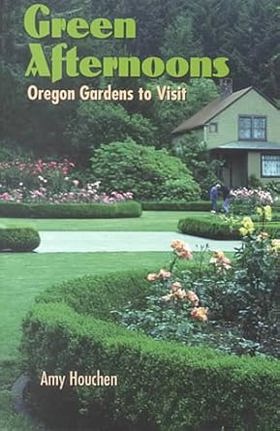
With Green Afternoons in hand, travelers, gardeners, and plant enthusiasts now have an exciting new guide to more than six dozen gardens throughout western and central Oregon and southwestern Washington. In her tour of the region, Amy Houchen uses the word "garden" broadly to include not only traditional gardens but also plantings of interest in such places as parks, college campuses, farms, and community gardens. Along with providing detailed descriptions of Oregon's best known and best loved gardens, Green Afternoons introduces readers to such unlikely but rewarding spots as an arboretum at a freeway rest area and climbing roses dressing up the cyclone fence around a ballfield. Arranged geographically, the garden listings include seasons of interest, directions, whether plants are labeled, a section on background and history, and a description of what to see. Indexes by plant name and topic allow for ease in locating plant specialties and such features as gardens for the blind and composting exhibits. Also included is information on holding weddings and listings of special events. From the Hulda Klager Lilac Gardens in Woodland and the International Rose Test Garden in Portland's Washington Park to Shore Acres in Coos Bay and the Sunriver Botanical Garden, Green Afternoons offers an informative and easy-to-use guide for locating and learning about the region's most beautiful gardens. iv, 250 pages : illustrations, maps ; 22 cm CIRC [ 0 ]
|
1998 |
|
Native Arts of the Columbia Plateau The Doris Swayze Bounds Collection of Native American Artifacts by Susan E. Harless, Orr Staff High Desert Museum Mbend 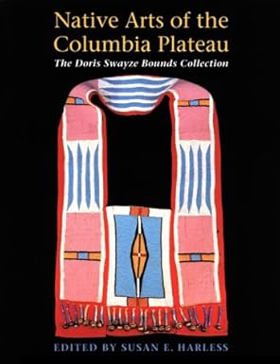
Colorfully beaded handbags, superbly tanned and decorated deerskin shirts, finely woven baskets, exquisitely beaded and fringed horse trappings -- these distinctive Native arts of the Columbia River Plateau have been overshadowed in the public eye by the arts of the Northwest Coast, Great Plains, and American Southwest. But Indians in the region where present-day Washington, Oregon, and Idaho share boundaries have for centuries combined function and beauty in the items they made for even the most mundane of uses, and their traditional arts are still vital today. This book brings overdue recognition to the artistry and craftsmanship of the Plateau Indians by focusing on the remarkable collection amassed by the late Doris Swayze Bounds, a banker in Hermiston, Oregon, who grew up with and deeply loved Native people and their culture. She was loved in return, and many of the nearly 1,000 Plateau items in her collection came to her as gifts from her Indian friends, who expressed their respect and affection through the time-honored tradition of gift-giving. Exposed to Euro-Americans relatively late, the Plateau Indians managed to retain many of their traditional lifeways of fishing, hunting, and gathering, as well as a vigorous ethic of generosity and respect for others. The pieces in the Bounds collection, which date mainly from the 1870s to the 1960s, reflect all these aspects of Plateau culture. They range from sturdy baskets made to hold roots or berries to elaborately beaded elkhide “tail dresses” worn on festive occasions. In five essays, both Native and non-Native experts describe the art styles and the uses and cultural meanings of the items; two other recount Doris Bound’s life, collecting practices, and relationships with Native Americans. The essays are handsomely illustrated with items from the Bounds collection. This book offers and introduction to this visually stunning art tradition. CIRC [ 0 ]
|
1998 |
|
The world of the Oregon fishboat a study in maritime folklife by Janet Crofton Gilmore 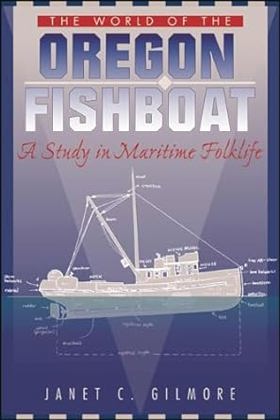
Originally published in a limited cloth edition in 1986, this reissue of The World of the Oregon Fishboat brings an important and lively book to a wider audience. Here, in an easily-read narrative, Janet Gilmore describes life in the Coos Bay community of Charleston, based upon her years of interviewing and research. She recounts a precarious lifestyle, but one filled with tradition. Oregon fishboats, and the fishermen who work on them, have been a mainstay of the Northwestern way of life. Now, as Gilmore notes both in her narrative and in the new introduction to this edition, that way of life is dramatically changing. In the process, the fishboats used by Oregon's commercial fishermen are also changing. The World of the Oregon Fishboat records a way of life as it was in the late 1970s as it focuses on the fisherman's vessel--which serves as vehicle, shelter, home, and companion. The World of the Oregon Fishboat is both an elegant recording of an important aspect of twentieth century American life and a compassionate plea to understand a world of work that most of us rarely contemplate. 1 online resource (xiv, 271 pages) : illustrations, maps CIRC [ 1 ]
|
1999 |
|
The coming of the spirit of pestilence introduced infectious diseases and population decline among Northwest Coast Indians, 1774-1874 by Robert T. Boyd 
In the late 1700s when European colonizers arrived on the Northwest Coast, they reported the presence of vigorous, diverse cultures—Tlingit, Haida, Kwakwaka’wakw (Kwakiutl), Nuu-chah-nulth (Nootka), Coast Salish, and Chinookan—with a population conservatively estimated at more than 180,000. Just a century later the population had plummeted to only 35,000—a devastating loss of Indigenous lives caused by the introduction of diseases brought by settlers and colonizers. The Coming of the Spirit of Pestilence examines the first century of contact and the effects of introduced diseases such as smallpox, malaria, measles, and influenza on Native American population size, structure, interactions, and viability. Whereas in most parts of the Americas disease transfer and depopulation occurred early and were poorly documented, the later date of Euro-American contact in the Pacific Northwest means that records are relatively complete. Through doctors’ records, ships’ logs, diaries, censuses, and Native American oral traditions and testimonies, Robert Boyd reconstructs the process of disease transfer and the profound demographic and cultural impact of specific epidemics. This definitive study of introduced diseases in the Pacific Northwest illuminates the magnitude of human suffering and traces connections between these processes and cultural change. xv, 403 pages : illustrations, maps ; 24 cm CIRC [ 1 ]
|
1999 |
|
Historical atlas of the Pacific Northwest maps of exploration and discovery : British Columbia, Washington, Oregon, Alaska, Yukon by Derek Hayes 
Reproduces and profiles more than 320 sixteenth- to twentieth-century maps of this region of the U.S. and Canada, including famous explorations, the purchase of Alaska, and the 1897 Klondike gold rush 1 atlas (208 pages) : illustrations (some color), maps (some color) ; 33 cm CIRC [ 1 ]
|
1999 |
|
For Wood River or bust Idaho's silver boom of the 1880s by Clark C. Spence 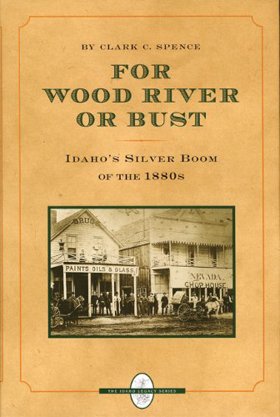
Chronicles the history of the silver rush in the Wood River area of Idaho during the late nineteenth century, describing the mining companies, settlements, and prospectors. The moment of brilliance of Idaho's Wood River mining towns spanned roughly the decade of the 1880s. Noted mining historian Clark C. Spence details the mining history of the Wood River region and captures the bedlam of the early camps and communities. Copublished with the Idaho State Historical Society. xi, 260 pages : illustrations, map ; 24 cm. CIRC [ 1 ]
|
1999 |
|
The Sky Valley. Volume 2 a photographic history by Buddie Williams 
Authored by local historian Buddie Williams, The Sky Valley, Volume 2: A Photographic History continues the visual documentation of Washington's rugged Skykomish River corridor through a rich collection of historic photographs and archival ephemera. The volume captures the dramatic transformation of towns like Index, Sultan, and Startup as they evolved from raw logging camps and mining outposts into established, tight-knit communities framed by the Cascade Mountains. Through vintage images of steam locomotives, timber mills, high-water floods, and local school children, the text portrays the relentless daily labor required to carve civilization out of a steep, flood-prone river valley. A keen insight drawn from the work is how visual archives of mountain valleys expose the inherent fragility of industrial frontier settlements; the recurring imagery of swollen rivers and swept-away bridges reminds readers that human infrastructure in the Pacific Northwest was always engaged in a precarious, high-stakes negotiation with an overwhelmingly powerful natural topography. 28 pages : illustrations ; 26 cm CIRC [ 1 ]
|
1999 |
|
Clearwater country! the travelers' historical and recreational guide, Lewiston, Idaho--Missoula, Montana by Borg Hendrickson, Linwood Laughy 
Few special places lie hidden in America, left much as they have been for centuries. Among them are the mountains, meadows, forests and streams of Clearwater Country. Here can be found the entire saga of the American west - from missionaries to miners, settlers to soldiers, outlaws and vigilantes, generals and war chiefs and more. The reader can follow in the footsteps of explorers Meriwether Lewis, William Clark and Sacagawea; missionaries Henry and Eliza Spalding; Nez Perce Chiefs Twisted Hair, Lawyer, Looking Glass and Joseph; General O.O. Howard; outlaw Henry Plummer - and dozens of other figures who wove the rich tapestry of Clearwater Country's historical past. This book will also help you discover Clearwater Country's wild and beautiful natural world - its flora and fauna, streams and rivers, beaches and hot springs, campgrounds and hiking trails. In addition to the historical and recreation guides, six additional chapters provide background information for! armchair historians and present or future visitors. The book includes maps, historical photos and original artwork. iv, 230 pages : illustrations, maps ; 22 cm CIRC [ 1 ]
|
1999 |
|
Hiking Oregon's history by William L. Sullivan, Navillus Press 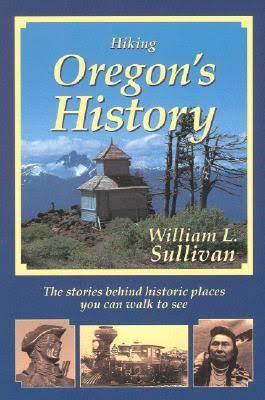
This guidebook tells the stories behind 56 of the state's most scenic historic sites. Come follow Lewis and Clark's trail across Tillamook Head. Ride with Chief Joseph on his tragic retreat through Hells Canyon. Discover paths to fire lookouts, lighthouses, and abandoned gold mines. Relive legends, discoveries, scandals, and triumphs that rocked the West. Come hike Oregon's history! -- Amazon 319 pages : illustrations, maps ; 23 cm CIRC [ 1 ]
|
1999 |
|
Kittitas County historic photo album by Pediment Publishing 
Published by Pediment Publishing in cooperation with regional archives, Kittitas County Historic Photo Album compiles a rich visual chronicle of central Washington's transition from an indigenous homeland and rugged frontier corridor into an organized agricultural and mining hub. The volume showcases rare vintage photographs documenting the rise of towns like Ellensburg, the punishing construction of railroads through mountain passes, and the daily lives of ranchers, homesteaders, and coal miners. Through its expansive visual catalog, the text captures the stark beauty of the high desert and river valleys alongside the relentless human labor required to harness the arid landscape. A keen insight drawn from the work is how photographic collections of inland Washington reveal the profound visual tension between monumental geography and fragile human enterprise; the stark, towering backdrops of the Cascade foothills dwarf the modest wooden storefronts and rail lines, underscoring how precarious early settlement truly was against the vast scale of the high desert. 128 pages : chiefly illustrations ; 20 x 27 cm CIRC [ 1 ]
|
1999 |
|
Union Pacific rails to the mines the Boise, Nampa & Owyhee Railway by Thornton Waite 
Authored by railroad historian Thornton Waite, Union Pacific Rails to the Mines: The Boise, Nampa & Owyhee Railway details the ambitious and financially volatile history of the late 19th-century rail line that connected southwestern Idaho's rich mining districts and agricultural valleys to the broader transcontinental network. The book traces the corporate maneuvers, engineering challenges, and economic battles required to construct and operate tracks through the rugged terrain between Nampa, Boise, and the Owyhee mountains. Drawing heavily on corporate archives, vintage maps, and historical photographs, the text illustrates how steel infrastructure dictated the survival and decline of regional boomtowns. A keen insight drawn from the work is how regional feeder railways acted as economic gatekeepers rather than mere public utilities; by holding a monopoly over mineral and crop transportation, independent lines like the Boise, Nampa & Owyhee held the ultimate power of life or death over local commerce, frequently leaving isolated communities at the mercy of distant corporate boardrooms. 64 pages : illustrations ; 28 cm CIRC [ 1 ]
|
1999 |
|
Best Places Oregon coast Destinations by Stephanie Irving 
Oregon Coast is your personal, portable guide to one of the region's favorite vacation destinations. From whale-watching and beachcombing to fresh oysters and beer, you'll find the best the coast has to offer. Expert opinions, inside information, and honest advice - from the most respected travel series in the Northwest. xiii, 133 pages : map ; 22 cm CIRC [ 1 ]
|
1999 |
|
The Siuslaw storybook the first storybook of Siuslaw Indian fables by B. J. Berrykeeper 
Published under the name B. J. Berrykeeper, The Siuslaw Storybook: The First Storybook of Siuslaw Indian Fables preserves the traditional oral literature, cultural values, and ancestral narratives of the Indigenous Siuslaw people of the central Oregon coast. The volume collects traditional fables and moral teachings passed down through generations, offering readers a rare window into a worldview deeply rooted in the coastal rivers, forests, and marine ecosystems of the Pacific Northwest. Through these timeless stories, the text honors an ancient literary heritage that predates European-American settlement by millennia. A keen insight drawn from the work is how Indigenous fables function as ecological instruction manuals disguised as folklore; by embedding practical ecological wisdom and behavioral ethics into animal and landscape stories, the oral tradition ensured that generations of youth learned sustainable stewardship of their fragile coastal environment long before modern conservation laws existed. 73 pages : illustrations ; 22 cm CIRC [ 1 ]
|
1999 |
|
Dreamers on the trail of the Nez Perce by Martin Stadius 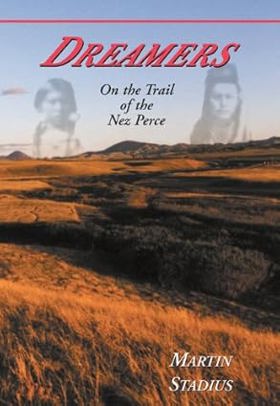
In 1877 Nez Perce warriors fought U.S. troops to a standstill, during the 1,200-mile epic retreat toward Canada. Martin Stadius tells the story as he follows the Nez Perce National Historic Trail. Stadius' crisp, entertaining writing style makes Dreamers more than a history book. xx, 437 pages : illustrations ; 24 cm CIRC [ 0 ]
|
1999 |
|
Naked against the rain the people of the lower Columbia River, 1770-1830 by Rick Rubin 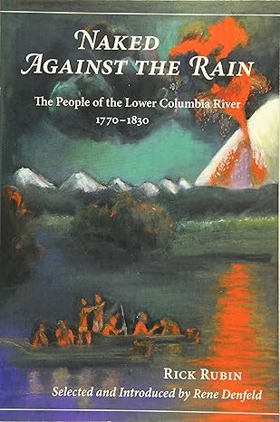
Thanks in large part to the abundant salmon runs the Chinook–speakers residing along the lower Columbia River were among the wealthiest in North America. Master fisherman and expert canoeists it was not uncommon for a single canoe and crew to net two tons of succulent Chinook salmon on a single outgoing tide. A thickset people with artificially flattened heads, anarchistic politics, and a highly stratified society, they spoke a language unconnected to any known language on earth. Yet despite all their wealth and accomplishments they were all but completely wiped out in a few short decades after whites first landed on their shores. Rubin conveys information about the people's daily life, spiritual beliefs, mythologies, and how the introduction of white settlers into the region forever changed their culture. 431 pages : illustrations ; 24 cm CIRC [ 0 ]
|
1999 |