Catalog of British Columbiana and Pacific Northwest Americana
Encyclopedia Cascadia Catalog contains book titles of mostly non-fiction Pacific Northwest Coast of North America Titles (primarially British Columbia, Idaho, Oregon and Washington State) in an easy-to-understand title catalog. If you see a link with this badge ONLINE CIRC it means that there is an online institution that provides free access to that title. In some cases there may be more than one institution hosting the title digitally.
| Catalog Title | Published |
|---|---|
|
|
1988 |
|
Idaho place names a geographical dictionary by Lalia Phipps Boone
|
1988 |
|
Historical atlas of Washington by James William Scott, Roland L. De Lorme , Ted R. Brandt, Patrick S. Grant 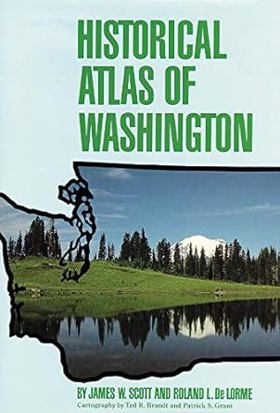
In 77 maps and accompanying texts, this atlas presents the history of Washington state from prehistoric times to the present, Beginning with Washington’s terrain climate, vegetation, and hydrography, it then displays and records the evolution of both Indian and white settlements, the development of the state’s modern economy, and the progress of society and culture from Indian times to the present. Some of the maps in the atlas cover major historical events or specific periods; other show present-day patterns of activity and deal with the historical background in the accompanying commentary. Selective bibliographies refer readers to further readings on the subject of each map 1 atlas (xxix, [181] pages) : illustrations, maps ; 32 cm CIRC [ 1 ]
|
1988 |
|
Oregon historical calendar and chronology of events, 1542-1988 listing major historical events as they occurred from the Oregon country to the Oregon comeback by Glenn T. Harding 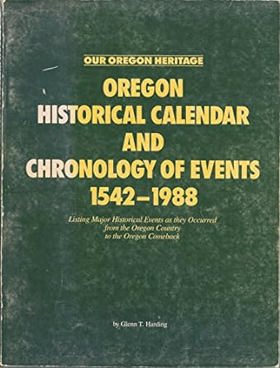
NOTE: "The Oregon Historical Calendar & Chronology of Events contains selected information compiled from numerous published sources available in most Oregon public libraries and historical societies ..." t.p. verso 150 pages ; 27 cm CIRC [ 1 ]
|
1988 |
|
The changing Pacific Northwest interpreting its past by David H. Stratton , George A. Frykman , National Endowment for the Humanities, Washington State University Department of History 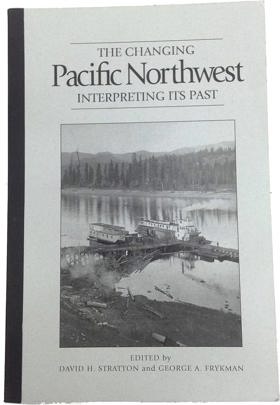
In order to explore the unique history of the Pacific Northwest, Washington State University established the Sherman and Mabel Smith Pettyjohn Distinguished Lecture Series in 1980. Since that time a series of nationally prominent guest speakers presented numerous, original contributions to the body of information available on the region. In this volume, nine schools explore Pacific Northwest hisorty from their unique perspectives. Pacific Northwest economic, social, and political trends are examined as important parts of a rapidly emerging, regional culture. Challenges posed by women's history, Alaska's place in the Pacific Northwest, the role cultural elites have played in Pacific Northwest development, the labor movement, and other issues are discussed in detail. The Changing Pacific Northwest presents nine articles by Pettyjohn lecturers, confronting these and other important questions. In doing so, they give us much insights in the history of this region xi, 187 pages : illustrations, map ; 23 cm. CIRC [ 1 ]
|
1988 |
|
Buck Mountain poems by Anne Kennedy
|
1988 |
|
Eastern Oregon portrait of the land and its people by Alan D. St John
|
1988 |
|
The first 100 years an illustrated celebration by Richard M. Steele, Vancouver (B.C.). Board of Parks and Recreation
|
1988 |
|
Ghost towns and drowned towns of West Kootenay by Elsie G. Turnbull
|
1988 |
|
That balance so rare the story of Oregon by Terence O'Donnell
|
1988 |
|
Granite and gold the story of Oregon's smallest city by James Waucop Tabor
|
1988 |
|
Hard times in paradise Coos Bay, Oregon, 1850-1986 by William G. Robbins 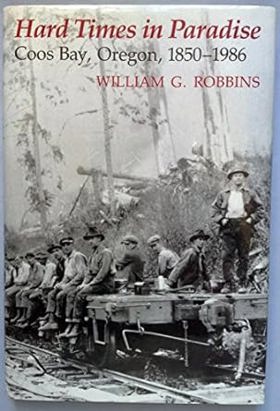
Blessed with vast expanses of virgin timber, a good harbor, and a San Francisco market for its lumber, the Coos Bay area once dubbed itself "a poor man's paradise." A new Prologue and Epilogue by the author bring this story of gyppo loggers, longshoremen, millwrights, and whistle punks into the twenty-first century, describing Coos Bay’s transition from timber town to a retirement and tourist community, where the site of a former Weyerhaeuser complex is now home to the Coquille Indian Tribe’s The Mill Casino. xiv, 194 pages, 16 unnumbered pages of plates : illustrations ; 23 cm CIRC [ 1 ]
|
1988 |
|
The way to the western sea Lewis and Clark across the continent by David Lavender 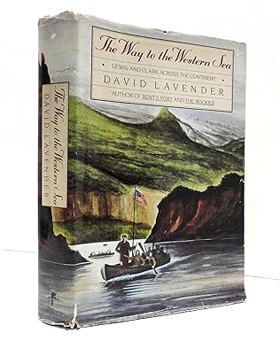
Lavender sets the stage with an account of the imperial rivalries between England, Spain, France, and the United States, and their role in Thomas Jefferson's decision to sponsor an expedition that might strengthen the young country's claims to lands it had purchased but never seen. Lavender then takes us through the steps that led to the selection of Meriwether Lewis as the Corps of Discovery's leader with William Clark as coleader. From there the great adventure story unfolds, and we follow Lewis and Clark and their company on their journey through vast, uncharted territory as they seek a transcontinental route to the Pacific. x, 444 pages, 1 unnumbered leaf of plates : illustrations, maps ; 25 cm CIRC [ 1 ]
|
1988 |
|
The park builders a history of state parks in the Pacific Northwest by Thomas R. Cox 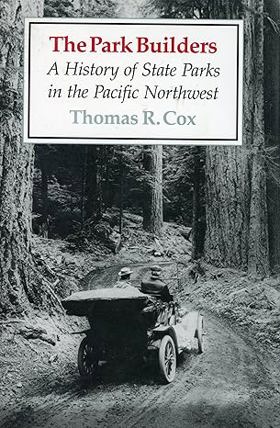
Among the greatest attractions of the Pacific Northwest are its state parks, campgrounds and tree-lined highways. From Idaho hot springs to the Oregon coast, millions of people enjoy this priceless legacy every year but few stop to think about the source of this bounty. The Park Builders profiles the men who provided the parks, and the times that shaped them. From its beginnings as part of the progressive crusades to its evolution into an expected function of state government, the state parks movement in the Northwest is a window onto the political and social developments of the twentieth century. The states of Washington, Idaho, and Oregon were generally in the mainstream of the parks movement, but each of their histories is unique. Taken together, they help to define the nature and limitations of regionalism in the Northwest. Especially in the early years, the story of state parks was largely the story of individuals. Drawing extensively from interviews and personal papers, Thomas Cox creates memorable pictures of parks activists in each state. Robert Moran, creator of the battleship, Nebraska, spent a decade lobbying the state of Washington to accept his magnificent acreage on Orcas Island. Sam Boardman went from a road crew to the head of Oregon’s park system, and took up his mission with a zeal that was literally religious: “To me a park is a pulpit,” he wrote. “The more you keep it as He made it, the closer you are to Him.” In Idaho, Senator Weldon Heyburn, no proponent of state expenditures, set out to create a national park, and ended up with a premier state park, named for him. State parks serve more people at far less expense than do those in the National Park System. Since their fates are determined largely at the state level, they are an ideal venue for the study of grassroots activism and regional trends. This book is the first to collect these themes into a coherent whole. It will serve as a model for further regional studies of its kind. xiii, 248 pages, 20 unnumbered pages of plates : illustrations, map, portraits ; 24 cm CIRC [ 1 ]
|
1988 |
|
Washington and Oregon a map history of the Oregon country by Martha Berry Parker
|
1988 |
|
Stehekin, a valley in time by Grant McConnell 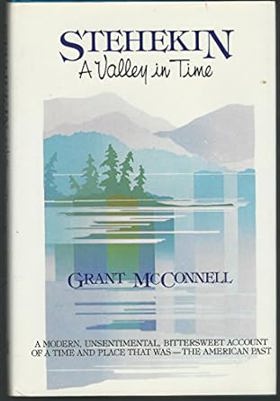
Looks at the remote community of Stehekin in Washington's Cascade mountains and describes how a pioneering style of life has become more like that of the outside world 206 pages : map ; 24 cm CIRC [ 1 ]
|
1988 |
|
Growing up with Lake Forest Park the early decades in "North Seattle" : Vol II by Barbara L. Drake Bender
|
1988 |
|
Washington a centennial history by Robert E. Ficken, Charles Pierce LeWarne, Washington Centennial Commission
|
1988 |
|
Latah County centennial, 1888-1988 by Idahonian
|
1988 |
|
Rumrunner the life and times of Johnny Schnarr by Marion Parker, Bob Tyrrell
|
1988 |
|
They never go back to Pocatello the selected essays of Richard Neuberger by Richard L. Neuberger, Steve Neal
|
1988 |
|
Fort Steele here history lives by Derryll White
|
1988 |
|
Saltwater City an illustrated history of the Chinese in Vancouver by Paul Richard Yee 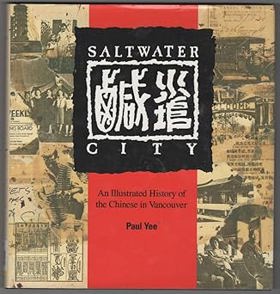
Saltwater City pays tribute to those who went through the hard times, to those who swallowed their pride, to those who were powerless and humiliated, but who still carried on. They all had faith that things would be better for future generations. They have been proven correct.Canada’s first Chinese arrived in British Columbia in 1858 from California. Almost all men—merchants, peasants, and laborers — and almost all from eight rural counties in the Pearl River delta in what is now Guangdong province — they came in search of gold and better fortune, escaping the rebellions, flood and drought of their homeland.By 1863 over 4,000 Chinese lived in B.C., filling jobs shunned by miners, road builders, teamsters, laundry men, restaurateurs, domestic servants and cannery workers. Between 1881 and 1885, thousands more arrived, most imported to build the transcontinental railway. They were to create, in Vancouver, Canada’s largest and most dynamic Chinese Community, known to its original inhabitants as Saltwater City. 174 p. : ill., fac-sim CIRC [ 1 ]
|
1988 |
|
Circling north by Charles Lillard
|
1988 |
|
Umbrella guide to Friday Harbor & San Juan Island by Jerome K. Miller
|
1988 |