Catalog of British Columbiana and Pacific Northwest Americana
Encyclopedia Cascadia Catalog contains book titles of mostly non-fiction Pacific Northwest Coast of North America Titles (primarially British Columbia, Idaho, Oregon and Washington State) in an easy-to-understand title catalog. If you see a link with this badge ONLINE CIRC it means that there is an online institution that provides free access to that title. In some cases there may be more than one institution hosting the title digitally.
| Catalog Title | Published |
|---|---|
|
Ka-mi-akin, the last hero of the Yakimas by A. J. Splawn 
Authored in 1917 by Washington cattleman and pioneer A. J. Splawn, Ka-mi-akin, the Last Hero of the Yakimas serves as a hybrid memoir and regional history chronicling the violent 1855-1858 Yakima War. Drawing heavily upon his personal interactions with local tribes, Splawn reconstructs the life of Chief Kamiakin, framing the prominent Indigenous leader not as a savage enemy, but as a brilliant, tragic patriot defending his homeland against the inevitable tide of white encroachment. The text operates dually as an adventurous autobiography of Splawn’s early cattle drives and an elegiac tribute to the regional resistance that preceded the agricultural settlement of the Yakima Valley. A keen insight drawn from the work is how the pioneer adoption of the "noble but doomed" Native American trope functioned as a psychological mechanism to absolve colonial guilt; by elevating Kamiakin to the status of a tragic, mythological hero only after his permanent defeat, the settler-author actively romanticized the violence of dispossession while cementing Indigenous erasure as a melancholic but unalterable act of historical fate. 6 preliminary leaves, 438, [6] pages front (portrait) illustrations (including portraits) 24 cm ONLINE CIRC [ 1 ] CIRC [ 1 ]
|
1917 |
|
Just east of sundown the Queen Charlotte Islands by Charles Lillard 
"The Queen Charlotte Islands have always been a half-legendary land of mists and mystery, set off and seemingly different from the rest of the coast. Human occuption goes back some 9,000 years, with intriguing hints of a people there before the Haida. Although the islands were "discovered" by Juan Perez, a Spaniard, in 1774, records indicate that voyagers from Asia had arrived much earlier. This is a story of people - Edenshaw, Weah, Davidson, Dawson, Collison and others - from Haida chiefs and carvers to European explorers and settlers xii, 180 pages : illustrations, map ; 22 cm CIRC [ 1 ]
|
1995 |
|
Just add water from barren Jawbone Flat to bountiful Clarkston, Washington, 1890-1940 by Carole Simon-Smolinski 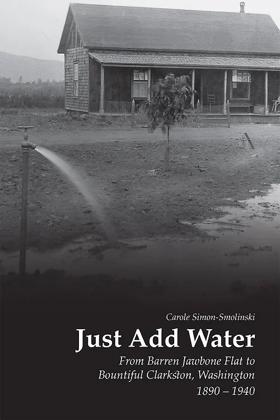
In her new book, “Just Add Water: From Barren Jawbone Flat to Bountiful Clarkston, Washington, 1890-1940,” area historian Carole Simon-Smolinski aims to shed new light on the creation story of Clarkston, Washington. xii, 237 pages : illustrations, maps ; 23 cm CIRC [ 1 ]
|
2019 |
|
Jumptown the golden years of Portland jazz, 1942-1957 by Robert Dietsche 
A fascinating blend of music, politics, and social history, Jumptown sheds light on a time and place overlooked by histories of Portland and jazz. For a golden decade following World War II, a thriving African American neighborhood—that would soon be bulldozed for urban renewal—spawned a jazz heyday rarely rivaled on the West Coast. Such luminaries as Duke Ellington, Charlie Parker, Oscar Peterson, Dave Brubeck, and Wardell Gray headlined Portland clubs and traded chops with the up-and-coming local talent. The Dude Ranch. Lil' Sandy's. McClendon's Rhythm Room. The Frat Hall. The Chicken Coop. The Uptown Ballroom. Jazz historian Bob Dietsche leads a guided tour of the main jazz spots—from supper club to dance hall—capturing the emotion, excitement, and energy of an evening on the town. His book for the first time collects hundreds of pieces of local jazz history—photographs, personal recollections, reviews, handbills—to create "an anatomy of a jazz village." Dietsche's compendium of stories and moments brings to life the citizens of this jazz village—the musicians and dancers, the disc jockeys and promoters, the critics and music teachers, the club owners and patrons. Jumptown celebrates and preserves this rich cultural past and showcases its continuing influence. In an afterword, Lynn Darroch recaps the highlights in Portland jazz during the past 40 years and shows how “Portland's 21st century jazz scene reflects the city's original golden age, and the spirit of the Avenue remains in the sounds of today.” xiii, 229 pages : illustrations, 1 map ; 26 cm CIRC [ 0 ]
|
2005 |
|
Juan Pérez on the northwest coast six documents of his expedition in 1774 by H. K. Beals 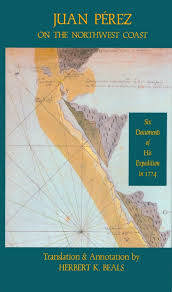
Juan Pérez on the Northwest Coast: Six Documents of His Expedition in 1774, translated and annotated by Herbert K. Beals, presents the first English translations of primary records from the earliest European voyage to reach the Pacific Northwest coast. The book compiles diaries and firsthand accounts from Pérez, his second-in-command Estéban José Martínez, and the Catholic priests aboard the Spanish frigate Santiago during their seven-month expedition. These translated documents offer vivid details of the crew's navigation along the British Columbia coastline and their unprecedented early encounters and trade with Indigenous peoples, including the Haida and Nuu-chah-nulth. By reviving these long-ignored archival materials from Mexico City and Madrid, the book restores a crucial chapter of Spanish maritime history that was largely overshadowed by later British exploration. xxvii, 270 pages : illustrations (some color), maps ; 27 cm. CIRC [ 1 ]
|
1989 |
|
Juan de Fuca's Strait voyages in the waterway of forgotten dreams by Barry M. Gough 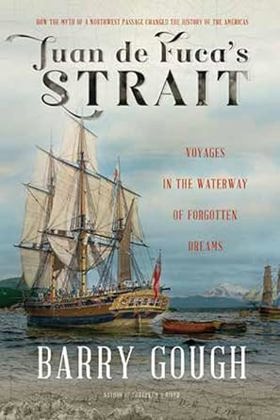
The tale begins in sixteenth-century Venice, when explorer Juan de Fuca encountered English merchant Michael Lok and relayed a fantastic story of a marine passageway that connected the Pacific and Atlantic Oceans. This tale would be the catalyst for centuries of dreaming, and exacerbate English and Spanish rivalry. The search for the fabled Northwest Passage inspired explorers to seek out fame, adventure, knowledge and riches. Likewise, the empires of Spain and Great Britain were impelled by the hopes of finding a naval trade route that would connect Europe to Asia, thus securing their dominance over the other as an economic power. The story of the Northwest Passage is one of significant figures and great empires, jostling for a distant corner of North America. Gough provides meticulously researched insight, delving into diplomatic records, narratives of explorers and commercial aspirants, legal affidavits and court records to illuminate the journeys of Martin Frobisher, James Cook, Francis Drake, Manuel Quimper, José Mar�a Narv�ez, George Vancouver and Juan Francisco de la Bodega y Quadra, among others. 287 pages : illustrations, maps, portraits ; 24 cm CIRC [ 1 ]
|
2012 |
|
Journeys of hope challenging discrimination and building on Vancouver Chinatown's legacies by author: Henry Yu ; editors: Sarah Ling, Szu Shen, Baldwin Wong ; translator: Szu Shen = 希望之旅 : 挑戰歧視及傳承溫哥華唐人街的歷史文化遺產 / 作者, 余全毅 ; 編輯, 凌慧意, 沈思, 黃永安 ; 翻譯, 沈思., Henry Yu / author: Henry Yu ; editors: Sarah Ling, Szu Shen, Baldwin Wong ; translator: Szu Shen = Xi wang zhi lu : tiao zhan qi shi yi chuan c 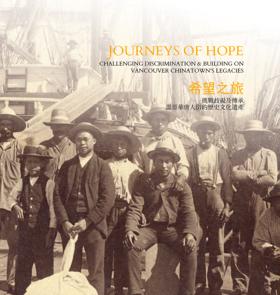
Created through a continued partnership between the City of Vancouver and the University of British Columbia, this book is an indication of both partners’ commitments to collaboratively plan and develop a UNESCO World Heritage Status application for Vancouver’s Chinatown. This edition builds on the commemorative version unveiled at the Vancouver City Council’s special meeting in Chinatown on April 22, 2018, capturing the historical moment when the City formally apologized for its past involvement in the discrimination and racism against early Chinese Canadian immigrants and their families. Chinese migrants arrived in what is now known as Canada as early as 1788. Their contributions were often forgotten as part of a long history of racism and discrimination in Canada. Journeys of Hope: Challenging Discrimination and Building on Vancouver Chinatown’s Legacies captures the story of how early Chinese migrants helped transform societies around the world, and how Vancouver’s Chinatown and other Chinatowns throughout Canada and the Pacific region are the living legacies of that transformation. Written in both English and Chinese, Journeys of Hope reaffirms the importance of multilingual engagement in community building, outreach, and education. Authored by Henry Yu and co-edited by Sarah Ling, Baldwin Wong and Szu Shen. 87 pages : illustrations (some color) ; 21 cm CIRC [ 0 ]
|
2018 |
|
Journal of Travels: Over the Oregon Trail in 1845 by Joel Palmer
Provides equipment guidance and comprehensive route information for those crossing the Oregon Trail. The publication also has a general description of the Oregon Country, a detailed description of the Willamette Valley, and includes a copy of the Organic Laws of Oregon adopted by settlers at the Champoeg Meetings [4], iv, 9-189, [3] pages ; 21 cm. ONLINE CIRC [ 1 ] CIRC [ 1 ]
|
1847 |
|
Journal of a Catholic bishop on the Oregon trail the overland crossing of the Rt. Rev. A.M.A. Blanchet, Bishop of Walla Walla, from Montreal to Oregon Territory, March 23, 1847 to January 23, 1851. Blackrobe buries Whitmans by Augustine Magloire Alexander Blanchet, Edward J. Kowrach, J. B. A. Brouillet
|
1978 |
|
José Narváez the forgotten explorer : including his narrative of a voyage on the northwest coast in 1788 by Jim McDowell
Even during his lifetime (1768-1840) was Narvaez forgotten, dying in poverty and obscurity in the Mexico he adopted as home in preference to his native Spain, but fortunately not during the high tides of his adventures in the 1780s and 1790s. Here is what is known about his voyages along the northwest coast of North America investigating the Russian movement into Alaska and searching for the Northwest Passage, and about the subsequent fate of his accounts of them. c. Book News Inc 189 pages : illustrations, maps ; 24 cm. CIRC [ 1 ]
|
1998 |
|
Joseph William McKay a Métis business leader in colonial British Columbia by Greg N. Fraser 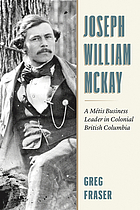
"An intriguing look at the accomplishments and contradictions of Joseph William McKay, best known as the founder of Nanaimo, BC, and one of the most successful Métis men to rise through the ranks of the Hudson's Bay Company in the late nineteenth century. When examining the history of British Columbia, one would be hard-pressed to find an Indigenous person who so successfully navigated the echelons of colonial power as did Joseph William McKay (1829-1900). McKay was Métis, born in Quebec, and began his career in Oregon during the dispute over the international boundary in 1845-46. After moving north, he met his mentor James Douglas and, at age twenty-three, was given the job of building the city of Nanaimo from the ground up and establishing its coal mines. McKay made several exploratory trips with Douglas during the Gold Rush, and he surveyed the route for the Overland Telegraph, which ran throughout BC. He rose through the ranks of the Hudson's Bay Company, eventually earning the appointment of Chief Factor, the company's highest rank. This was at a time when few Indigenous employees of HBC were permitted to rise beyond the rank of postmaster. After leaving the company in 1878, McKay began a second career in the Department of Indian Affairs. He was a federal Indian Agent and later the Assistant Commissioner of Indian Affairs for British Columbia. A product of his time who had found personal success working within the colonial system, McKay is a complicated figure when viewed through a twenty-first-century lens. He advocated on behalf of Indigenous Peoples when he tried to prevent the trespass of CPR crews and European settlers on their ancestral land. Between 1886 and 1888, he personally inoculated more than a thousand Indigenous people with the smallpox vaccine. Yet, he also participated in a system that did untold harm to First Nations, Métis, and Inuit people. This fascinating new biography, endorsed by the BC Métis Federation, sheds light on an accomplished and complex man."-- Provided by publisher xii, 199 pages : illustrations, maps ; 23 cm CIRC [ 0 ]
|
2021 |
|
John Mullan the tumultuous life of a western road builder by Keith C. Petersen 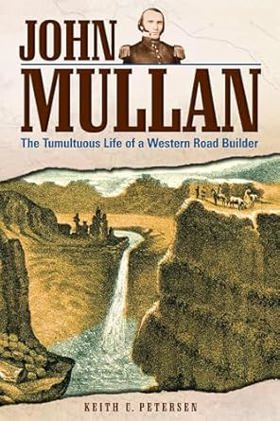
John Mullan's celebrated road - a 625-mile link that connected the Missouri and Columbia Rivers - established the West Point graduate as an accomplished engineer. After completing the Northwest's first engineered highway at age thirty-two, he lived for nearly another half century, a period of dynamic change. When he died in 1909, automobiles were making their initial crossings along his route. The arterial eventually became a critical link in America's longest interstate freeway, I-90. Yet despite frequent mentions in books about the nineteenth century Northwest, the soldier/explorer has remained little more than a caricature: a dashing young Army officer who comes West, builds one of its most important thoroughfares, and then disappears from regional literature. Now, in lively prose, Idaho State Historian Keith Petersen takes a fresh look at Mullan, whose road significantly impacted the development of the Northwest. Mullan's story includes business partnerships and personal relationships with some of the West's most intriguing characters: Father Pierre-Jean DeSmet, General William T. Sherman, Chico founder John Bidwell, Idaho gold discoverer Elias Pierce, Yakama Indian chief Owhi, and others. The first comprehensive portrayal of John Mullan's life, this deeply researched biography probes the explorer's complex personality, his rise to fame, and his fall from grace. 336 pages : illustrations, maps ; 23 cm CIRC [ 0 ]
|
2014 |
|
John McLoughlin's business correspondence, 1847-48 by John McLoughlin, William R. Sampson , Washington State Historical Society
John McLoughlin held the role as chief factor in the Columbia Department of the Hudson's Bay Company. His career following his retirement from the company in 1846 is less well known. In 1962, the United States National Park Service acquired the McLoughlin letter book. These letters provide insights into the wide range of his interests and affairs in Oregon City, and they show his continuing relations, both economic and personal, with the Hudson's Bay Company and its officers. The letters also provide an increased understanding of the problems and frustrations that a frontier community had in struggling to diversify and expand its economy.--adapted from the preface li, 179 pages illustrations 24 cm CIRC [ 1 ]
|
1973 |
|
Jimmy come lately, history of Clallam County. A symposium by Jervis Russell
|
1971 |
|
Jim Christy a vagabond life by Ian Cutler , Luis E. Navia 
"Jim Christy's life and adventures began on the mobbed-up streets of South Philadelphia. Over his 73 years to date, Christy has asserted his freedom of spirit as a vagabond adventurer, latter-day hobo, journalist, private eye, actor, musician, and artist, in over 50 countries around the globe, and still found time to write over 30 books. His early adventures as a street fighter and child tramp provide a unique socio-cultural history of Philadelphia in the 50's and 60's before the book moves on to recount his later exploits from some of the most remote and random corners of the world."-- Amazon.com xxx, 334 pages, 16 unnumbered pages of plates : illustrations, portraits ; 23 cm CIRC [ 0 ]
|
2019 |
|
Jesintel living wisdom from Coast Salish elders by Darrell Hillaire , Natasha Frey , Beau Garreau (Photographer), Children of the Setting Sun Productions (Issuing body) 
A gathering of stories for all generations, past, present, and future. Dynamic and diverse, Coast Salish culture is bound together by shared values and relations that generate a resilient worldview. Jesintel—"to learn and grow together"—characterizes the spirit of this book, which brings the cultural teachings of nineteen elders to new generations. Featuring interviews that share powerful experiences and stories, Jesintel illuminates the importance of ethical reciprocal relationships and the interconnectedness of places, land, water, and the spirit within all things. Elders offer their perspectives on language revitalization, Coast Salish family values and naming practices, salmon, sovereignty, canoe racing, and storytelling. They also share traumatic memories, including of their boarding school experiences and the epidemics that ravished their communities. Jesintel highlights the importance of maintaining relations and traditions in the face of ongoing struggles. Collaboration is at the heart of this work and informs how the editors and community came together to honor the boundless relations of Coast Salish people and their territories. Elders Interviewed: Tom Sampson (Tsartlip First Nation), Virginia Cross (Muckleshoot Tribe), Ernestine Gensaw (Lummi Nation), Steve and Gwen Point (Stó:lō Nation), Gene and Wendy Harry (Malahat Nation), Claude Wilbur (Swinomish Tribe), Richard Solomon (Lummi Nation), Elaine Grinell (Jamestown S’Klallam Tribe), Arvid Charlie (Cowichan Nation), Amy George (Tsleil-Waututh Nation), Nancy Shippentower (Nisqually Tribe), Nolan Charles (Musqueam Indian Band), Andy de los Angeles (Snoqualmie Tribe), Jewell James (Lummi Nation), Kenny Moses Sr. Family (Tulalip Tribal Nation), Ramona Morris (Lummi Nation) xiv, 207 pages : illustrations (chiefly color), color maps ; 26 cm CIRC [ 0 ]
|
2023 |
|
Japanese Americans at Heart Mountain networks, power, and everyday life by Saara Kekki 
"On August 8, 1942, 302 people arrived by train at Vocation, Wyoming, to become the first Japanese American residents of what the U.S. government called the Relocation Center at Heart Mountain. In the following weeks and months, they would be joined by some 10,000 of the more than 120,000 people of Japanese descent, two-thirds of them U.S. citizens, incarcerated as "domestic enemy aliens" during World War II. Heart Mountain became a town with workplaces, social groups, and political alliances-in short, networks. These networks are the focus of Saara Kekki's Japanese Americans at Heart Mountain. Interconnections between people are the foundation of human societies. Exploring the creation of networks at Heart Mountain, as well as movement to and from the camp between 1942 and 1945, this book offers an unusually detailed look at the formation of a society within the incarcerated community, specifically the manifestation of power, agency, and resistance. Kekki constructs a dynamic network model of all of Heart Mountain's residents and their interconnections-family, political, employment, social, and geospatial networks-using historical "big data" drawn from the War Relocation Authority and narrative sources, including the camp newspaper Heart Mountain Sentinel. For all the inmates, life inevitably went on: people married, had children, worked, and engaged in politics. Because of the duration of the incarceration, many became institutionalized and unwilling to leave the camps when the time came. Yet most individuals, Kekki finds, took charge of their own destinies despite the injustice and looked forward to the day when Heart Mountain was behind them. Especially timely in its implications for debates over immigration and assimilation, Japanese Americans at Heart Mountain presents a remarkable opportunity to reconstruct a community created under duress within the larger American society, and to gain new insight into an American experience largely lost to official history."-- Provided by publisher xvii, 224 pages : illustrations, maps ; 24 cm. CIRC [ 0 ]
|
2022 |
|
James Swan, cha-tic of the Northwest Coast drawings and watercolors from the Franz & Kathryn Stenzel collection of western American art by George A. Miles, James G. Swan, Franz Stenzel, Kathryn M. Stenzel 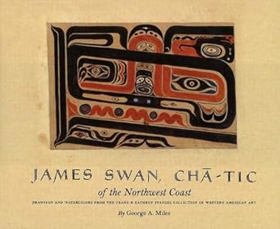
"In November 1852 James Swan moved to the Olympic Peninsula of Washington Territory. Fascinated by the Indian communities he encountered, Swan spent the remainder of his life studying their art, material culture, and history. The author of several books, he became the Smithsonian Institution's principal agent in the Northwest, collecting natural history and ethnographic objects from Gray's Harbor through the Alaskan panhandle 160 pages : color illustrations, maps ; 25 x 32 cm CIRC [ 1 ]
|
2003 |
|
James Madison Alden Yankee artist of the Pacific coast, 1854-1860 by Franz Stenzel, James Madison Alden, Amon Carter Museum of Western Art
Accompanying exhibition presented at Amon Carter Museum, Fort Worth [and others] xiii, 209 pages : illustrations (some color) ; 25 cm CIRC [ 1 ]
|
1975 |
|
James J. Hill and the opening of the Northwest by Albro Martin 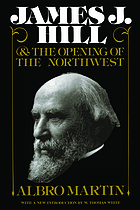
"James J. Hill (1838-1916), the Empire Builder, created a vast railroad network across the northwestern United States. In this splendid biography Albro Martin, the first researcher to have access to Hill's voluminous correspondence, richly portrays a man of many parts: an entrepreneur, a family man, a collector of notable French paintings, a promoter of scientific agriculture, and a booster for the Northwest."--Back cover xxvi, 676 pages : illustrations, maps ; 23 cm. CIRC [ 0 ]
|
1991 |
|
James J. Hill empire builder of the Northwest by Michael P. Malone 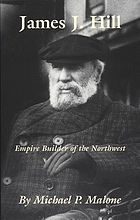
In this volume, Michael P. Malone provides a succinct interpretive biography of James J. Hill, the "Empire Builder" - so called for his work in developing the region of the United States between the Great Lakes and the Pacific Northwest. Hill was born near Rockwood, Ontario, in 1838. At age sixteen, following his father's death, he left home for St. Paul, Minnesota Territory. There he found work in the steam boating trade along the Mississippi River. By 1865 he was a freight agent, by 1877 a major coal dealer, and soon thereafter he owned a lucrative steamboat service along the Red River. From these beginnings in transportation, Hill eventually realized his dream of building a transcontinental railroad to the Pacific Ocean. Taking over the bankrupt Saint Paul and Pacific Railroad, which ran between St. Paul and Winnipeg, Hill spent fifteen years constructing what would become the Great Northern Railway. Nor did he stop then. Until his death, in 1916, he continued building and directing his ever-growing business empire. Like most other leaders in the history of American industry, Hill gained loyal partners and avid critics. He was a man of remarkable abilities, determination, and drive, but he could be equally ruthless, overbearing, and politically domineering. The Hill story touches every aspect of the regional economy: transportation, agriculture, mining, lumbering, maritime trade, and town building. Malone explores Hill's complex life and personality, his activities and interests, and recreates both the story of the railroad race to the Pacific and the complex interactions involved in the development of the region xiv, 306 pages : illustrations ; 23 cm. CIRC [ 0 ]
|
1996 |
|
James Douglas father of British Columbia by Dorothy Blakey Smith
|
1971 |
|
JAJ a Haida manga by Michael Nicoll Yahgulanaas (Artist, Author) 
"With gorgeous imagery, visual artist Michael Nicoll Yahgulanaas brings to life the tumultuous history of first contact between Europeans and Indigenous peoples and the early colonization by the Europeans of the northern West Coast. Yahgulanaas uses a blend of traditional and modern art, eschewing the traditional boxes of comic books for the flowing shapes of North Pacific iconography. The panels are filled with colourful and expressive watercolour paintings. The panels of each page, if removed and assembled into one whole image, form a large image reminiscent of a woven robe. The story follows several historical figures, including Johan Adrian Jacobsen (JAJ), who comes to the Haida village of Masset to collect specimens for a German museum, through a time span that includes first contact, the devastation of the smallpox epidemic, and the mass resettlement of disenfranchised peoples, both Indigenous and European."-- Provided by the Publisher 116 pages : chiefly color illustrations ; 27 cm CIRC [ 0 ]
|
2023 |
|
Jack Ward Thomas the journals of a Forest Service chief by Jack Ward Thomas, Harold K. Steen 
Jack Ward Thomas, an eminent wildlife biologist and U.S. Forest Service career scientist, was drafted in the late 1980s to head teams of scientists developing strategies for managing the habitat of the northern spotted owl. That assignment led to his selection as Forest Service chief during the early years of the Clinton administration. It is history’s good fortune that Thomas kept journals of his thoughts and daily experiences, and that he is a superb writer able to capture the moment with clarity and grace. The issues Thomas dealt with in office and noted in his journals lie at the heart of recent Forest Service policy and controversy, starting with President Clinton’s Timber Summit in Portland, Oregon, dealing with the spotted owl issue, and the 1994 loss of fourteen firefighters in the Storm King Mountain fire in Colorado. Against a constant backdrop of partisan politics in the White House and Congress, Thomas discusses issues ranging from grazing in the national forests, long-term pulp timber sales in Alaska, and the Forest Service Law Enforcement Division to the New World Mine near Yellowstone National Park. He considers the timber salvage rider and its linkage to forest health, the Department of Justice and Counsel on Environmental Quality influence on Forest Service policies, and interagency management for the Columbia River Basin. Woven throughout these excerpts from his diary is Thomas’s conviction that the effective, ethical management of wildlife depends on how the management effort is situated within the broader human context, with all its intransigence and unpredictability. Writing in 1995, Thomas says, "Things simply don’t work the way that students are taught in natural resources policy classes--not even close. . . .There is simply no way that scholars of the subject can understand the ad hoc processes that go on within only loosely defined boundaries.” Wildlife management, he says, is "90 percent about people and 10 percent about animals," and when it comes to learning about people, wildlife managers are on their own. This book is the record of how one man met that challenge. 417 pages : illustrations ; 24 cm CIRC [ 0 ]
|
2004 |
|
J.R. Simplot a billion the hard way by Louie W. Attebery 
This is the story of a kid from Declo, Idaho who parlayed a few "bum" lambs into one of the largest privately held companies in America. J.R. Simplot is one of the last of the classic Horatio Alger success stories - a man who spent seventy-five years building an international empire. xxxii, 251 pages : illustrations ; 24 cm CIRC [ 0 ]
|
2000 |