Catalog of British Columbiana and Pacific Northwest Americana
Encyclopedia Cascadia Catalog contains book titles of mostly non-fiction Pacific Northwest Coast of North America Titles (primarially British Columbia, Idaho, Oregon and Washington State) in an easy-to-understand title catalog. If you see a link with this badge ONLINE CIRC it means that there is an online institution that provides free access to that title. In some cases there may be more than one institution hosting the title digitally.
| Catalog Title | Published |
|---|---|
|
Fearless Farris Lind, the man behind the skunk by Rick Just 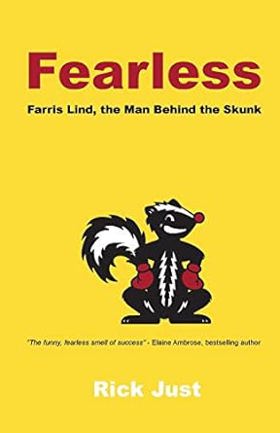
This is the story of the signs, the skunk, the crop dusting, the tragedy and the triumph of a man who was the essence of Idaho. 123 pages : illustrations ; 23 cm CIRC [ 1 ]
|
2019 |
|
|
1990 |
|
Farming the frontier the agricultural opening of the Oregon country, 1786-1846 by James R. Gibson 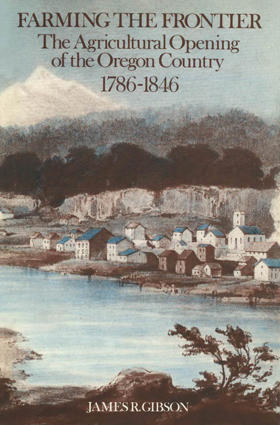
In its rich detail, this book provides the first comprehensive history of the agricultural development of the Oregon Country. Based on extensive research in Hudsons's Bay Company documents, missionary records, and military and private papers, this book traces the crucial transition of the Pacific Northwest from a fur-trading outpost to an agricultural settlement -- a process which also saw the shift from British to American jurisdiction in the area. 265 pages : illustrations, maps ; 24 cm CIRC [ 1 ]
|
1985 |
|
Far west the story of British Columbia by Daniel Francis 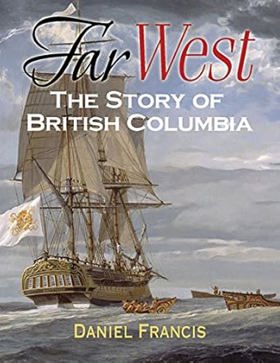
British Columbia's colourful story has been told many times, but until now no one has attempted to relate the chronicle specifically for young readers. From the gold rush to the Gumboot Navy and from "brideships" to W.A.C. Bennett, BC history comes alive in this highly illustrated and vivid account by award-winning writer and historian Daniel Francis. Starting with the story of BC's aboriginal people and their lives prior to the arrival of the Europeans, Far West recounts first contact with early explorers such as Captain James Cook and Captain George Vancouver and the changes the fur trade brought to the "New World." Francis then describes how BC was born, starting with the gold rush and Confederation eras, going through to modern times and speculating on BC's future. On the way we meet interesting characters from BC's history, people such as Frances Barkley, the first European woman to visit British Columbia in 1787; Joe Capilano, who travelled to London, England, in 1906 to explain to the British king how BC's aboriginal people were displaced by white settlers; and Rosemary Brown, a Vancouver social worker who was the first black woman elected to political office in Canada in 1972. Quotes from BC people--past and present--and anecdotal sidebars containing little-known BC facts spice up the text. Geared toward readers aged nine and up and richly illustrated with archival photographs, colourful paintings, maps and original illustrations, Far West is a must-have for every BC family. 175 p. : ill. (some col.), col. maps ; 29 cm. CIRC [ 0 ]
|
2006 |
|
Far corner, a personal view of the Pacific Northwest by Stewart H. Holbrook 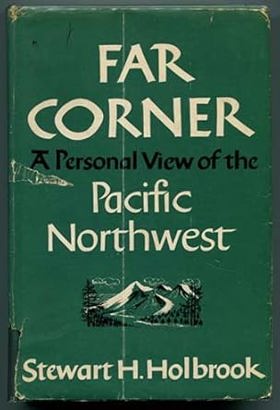
Far Corner is the saga of a latter-day pioneer who invaded the Pacific Northwest wearing the only derby hat those parts had ever seen. Athor Stewart H.Holbrook bought the hat in Boston just before he boarded the steam-cars to seek fame and fotune amidst the booms and busts of the roaring '20s. On his journey he discovered there were still people who liked fried elk for breakfast and noticed that not all cowboys were six feet tall and lithe. He was delighted with a hamlet named Pluvuus because one it rained for 362 days and the other three days, according to the sole resident, "was goddam cloudy." 270 pages 22 cm CIRC [ 0 ]
|
1952 |
|
Fall City in the Valley of the Moon by Margaret McKibben Corliss
|
1972 |
|
Faith, food, and fond memories 1884-1984 by Orcas Island Community Church 
Faith, Food, and Fond Memories 1884-1984 by the Orcas Island Community Church is a 1984 centennial compilation published locally in Eastsound, Washington, that blends community history with a generational cookbook to commemorate the congregation's first century. Beyond a simple collection of regional recipes, the book functions as a unique grassroots historical record, intertwining the culinary heritage of the San Juan Islands with pioneer reminiscences, poetry, and congregational milestones. By documenting the shared meals, local agricultural bounty, and social gatherings that sustained the isolated islanders, the volume ultimately serves as an intimate primary source for regional historians seeking to understand the resilient social fabric, agrarian roots, and enduring fellowship that shaped early community life on Orcas Island. 149 pages : illustrations ; 22 cm CIRC [ 1 ]
|
1985 |
|
Fairhaven a history by Brian L. Griffin 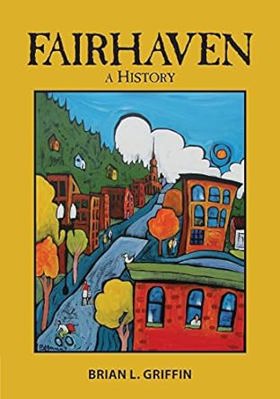
The complete history of that most southerly community on Bellingham Bay, one of the four original towns that were consolidated in 1904 to become the present City of Bellingham. Fairhaven, Washington--from the glaciers to today--the places, the participants, and the grand possibilities. A new arrival in 1889 said, "only crude raw beginnings, the primeval forest of giant firs and cedars barely pushed back to the hillsides, mud streets gouged out, raw with jumbled piles of burning stumps, flames and smoke obscuring the sky. On the beach, tents flap in the breeze and a few unpainted wooden structures suggest civilization is to come." In 2015, what would be recognizable to any of those old-timers would be the enterprising spirit of the latest inhabitants, who have done so much to create Fairhaven's modern growth and economic strength xi, 275 pages : illustrations, maps ; 26 cm CIRC [ 1 ]
|
2015 |
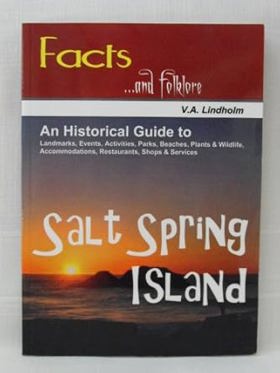
An historical guide to the landmarks, events, activities, parks, beaches, plants and wildlife, accommodations, restaurants, shops and services available on Salt Spring Island, British Columbia. This book features charming stories of the early pioneers and offers over 200 photographs, easy-to-read map, where to stay, shop, eat and explore, points of interest, how to get around, list of major island events and activities, as well as where to see plants and wildlife. This book presents Salt Spring Island in a way no other book has. Meet the postman of the 19th century and explore what Salt Spring has to offer today, while taking a trip back in time. 242 pages : illustrations ; 21 cm. CIRC [ 1 ]
|
2006 |
|
Facing the world defense spending and international trade in the Pacific Northwest since World War II by Christopher P. Foss 
"Before the Second World War, the states of Washington and Oregon were thinly populated economic backwaters of the United States. Even the major cities of Portland and Seattle were dependent on agricultural industries, especially timber, for their economic health. That all changed during World War II and the Cold War. By the dawn of the twenty-first century, the Pacific Northwest boasted a more diversified economy. Beer, tourism, and high tech moved in alongside timber and wheat as the region's mainstay industries. In Washington, especially, a Cold War-driven military and national security state set up shop as an economic behemoth even as debates over the costs and consequences of the new Atomic Age raged. Facing the World highlights these changes, as well as the politicians, business leaders, and ordinary people who helped bring them about. At the center of the story, Senators Henry Jackson, Wayne Morse, Slade Gorton, and Mark Hatfield; Congressman Tom Foley; and Governor Vic Atiyeh worked diligently for a generation to transform the region from insular and backward to cosmopolitan and forward-looking. Aligning the region with national security and international trade policies, these politicians made the Pacific Northwest economy what it is today. Through extensive research in congressional and federal archives, historian Christopher P. Foss vividly brings to life the discussions, conflicts, and controversies that shaped this political era. Though it wasn't perfect, its fading legacy of leadership is a lesson for our own time. Facing the World will prove a valuable resource to historians, political scientists, and civic-minded residents of the Pacific Northwest"-- Provided by publisher x, 338 pages : illustrations, maps ; 23 cm CIRC [ 0 ]
|
2020 |
|
Exploring Washington's past a road guide to history by Ruth Kirk, Carmela Alexander, David L. Nicandri, Louis Kirk 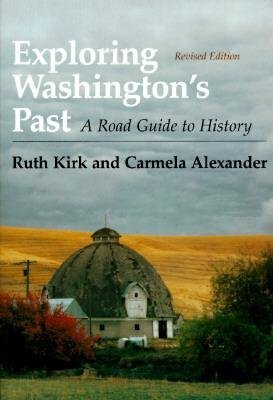
Exploring Washington’s Past tells the state’s story in terms of where to go and what to see. With words, photographs, and maps, the authors evoke the cultural landscape and portray Washington’s people and events from the days of the fur trade and pioneer settlement to the recent past. Capsule descriptions of small communities -- from Altoona to Zillah -- are interwoven with those of better known cities, and eastern and western Washington receive equal attention. More than two hundred photographs portray our historical landscape through images of today intermixed with a sampling of the past. This book will be an indispensable guide for residents, tourists, and armchair travelers. xiii, 543 pages : illustrations, maps (some color) ; 26 cm CIRC [ 1 ]
|
2001 |
|
Exploring Vancouver Island's west coast a cruising guide by Don Douglass 
Nowhere does the tourist motto Super, National British Columbia! come more alive than on Vancouver Island's West Coast. With five great sounds, sixteen major inlets, and an abundance of spectacular wildlife, the largest island on the west coast of North America is a cruising paradise. The Douglasses consider their voyages along this coast to be among their most satisfying adventures. In this guide they give small craft skippers the kind of local knowledge they need to circumnavigate the island and drop hook in an abundance of intimate coves. 287 pages : illustrations, maps ; 26 cm CIRC [ 1 ]
|
1994 |
|
Exploring Vancouver ten tours of the city and its buildings by Harold Kalman , Robin Ward 
"This new edition of the classic urban guidebook brings the city's architectural story up to date. Harold Kalman and Robin Ward, long-time chroniclers of Vancouver, offer an authoritative and highly readable book about Vancouver's most interesting places and explain how, why and by whom the city's urban environment was created. Containing more than four hundred entries, ten self-guided tours highlight significant buildings from all eras in the city and its metro region, and feature new projects that transform the skyline more radically than ever before. The tours--organized by neighbourhood and planned variously for walking, cycling, car and transit--reveal Vancouver in a constant state of reinvention, fuelled by real estate speculation, immigration and the egos of civic boosters, developers and architects. Today, this dynamic is colliding with architectural and urban planning responses to climate change. For the first time in the series, this edition includes the Musqueam, Squamish and Tsleil-Waututh peoples' role in the narrative, including information on several substantial local projects shaped by these communities and Nations. For wayfinding, entries are numbered and keyed to maps. A glossary of architectural terms and styles is provided. Exploring Vancouver is the perfect companion for curious visitors and citizens of this fascinating metropolis alike."-- Provided by publisher 366 pages : colour illustrations, maps ; 23 cm CIRC [ 0 ]
|
2023 |
|
Exploring the Tualatin River Basin a nature and recreation guide by Susan Peter, Shirley Ewart, Tualatin Riverkeepers 
The Tualatin River Basin in Washington County, Oregon has some of the most appealing and least known natural areas in the greater Portland area, and nobody knows the territory better than Tualatin Riverkeepers. This informative, well-organized guide introduces 85 readily accessible sites throughout the Tualatin River Basin, from the River's tributaries in the Coast Range to its confluence with the Willamette River. The detailed site descriptions include directions, maps, and a wealth of information on the plants, wildlife, and natural attractions to be found. Also included are brief features on the flora, fauna, ecology, and history of the area. Hikers, canoeists, naturalists, birders, and outdoor enthusiasts of all kinds will find this unique field guide an essential companion as they explore the beautiful, meandering Tualatin River and its environs. xii, 162 pages : color illustrations ; ol. maps ; 22 cm CIRC [ 0 ]
|
2002 |
|
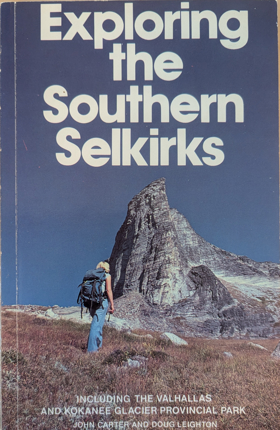
Exploring the southern Selkirks including the Valhallas and Kokanee Glacier Provincial Park by John Carter, Douglas Leighton
|
1980 |
|
Exploring the south coast of British Columbia Gulf Islands and Desolation Sound to Port Hardy and Blunden Harbour by Don Douglass, Réanne Hemingway-Douglass 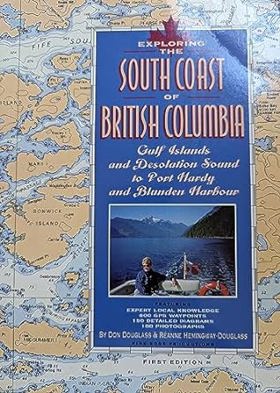
Nowhere does the tourist motto Super, National British Columbia! come more alive than on Vancouver Island's West Coast. With five great sounds, sixteen major inlets, and an abundance of spectacular wildlife, the largest island on the west coast of North America is a cruising paradise. The Douglasses consider their voyages along this coast to be among their most satisfying adventures. In this guide they give small craft skippers the kind of local knowledge they need to circumnavigate the island and drop hook in an abundance of intimate coves. 303 pages : illustrations, maps ; 26 cm CIRC [ 1 ]
|
1996 |
|
Exploring the Salish Sea an artist's view by Don Douglass, Reanne Hemingway-Douglass, Margy Gates 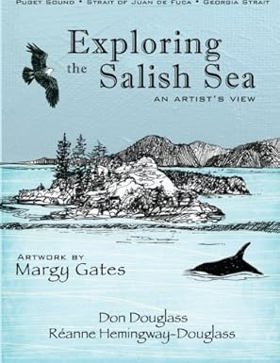
Exploring The Salish Sea with the Pen & Ink drawings of Margy Gates. This work celebrates the unique and rich beauty of the Salish Sea and its environs. It depicts fauna and flora iconic to the area, as well as plants and animals seen only infrequently. The artist is not Coast Salish, but her depictions of native arts and crafts attempt to interpret the spirit of the tribal and First Nations artists’ and artisans’ creations. The Salish Sea (SAY-lish) is a designation for the inland sea of Washington State in the United States and its neighbor to the north, the Canadian province of British Columbia, on the Northwest Coast of North America. The term Salish honors the Coast Salish peoples who lived in the area long before the arrival of European and American explorers and settlers. To describe the beauties of this region, will, on some future occasion, be a very grateful task to the pen of a skillful panegyrist. The serenity of the climate, the innumerable pleasing landscapes, and the abundant fertility that unassisted nature puts forth, require only to be enriched by the industry of man with villages, mansions, cottages, and other buildings, to render it the most lovely country that can be imagined. vii, 96 pages : illustrations, maps ; 28 cm CIRC [ 0 ]
|
2014 |
|
Exploring Oregon's historic house museums by Kathleen M. Wiederhold 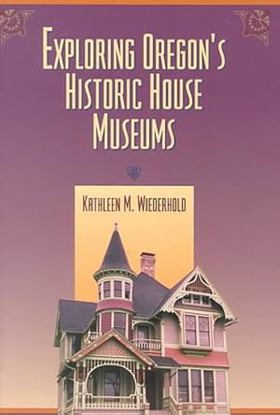
Oregon's historic house museums are time capsules that preserve our past domestic life. As Kathleen Wiederhold shows in this informative and entertaining guide, historic houses provide a place to experience the architecture and artifacts of the most intimate part of our lives, the home. Each of the historic house museums featured is unique in its place and time. The book covers houses built from 1841 to 1936, from a hewn log cabin in the high desert to a grand mansion in the state's most populated city. The houses, many of which are on the National Register of Historic Places, span the economic spectrum from poor to wealthy, and include those belonging to noteworthy Oregonians, from John McLoughlin to Wayne Morse. All are open to the public. The author introduces readers to more than fifty historic house museums in towns and cities from Astoria to Baker City. Each profile includes: a fascinating history of the people who built and lived in the house, detailed descriptions of exterior and interior features, including architectural styles, floorplans, and furnishings, a step-by-step tour of the house with tips on what to see, and visitor information such as directions, operating hours, and nearby attractions. Historic house museums showcase both ordinary and unusual objects that Oregonians used in everyday life. They provide glimpses of people's lives in the places where they lived. They also reflect on the course of the state's settlement and development. this engaging guide explains these dwellings and tells their stories. Photographs of both the exteriors and interiors bring the houses alive. For history buffs, old house enthusiasts, antique aficionados, and cultural tourists, this book is an excellent introduction to Oregon's heritage houses. Kathleen M. Wiederhold is a scholar of and an advocate for Oregon's courthouses. She has spent 18 years researching historic buildings and town histories. She has an extensive collection of courthouse memorabilia. She currently lives in Spokane, Washington. xv, 286 pages : illustrations, maps ; 23 cm CIRC [ 0 ]
|
2000 |
|
Exploring Oregon's historic courthouses by Kathleen M. Wiederhold 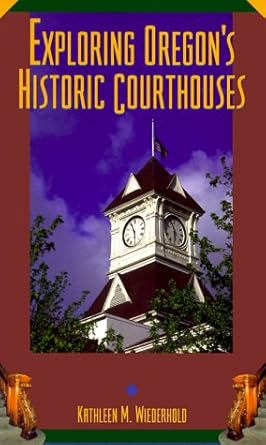
Courthouses are often overlooked as significant historical sites, perhaps because they are "working" buildings open to the public. As this informative and entertaining guide proves, however, Oregon courthouses are fascinating places to explore aspects of the state's history. For this first guide to Oregon's historic courthouses, Kathleen Wiederhold traveled extensively throughout the state visiting courthouses and talking to county officials and local residents. What she discovered were buildings rich in historical meaning and significance. This book explains these buildings and tells their stories, from political drama to salty local lore. The author introduces twenty-one courthouses in towns and cities from Astoria to Enterprise. Each profile includes a look at the county seat, past and present; a history of the courthouse; a detailed description of the building as it stands today; and tips on what to see. Exploring Oregon's Historic Courthouses combines local histories and their intriguing anecdotes with valuable information on the state's architectural heritage and old and new photographs of these venerable structures. It offers visitors and readers new opportunities to encounter history and historic architecture in the guise of these living buildings. xv, 289 pages : illustrations ; 22 cm CIRC [ 0 ]
|
1998 |
|
Exploring Fort Vancouver by Douglas Calvin Wilson, Theresa E. Langford 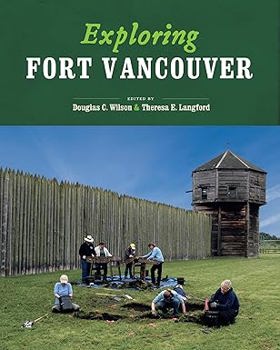
To explore the sweep of human history at Fort Vancouver is to grasp some of the essentials of the North American experience. The fort has been part of the major historical trends of the Pacific Northwest for over 150 years, from the effects of colonialism native peoples to the role of the U.S. Army. Native Americans, traders, homesteaders, and soldiers lived and worked at the fort, their lives interwoven and their stories imbedded in the objects they left behind. Exploring Fort Vancouver uses some of the most intriguing objects from the fort's extensive archaeological and archival collections to tell the history of technology, material culture, globalization, health and diet, and the National Park Service at this significant place. xii, 116 pages : illustrations (some color), color maps ; 26 cm CIRC [ 0 ]
|
2011 |
|
Exploring Coast Salish prehistory the archaeology of San Juan Island by Julie K. Stein 
Every year thousands of people visit the San Juan Islands off the coast of Washington State. With a copy of Exploring Coast Salish Prehistory in hand, they will enjoy an introduction both to archaeology in general and to sites within San Juan Island National Historic Park. The Coast Salish people inhabited the San Juans for 5,000 years. One important site on San Juan Island, Cattle Point, was a summer camp where residents engaged in fishing and shellfish harvesting. Native peoples' recollections of activities there have been confirmed by physical evidence in the form of shell middens, fish bones, and other artifacts. Another San Juan site, English Camp, was a winter village site for 2,000 years. Structure remains provide insight into how people's lives and activities changed over time. Tools found at the site have allowed archaeologists to deduce that early residents ate camas bulbs and other plants, engaged in woodworking, weaving, fishing, and carving, and manufactured and used stone tools. Stein's discussions of the sites and archaeological practices are enhanced by numerous illustrations. Clear photos of different types of artifacts, topographical maps, and other images help the reader to understand how people lived in the San Juans thousands of years ago ix, 126 pages : illustrations CIRC [ 1 ]
|
2000 |
|
Explore the Salish Sea a nature guide for kids by Joseph K. Gaydos , Audrey D. Benedict 
The SeaDoc Society has published a book for the next generation. Filled with beautiful photography and engaging stories, Explore the Salish Sea: A Nature Guide for Kids inspires children to explore the unique marine ecosystem that encompasses the coastal waters from Seattle’s Puget Sound up to the Strait of Juan de Fuca and the Georgia Strait of British Columbia. Discover the Salish Sea and learn about its vibrant ecosystem in this engaging non-fiction narrative that inspires outdoor exploration. Filled with full-color photography, this book covers wildlife habitats, geodiversity, intertidal and subtidal sea life, and highlights what is unique to this Pacific Northwest ecosystem. The book was written by SeaDoc Science Director Joe Gaydos and board member Audrey Benedict.Puget Sound up to the Strait of Juan de Fuca and the Georgia Strait of British Columbia. Discover the Salish Sea and learn about its vibrant ecosystem in this engaging non-fiction narrative that inspires outdoor exploration. Filled with full-color photography, this book covers wildlife habitats, geodiversity, intertidal and subtidal sea life, and highlights what is unique to this Pacific Northwest ecosystem"-- Provided by publisher ix, 53 pages : color illustrations, color map ; 23 x 29 cm CIRC [ 0 ]
|
2018 |
|
Experiences in a promised land essays in Pacific Northwest history by G. Thomas Edwards, Carlos A. Schwantes 
The Pacific Northwest, like many other regions of the United States, has been touted as the Promised Land. As early as the 1830s, “Oregon fever” brought missionaries, promoters, speculators, politicians, and settlers to the nation’s far West. Spared the ravages of the Civil War and the scars of rapid northern industrialization, the region continued to offer Golden Opportunity. Its promise encompassed the bounties of sea and land, a mild and healthful climate, and an unusually homogeneous population. Practically since the turn of the century, the Northwest has been a region of paradoxes. Women, who in Washington had acquired suffrage and lost it in the 1880s, regained it and later elected a woman mayor of Seattle. Exploitation of workers, despite, or perhaps because of, abundance has been extreme-- and has engendered some of America’s most radical labor movements. Both racial backlash and enlightened reforms characterize the region. Until now, no single-volume history has taken up the modern issues of women, minorities, radicalism and environment. The editors of Experiences in the Promised Land, G. Thomas Edwards and Carlos Schwantes, themselves teachers and writers of Northwest history, have carefully compiled a selection of essays that treats the full scope of the region’s history, with a special emphasis on 20th century topics. They have gathered together the best of recent scholarship: the work of regional authorities as well as contributions by some of the most promising of the new generation of scholars. A variety of writing styles and approaches, subjects ranging from individual biographies to studies of broad policies and movements, a chronological organization enhanced by concise, insightful chapter commentaries, and an extensive bibliography make this volume indispensable for teachers, students, and the general reader of Northwest history. xvi, 397 pages ; 24 cm CIRC [ 0 ]
|
1986 |
|
Everything Shuswap by Jim Cooperman 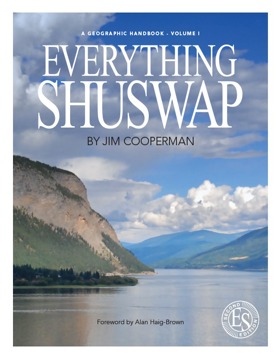
"The Shuswap has all the attributes to attract someone who enjoys four seasons -- nature, clean water, recreation, and culture and reasonably close access to larger cities. There is an amazing diversity of plant and animal life here and thankfully due to the small population, a minimum of pavement, crowds and pollution. Yet until now, there has been little written about the region. Author Jim Cooperman, a dedicated environmentalist and back-to-the-lander, spent 12 years researching and writing this comprehensive, bioregional guidebook that includes 36 maps and over 350 stunning photos. Tour through the watershed and explore the lakes region and each of the 12 sub-drainages. Learn about the region's ancient geology and its mostly unsuccessful mining ventures. Discover why the Shuswap is so ecologically diverse and why mountain caribou are endangered and how the sockeye salmon may be next. Learn about the Secwepemc people, who have lived on this land since time immemorial and understand why, after nearly two centuries of exploitation and mistreatment, they are regaining their heritage. Understand the factors behind the pattern of European settlement and discover details about the sternwheeler era. Everything Shuswap is more than a book; it is also an educational project. Proceeds from book sales will be used to support outdoor learning; the book will be used in the grade 10 social studies curriculum; and, there is a plan to involve students in the research for the next two volumes. Given that Dr. David Suzuki wrote after receiving a copy, 'Every part of the country should have something like Everything Shuswap,' the book can also serve as a template for other communities."-- Provided by publisher 240 pages : illustrations (some colour), maps ; 28 cm. CIRC [ 0 ]
|
2017 |
|
Eventful Life of Philip Hankin world-wide traveller and witness to british columbias... early history by GEOFF MYNETT 
"Today’s explorers of Vancouver Island may be familiar with the name “Hankin”--Hankin Island lies off the coast of Ucluelet within the famous Pacific Rim National Park; Mount Hankin looms amidst the dense forests of central Vancouver Island; and nestled in the San Juan Islands, Hankin Point sits on the easternmost tip of Shaw Island. The man behind the name is Philip Hankin, a little-known but fascinating figure who led an eventful life marked by immense swings in fortune. In 1849, at just thirteen years old, Philip Hankin, then in England, entered the Royal Navy and engaged in the navy’s campaigns to suppress the trade of enslaved people on the coasts of Africa. His naval career brought him to Vancouver Island in 1858, where he helped survey the coastline on the Royal Navy’s HMS Plumper and Hecate. In his journeys on the Indigenous homelands of the Nuu-chah-nulth and Huu-ay-aht Peoples in what is now Vancouver Island, and the Lummi, WSÁNEĆ and Tulalip Peoples to the south, Hankin learned several Indigenous languages, a skill that would prove pivotal in his career. After leaving the navy at age twenty-eight, he walked from Yale to Barkerville to try his hand at prospecting. In this, despite family connections to Billy Barker, he failed miserably. Broke, he returned to Victoria, where within months he was appointed Superintendent of Police for the Colony of Vancouver Island, but the merger of the colonies in 1866 left him again jobless. He served as colonial secretary in British Honduras and then in late 1868 he returned to British Columbia as colonial secretary. Hankin was at the centre of BC politics in the years before BC’s accession to Canada in 1871. In his memoirs, Hankin reflected on his eventful life: “I have had many ups and downs and have travelled several times around the world… although I have been somewhat of a rolling stone, yet, I have gathered some moss.” In The Eventful Life of Philip Hankin, bestselling author and historian Geoff Mynett tells the story of the adventurous and often tumultuous life of this “rolling stone” and reveals his remarkable resilience."-- Provided by publisher 240 pages : illustrations ; 23 cm CIRC [ 0 ]
|
2024 |