Catalog of British Columbiana and Pacific Northwest Americana
Encyclopedia Cascadia Catalog contains book titles of mostly non-fiction Pacific Northwest Coast of North America Titles (primarially British Columbia, Idaho, Oregon and Washington State) in an easy-to-understand title catalog. If you see a link with this badge ONLINE CIRC it means that there is an online institution that provides free access to that title. In some cases there may be more than one institution hosting the title digitally.
| Catalog Title | Published |
|---|---|
|
More than a thousand points of light by Herbert A. Pfiffner, Seattle's Union Gospel Mission 
Celebrates and commemorates sixty years of Seattle's Union Gospel Mission 90 pages : illustrations ; 22 cm CIRC [ 1 ]
|
1992 |
|
North Coast odyssey the Inside Passage from Port Hardy to Prince Rupert by Kenneth Campbell 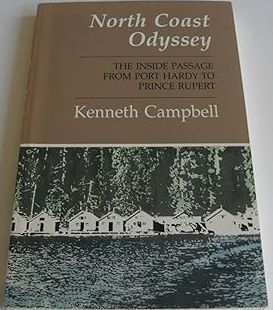
Published by Kenneth Campbell, North Coast Odyssey: The Inside Passage from Port Hardy to Prince Rupert captures the dramatic geography and rich maritime heritage of British Columbia's isolated northern marine highway. The book chronicles a coastal voyage through labyrinthine fjords, treacherous narrows, and wind-swept archipelagos, blending nautical adventure with local history, Indigenous lore, and observations of the region's abundant marine wildlife. Through vivid descriptive prose, the author details the weathered cannery towns, lighthouses, and remote settlements that cling to a magnificent yet unforgiving coastline. A keen insight drawn from the work is how the Inside Passage functions as a liquid highway that simultaneously isolates and connects; by relying entirely on maritime transit through a maze of stone and water, coastal inhabitants experience a profound sense of remoteness that can only be bridged by a deep, respectful attunement to the fickle rhythms of the Pacific tides. 202 pages : illustrations, maps, portrait ; 23 cm CIRC [ 1 ]
|
1993 |
|
Queen Anne, community on the hill by Kay Frances Reinartz 
Published in local editions by Kay Frances Reinartz, Queen Anne: Community on the Hill chronicles the rich neighborhood history and architectural evolution of one of Seattle’s most prominent geographic landmarks. The book traces the area's transformation from a dense evergreen forest and native camp into an affluent residential streetcar suburb offering sweeping vistas of Elliott Bay and the Cascade Mountains. Through archival photographs, diaries, and municipal records, the text captures the daily lives of early residents who shaped the hill's distinct community identity amidst rapid urban growth below. A keen insight drawn from the work is how topographical isolation can preserve a distinct community consciousness within an expanding metropolis; by literally rising above the industrial grit and commercial clamor of downtown Seattle, Queen Anne Hill allowed its residents to curate an architectural enclave that visually and socially equated geographic elevation with civic prestige. viii, 231 pages : illustrations, maps ; 28 cm CIRC [ 1 ]
|
1993 |
|
Seabeck tide's out, table's set by Fredi Perry, Michael Jay Mjelde, Larry Hill, Victoria Rowe 
History of Seabeck, Washington (state) covers the early Native American history, exploration by British and American navigators, and continues on to the development of the harbor as the site of a lumber mill and shipbuilding center. Topics include water transportation, hotels, saloons, store, post office, schools, cemetery, Seabeck Christian Conference Center, and surrounding communities. Included are census and cemetery records, maps, legends, and an extensive index. This is the second printing.-- 242 pages : illustrations, maps ; 28 cm CIRC [ 1 ]
|
1993 |
|
Lights of the inside passage a history of British Columbia's lighthouses and their keepers by Donald Graham 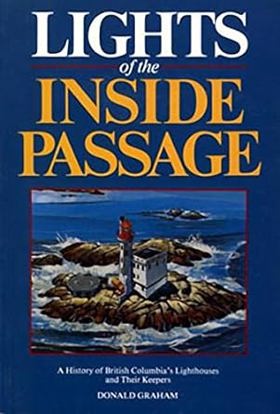
The lighthouses of the inside passage, many of them built to guide prospectors on their way to the Klondike, stretch from sheltered stations on the Gulf Islands to stark, storm-swept Triple Island and Langara, south of Alaska. Feel the fury of destructive North Pacific gales and tidal waves that ravage the coast; ponder the unsolved murder of Addenbrooke's keeper, and the mysterious disappearances on Egg Island; witness the insanity caused by isolation -and enjoy the contentment and peace that many keepers found on their solitary stations. Don Graham, keeper at Vancouver's Point Atkinson light, tells the stories of individual lighthouses, then brings the history of lightkeepers in general into the present. The century-old tradition of service that has insured the safety of West Coast mariners and ships is currently threatened by automation, and Graham presents a persuasive case against unmanning the lights through his account of the dedication and endurance of pioneer keepers. 269 str. : ilustr. ; 25 cm CIRC [ 1 ]
|
1993 |
|
Chiefs & chief traders Indian relations at Fort Nez Percés, 1818-1855 by Theodore Stern 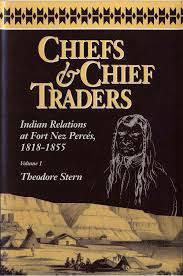
A ground-breaking study of the relations between the fur traders of Fort Nez Perce's and the Indians of the region, primarily Cayuse, Wallawalla, Umatilla, and Nez Perce. Existing literature on this region has focused on the white explorers, the fur traders, and the settlers; Chiefs and Chief Traders offers a new perspective, exploring both white and Indian cultures and their interactions. Chiefs and Chief Taders represents the culmination of 25 years of research, utilizing an extensive variety of primary sources - some used here for the first time - as well as oral interviews conducted in the course of ethnographic research on the Umatilla Indian Reservation. Stern weaves together anthropology and history in a way that few are qualified to do. He brings important new information to the story of the relations between Indians and whites in the Pacific Northwest xii, 272 pages : illustrations, maps ; 24 cm CIRC [ 1 ]
|
1993 |
|
The other side of Oregon by Ralph Friedman 
A collection of history, biographies and tales of what makes the eastern side of Oregon unique. The Other Side of Oregon is filled with stories about people and places that make the state special, spiced with philosophical tidbits from the author. xii, 425 pages : illustrations ; 23 cm CIRC [ 1 ]
|
1993 |
|
Terrible trail the Meek Cutoff, 1845 by Keith Clark, Lowell Tiller, Maverick Publications 
In the winter of 1960, when Keith Clark and Lowell Tiller hit upon the idea of investigating the tragic history of the Meek Cutoff in Oregon, they formulated four goals: To write an investigative if not definitive work on the subject. To lay to rest the mass of misinformation about the route of those lost and wandering pioneers who made up the Meek Train. To narrate the passage of the emigrant train whose tragic experience rivaled - indeed, surpassed, in the number of deaths -that of the Donner Party of California. To help lay the groundwork for the solution of the Blue Bucket mystery. This book offers the results of the achievement of these goals. In 1845, when emigrant parties reached old Fort Boise on the Snake River, they still faced many tortuous miles through the Blue Mountains and down the Columbia to The Dalles. A shortcut which would avoid this fearsome part of the journey seemed to have been discovered by Stephen H. L. Meek, older brother of Joe Meek. Confident that he could lead wagons through territory where he had trapped, and west across the Cascades through country he knew only by description, Meek, an intrepid mountain man, persuaded two hundred families to follow him through the trackless desert country of central Oregon. The emigrants made their way up the Malheur River, building their road as they went; and the story of their suffering, despair, and eventual rescue is presented in the pages of this book. Somewhere along the route to the Willamette Valley a group of these wandering people stumbled onto gold only to lose sight of it again. Subsequent searchers have traced and retraced the trail for more than a hundred years but to no avail. The book throws new light on the possibility of a rediscovery of the long-lost Blue Bucket gold. There are thirty-three illustrations from photographs, three maps and an endsheet map, a bibliography, an index, and a roster of names of pioneers. xx, 279 pages : illustrations, maps ; 22 cm CIRC [ 1 ]
|
1993 |
|
Land in common an illustrated history of Jackson County, Oregon by Joy B. Dunn, Southern Oregon Historical Society 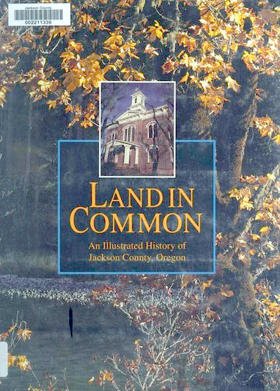
Published by the Southern Oregon Historical Society and authored by Joy B. Dunn, Land in Common: An Illustrated History of Jackson County, Oregon chronicles the complex and vibrant heritage of the Rogue River Valley. The book traces the region's transformation from ancestral indigenous homelands and a turbulent 1850s gold rush frontier into a thriving agricultural and timber-producing community. Through an extensive collection of historical photographs and archival records, the text highlights the diverse waves of settlers, miners, and entrepreneurs who shaped the physical and social landscape of southern Oregon. A keen insight drawn from the work is how the book's title operates as a poignant irony; by documenting how a land once held in common by native nations was rapidly parceled out into private claims, the history reveals that the foundational wealth of the frontier was built entirely upon the systematic legal enclosure of indigenous geography. xiv, 178 pages : illustrations (some color) ; 29 cm CIRC [ 1 ]
|
1993 |
|
Sails, steamships & sea captains settlement, trade, and transportation of Island County between 1850-1900 by Island County Historical Society 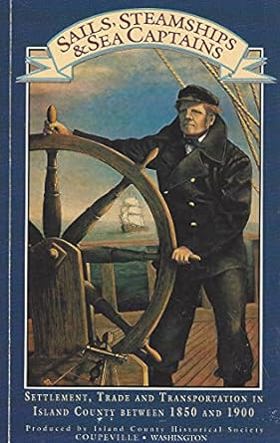
Published by the Island County Historical Society, Sails, Steamships & Sea Captains: Settlement, Trade, and Transportation of Island County Between 1850-1900 chronicles the maritime foundation of Washington’s Whidbey and Camano islands during the late nineteenth century. The book details the pivotal role played by mosquito fleet steamers, schooners, and daring sea captains in binding together isolated homesteads, timber camps, and agricultural outposts across Puget Sound long before the era of bridges and highways. Through archival photographs and pioneer accounts, the text captures a watery frontier where daily commerce, mail delivery, and social survival depended entirely on wind, tide, and vessel navigation. A keen insight drawn from the work is how insular geography in the Pacific Northwest inverted modern transportation logic; rather than land acting as the primary territory and water as the barrier, the interconnected waterways of Puget Sound served as the region's true main street, dictating the economic rise and fall of early island communities based entirely on their access to passing steamship docks. vii, 137 pages : illustrations, maps ; 21 cm CIRC [ 1 ]
|
1993 |
|
Arch Cape chronicles a bit of Oregon coast's past by David English, Alma English 
Published by local historians David and Alma English, Arch Cape Chronicles: A Bit of Oregon Coast's Past explores the intimate, isolated history of a windswept coastal community nestled between Cannon Beach and Nehalem. The book traces Arch Cape’s evolution from an untamed wilderness of dense old-growth timber and rocky headlands into a quiet haven for pioneering homesteaders, loggers, and vacationers. Drawing on historical documents, oral histories, and vintage photographs, the authors document how early travelers navigated the treacherous coastline before the construction of modern highways and tunnels carved open the rugged terrain. A keen insight drawn from the work is how the very geographic barriers that delayed Arch Cape's development—such as towering sea cliffs and impassable tides—ultimately preserved its secluded character, transforming what was once an existential travel hazard into an exclusive sanctuary for those seeking refuge from the modern world. 357 pages : illustrations ; 26 cm CIRC [ 1 ]
|
1993 |
|
Calabash a guide to the history, culture, and art of African Americans in Seattle and King County, Washington by Esther Hall Mumford 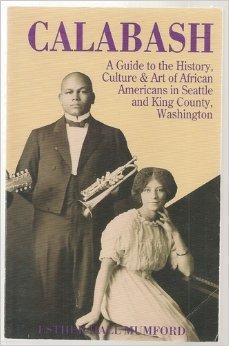
"This guide is intended to acquaint county residents and visitors with some of the more easily accessible landmarks of African-American history. These include works of art and cultural and historical sites which have been passed or driven by, for years while their existence, significance or association with African Americans in King County over the past century and a half has gone unnoted. This book provides information to give the user a sense of the creators and participants, the places and the activities associated with them ... Except for private homes and corporations most of the art and sites included here are accessible to public viewers. They are marked on the maps accompanying each section." from author's preface xii, 158 pages : illustrations, maps ; 22 cm CIRC [ 1 ]
|
1993 |
|
Tracks, trails, and tales in Clallam County, state of Washington by Harriet U. Fish 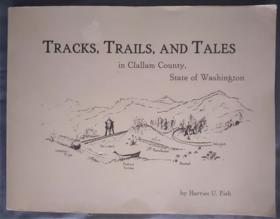
Published by local historian Harriet U. Fish, Tracks, Trails, and Tales in Clallam County, State of Washington chronicles the rugged pioneering history and frontier development of the Olympic Peninsula's northernmost reaches. The book captures the arduous experiences of early homesteaders, loggers, and native communities who navigated dense rain forests, uncharted coastal waters, and punishing mountain passes to build isolated settlements. Through first-person accounts, archival records, and local folklore, the text preserves the vanishing daily rhythms of a remote region shaped by timber extraction and maritime trade. A keen insight drawn from the work is how the geographic isolation of the Olympic Peninsula inverted standard settlement patterns; because dense wilderness and fierce coastal weather made overland travel nearly impossible, early Clallam County communities were often more closely tethered by steamship routes to distant Seattle and Victoria than to the rest of their own state. 214 pages : illustrations ; 22 x 28 cm CIRC [ 1 ]
|
1993 |
|
The Centralia tragedy of 1919 Elmer Smith and the Wobblies by Tom Copeland 
On November 11, 1919, the citizens of Centralia, Washington, gathered to watch former servicemen, local Boy Scouts, and other community groups march in the Armistice Day parade. When the marchers swung past the meeting hall of the Industrial Workers of the World, a group of veterans broke ranks, charged the hall, and were met by gunshots. Before the day was over, four of the marchers were dead and one of the Wobblies had been lynched by the mob. Through a wealth of newly available primary source material including previously sealed court documents, FBI records released under the Freedom of Information Act, and interviews with surviving witnesses, Tom Copeland has pieced together the events of that day and has traced the fate of the men who were accused and convicted of murdering the marchers. Copeland focuses on Elmer Smith, the local attorney who advised the Wobblies that they had the right to defend their hall against an anticipated attack. Although he never belonged to the I.W.W., Smith sympathized with their interests, championing the rights of working people and speaking on their behalf. He was originally arrested with the Wobblies and then took up their cause in the courts, beginning a life-long struggle to free the men who were charged with murdering the Centralia marchers. The fight lasted for fourteen years, during which Smith endured insults, threats, arrest, disbarment, and reinstatement. Copeland recounts Smith's run for political office, his speeches throughout the Northwest, and his unyielding support for the workers' cause. In 1932 he died at the age of forty-four. The book is a balanced treatment of the Centralia tragedy and its legal repercussions written by a practicing lawyer. It is also a compelling human drama, centering on the marginal life of an industrial frontier labor lawyer; a study of radical politics of the 1920s; and a depiction of conditions of life in the lumber camps and towns. It is thus biography as well as legal, political, and social history xv, 233 pages, 8 unnumbered pages of plates : illustrations ; 25 cm CIRC [ 1 ]
|
1993 |
|
History of the flower bulb industry in Washington State by Charles J. Gould 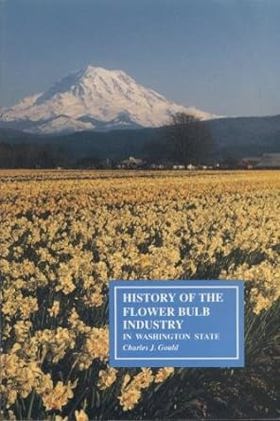
Published by the Washington State University Agricultural Experiment Station and authored by plant pathologist Charles J. Gould, History of the Flower Bulb Industry in Washington State details the remarkable mid-20th-century rise of commercial bulb production in the Pacific Northwest. The text chronicles how immigrant growers and agricultural innovators capitalized on the region's mild, maritime-influenced climate—particularly in the Puget Sound and Skagit valleys—to successfully rival traditional European floral markets. Through detailed historical accounts and horticultural data, the book documents the labor-intensive cultivation of daffodils, tulips, and iris that transformed local farmland into vibrant floral landscapes. A keen insight drawn from the work is how regional agricultural booms often rely on imported microclimates; by identifying that Western Washington's cool, damp springs closely mirrored the prized growing conditions of the Netherlands, the industry proved that niche economic success can be engineered by aligning local ecological quirks with international market demands. ix, 309 pages : illustrations, maps ; 23 cm CIRC [ 1 ]
|
1993 |
|
Washington off the beaten path by Todd Litman, Suzanne Kort
Published as a regional travel guide by Todd Litman and Suzanne Kort, Washington Off the Beaten Path steers travelers away from crowded metropolitan tourist traps and toward the state's hidden roadside gems, quirky local museums, and secluded natural wonders. The book takes readers on a comprehensive journey across Washington's diverse terrain—from the rain-drenched coastal forests of the Olympic Peninsula to the high-desert canyons of the Inland Empire—highlighting lesser-known historical sites and eccentric community landmarks. Through descriptive entries and practical travel tips, the authors champion the curious explorer willing to trade interstate highways for winding rural backroads. A keen insight drawn from the work is how alternative travel guides subvert standard tourism economies; by assigning cultural and recreational value to overlooked rural outposts, the book reframes geographic isolation and quirky local character not as economic liabilities, but as precious antidotes to mass-market commercialization. xii, 180 pages : illustrations, maps ; 21 cm CIRC [ 1 ]
|
1993 |
|
The Washington story a history of our State by Ruth Pelz, Seattle Public Schools 
Published by Seattle Public Schools and authored by educator Ruth Pelz, The Washington Story: A History of Our State provides an engaging regional overview designed to introduce students to the complex political, economic, and social heritage of the Pacific Northwest. The book traces the region's trajectory from ancestral Indigenous stewardship and the maritime fur trade through the eras of industrial logging, hydroelectric dam construction, and the rise of modern aerospace and technology hubs. By centering diverse voices and grassroots perspectives, the text moves beyond traditional pioneer narratives to examine how ordinary workers, immigrants, and native nations shaped local communities. A keen insight drawn from the work is how civic education textbooks function as blueprints for regional identity; by intentionally highlighting labor strikes, environmental struggles, and social justice milestones alongside economic triumphs, the book teaches young citizens that Washington's modern prosperity is inextricably tied to an ongoing, contentious negotiation between corporate ambition and grassroots resistance. 303 pages : illustrations, maps ; 27 cm CIRC [ 1 ]
|
1993 |
|
Haboo native American stories from Puget Sound by Vi Hilbert, Ron Hilbert 
The stories and legends of the Lushootseed-speaking people of Puget Sound represent an important part of the oral tradition by which one generation hands down beliefs, values, and customs to another. Vi Hilbert grew up when many of the old social patterns survived and everyone spoke the ancestral language. Haboo, Hilbert's collection of thirty-three stories, features tales mostly set in the Myth Age, before the world transformed. Animals, plants, trees, and even rocks had human attributes. Prominent characters like Wolf, Salmon, and Changer and tricksters like Mink, Raven, and Coyote populate humorous, earthy stories that reflect foibles of human nature, convey serious moral instruction, and comically detail the unfortunate, even disastrous consequences of breaking taboos. Beautifully redesigned and with a new foreword by Jill La Pointe, Haboo offers a vivid and invaluable resource for linguists, anthropologists, folklorists, future generations of Lushootseed-speaking people, and others interested in Native languages and cultures. XXIII, 204 Seiten : Illustrationen ; 28 cm CIRC [ 1 ]
|
1993 |
|
Washington State place names from Alki to Yelm by Doug Brokenshire 
Place names are like the historical markers past which we all speed in our cars, too preoccupied to stop and enjoy them. The Strait of Juan de Fuca, Puyallup, Anacortes, Walla Walla these are some of the place names of Washington State. Scratch the surface and spend a little time wondering from whence they came and you will uncover a wealth of lore, legend, and local flavor. 291 pages : illustrations, map ; 25 cm CIRC [ 1 ]
|
1993 |
|
The Vancouver Natural History Society, 1918-1993 by Jim Peacock, Vancouver Natural History Society 
Published by the Vancouver Natural History Society and authored by Jim Peacock, The Vancouver Natural History Society, 1918–1993 chronicles seventy-five years of grassroots ecological stewardship, amateur scientific research, and outdoor exploration in southwestern British Columbia. The book details the organization's instrumental role in advocating for provincial parks, documenting regional flora and fauna, and fostering a community-wide appreciation for the natural landscapes surrounding a rapidly expanding urban center. Through archival logs, club newsletters, and biographical sketches, the text highlights how dedicated citizen scientists successfully pushed back against unbridled resource extraction to protect local wilderness. A keen insight drawn from the work is how amateur natural history societies functioned as the vanguard of early environmentalism; by mobilizing urban citizens into weekend field trips and systematic species observation, the society turned ordinary nature enthusiasts into passionate political defenders of British Columbia's imperiled ecosystems. 104 pages : illustrations ; 22 cm CIRC [ 0 ]
|
1993 |
|
The Utter disaster on the Oregon Trail the Utter and Van Ornum massacres of 1860 by Donald H. Shannon 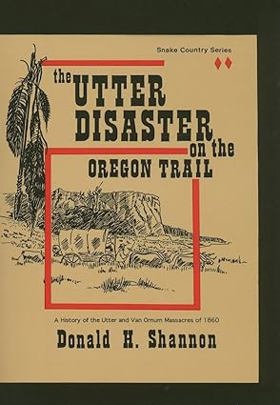
"In 1860 on the South Alternate Route of the Oregon Trail in the Snake River Country of present day Idaho and Oregon. A rare instance when Indians not only attempted but maintained a successful attack on encircled emigrant wagons. Attacks on the Utter wagon train and then on the survivors resulted in the greatest loss of life to an emigrant train and to the attacking Indians, of any such encounters. Survivors' starvation camp on the Owyhee River and eventual rescue by an army expedition commanded by Captain Frederick T. Dent (his sister married U.S. Grant). Discovery of the Van Ornum massacre -- the bodies "gleaming in the moonlight"--By a fast-moving dragoon force led by Lieutenant Marcus A. Reno (later with Custer at the Little Big Horn). Two-year attempt to rescue children held captive by the Shoshoni as the US Army disintegrated at the onset of the Civil War."--Cover xvii, 218 pages : illustrations, maps ; 23 cm. CIRC [ 0 ]
|
1993 |
|
Mining engineers and the American West the lace-boot brigade, 1849-1933 by Clark C. Spence 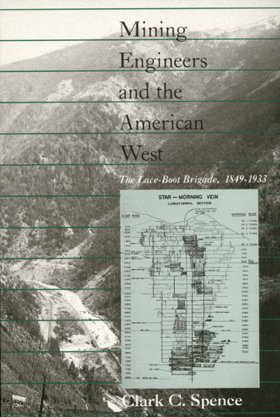
Even though they were key figures in the development of western mining, mining engineers have received little attention until publication of Dr. Clark Spence's volume. At once a technological and social history, Dr. Spence examines the professional mining engineer in terms of his education, lifestyle, actual work, and impact on the environment beyond the Mississippi. xii, 407 pages : illustrations, maps ; 23 cm CIRC [ 0 ]
|
1993 |
|
In pursuit of the Nez Perces the Nez Perce War of 1877 by Linwood Laughy, O. O. Howard, Duncan McDonald, Joseph 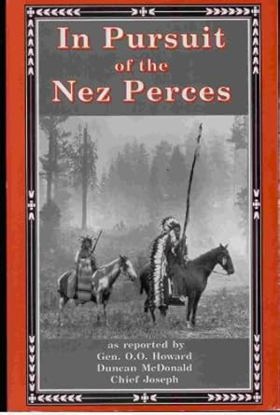
Three contradicting accounts concerning the military campaign of the Nez Perce War of 1877 x, 307 pages : map ; 22 cm CIRC [ 0 ]
|
1993 |
|
Seashore life of the northern Pacific coast an illustrated guide to northern California, Oregon, Washington, and British Columbia by Eugene N. Kozloff 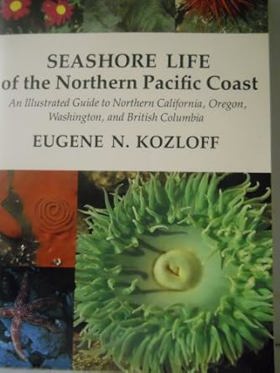
On the northern Pacific coast, from Monterey Bay to Vancouver Island, zoologist Eugene Kozloff explores the rich variety of seashore life of the northern Pacific coast. Hundreds of plants and animals that inhabit the rocky shores, sandy beaches, and quiet bays and estuaries are described and illustrated with encyclopedic thoroughness. Two hundred and ninety-nine color illustrations and nearly 400 black-and-white photographs and line drawings show sponges, molluscs, crustaceans, comb jellies, flatworms, seaweeds, and many other kinds of seashore life, making for easy identification. The text, cross-referenced with figures and plates, describes in precise terms the size, color, activities, and peculiarities of the plants and animals most likely to be encountered. This book is a greatly expanded version of the author’s popular Seashore Life of Puget Sound, the Strait of Georgia, and the San Juan Archipelago, published in 1973. It includes much new material on marine life along the open coast and in coastal bays, and extends the coverage to Oregon and northern California. Years of additional study make this the definitive work on the common seashore life of the northern Pacific coast. Kozloff discusses the geology and geography of the area, and gives the reader “some instant zoology and botany” with which to make the most of seashore exploration. He presents more than 650 species of plants and animals, each in its individual habitat, in chapters dealing with “Floating Docks and Pilings,” “Rocky Shores of the Puget Sound Region,” “Rocky Shores of the Open Coast,” “Sandy Beaches,” and “Quiet Bays and Salt Marshes.” He also explains the laws and customs governing the collection of biological material and how animals respond to changes in their environment. Clearly and convincingly, he communicates pleasure in, and respect for, diverse marine habitats. This book is not only for the use of professional biologists and students; it will add to the pleasure of all who visit the Pacific seashores, ranging from secluded inlets in the San Juan Islands to the magnificent rocky outer coast and tidal estuary of San Francisco Bay. viii, 373 pages, 40 pages of plates : illustrations (some color) ; 25 cm CIRC [ 0 ]
|
1993 |
|
New land, new lives Scandinavian immigrants to the Pacific Northwest by Janet Elaine Rasmussen 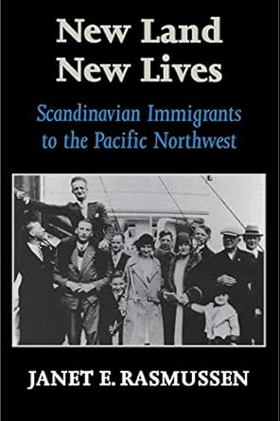
"NEW LAND, NEW LIVES tells in their own words the experiences of 45 immigrants (28 of them women) in the early years of the 20th century. Rasmussen's selections capture the textures and tones of ordinary life. They show how the cultures the immigrants had known in the Old World influenced . . . life in the Pacific Northwest".--TACOMA NEWS TRIBUNE. 41 photos xiii, 320 pages : illustrations, 2 maps ; 25 cm CIRC [ 0 ]
|
1993 |