Catalog of British Columbiana and Pacific Northwest Americana
Encyclopedia Cascadia Catalog contains book titles of mostly non-fiction Pacific Northwest Coast of North America Titles (primarially British Columbia, Idaho, Oregon and Washington State) in an easy-to-understand title catalog. If you see a link with this badge ONLINE CIRC it means that there is an online institution that provides free access to that title. In some cases there may be more than one institution hosting the title digitally.
| Catalog Title | Published |
|---|---|
|
Massacred for gold the Chinese in Hells Canyon by R. Gregory Nokes 
In 1887, more than 30 Chinese gold miners were massacred on the Oregon side of Hells Canyon, the deepest canyon in North America. Massacred for Gold, the first authoritative account of the unsolved crime—one of the worst of the many crimes committed by whites against Chinese laborers in the American West—unearths the evidence that points to an improbable gang of rustlers and schoolboys, one only 15, as the killers. The crime was discovered weeks after it happened, but no charges were brought for nearly a year, when gang member Frank Vaughan, son of a well-known settler family, confessed and turned state’s evidence. Six men and boys, all from northeastern Oregon’s remote Wallowa country, were charged—but three fled, and the others were found innocent by a jury that a witness admitted had little interest in convicting anyone. A cover-up followed, and the crime was all but forgotten for the next 100 years, until a county clerk found hidden records in an unused safe. In bringing this story out of the shadows, Nokes examines the once-substantial presence of Chinese laborers in the interior Pacific Northwest, describing why they came, how their efforts contributed to the region’s development, and how too often mistreatment and abuse were their only reward. 208 pages : illustrations, map, portraits ; 23 cm CIRC [ 1 ]
|
2009 |
|
Roche Harbor by Richard Walker 
Working with Roche Harbor archivists as well as owners of private photo collections, Walker has selected more than 200 images and written text to illustrate the visual history of Roche Harbor and the people who have lived there 127 pages : chiefly illustrations ; 24 cm. CIRC [ 1 ]
|
2009 |
|
Friday Harbor by Mike Vouri , Julia Vouri , San Juan Historical Society 
Friday Harbor, Washington was incorporated in 1909. As with many of the young state's small port towns, timber, salmon fishing, and farming fueled Friday Harbor's early economy. Life slowed and some left, but in being passed--until tourism caught on in the late 1970s--the town (and island) developed a unique sense of community that survives to this day 127 pages : illustrations, maps, portraits ; 24 cm. CIRC [ 1 ]
|
2009 |
|
The encyclopedia of raincoast place names a complete reference to coastal British Columbia by Andrew Scott 
In 1909 Captain John T. Walbran published one of the most beloved and enduring of all BC books, British Columbia Coast Names. Harbour Publishing celebrates the hundredth anniversary of that landmark work by presenting the first book to update Walbran's classic, Andrew Scott's Raincoast Place Names. Like its progenitor, Raincoast Place Names is much more than simply a catalogue of name origins because it tells the often fascinating stories behind the names and in so doing serves as a history of the region in capsule form. It is also a monumental work, twice the size of Walbran's and including more than three times as many places. Four thousand entries consider, in intriguing detail, the stories behind over five thousand place names: how they were discovered, who named them and why, and what the names reveal. It describes the original First Nations cultures, the heroics of the 18th-century explorers and fur traders, the gruelling survey and settlement efforts of the 19th century, the lives of colonial officials, missionaries, gold seekers and homesteaders, and the histories of nearly every important vessel to sail or cruise the coast. 661 pages : illustrations (some color), maps, portraits ; 26 cm CIRC [ 1 ]
|
2009 |
|
The Cowichan Duncan, Chemainus, Ladysmith and region : including Cobble Hill, Cowichan Bay, Cowichan Lake and communities, Crofton, Glenora, Maple Bay, Mill Bay and Shawnigan Lake by Georgina Montgomery, Kevin Oke 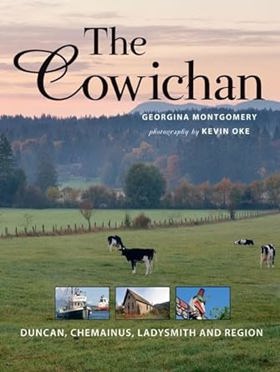
The Cowichan Region is the large area that lies between the cities of Victoria and Nanaimo on Vancouver Island, reaching from the protected eastern shores of the island nearly all the way west to the Pacific Ocean. Its cornucopia-like shape is fitting for a place of such remarkable bounty, and this area is home to a growing number of newcomers seeking its pleasant climate, recreational activities and culinary delights. Sometimes referred to as Canada's Provence, the name Cowichan is derived from a Coast Salish word meaning "warm land" or "basking in the sun." 143 pages : illustrations (chiefly color), maps, portraits ; 29 cm CIRC [ 1 ]
|
2009 |
|
Day hiking. Central Cascades by Craig Romano, Alan Bauer 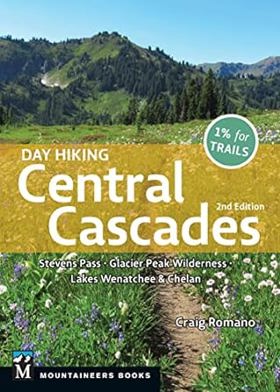
Describes 125 hiking trails in the Central Cascades in Washington state, including detailed route descriptions, information on camping options, flora, fauna, historical trails, photographs, and maps. With some of the largest tracts of wilderness to be found in the Pacific Northwest, the Central Cascades are packed with wildlife, geological diversity, and opportunity for adventure. Using US Highway 2 as its primary organizing principle, this second edition of Day Hiking Central Cascades focuses on the best day hikes to be found between the Sultan Basin and Wenatchee, and around Blewett Pass, Chelan, and the Stehekin and Entiat River Valleys. 355 pages : illustrations (some color), maps (some color) ; 18 cm CIRC [ 1 ]
|
2009 |
|
Bright seas, pioneer spirits a history of the Sunshine Coast by Betty Keller, Rosella M. Leslie 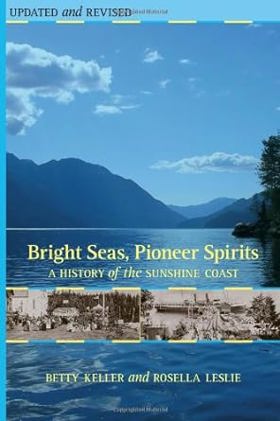
For well over a century, the bright seas of the Sunshine Coast have been attracting visitors to the waterfront resorts, fishing lodges and beaches that rest between Howe Sound and the spectacular Princess Louisa Inlet. These coastal hotspots and communities were settled by a few courageous and daring pioneers whose names are still familiar today: Gibsons, Roberts, Whitaker, Donley, Silvey, Griffiths. Bright Seas, Pioneer Spirits tells the stories of the homesteaders, loggers, prospectors and fishermen who carved out a living on the treacherous mountainside that rises straight out of the inlets. These men and women came with nothing in their pockets and founded logging empires, shingle mills and sawmills, launched fish canneries, a glue factory and even a well-known jam factory, and scaled the mountainsides to start copper and gold mines. They travelled and traded by boat, long before coastal roads were built in the 1950s, and their pioneering spirits still ride the bright seas of the Sunshine Coast today. 245 p. : ill., map, ports. ; 23 cm. CIRC [ 1 ]
|
2009 |
|
Fort St. James and New Caledonia where British Columbia began by Marie Elliott, Betty Keller 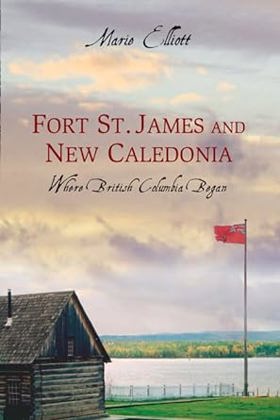
"As BC 150 celebrations have made us aware, modern British Columbia began in the central interior of the province, where Simon Fraser founded the fur trade empire known as New Caledonia. Today only the restored trading post of Fort St. James and the ancient trails remain. Fort St. James and New Caledonia is the first history of this crucial chapter in over one hundred years. Using unpublished Hudson's Bay Company archival material, Marie Elliott delivers rare glimpses into the lives and times of the first fur traders, weaving a tapestry of colourful characters including the great Carrier chief Kwah, Nor'westers John Stuart and James McDougall, as well as a surprisingly strong cast of women including Miyo Nipiy, Governor Simpson's country wife, Margaret Taylor and the tragic Elizabeth Pruden 270 pages : illustrations, maps ; 23 cm CIRC [ 1 ]
|
2009 |
|
A bridge back the early days of Florence, Oregon by Ellen Traylor 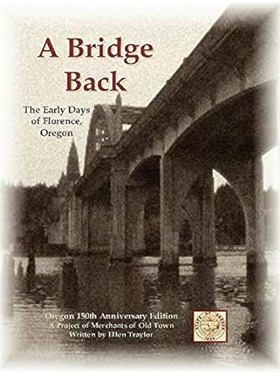
A Bridge Back, The Early Days of Florence, Oregon is an entertaining romp into the early history of a rollicking town, at once "wild west" and "gentle natured." It was a small town with a big heart and many colorful characters. They followed in the footsteps of greatness, on the trail of Lewis and Clark, Jedediah Smith and in the shadow of railroad barons and spruce-winged airplanes. Meet the adventuresome dreamer-founder and his bandito-turned-poet brother; meet the bold editor of the town paper, who went on to be a senator; meet the brave settler who saved a wagon master from mob attack; meet the lovely Rhododendron Queen who married the founder's nephew; meet the fishermen who blew up bombs in the river and the young man who sauntered nude down the beach; meet the greedy publisher who sided with grasping barons to his own downfall; and meet the bumbling Romeo who snapped a photo of his girl as she sank in quicksand. If you know Florence, you will never see her the same way again. If you do not know Florence, prepare to fall in love. A project of Merchants of Old Town Florence for the 150th Anniversary of Oregon. 110 pages : illustrations ; 28 cm CIRC [ 1 ]
|
2009 |
|
Oregon off the beaten path, a guide to unique places by Myrna Oakley 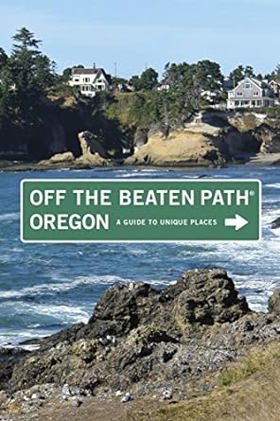
With this attractive and easy-to-use guide in hand youll discover the Oregon you never knew existed. Nine maps and thirteen black-and-white illustrations help you become acquainted with this unknown Oregon. x, 261 pages : illustrations ; 23 cm. CIRC [ 1 ]
|
2009 |
|
The remarkable world of Frances Barkley, 1769-1845 by Beth Hill, Cathy Converse 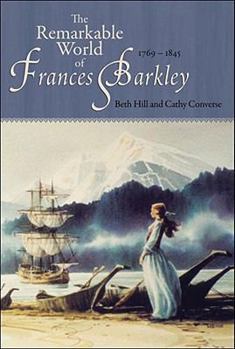
Frances Barkley was the first European woman to set foot on the coast of B.C. In 1786, she embarked from Europe on a trade and exploration voyage with her husband, Captain Charles W. Barkley. Her reminiscences contain her descriptions of their life at sea, and visits to S. American, India, China, and what is now known as Alaska and B.C xv, 207 p. : ill., ports., maps ; 23 cm. CIRC [ 1 ]
|
2009 |
|
British Columbia place names by Mark Thorburn 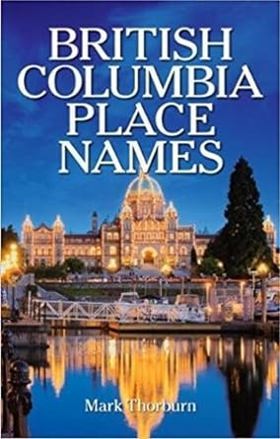
Whether the names come from the First Nations peoples, the English and Spanish explorers who sailed along BC's coast, or the fur traders, gold prospectors and settlers, the stories behind the place names reveal much about the places themselves and the history of the province: - Babine Lake takes its name from the French word for large lip and refers to the former practice of the local First Nations people of inserting half-inch pieces of wood or bone between the teeth and lower lips of their women - Barkerville was named for Billy Barker, a gold prospector from the Cariboo Gold Rush Days who struck it rich but later died in poverty - In 1920, the residents of Harper's Camp voted almost unanimously in favour of changing their community's name to Horsefly in honour of that pesky insect that visits every summer - Lulu Island, on which the city of Richmond sits, was named for 16-year old American actress Lulu Sweet who won the hearts of a detachment of Royal Engineers - Squamish is an anglicization of the Squamish people's name for themselves, the Skwxwú7mesh, the word means mother of the wind and many refer to the steady wind that blows off Howe Sound into the city - Vancouver's famous clothing-optional Wreck Beach was named after three ships that were sunk off its shores in 1928 to create a breakwater for a log-storage site - Tête Jaune Cache is French for Yellow Head's hiding place and refers to the yellow-haired Pierre Bostonais, an Iroquois Métis fur trapper and trader who worked as a guide for the North West and Hudson's Bay companies. 336 pages : portrait ; 21 cm CIRC [ 1 ]
|
2009 |
|
The HBC fur brigade-First Nations trail of 1848-49 by Charles Hou 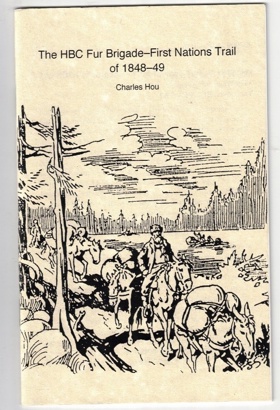
Published in 2009, Charles Hou’s The HBC Fur Brigade-First Nations Trail of 1848-49 examines the historic development and geography of the Hudson's Bay Company's vital trade route connecting the interior of British Columbia to the Pacific coast. The illustrated account details how chief trader Alexander Caulfield Anderson and company men mapped out new pathways between Fort Kamloops and Fort Langley to bypass the treacherous, impassable canyons of the lower Fraser River. Drawing heavily on archival records, the book maps the physical layout of these pack-horse routes and the immense logistical challenges required to sustain them. A keen insight drawn from the text is how it powerfully subverts the traditional corporate narrative of the fur trade; by foregrounding the indispensable geographic knowledge and guidance provided by local First Nations, Hou reveals that the survival and success of these imperial commercial arteries relied entirely on indigenous expertise rather than autonomous European exploration. 32 p. : ill. (some col.), maps ; 22 cm. CIRC [ 0 ]
|
2009 |
|
Charles Wilkes and the exploration of inland Washington waters journals from the expedition of 1841 by Richard W. Blumenthal 
"Follows the Wilkes Expedition in 1841. Includes the journals of Charles Wilkes and ten of his crewmen, eighteen of the Wilkes Expedition's charts (the quality of which reflects the crew's careful attention to accuracy), and a complete muster list of the officers and crewmen (name, title, and a brief synopsis of his activity within the expedition"--Provided by publisher v, 314 pages : maps ; 23 cm CIRC [ 0 ]
|
2009 |
|
The U.S. Forest Service in the Pacific Northwest a history by Gerald W. Williams, United States Forest Service Pacific Northwest Region 
The Northwest has been at the forefront of forest management and research in the United States for more than one hundred years. In The U.S. Forest Service in the Pacific Northwest, Gerald Williams provides an historical overview of the part the Forest Service has played in managing the Northwest’s forests. Emphasizing changes in management policy over the years, Williams discusses the establishment of the national forests in the region, grazing on public land, the Great Depression, World War II, and the rise of multiple-use management policies. He draws on extensive documentation of the post-war development boom to explore its effects on forests and Forest Service workers. Presenting such controversial issues as roadless areas and wilderness designation, timber harvesting, forest planning, ecosystems, and spotted owls, Williams demonstrates the impact of 1970s environmental laws on national forest management. The book is rich in photographs, many drawn from the Gerald W. Williams Collection, Oregon State University Archives. Extensive appendices provide detailed data about Pacific Northwest forests. Chronicling a century of the agency’s management of almost 25 million acres of national forests and grasslands for the people of the United States, The U.S. Forest Service in the Pacific Northwest is a welcome and overdue resource. This work was completed through the collaborative efforts of the author and the Pacific Northwest Forest Service Association, with support from the U. S. Forest Service. x, 416 pages : illustrations, maps ; 23 cm CIRC [ 0 ]
|
2009 |
|
The environmental justice William O. Douglas and American conservation by Adam M. Sowards 
From the late 1940s to the mid-1970s, American conservation politics underwent a transformation — and Supreme Court Justice William O. Douglas was at the heart of this shift toward modern environmentalism. The Environmental Justice explores how Douglas, inspired by his youthful experiences hiking in the Pacific Northwest, eventually used his influence to reshape American conservation thought, politics, and law. One of the nation’s most passionate conservationists, Douglas wrote eloquent testimonies to the value of wilderness and society’s increasing need for it, both in his popular books and in his heartfelt judicial opinions celebrating nature and condemning those who would destroy it. He led public protests in favor of wilderness. He worked tirelessly to secure stronger legal protections for the environment, coordinating with a national network of conservationists and policymakers. As a sitting Supreme Court Justice, Douglas brought both prestige and the enormous symbolic power of legal authority to conservation crusades at a time when the nation's laws did not favor environmental protection. He understood the need for national solutions that included public involvement and protections of minority interests; the issues were nationally important and the forces against preservation were strong. In myriad situations Douglas promoted democratic action for conservation, public monitoring of government and business activities, and stronger laws to insure environmental and political integrity. x, 198 pages : illustrations, maps ; 23 cm CIRC [ 0 ]
|
2009 |
|
Oregon fossils by Elizabeth L. Orr, William N. Orr 
This revised and expanded edition of Oregon Fossils includes a record of all known fossils in Oregon going back 400 million years, along with collecting localities by county, age, rock formation, and published source. The book also provides a geologic overview of the state, from ocean beaches to the high desert, from the Blue Mountains to the Siskiyous. Unique among fossil field guides, Oregon Fossils includes both specimen identification and interesting notes about their discovery, naming, and conservation. The narrative is sprinkled with biographical sketches of paleontologists who have contributed to the state’s fossil record, and the text is richly illustrated with photographs, line drawings, charts, and maps. A complete bibliography lists full citations to fossil material. The only single volume that provides Oregon’s fossil record and history, Oregon Fossils is a well-written, well-organized guide. It is an excellent reference for classroom and library use, for researchers, and for private collectors and hobbyists. xiv, 300 pages : illustrations, maps ; 26 cm CIRC [ 0 ]
|
2009 |
|
Davis country H.L. Davis's Northwest by H. L. Davis, Brian Booth, Glen A. Love 
Davis Country collects the best writings of H. L. Davis, one of the Northwest's premier authors and the only Oregonian to receive the Pulitzer Prize for fiction. Born in southern Oregon's Umpqua Valley in 1894, Davis grew up in Antelope and The Dalles. He began as a poet, receiving the prestigious Levinson Prize at age twenty-five. With the encouragement of H. L. Mencken, he turned to fiction, winning the Pulitzer Prize for his 1935 novel Honey in the Horn, which Mencken called the best first novel ever published in America. Full of humor and humanity, Davis's work displays a vast knowledge of Pacific Northwest history, lore, and landscape. His instinctive feel for the Northwest – the weather, trees, plants, animals, the varieties of Oregon rain, the smell of forest winds and high-desert heat – is unmatched. This volume gathers many of Davis's finest stories, essays, poems, and letters, as well as excerpts from his most famous novels. An introduction by editors Brian Booth and Glen Love, a brief autobiography, and an afterword on Davis's final, unfinished novel provide for a better understanding of this truly original Northwest voice. 320 pages : illustrations ; 23 cm. CIRC [ 0 ]
|
2009 |
|
Calamity the Heppner flood of 1903 by Joann Green Byrd 
June 14, 1903, was a typical, hot Sunday in Heppner, a small farm town in northeastern Oregon. People went to church, ate dinner, and relaxed with family and friends. But late that afternoon, calamity struck when a violent thunderstorm brought heavy rain and hail to the mountains and bare hills south of town. When the fierce downpour reached Heppner, people gathered their children and hurried inside. Most everyone closed their doors and windows against the racket. The thunder and pounding hail masked the sound of something they likely could not have imagined: a roaring, two-story wall of water raging toward town. Within an hour, one of every five people in the prosperous town of 1,300 would lose their lives as the floodwaters pulled apart and carried away nearly everything in their path. The center of town was devastated. Enormous drifts of debris, tangled around bodies, snaked down the valley. The telegraph was down, the railroads were out, and the mayor was in Portland. Stunned survivors bent immediately to the dreadful tasks of searching for loved ones and carrying bodies to a makeshift morgue in the bank. By the next afternoon, thousands of individuals and communities had rushed to the town's aid, an outpouring of generosity that enabled the self-reliant citizens of Heppner to undertake the town's recovery. In Calamity, Joann Green Byrd, a native of eastern Oregon, carefully documents this poignant story, illustrating that even the smallest acts have consequences - good or bad. She draws on a wealth of primary sources, including a moving collection of photographs, to paint a rare picture of how a small town in the West coped with disaster at the turn of the twentieth century. xviii, 202 pages : illustrations, maps ; 23 cm CIRC [ 0 ]
|
2009 |
|
Picturing the Alaska-Yukon-Pacific Exposition the photographs of Frank H. Nowell by Nicolette Bromberg, Frank H. Nowell, John Stamets 
For those who experienced it, the Alaska-Yukon-Pacific Exposition was a time of wonder in a "citadel set in stars" -- a grand world's fair that transformed the summer of 1909 in Seattle into a whirl of excitement and pleasure. On what would become the University of Washington campus, for a brief moment a huge city emerged. At noon on June 1, amidst the blasting of horns and whistles, confetti filled the air and the gates were opened to a pent-up crowd of about 80,000 fairgoers. At the end of the evening on October 16, the fair was over and the magical city became a memory for its 3.7 million visitors. For those who couldn't make the trip to see the exhibits and for the rest of us today, the best record of the event was made by Frank H. Nowell, official photographer for the exposition. He documented the construction of the city, its landscaping, the people who built it, and the people who visited it, as well as the buildings that housed displays from dozens of foreign countries. He used a large view camera and 8 x 10 glass-plate negatives to create several thousand photographs. For this book, Nicolette Bromberg has chosen the best and most representative. Her essay illuminates both the man and the fair, providing perspective to a history of the West that connects us to a world-expanding event a hundred years ago, and also contains Nowell's photographs of Alaska during the gold rush, relating how an Alaskan photographer became the official A-Y-P photographer. For the 100th anniversary of the exposition, John Stamets organized and led University of Washington students in a project to rephotograph the site. This book includes an essay by Stamets describing the challenges, delights, and problems of the project, along with thirty rephotographs that imagine the fabulously spectacular ghost city on the campus. 128 pages : illustrations ; 28 cm CIRC [ 0 ]
|
2009 |
|
Warship under sail the USS Decatur in the Pacific West by Lorraine McConaghy, Center for the Study of the Pacific Northwest 
Ordered to join the Pacific Squadron in 1854, the sloop of war Decatur sailed from Norfolk, Virginia, through the Strait of Magellan to Valparaiso, Honolulu, and Puget Sound, then on to San Francisco, Panama, Nicaragua, and Costa Rica, while serving in the Pacific until 1859, the eve of the Civil War. Historian Lorraine McConaghy presents the ship, its officers, and its crew in a vigorous, keenly rendered case study that illuminates the forces shaping America's antebellum navy and foreign policy in the Pacific, from Vancouver Island to Tierra del Fuego. One of only five ships in the squadron, the Decatur participated in numerous imperial adventures in the Far West, enforcing treaties, fighting Indians, suppressing vigilantes, and protecting commerce. With its graceful lines and towering white canvas sails, the ship patrolled the sandy border between ocean and land. Warship under Sail focuses on four episodes in the Decatur's Pacific Squadron mission: the harrowing journey from the Atlantic to the Pacific Ocean through the Strait of Magellan; a Seattle war story that contested American treaties and settlements; participation with other squadron ships on a U.S. State Department mission to Nicaragua; and more than a year spent anchored off Panama as a hospital ship. In a period of five years, more than 300 men lived aboard ship, leaving a rich record of logbooks, medical and punishment records, correspondence, personal journals, and drawings. Lorraine McConaghy has mined these records to offer a compelling social history of a warship under sail. Her research adds immeasurably to our understanding of the lives of ordinary men at sea and American expansionism in the antebellum Pacific West. xi, 381 pages : illustrations, maps ; 27 cm. CIRC [ 0 ]
|
2009 |
|
In love with a hillside garden by Ann Pytkowicz Streissguth, Daniel Streissguth, Benjamin Streissguth, Arboretum Foundation (Seattle, Wash) 
It all began when architect Daniel, then a bachelor, built his own house on a wild hillside lot, developing his garden as next-door-neighbor, Ann, was developing a garden around natural springs in her backyard. We married, and together with our growing son, Benjamin, continued these gardens as we also fought through blackberries, horsetails, and morning glories to push intersecting paths through the adjacent two-lot wilderness we later purchased, creating a little park which we planted and nurtured and ultimately gave to the City of Seattle in 1996, with our promise to maintain it through our lifetimes. This richly illustrated book offers timely inspiration to gardeners in an increasingly urban world. In an engaging narrative, the Streissguths show the emergence of their gardening partnership during forty years of marriage, and their philosophy that developing a site along a public stairway gave them the opportunity to share their garden with neighbors and passersby. They offer practical insight into concepts of linking inside and outside rooms and of combining private and public spaces, and they describe the process through which they transformed a steep forested hillside in the heart of Seattle into a deciduous woodland garden with banks of perennials, a dell, vistas of the city and lake, and a site for ornamental and food-producing plants. Finally, they consider the future stewardship of the Streissguth Gardens, a park linking the wild and tamed sections of a unique greenbelt garden shared with joggers, strollers, fellow gardeners, schoolchildren, and those who call it “a touch of Eden in a big city.” 118 pages : illustrations (chiefly color) ; 26 cm CIRC [ 0 ]
|
2009 |
|
Ichishkiin sinwit Yakama/Yakima Sahaptin dictionary by Virginia Beavert, Sharon Hargus, Bruce Rigsby 
Sahaptin, or Ichishkíin Sínwit (literally, "this language"), is a Plateau Penutian language spoken in south-central Washington and northern Oregon. This dictionary documents the dialect of Sahaptin that is spoken by the Yakama people. Ichishkíin Sínwit Yakama / Yakima Sahaptin Dictionary is the first modern published dictionary of any Sahaptin dialect. The dictionary is divided into three sections: a Sahaptin-English section; an English-Sahaptin section; and a section listing roots used in the formation of Sahaptin words. The Sahaptin-English section contains approximately 3,500 headwords, over 4,500 example sentences, more than 100 images, and over 9,200 sound files available online. Copious cross-references alert readers to related words elsewhere in the Sahaptin-English section. The English-Sahaptin and roots sections serve as indices to the Sahaptin-English section. In the English-Sahaptin section, users can look up the Sahaptin equivalents of English words. In the root section, users can see words from different parts of the dictionary that share the same component of meaning. The dictionary also contains essays by noted Plateau linguist Bruce Rigsby (professor emeritus, University of Queensland) on the histories and current usage of the terms "Sahaptin" and "Yakima / Yakama." lxviii, 492 pages : illustrations (chiefly color) ; 26 cm + 1 audio disc (digital, MP3 file ; 4 3/4 in.) CIRC [ 1 ]
|
2009 |
|
Solidarity stories an oral history of the ILWU by Harvey Schwartz 
The International Longshore and Warehouse Union, born out of the 1934 West Coast maritime and San Francisco general strikes under the charismatic leadership of Harry Bridges, has been known from the start for its strong commitment to democracy, solidarity, and social justice. In this collection of firsthand narratives, union leaders and rank-and-file workers - from the docks of Pacific Coast ports to the fields of Hawaii to bookstores in Portland, Oregon - talk about their lives at work, on the picket line, and in the union. Workers recall the back-breaking, humiliating conditions on the waterfront before they organized, the tense days of the 1934 strike, the challenges posed by mechanization, the struggle against racism and sexism on the job, and their activism in other social and political causes. Their stories testify to the union's impact on the lives of its members and also to its role in larger events, ranging from civil rights battles at home to the fights against fascism and apartheid abroad. Solidarity Stories is a unique contribution to the literature on unions. There is a power and immediacy in the voices of workers that is brilliantly expressed here. Taken together, these voices provide a portrait of a militant, corruption-free, democratic union that can be a model and an inspiration for what a resurgent American labor movement might look like. The book will appeal to students and scholars of labor history, social and economic history, and social change, as well as trade unionists and anyone interested in labor politics and history. xi, 347 pages : illustrations ; 24 cm CIRC [ 0 ]
|
2009 |
|
The good times are all gone now life, death, and rebirth in an Idaho mining town by Julie W. Weston 
Julie Whitesel Weston left her hometown of Kellogg, Idaho, but eventually it pulled her back. Only when she returned to this mining community in the Idaho Panhandle did she begin to see the paradoxes of the place where she grew up. Her book combines oral history, journalistic investigation, and personal reminiscence to take a fond but hard look at life in Kellogg during "the good times." Kellogg in the late 1940s and fifties was a typical American small town complete with high school football and basketball teams, marching band, and anti-Communist clubs; yet its bars, gambling dens, and brothels were entrenched holdovers from a rowdier frontier past. The Bunker Hill Mining Company, the largest employer, paid miners good wages for difficult, dangerous work, while the quest for lead, silver, and zinc denuded the mountainsides and laced the soil and water with contaminants. Weston researched the late-nineteenth-century founding of Kellogg and her family's five generations in Idaho. She interviewed friends she grew up with, their parents, and her own parents' friends--miners mostly, but also businesspeople, housewives, and professionals. Much of this memoir of place set during the Cold War and post-McCarthyism is told through their voices. But Weston also considers how certain people made a difference in her life, especially her band director, her ski coach, and an attorney she worked for during a major strike. She also explores her charged relationship with her father, a hardworking doctor revered in the community for his dedication but feared at home for his drinking and rages. The Good Times Are All Gone Now begins the day the smokestacks came down, and it reaches far back into collective and personal memory to understand a way of life now gone. The company town Weston knew is a different place, where "Uncle Bunker" is a Superfund site, and where the townspeople, as in previous hard times, have endured to reinvent Kellogg--not once, but twice xv, 231 pages : illustrations, photographs ; 22 cm CIRC [ 0 ]
|
2009 |