Catalog of British Columbiana and Pacific Northwest Americana
Encyclopedia Cascadia Catalog contains book titles of mostly non-fiction Pacific Northwest Coast of North America Titles (primarially British Columbia, Idaho, Oregon and Washington State) in an easy-to-understand title catalog. If you see a link with this badge ONLINE CIRC it means that there is an online institution that provides free access to that title. In some cases there may be more than one institution hosting the title digitally.
| Catalog Title | Published |
|---|---|
|
Now you are my brother missionaries in British Columbia by Margaret Whitehead
|
1981 |
|
Along the way by Margaret Lang Hastings
|
1981 |
|
Valley of the Stave by Charles A. Miller
|
1981 |
|
History of Harrison Hot Springs and Port Douglas area healing waters by Belle Rendall, Harrison Lake Historical Society
|
1981 |
|
Backroad adventures through interior British Columbia by Donovan Clemson 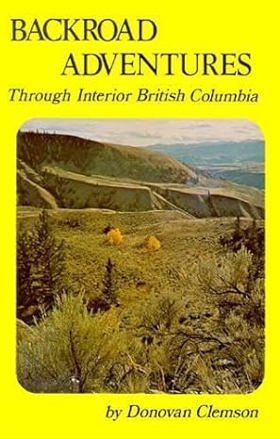
BACKROAD ADVENTURE takes us through the great stretch of country lying between the Coast range and the Rockies, south of Prince George. It is about the quiet remote places and the people one finds sheepherders in alpine pastures, ranchers in secluded valleys, fire watchers on isolated mountain tops, and the lonely ferrymen. The byways straggle and wander through the interior, leading to dry valleys where fantastic rock formations surprise the stranger; or to remote jack pine plateaux where back woods ranchers count many miles between neighbors. Threading the timbered Kootenay valleys, quiet and friendly roads trail past the fast fading relics of ghostly mining towns and rustic settlements which time has passed by. 192 pages : illustrations ; 21 cm CIRC [ 1 ]
|
1981 |
|
Chief Joseph country land of the Nez Perce by Bill Gulick 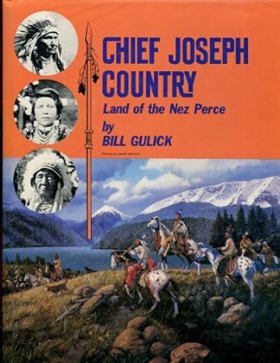
The relationship between Westering Americans and the Nez Perce Indians covers a time-span of one hundred years, from the meeting of the Lewis and Clark party with the Indians in 1805 to the death of Chief Joseph in 1904. It is epic drama, taking place on a vast stage during a critical period in the development of the United States. Certainly no setting could be more spectacular than the rugged, beautiful homeland of this tribe. No story can equal in historical importance the long-standing friendship given by the Nez Perces to the white newcomers in their country. And no event is more poignant, bitter, and tragic than the Nez Perce War. Before acquiring the horse around 1730, the Nez Perces occupied approximately 27,000 square miles of what is now north-central Idaho, northeastern Oregon, and southeastern Washington. After becoming a mounted people, they ranged over a much larger area, traveling east to the buffalo country claimed by Blackfeet, Crow, and Sioux, west to the great fishing and trading station on the lower Columbia, Celilo Falls. Uniquely situated as they were between the Plains and Coastal Indian cultures, they would play a key role in the struggle between Great Britain and the United States as to which nation would take title to the Pacific Northwest. In Chief Joseph Country: Land of the Nez Perce, author Bill Gulick lets the participants in the developing drama tell the story in their own words by excerpting diaries, letters, and statements made in contemporary accounts. Beginning with the prehistory of the Nez Perces, he relates how, after being pedestrians for eight thousand years, acquisition of the horse drastically altered their way of life. Then, in rapid succession, came firearms, American explorers, British fur traders, the Manifest Destiny struggle, missionaries, Oregon Trail emigrants, settlers, gold miners, farmers, and finally war. "If there is a bias in this book, it is that I have given more credence to statements made by Indians than to words written by white men," the author says. "Time and again in my research I have come across references to the importance the Indian placed on telling the plain, simple truth when relating any event in which he was involved. To the contrary, time and again I have found statements made by white leaders so contradictory and at variance with the truth that I began to question everything they wrote." In selecting the many historical photographs and sketches used to illustrate the book, the author examined the holdings of some twenty institutions from coast to coast, some of which dated back to the 1850s. As he did in Snake River Country, Bill Gulick applies skills learned as a novelist and dramatist to the non-fiction field of history, using the twin tools of dramatic narrative and sound research to bring history alive to the layman reader. He writes: "As in all epic dramas, forces beyond the understanding or control of the people involved were at work as the Nez Perces and the whites confronted one another, driving them toward a fate neither could forsee. "Here, I have recorded that confrontation from the Indian point of view." xiv, 316 pages : illustrations ; 29 cm CIRC [ 1 ]
|
1981 |
|
Tales of Eastern Idaho by David L. (David Lester) Crowder
|
1981 |
|
Whatcom scenes a miscellany of prose and verse by Dorothy Koert 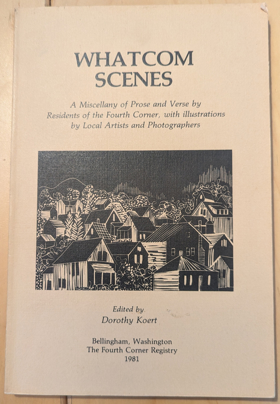
Whatcom Scenes, 1981, edited by Dorothy Koert. A miscellany of prose and verse by residents of the fourth corner, with illustrations by local artists and photographers. Paperback with 134 pages, published by The Fourth Corner Registry. xvi, 134 pages : illustrations ; 23 cm CIRC [ 1 ]
|
1981 |
|
Railroad man a conversation with W.J. Gamble, W.I. & M. Ry. Co by Latah County Historical Society 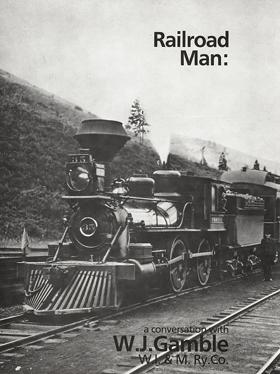
A conversation with W.J. Gamble about his life working for the Washington, Idaho & Montana Railway Company from 1910 until his retirement in 1951, including the origins and development of the railroad and his relationship with it. 16 pages : illustrations, maps, portraits ; 26 cm CIRC [ 0 ]
|
1981 |
|
Overland from Canada to British Columbia by Thomas McMicking, Joanne Leduc 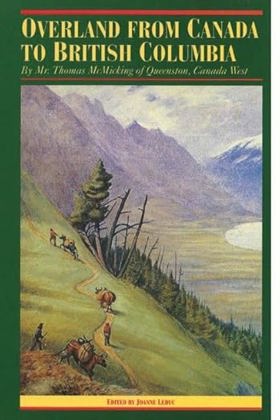
Spurred on by reports of gold in the Cariboo, adventurers from all over the world descended on British Columbia in the mid-1800s. Among them were ambitious easterners who accepted the challenge of the shorter but more arduous overland route across the prairies and the Rockies. One such man determined to find his fortune in the West was Thomas McMicking – destined to lead the largest and best organized group of “Overlanders” into British Columbia. His record of their epic journey is a valuable historical document that possesses the universal appeal of an adventure story. McMicking presents a vivid image of the hardships of the overland route, the dangers, both real and imagined -- like the apparently threatening Plains Indians who turned out to be “our best friends” – facts about important officials and settlements, and scientific observations of the physical environment. But this is also a very human document that describes a journey of self-discovery revealing a sensitive man’s encounter with a bountiful and beautiful yet hostile and alien land. The journal is augmented by a valuable introduction, appendices on the Overlanders’ trail and the McMicking family, and biographical sketches of many of the men who later played prominent roles in British Columbia’s development and whose descendants became some of the province’s best-known leaders and families. It is also enriched by the pictorial records of William Hind, a major Canadian painter who became known as the “expedition artist.” Drawing on much previously unavailable material as well as on traditional sources, the editor has created a comprehensive historical framework for this unique document. xl, 121 pages : illustrations, maps ; 23 cm. CIRC [ 0 ]
|
1981 |
|
Totem poles an illustrated guide by Marjorie M. Halpin, Michael M. Ames 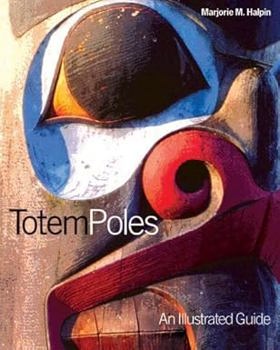
Presents an illustrated history of the totem poles of the Native peoples of the Northwest Coast and examines their form and meaning, origin and cultural significance to those in the Pacific Northwest 58 pages : illustrations (some color) ; 26 cm CIRC [ 0 ]
|
1981 |
|
Summer of promise Victoria 1864-1914 by Derek Pethick 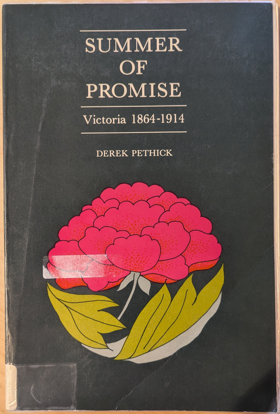
In 1864 Governor James Douglas handed over his office to Arthur Edward Kennedy, closing an era in Vancouver Island's history and ushering in a period of growth and development. The optimism felt by its people was to a large extent justified; the ensuing years were to bring stability, prosperity and many changes. In Summer of Promise, a sequel to Victoria: The Fort, the author chronicles the years from 1864 to the outbreak of World War One in 1914, seeing them through the eyes of the inhabitants of the city which was the capital of the colony and later of the province. Despite its geographical isolation, its population remained well aware of world events: the Boer War, the death of Queen Victoria, the ascension of Edward VII to the throne and the rising threat of the German navy were as much talked about as the waning of many traditional religious beliefs and the enfranchisement of women. Nearer home, these were important years for Victoria as the colony voted to join the Dominion of Canada, the railroad connected the new province with the rest of the country, and the "All Red Route" linked it by steamship to Australia and the Orient. Motorcars, aeroplanes, telephones, the telegraph and electricity brought British Columbia into the twentieth century. From the momentous to the mundane, and sometimes even to the ridiculous, Derek Pethick documents an era in Victoria's history. Summer of Promise is enlightening, fascinating and enjoyable reading. 191 pages, 8 unnumbered leaves of plates : illustrations ; 23 cm CIRC [ 1 ]
|
1980 |
|
Follow the pathfinders through the Okanogan and Ogopogoland to the Shuswap by George Bechtold
|
1980 |
|
Heritage of the Wallowas life as it was by Ethel Halsey Scott 
Ethel Halsey, daughter of Bill Halsey (born 1873) and Vergie Bell Pinkley (born 1886), was born in the early 1900s. She tells of her life with her husband, Noel Scott, and her children and extended family and friends and neighbors, weaving these with the history of the Wallowa, Oregon area iii, 153 pages : illustrations ; 23 cm CIRC [ 1 ]
|
1980 |
|
Oregon Coast Range wilderness by Sherry Wellborn
|
1980 |
|
Early churches of Washington State by Arnold Pearson, Esther Pearson 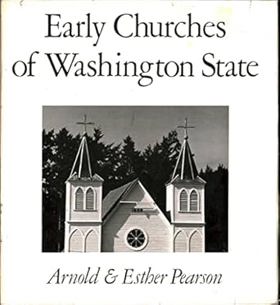
Author is an alumnus of Evanston Township High School, class of 1932 ix, 182 pages : illustrations, map ; 27 cm CIRC [ 1 ]
|
1980 |
|
The Nootka connection Europe and the Northwest coast, 1790-1795 by Derek Pethick
|
1980 |
|
Pioneers of North Central Washington by Eva Greenslit Anderson
|
1980 |
|
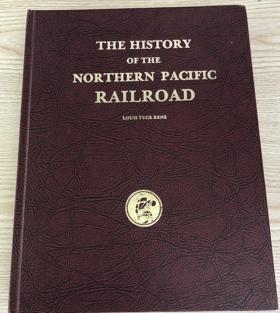
The history of the Northern Pacific Railroad by Louis T. Renz
|
1980 |
|
So they called the town "Concrete" a story of life and times in unique Concrete, Washington by Charles M. Dwelley 
Concrete, as a town, had a colorful and interesting history and those who took part even briefly never forgot "those old days in Concrete." Some of the itinerant workers who arrived with the building of the railroad in 1900 - Italians, Swedes, Norwegians, Greeks from the old country; plus Northerners, Southerners, Easterners of all nationalities remained to become accorded an unusual acceptance and welcome that made them feel at home. Many who came for a short employment stayed on to marry and settle in, and lived to be buried here as old-timers. It was that kind of town. If you want to know the rest of the story, read on. 134 pages : illustrations ; 21 cm CIRC [ 1 ]
|
1980 |
|
Seattle's black Victorians, 1852-1901 by Esther Hall Mumford 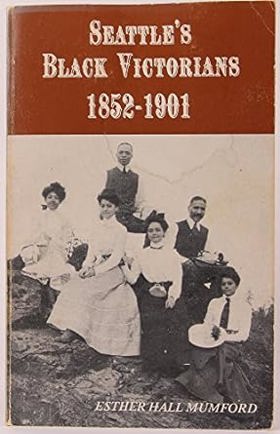
"...looks at black life in 19th century Seattle from many angles. The combination of newspaper files, county records, and oral history gives a density to the historical picture." John Berry, Seattle Sun -- Back cover 235 pages : illustrations, facsimiles, map, portraits ; 22 cm CIRC [ 0 ]
|
1980 |
|
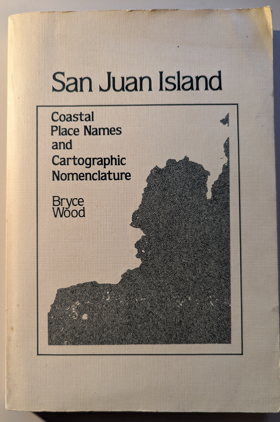
San Juan Island coastal place names and cartographic nomenclature by Bryce Wood, Washington State Historical Society
|
1980 |
|
Strangers in blood fur trade company families in Indian country by Jennifer S. H. Brown 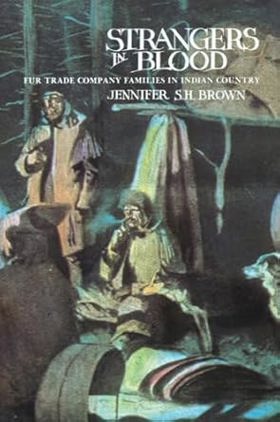
Describes the social world of the traders in the 18th and 19th centuries. Examines differences between the North West Company and the Hudson's Bay Company and their effects on Indian-white relations xxiii, 255 pages, 6 unnumbered leaves of plates : illustrations (some color) ; 24 cm CIRC [ 0 ]
|
1980 |
|
The Northern Shoshoni by Brigham D. Madsen 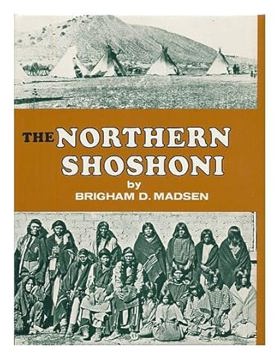
Brigham D. Madsen examines four distinct groups which comprise the Northern Shoshoni, focusing on the tribe since the arrival of the first white settlers. He describes the early days on the reservation and the tribe’s struggle to adapt to massive cultural changes. 259 pages : illustrations ; 29 cm CIRC [ 0 ]
|
1980 |
|
Point Roberts, U.S.A. the history of a Canadian enclave by Richard Eugene Clark , Runa Thordarson (Photographer), Robert B. Lindquist (Contributor) 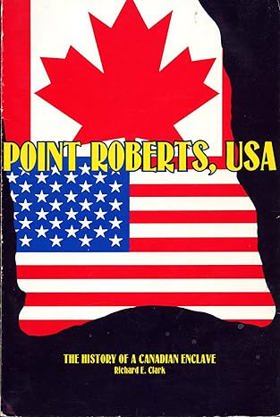
When the June 15, 1846 Treaty of Washington was signed by representatives of the United States and Great Britain, it established the forty-ninth parallel of north latitude as the boundary to the middle of the channel which separates the North American continent from Vancouver Island. That decision, probably unknowingly, left a small piece of real estate below the line but isolated by marine waters from the rest of United States / Washington land. That promontory subsequently became known as Point Roberts, a unique and interesting community, greatly influenced by Canada but fiercely American. Point Roberts is a story of political and geographic accident; it is also a story of the people who settled there, who fished and farmed, who lived under difficult circumstances and isolation. It is a chronicle of good times and bad, rising expectations and tragic events. It includes the efforts of people to create social and cultural institutions to solve their problems and to pass their culture on from one generation to the next — governmental units, churches, schools, water districts, even a cemetery. Point Roberts is also a study of two nations and their people facing off, sharing, trying to learn how to live together. That chapter still is not complete, nor is the history of Point Roberts. But its history has begun, and we are indebted to Richard Clark for gathering the existing bits and pieces to date together in this book. It teaches some valuable lessons — that human perseverance can overcome adversity, that human institutions and social inventions do advance a people, and that Point Roberts is an extremely interesting and valuable part of Washington State and the United States of America. viii, 137 pages : illustrations ; 23 cm CIRC [ 0 ]
|
1980 |