Catalog of British Columbiana and Pacific Northwest Americana
The Encyclopedia Cascadia Catalog indexes mostly non-fiction literature covering the Pacific Northwest coast of North America, with an emphasis on British Columbia, Idaho, Oregon, and Washington State.
| Catalog Title | Published |
|---|---|
|
A selection of publications on the Indians of British Columbia by Alan L. Hoover, British Columbia Provincial Museum 
Selection of monographs, films, children's books and bibliographies focusing the Indians of British Columbia. Includes abstracts 50 pages ; 28 cm Non-circulating [ 1 ]
|
1982 |
|
Seattle Leschi diary by Wade Vaughn, Leschi Improvement Council
|
1982 |
|
The river pioneers early days on Grays Harbor by Edwin Van Syckle, David A. James 
History of Grays Harbor, its coastal towns and river valleys in Grays Harbor County, Washington from 1775-1948. Narrative insights into the lives of the native Indians, early explorers and the pioneers who settled the valleys and established towns such as Aberdeen, Hoquiam, Cosmopolis and Grays Harbor City 423 pages, 48 unnumbered pages of plates : illustrations ; 24 cm Non-circulating [ 1 ]
|
1982 |
|
Alberni prehistory archaeological and ethnographic investigations on Western Vancouver Island by Alan D. McMillan, Denis E. St Claire, Alberni Valley Museum
|
1982 |
|
Air, sunlight, and a bit of land by Marian Lowe Quackenbush
|
1982 |
|
The fair land, Saanich by Betty Bell 
The Fair Land: Saanich by Betty Bell is a 1982 memoir and historical account capturing the author's fond childhood memories of growing up on the Saanich Peninsula of Vancouver Island during the Edwardian era. The book offers an evocative glimpse into a prosperous rural farming community, detailing everyday life, local families, and early transportation like the Victoria & Sydney Railway. Through a mix of charming personal anecdotes and archival photographs, Bell preserves the history of a slower, simpler time before modern development transformed the region. 132 pages, 16 unnumbered pages of plates : illustrations, map, portraits ; 23 cm Non-circulating [ 1 ]
|
1982 |
|
Idaho for the curious a guide by Cort Conley 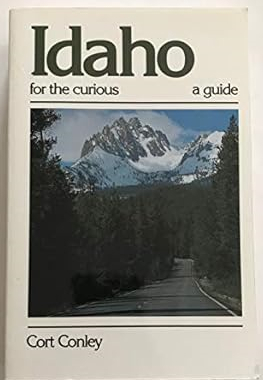
A guide to the history of Idaho from a geographical context, this volume follows the roadways of Idaho and tells about interesting history that happened in the area xii, 704 pages : illustrations ; 23 cm Non-circulating [ 1 ]
|
1982 |
|
Main Street, northeastern Oregon the founding and development of small towns by Barbara Ruth Bailey 
Main Street, Northeastern Oregon details the early development of a fascinating variety of communities in one of this country's most remote and spectacular regions. Collectively and through case studies, the author follows their growth, adaptation to changing economies and social patterns, and frequently their failure - out of 52 towns founded between 1862 and 1915, only 23 have survived to the 1980s. Northeastern Oregon's earliest towns grew up along the Oregon Trail and stage routes, others soon appearing along newly built railroads and adjacent to rivers, in mining districts, agricultural valleys and timbered areas. Founded for a variety of reasons - to make their founders money, to serve passing traffic, or to supple surrounding districts - they developed at different rates, and each took on a unique character. As the economic and social hub of these towns, and their architectural showpiece, northeastern Oregon's main streets exhibit a wide, though not unpredictable, range of personalities. --- excerpt from book's back cover xviii, 219 pages : illustrations ; 24 cm Non-circulating [ 1 ]
|
1982 |
|
Walla Walla, a town built to be a city, 1900-1919 by Robert Allen Bennett
|
1982 |
|
South Whidbey and its people Volume 1 by Lorna Cherry, South Whidbey Historical Society 
How it was formed. Indians - the first inhabitants. Early explorers and the arrival of settlers. The giant mammoths that once roamed here. And much, much, more. volumes : illustrations ; 26 cm Non-circulating [ 1 ]
|
1982 |
|
Green gold for America the life and times of Roderic Marble Olzendam by Roderic Marble Olzendam, Gordon Keith
|
1982 |
|
The working waterfront the story of Tacoma's ships and men by Ronald Magden, A. D. Martinson
|
1982 |
|
An account of a voyage to the north west coast of America in 1785 & 1786 by Alexander Walker, Robin Fisher, J. M. Bumsted 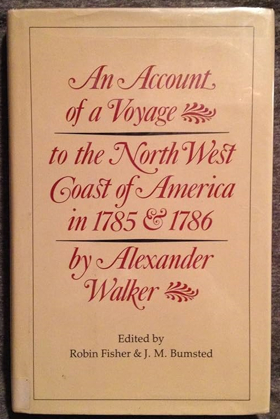
Account of expedition with J.S. Strange to the west coast of B.C. and the southern coast of Alaska. Includes extensive descriptions of the native cultures of Nootka and Prince William Sound 319 pages : illustrations ; 24 cm Non-circulating [ 1 ]
|
1982 |
|
Whatcom images an illustrated collection of prose and verse by Dorothy Koert, James W. Scott
|
1982 |
|
History of Hood River County, Oregon, 1852-1982 by Hood River County Historical Society
|
1982 |
|
Paths to the Northwest a Jesuit history of the Oregon Province by Wilfred P. Schoenberg 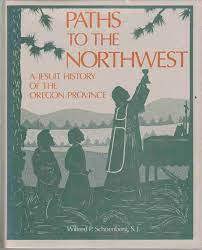
A detailed history of the Oregon Province of the Jesuits from 1831 to 1982. The Oregon Province includes St. Ignatius Mission. Illustrates how the Pacific Northwest Indian missions became a very small part of the Province's business as it grew. The Alaskan Mission and Jesuit educational work occupied most of the Province's resources xiii, 647 pages, 2 unnumbered leaves of plates : illustrations ; 26 cm Non-circulating [ 1 ]
|
1982 |
|
The Rogue, a river to run (the story of pioneer whitewater river runner Glen Wooldridge and his first eighty years on the Rogue River) by Florence Arman, Glen Wooldridge 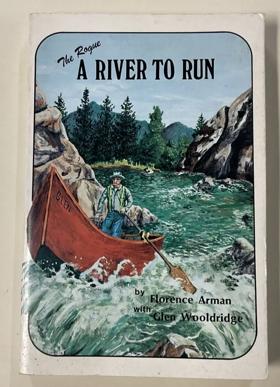
"One day in 1915, I started down the Rogue River in a boat I made. My first trip, I was a wild brainless kid of course, learning the hard way by rambunctious adventure, the needs to explore the unknown, down the plunging rapids. The Rogue is a wild brawling river and you had better respect it. I learned to use the oars, the pikepole, rope line, currents and eddies, and how to read the water. I craved fast white water like a steelhead, and tried lots of rivers like the Klamath, the Salmon River of No Return, Canadian rivers, etc., but for me the Rogue beats them all. Later I hauled dudes... hundreds of them... maybe over a thousand, shooting the rapids and camping out on the beach in the wilds." These stories and many more are in this no-holds-barred book. But more than that, it tells of the Rogue itself, of its development and its people. It gives you a sense of an earlier time - a time whose only remnants are rusting pieces of mining equipment, fiant traces of burned cabins and crumbling bridge piers. It brings alive the grizzled miners always looking to strike it rich tomorrow; hermits toting rifles after the ultimate game, each other; tall-tale tellers; poachers and gamewardens; fueders, gillnetters, sportsmen and unsportsmen. It tells of blasting the channel downriver, of floods and rescues, of depression and river-running highs. xv, 276 pages : illustrations ; 23 cm Non-circulating [ 1 ]
|
1982 |
|
|
1982 |
|
Trails and tales of north-central Idaho by Don McCombs
|
1982 |
|
Whistle stops along the Columbia River narrows a history of Burton and surrounding area by Burton New Horizons Book Committee 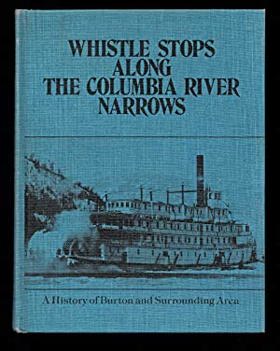
The Burton New Horizons Book Committee’s Whistle stops along the Columbia River narrows: a history of Burton and surrounding area chronicles the vibrant steamboat era and agrarian settlement along the vital Arrow Lakes corridor in the West Kootenay region of British Columbia. Set against the deep, glacially carved valleys connecting the Upper and Lower Arrow Lakes, the narrative details how early homesteaders, miners, and loggers mapped their riverside camps directly onto the ancient fishing and trading routes of the Sinixt and Ktunaxa peoples. The text reveals how these remote residents relied on tight-knit kinship alliances and the regular arrival of Columbia River sternwheelers to survive the profound geographic isolation of the narrows, forging a highly interdependent, water-bound society. Crucially, the local history documents the ultimate civic sacrifice required by mid-twentieth-century hydroelectric engineering, detailing how the original Burton townsite was intentionally flooded and relocated following the 1968 construction of the Hugh Keenleyside Dam. Ultimately, this community-authored volume functions as both a vital pioneer record and a testament to the cooperative endurance of a rural society forced to completely adapt its geographic footprint in the face of massive environmental reengineering. vii, 411 pages : illustrations, maps, portraits ; 29 cm Desiderata
|
1982 |
|
Boss whistle the coal miners of Vancouver Island remember by Lynne Bowen
|
1982 |
|
Digressions of a native son by Emmett Watson 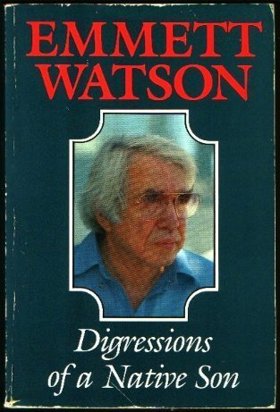
Digressions of a Native Son is a 1982 memoir by Emmett Watson (1918-2001), a Seattle journalist whose columns appeared in Seattle newspapers for more than 50 years. 251 pages ; 21 cm Desiderata
|
1982 |
|
Draft environmental impact statement for Madrona Point, Eastsound, Washington July 1982 by San Juan County (Wash)., Northwest Building Corporation 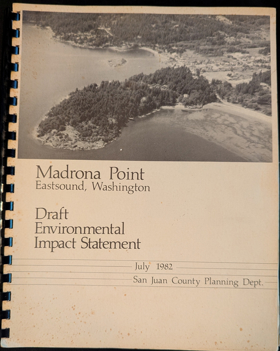
Platting of a 29.67 acre subdivision on Madrona Point, adjacent to the unincorporated town of Eastsound, into eleven single family lots (approx. 9 acres) five tracts for multi-family housing (approx. 3-1/2 acres) to contain 30 dwelling units in four- and five-unit buildings, and two larger tracts for future development subject to binding site plan approval (approx. 10-3/4 acres), intended for 61 multi-family dwellings in two- and four-unit buildings. In addition, four community recreation tracts will be established. On one of the community tracts a small caretaker's residence would be constructed, bringing the total of proposed residential units to 103. 241 pages : illustrations, maps ; 28 cm Non-circulating [ 1 ]
|
1982 |
|
Sprague, Lamont, Edwall Washington: Stories Of Our People, Land And Times 1881-1981 by Southeastern Lincoln County Historical Society
|
1982 |
|
The boundary hunters surveying the 141st meridian and the Alaska Panhandle by Lewis Green
Lewis Green’s The Boundary Hunters: Surveying the 141st Meridian and the Alaska Panhandle provides a diplomatic and spatial history of the International Boundary Commission survey that established the official border between British Columbia, Yukon, and Alaska following the 1903 dispute settlement. Green chronicles the physical feats of Canadian and American survey crews climbing glaciated Coast Mountain peaks and surveying rugged coastal valleys. The volume details police and customs posts along overland pack routes such as Pleasant Camp on the Dalton Trail, exploring mineral exploration at Rainy Hollow, river transit around Bennett, and the isolated mining enclave along the Tulsequah and Taku rivers. xiv, 214 pages : illustrations, maps, portraits ; 24 cm Desiderata
|
1982 |