Catalog of British Columbiana and Pacific Northwest Americana
Encyclopedia Cascadia Catalog contains book titles of mostly non-fiction Pacific Northwest Coast of North America Titles (primarially British Columbia, Idaho, Oregon and Washington State) in an easy-to-understand title catalog. If you see a link with this badge ONLINE CIRC it means that there is an online institution that provides free access to that title. In some cases there may be more than one institution hosting the title digitally.
| Catalog Title | Published |
|---|---|
|
From homestead to lakebed Kosmos, The Town That Drowned by LaVonne M. Sparkman 
Authored by LaVonne M. Sparkman, From Homestead to Lakebed: Kosmos—The Town that Drowned chronicles the rise and deliberate inundation of Kosmos, a small logging and milling community in Washington State that was wiped off the map to make way for the Mayfield Dam. The book utilizes historical records, photographs, and accounts from former residents to trace how a thriving early-twentieth-century industrial settlement was systematically dismantled, evacuated, and submerged beneath the Cowlitz River. Through these local archives, the text preserves the poignant human cost of hydroelectric progress on rural Pacific Northwest ecosystems and neighborhoods. A keen insight drawn from the work is how corporate and state infrastructure projects treat localized working-class history as entirely disposable collateral; by documenting how a self-sustaining town was erased by utility planning, the narrative underscores how modern energy demands have repeatedly required the literal burial of regional heritage. viii, 242 pages : illustrations, maps, portraits ; 28 cm CIRC [ 1 ]
|
1994 |
|
From Here to There and In-Between From the Log of S.V. Stone Spirit by Donna Winter 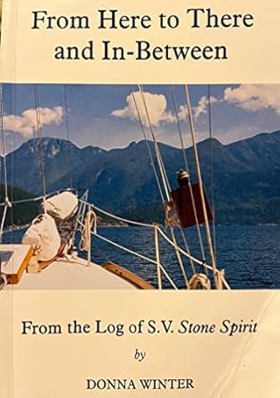
From the logbook of the 33’ ferro-cement, cutter-rigged “Stone Spirit“. Follow Donna, her husband Dave, and Montague the cat as they travel around the southern inside passage of British Columbia, Canada. 99 pages illustrations, map CIRC [ 1 ]
|
1998 |
|
From Copenhagen to Okanogan the autobiography of a pioneer by U. E. Fries 
[2], 437 pages, [32 leaves of plates : illustrations, map (on lining papers), portraits ; 24 cm CIRC [ 1 ]
|
1949 |
|
From A to Z in Latah County, Idaho a place name dictionary by Lalia Phipps Boone 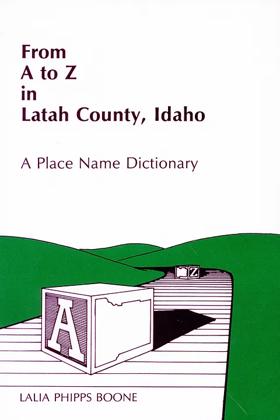
You name it, we've got it! Really a miniature encyclopedia, this book yields a wealth of historical and practical information about the names of places in Latah County, Idaho. Who were some of the prominent early settlers, businessmen, teachers? What happened to the almost ninety towns that have disappeared from the face of our maps? How many millions of dollars worth of gold have been mined here? Moscow wasn't really named by Russians, was it? Where are some good parks and campgrounds I can visit? And how could a place like "Yellow Dog" get a name like that? From A to Z in Latah County contains over 600 place names with twelve classified index lists including all towns, creeks, historic sites, mines, post offices, recreational sites, and schools. From "Abe" to "Zion" - it's all here! Lalia Boone is a retired professor of English from the University of Idaho. Her Idaho Place Name Project began in 1966 as a personal hobby when she moved to Moscow from a professorship at the University of Florida. Dr. Boone wanted to know where the place names that sounded so strange to her southern ears came from, what they meant, when and why they were chosen, and who chose them. 117, [3] pages ; 23 cm CIRC [ 1 ]
|
1983 |
|
Fried eggs & fish scales tales from a Sointula troller by Jon David Taylor 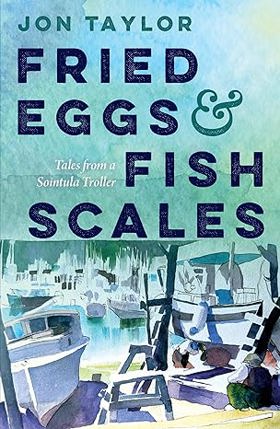
"Longtime fisherman and Sointula resident Jon Taylor dishes up hilarious yarns from his life off northern Vancouver Island. Capturing the "rough but reasonable" freedom of Malcolm Island, situated off the northeast shore of Vancouver Island, Jon Taylor recounts the bizarre but enticing lifestyle of a fisherman and his remote community--"haywire tightwads" for skippers, rotten fish in the hold that become "three thousand humpies in a warm, pink soup," and the kind of integrity you don't often see. Jon Taylor's family history on Malcolm Island extends back to 1917, when Taylor's Finnish grandparents planned to move to the community of Sointula, to live among fellow expats who shared a language and a dream. However, Taylor recounts, upon seeing the island they promptly changed their minds and moved to Cuba. Taylor himself moved to Malcolm Island in 1976 and became a steadfast resident, embracing the fishboat life, for better or worse, aboard seiners, gillnetters and his own troller. Taylor captures a classic but now-disappearing way of life in its heyday with his vibrant and amusing vignettes."-- Provided by publisher 224 pages ; 22 cm CIRC [ 0 ]
|
2024 |
|
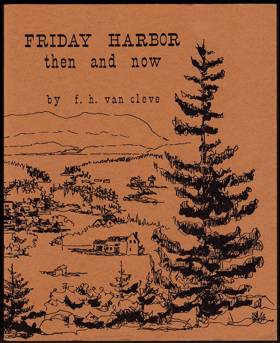
Friday Harbor, then and now by F. H. Van Cleve
|
1972 |
|
Friday Harbor by Mike Vouri , Julia Vouri , San Juan Historical Society 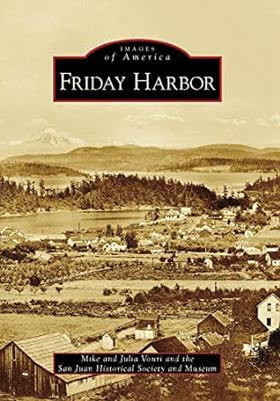
Friday Harbor, Washington was incorporated in 1909. As with many of the young state's small port towns, timber, salmon fishing, and farming fueled Friday Harbor's early economy. Life slowed and some left, but in being passed--until tourism caught on in the late 1970s--the town (and island) developed a unique sense of community that survives to this day 127 pages : illustrations, maps, portraits ; 24 cm. CIRC [ 1 ]
|
2009 |
|
French presence in Victoria, B.C., 1843-1991 by John Greene, Association historique francophone de Victoria 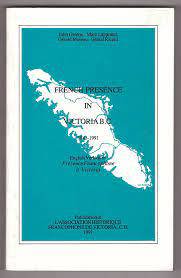
Published by the Association historique francophone de Victoria and authored by John Greene, French Presence in Victoria, B.C., 1843–1991 chronicles nearly a century and a half of Francophone contributions to the cultural, economic, and religious fabric of Vancouver Island. The book traces the arrival of French-Canadian fur traders, Catholic missionaries, and European immigrants who helped establish and shape the early colonial capital long before Confederation. Through archival records, church registers, and personal accounts, the text illuminates how a distinct Francophone community maintained its linguistic and cultural identity despite the overwhelming dominance of British institutions. A keen insight drawn from the work is how multiculturalism in early Western Canadian cities existed beneath a veneer of British imperial hegemony; by uncovering the vital, behind-the-scenes roles played by French speakers in commerce and governance, the study reveals that the foundational history of British Columbia was far more pluralistic than its overtly Anglo-Saxon administrative facade suggested. v, 200 pages, [17] pages of plates (1 folded) : illustrations, maps ; 22 cm CIRC [ 1 ]
|
1991 |
|
Fred T. Dubois's The making of a state by Frederick T. Dubois , Louis J. Clements
|
1971 |
|
Fray Juan Crespi, missionary explorer on the Pacific coast, 1769-1774 by Juan Crespí, Herbert Eugene Bolton
|
1971 |
|
Frank Okada the shape of elegance by Kazuko Nakane, Frank S. Okada, Museum of Northwest Art 
"Artist Frank Okada played a significant role in the modern art history of the Pacific Northwest. Born a Nisei in 1931, he was raised in Seattle's International District. Throughout his life he retained its influences and expressed his vivid memories in his art. From his first painting award - received at the Washington State fair - until his death in 2000 at the age of sixty-nine, he worked at the confluence of regional art, Asian culture, and national art movements." "At the beginning of his career, Okada received a series of prominent fellowships - John Hay Whitney in 1957, Fulbright in 1959, and Guggenheim in 1966-67. He was greatly influenced by the artists he met and was a close observer of the art scenes in New York, Paris, and Kyoto in an effort to find his own style of painting and how to be a painter. He began teaching painting at the University of Oregon in 1969, a tenure that lasted thirty years. His work from the seventies, eighties, and nineties balanced forms and colors in intensely worked surfaces. The color blocks gradually became more intellectually structured and his compositions more expressive as he made his colors more powerful. As Nakane notes, without recognizable reference to nature or his own personality, he created a texture that brought light to a field of color. The build-up of color dots underneath and extensive small textural stories across large canvases made progress slow. In order to appreciate his paintings, one needs to spend time observing how the colors respond to the charges of light throughout the day."--Jacket 80 pages : color illustrations ; 23 cm CIRC [ 0 ]
|
2005 |
|
Francis Rattenbury and British Columbia architecture and challenge in the Imperial Age by Anthony Barrett, Rhodri Windsor Liscombe 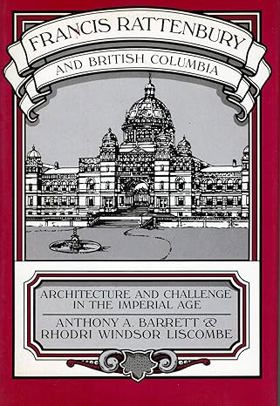
Yorkshire-born Francis Mawson Rattenbury (1867-1935) emigrated to British Columbia as a young architect in 1892. Within months of his arrival in Victoria he launched his brilliant, if abbreviated, career by winning an international competition to design the legislative buildings. While his life was marred by controversy, scandal and, in the end, tragedy, Rattenbury's architecture had an enduring impact on the Canadian landscape and his commercial ventures were important to the economic development of the West. Richly illustrated with over 200 drawings and photographs, Francis Rattenbury and British Columbia is the first major critical study of a Canadian architect in the context of his times. Using unpublished primary sources, including his recently discovered private letters, the authors document Rattenbury's professional career and the evolution of his architectural style. Detailed descriptions are given of some of his most famous projects, notably the legislative buildings and the Empress Hotel in Victoria. Besides working on a number of government commissions, Rattenbury became chief architect for the Canadian Pacific Railway and designed "chateau-like" buildings for C.P.R.hotels in the Rockies, Vancouver, and Victoria. Other projects such as the Vancouver and Nanaimo Courthouses and Bank of Montreal branches set the pattern for institutional architecture in British Columbia. His buildings not only drew attentionto the growing importance of the province, but also lent dignity and character to its major centres. Filled with the vigour and confidence of the imperial age, Rattenbury initiated a number of commercial ventures. These included the founding of a transportation system to the Yukon goldfields and extensive land speculations. As the authors point out, these investments were perhaps not undertaken solely for monetary gain but reflected Rattenbury's firm belief in the future of British Columbia and his desire to play an active role in its growth. Unfortunately, his entrepreneurial adventures involved heavy financial losses, among which were ruinous lawsuits involving the provincial government. This pioneering work on Western Canadian architecture will serve asa valuable design source for both the specialist and lay reader. It also includes an important account of the part played by major Canadian companies and government patronage in the development of British Columbia. This professional biography reveals new facets of Rattenbury's life and character which have been the subject of both public and literary controversy. xii, 391 pages : illustrations ; 24 cm CIRC [ 0 ]
|
1983 |
|
Frances Barkley eighteenth-century seafarer by Cathy Converse , Frances Barkley 
"A rivetingly imagined re-telling of the voyages of Frances Barkley (1769–1845), who as a young woman travelled the world on a trading mission with her sea captain husband. Over two hundred years ago, Frances Barkley, a seventeen-year-old girl fresh out of a convent school in France, met twenty-six-year-old sea captain, fell deeply in love, and married him after a six-week courtship. Five weeks later, she stepped aboard his ship, the Imperial Eagle, to set sail on an eight-year voyage that would take them around the world twice. Frances Barkley’s story is a remarkable one. It is a story born of discovery, of firsts, of hardship, of disease, of illness, and of death. Relying on her strength of character and wit, this young woman survived fierce seas, shipwreck, and capture by pirates. When Frances was approaching her seventh decade, at the behest of her daughter, she put pen to paper and wrote down what she could remember of her life with her husband in the merchant sea trade. Frances Barkley: Eighteenth-century Seafarer is not simply a re-issue of Frances’s own reminiscences, but a work of creative non-fiction—an extensive reimagining of her time at sea, supplemented through extensive historical, geographic, and nautical research."-- Provided by publisher 137 pages : illustrations, maps ; 22 cm. CIRC [ 0 ]
|
2023 |
|
Four years in British Columbia and Vancouver Island an account of their forests, rivers, coasts, gold fields and resources for colonisation by Richard C. Mayne, John Murray (Firm) (Publisher), William Clowes and Sons (Printer), Northern Pacific Railroad Company (Former owner), Northern Transcontinental Survey (Associated name) 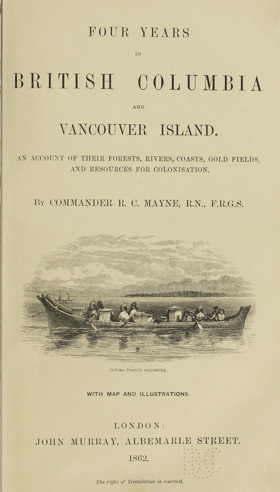
Published in 1862, Royal Navy Commander Richard C. Mayne’s Four Years in British Columbia and Vancouver Island provides a detailed firsthand account of the region's geography, indigenous populations, and natural resources during the height of the Fraser River Gold Rush. Based on his extensive coastal and inland surveying expeditions aboard the HMS Plumper and Hecate, the narrative captures the rapid transformation of the territory from a remote fur-trade outpost into an actively managed British colony. A keen insight drawn from the text is how Mayne's meticulous cartographic and resource-focused observations demonstrate the Royal Navy's crucial role as agents of colonial statecraft, systematically converting a rugged, Indigenous-inhabited landscape into a legible, commodified space designed specifically for imperial investment. Furthermore, the volume's historical provenance as property of the Northern Pacific Railroad Company perfectly illustrates how these early military surveys ultimately functioned as direct strategic blueprints for subsequent corporate and infrastructural expansion across the Pacific Northwest. xi, 468 pages, 20 unnumbered pages of plates + 32 pages publisher's ads : illustrations, maps (1 folded) ; 23 cm ONLINE CIRC [ 1 ]
|
1862 |
|
Four wagons west the story of seattle by Roberta Frye Watt
Published in 1931 by Roberta Frye Watt—the granddaughter of city founder Arthur A. Denny—Four Wagons West: The Story of Seattle is a deeply nostalgic, familial hagiography chronicling the pioneer origins of the Pacific Northwest’s largest metropolis. The text traces the Denny Party’s grueling overland migration, their iconic 1851 landing at Alki Point, and the subsequent establishment of the first sawmills and civic institutions on Elliott Bay. Writing the city’s history as a cherished family heirloom, Watt relies heavily on pioneer diaries and ancestral lore, detailing the pioneers' paternalistic relationship with Chief Seattle and their defense of the settlement during the Puget Sound War of 1856. The book ultimately functions to cement the original white founding families as the undisputed moral and civic aristocracy of the region. A keen insight drawn from the work is how the narrative weaponizes maternal pioneer nostalgia and domestic intimacy to sanitize the aggressive mechanics of urban colonial expansion. By framing the establishment of Seattle not as a calculated, capitalist enterprise of land speculation, but as a cozy, inevitable, and divinely guided family triumph, Watt successfully domesticates the violent dispossession of the Duwamish people. This historiographical maneuver effectively reduces Indigenous sovereignty to a romanticized backdrop, transforming figures like Chief Seattle into tragic, benevolent props who seemingly exist only to willingly bequeath the landscape to its "destined" white inheritors. Consequently, the text allows the city's pioneer elite to legally and morally absolve themselves of the ongoing, systemic erasure of the region's original inhabitants. CIRC [ 1 ]
|
1933 |
|
Four travel journals the Americas, Antarctica and Africa, 1775-1874 by H. K. Beals 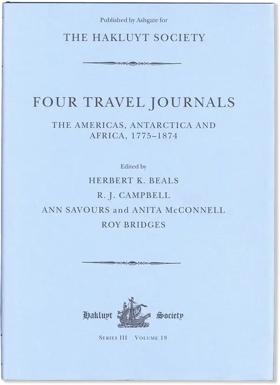
The journals featured are: the 1775 journal of Juan Francisco de la Bodega y Quadra, Pringle Stokes' journal of HMS Beagle in the Straits of Magellan, 1827, the journal kept by Joseph Henry Kay during the voyage of HMS Chanticleer, 1828-1831, and Jacob Wainwright's diary telling of the transportation of Dr Livingstone's body, 1873-1874 x, 404 pages : illustrations, maps ; 26 cm. CIRC [ 1 ]
|
2007 |
|
Fortune's a river the collision of empires in northwest America by Barry M. Gough 
Finalist for the Writers' Trust Nereus Non-fiction Award. Finalist for the Roderick Haig-Brown Regional Prize, BC Book Prize. "Fortune's a River" is the most authoritative and readable account to date of just how British Columbia became British and how Oregon, Washington and Alaska became American. By the closing years of the 18th century, the stage was set for a major international confrontation over the Northwest Coast. Imperial Russia was firmly established in Alaska, Spain was extending its trade routes north from Mexico, Captain James Cook had claimed Northwest America for England and Captain Robert Gray had claimed the Columbia River region for the United States. Open warfare between Spain and England was narrowly averted during the Nootka Sound Controversy of 1789-1794, and again between Britain and the US in the War of 1812, when a British warship seized American property in Oregon. In "Fortune's a River," noted historian Barry Gough re-examines this Imperial struggle for possession of the future British Columbia and fully evokes its peculiar drama. It turned out the great powers were reluctant conquerors in this area. Russia and Spain withdrew of their own accord. Britain was in a position to dominate, but couldn't be bothered. The US vaguely wished to fulfill its manifest destiny by securing the Northwest Coast, but it was not a priority. In the end the battle was carried on by private enterprise and individuals of vision. Alexander Mackenzie established an overland route to the coast and with his partners Simon Fraser and David Thompson, set up a network of fur trading forts south to Oregon. US president Thomas Jefferson countered by sending out the Lewis and Clarkexpedition to strengthen American claims and an American entrepreneur, John Jacob Astor, established a lonely US outpost at Astoria. Gough examines each of the players in this territorial drama, bringing them fully to life and vividly recounting their hardships and struggles. "Fortune's a River" is a major historical work that reads like a wild west adventure. -- Publisher description 413 pages : illustrations, maps ; 24 cm CIRC [ 1 ]
|
2007 |
|
Fort Victoria letters 1846-1851 by Hartwell Bowsfield, Hudson's Bay Company 
Letters of James Douglas, Chief Factor of the Hudson's Bay Company Pacific headquarters at Fort Victoria, Vancouver Island, British Columbia xcix, 277, xvii pages, 3 unnumbered leaves of plates (2 folded) : maps ; 24 cm. CIRC [ 0 ]
|
1979 |
|
Fort Victoria from fur trading post to capital city of British Columbia, Canada by Herbert P. Plasterer 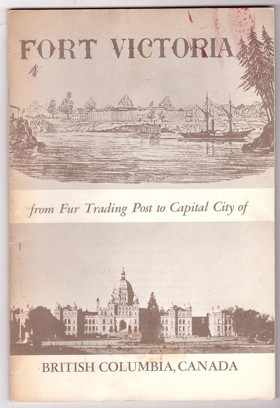
Fort Victoria: From Fur Trading Post to Capital City of British Columbia, Canada by Herbert P. Plasterer is a concise 1967 historical booklet that traces the foundational years of British Columbia's capital. The work provides a focused overview of Victoria's evolution, detailing its origins as a strategic 19th-century Hudson's Bay Company fort and its rapid expansion during the colonial era. Ultimately, it serves as an accessible, localized snapshot of the pioneer history and key milestones that transformed a remote settlement into a modern political center. 38 pages : illustrations ; 23 cm CIRC [ 1 ]
|
1960 |
|
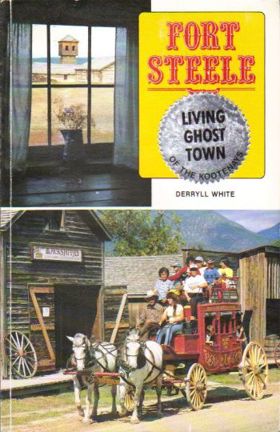
Fort Steele here history lives by Derryll White
|
1988 |
|
Fort St. James and New Caledonia where British Columbia began by Marie Elliott, Betty Keller 
"As BC 150 celebrations have made us aware, modern British Columbia began in the central interior of the province, where Simon Fraser founded the fur trade empire known as New Caledonia. Today only the restored trading post of Fort St. James and the ancient trails remain. Fort St. James and New Caledonia is the first history of this crucial chapter in over one hundred years. Using unpublished Hudson's Bay Company archival material, Marie Elliott delivers rare glimpses into the lives and times of the first fur traders, weaving a tapestry of colourful characters including the great Carrier chief Kwah, Nor'westers John Stuart and James McDougall, as well as a surprisingly strong cast of women including Miyo Nipiy, Governor Simpson's country wife, Margaret Taylor and the tragic Elizabeth Pruden 270 pages : illustrations, maps ; 23 cm CIRC [ 1 ]
|
2009 |
|
Fort Limhi the Mormon adventure in Oregon territory, 1855-1858 by David L. Bigler
Published by Utah State University Press, Fort Limhi: The Mormon Adventure in Oregon Territory, 1855–1858 by David L. Bigler chronicles the dramatic and ultimately ill-fated attempt by Brigham Young to establish an outlying Latter-day Saint mission in the remote wilderness of present-day Idaho. The book details the missionaries' grueling efforts to construct a fortified settlement along the Salmon River, cultivate relations with the local Bannock and Shoshone tribes, and build an expansive intermountain empire. Through meticulous archival research and pioneer journals, the text reconstructs the compounding pressures of geopolitical tension, cross-cultural friction, and a violent 1858 raid that forced the colony's sudden abandonment. A keen insight drawn from the work is how the mission exposes the friction between utopian religious expansion and indigenous territorial sovereignty; the enterprise failed not merely due to logistical isolation, but because Mormon colonizers fundamentally underestimated native resistance to having their ancestral homelands converted into a foreign ecclesiastical buffer zone. 372 pages : illustrations, maps ; 25 cm. CIRC [ 1 ]
|
2003 |
|
Fort Langley, birthplace of British Columbia by B. A. McKelvie, Charles Lillard 
Co-authored by B.A. McKelvie and Charles Lillard, Fort Langley, Birthplace of British Columbia chronicles the foundational history of the Hudson's Bay Company fur-trading post established along the lower Fraser River in 1827. The book details how the fort evolved from a modest trading stockade dealing in salmon and beaver pelts into the geopolitical staging ground where British colonial rule was officially proclaimed in 1858. Drawing on historical journals and company records, the text illustrates the complex economic web linking fur traders, maritime supply ships, and local Indigenous populations. A keen insight drawn from the work is how the romantic narrative of a colony's "birthplace" obscures its corporate origins; by tracing British Columbia's administrative roots directly back to a commercial trading monopoly, the authors reveal that the region's political foundation was engineered less by heroic statecraft than by the ruthless logistical demands of the fur trade. 112 pages, [8] pages of plates : illustrations, maps ; 23 cm CIRC [ 1 ]
|
1991 |
|
Fort Langley outpost of Empire by B. A. McKelvie 
An account of the Hudson's Bay Company's operation at Fort Langley in southern British Columbia in the early-to-mid 19th Century ix, 98 pages illustrations (some color) maps (on lining-papers) 27 cm CIRC [ 0 ]
|
1947 |
|
Forlorn hope the Battle of White Bird Canyon and the beginning of the Nez Perce War by John D. McDermott, Merle W. Wells 
On a June morning in 1877, 109 soldiers and civilian volunteers attacked a small band of Nez Perce Indians camped in White Bird Canyon, in what is now central Idaho. This account of that event is considered one of the best about the beginning of the Nez Perce War. McDermott's account of the battle, from both Indian and white points of view, is considered by many experts one of the best books ever written on an event from the western Indian wars. xv, 229 pages, 8 unnumbered leaves of plates : illustrations, maps, portraits ; 24 cm CIRC [ 1 ]
|
1978 |