Catalog of British Columbiana and Pacific Northwest Americana
Encyclopedia Cascadia Catalog contains book titles of mostly non-fiction Pacific Northwest Coast of North America Titles (primarially British Columbia, Idaho, Oregon and Washington State) in an easy-to-understand title catalog. If you see a link with this badge ONLINE CIRC it means that there is an online institution that provides free access to that title. In some cases there may be more than one institution hosting the title digitally.
| Catalog Title | Published |
|---|---|
|
The fire still burns life in and after residential school by Sam George , Jill Yonit Goldberg , Liam Belson , Dylan MacPhee , Tanis Wilson 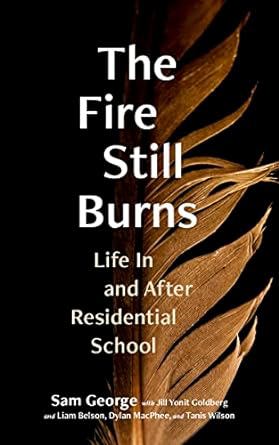
"'My name is Sam George. In spite of everything that happened to me, by the grace of the Creator, I have lived to be an Elder.' The crimes carried out at St. Paul's Indian Residential School in North Vancouver scarred untold numbers of Indigenous children and families across generations. Sam George was one of these children. This candid account follows Sam from his idyllic childhood growing up on the Eslhá7an (Mission) reserve to St. Paul's, where he weathered physical, emotional, and sexual abuse. He spent much of his life navigating the effects of this trauma - prison, addiction, and challenging relationships - until he found the strength to face his past. Now an Elder and educator with the Indian Residential School Survivors Society, this is Sam's harrowing story, in his own words. An ember of Sam's spirit always burned within him, and even in the darkest of places he retained his humour and dignity. The Fire Still Burns is an unflinching look at the horrors of a childhood in the Indian Residential School system and the long-term effects on survivors. It illustrates the healing power of one's culture and the resilience that allows an individual to rebuild a life and a future."-- Provided by publisher xii, 133 pages : illustration ; 21 cm CIRC [ 0 ]
|
2023 |
|
Exploring Vancouver ten tours of the city and its buildings by Harold Kalman , Robin Ward 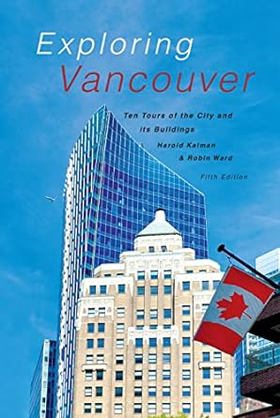
"This new edition of the classic urban guidebook brings the city's architectural story up to date. Harold Kalman and Robin Ward, long-time chroniclers of Vancouver, offer an authoritative and highly readable book about Vancouver's most interesting places and explain how, why and by whom the city's urban environment was created. Containing more than four hundred entries, ten self-guided tours highlight significant buildings from all eras in the city and its metro region, and feature new projects that transform the skyline more radically than ever before. The tours--organized by neighbourhood and planned variously for walking, cycling, car and transit--reveal Vancouver in a constant state of reinvention, fuelled by real estate speculation, immigration and the egos of civic boosters, developers and architects. Today, this dynamic is colliding with architectural and urban planning responses to climate change. For the first time in the series, this edition includes the Musqueam, Squamish and Tsleil-Waututh peoples' role in the narrative, including information on several substantial local projects shaped by these communities and Nations. For wayfinding, entries are numbered and keyed to maps. A glossary of architectural terms and styles is provided. Exploring Vancouver is the perfect companion for curious visitors and citizens of this fascinating metropolis alike."-- Provided by publisher 366 pages : colour illustrations, maps ; 23 cm CIRC [ 0 ]
|
2023 |
|
Live at the Commodore the story of Vancouver's historic Commodore Ballroom by Aaron Chapman 
"A new edition of the storied history of Vancouver's Commodore Ballroom, by the author of Vancouver After Dark. The Commodore Ballroom, located in the heart of downtown Vancouver, remains one of the best-loved music venues in Canada, if not the world; it's played host to a who's who of music greats: the Police, the Clash, Blondie, Talking Heads, Nirvana, New York Dolls, U2, Lady Gaga, Katy Perry, Snoop Dogg, and the White Stripes, among others. The Commodore's history extends back to 1930, when it was built in the splendour of art deco style. Through World War II and into the 1950s, the Commodore was where Vancouverites went to hear swing orchestras and dance into the late hours. Beginning in the 1970s, the Commodore became a full-on music club, a must-stop for breakout bands and other music acts before they became arena headliners. Vancouverites soon filled the place on a nightly basis, not only to hear the latest in punk, new wave, blues, heavy metal, and rock, but also to dance on its legendary bouncy sprung floor. Now regarded as a music landmark, "the nightclub for all seasons" continues to attract the hottest musicians on tour, defying and outlasting other cultural venues that have vanished as a result of gentrification and the pandemic. First published in 2014, Live at the Commodore was a BC bestseller and won the Bill Duthie Booksellers' Choice Award at the BC Book Prizes. Author Aaron Chapman delves into the Commodore's archives to reveal stories about the club over the last ninety-plus years, as well as startling and outrageous anecdotes about the legendary acts that have graced its stage. Filled with never-before-published photographs, posters, and paraphernalia, Live at the Commodore is a visceral, energetic portrait of one of the world's great rock venues. This new edition includes a new chapter and several new photographs and posters. Full-colour throughout."-- Provided by publisher 246 pages : illustrations ; 23 x 26 cm CIRC [ 0 ]
|
2023 |
|
Room at the inn historic hotels of British Columbia’s Southern interior by Glen Mofford , Karla Decker 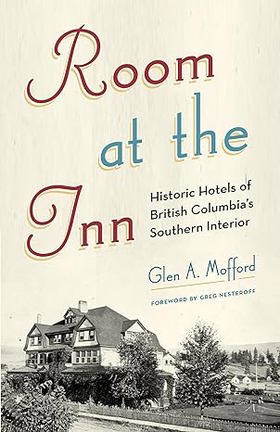
"A fully illustrated social history profiling forty historic hotels spread over five regions of the southern interior of British Columbia, covering the time period of the 1890s to 1950s. Room at the Inn reveals the long-forgotten histories of British Columbia’s early hospitality industry, through the riveting stories of the men and women who built, ran, and frequented hotels, hostelries, resorts, and roadhouses in the southern Interior. From the Similkameen town of Keremeos to Spences Bridge at the confluence of the Thompson and Nicola Rivers, east to the Alberta border along the Trans-Canada Highway, and south to the Canada–US border, the history of these hotels mirrors the history of BC’s mining towns and boom-bust economy of the late nineteenth and early twentieth centuries, as waves of prospectors, settlers, and eventually tourists shaped the culture of the province that we know today. Of the forty historic hotels profiled in this book, all contributed to their communities in various ways. They provided more than just a roof over the heads of weary travellers; they were often the sites of live entertainment, places where community members could meet and socialize. Some even doubled as makeshift hospitals during wildfires and floods. Through colourful anecdotes, meticulous research, and fascinating archival photography, Room at the Inn transports readers to a bygone era and pays tribute to the pioneers, entrepreneurs, and hard-work men and women who built and operated these historic accommodations."-- Provided by publisher xi, 323 pages : illustrations, map, portrait ; 22 cm CIRC [ 0 ]
|
2023 |
|
Tribal histories of the Willamette Valley by David G. Lewis 
"The Willamette Valley is rich with history -- its riverbanks, forests, and mountains home to the tribes of Kalapuya, Chinook, Molalla, and more for thousands of years. This history has been largely unrecorded, incomplete, poorly researched, or partially told. In these stories, enriched by photographs and maps, Oregon Indigenous historian David G. Lewis combines years of researching historical documents and collecting oral stories, highlighting Native perspectives about the history of the Willamette Valley as they experienced it. The timeline spans the first years of contact between settlers and tribes, the takeover of tribal lands and creation of reservations by the US Federal Government, and the assimilation efforts of boarding schools. Lewis shows the resiliency of Native peoples in the face of colonization. Undoing the erasure of these stories reveals the fuller picture of the colonization and changes experienced by the Native peoples of the Willamette Valley absent from other contemporary histories of Oregon."-- Provided by publisher 238 pages : illustrations, maps ; 23 cm CIRC [ 1 ]
|
2023 |
|
This place is who we are stories of Indigenous leadership, resilience, and connection to homelands by Katherine Gordon , Dallas Smith 
"This Place Is Who We Are profiles Indigenous communities in central and northern coastal BC that are reconnecting to their lands and waters--and growing and thriving through this reconnection. Indigenous peoples and cultures are integrally connected to the land. Well-being in every sense--physical, social, environmental, economic, spiritual and cultural--depends on that relationship, which is based on a fundamental concept: when the land is well, so are the people. With increasing strength, Indigenous peoples in this vast region of BC--which spans the homelands of more than two dozen First Nations and one of the largest remaining coastal temperate rainforests in the world--are restoring what has been lost through environmental depredation and healing what has been devastated by colonization. This volume is a collection of ten of these inspiring stories. X̱aayda voices explain how their Rediscovery camps are healing and empowering their youth; Dzawada̱'enuxw Hereditary Chief Maxwiyalidizi K'odi Nelson shares the story of building a healing centre and ecolodge; Wei Wai Kum Chief Christopher Roberts describes the challenges and opportunities for an urban First Nation looking to prosper while protecting the environment and ancient Ligʷiłdaxʷ history and living cultural values; and many more Indigenous leaders share their own experiences of growth, strength and reconnection. Thoughtful and inspiring, This Place Is Who We Are illustrates what can be accomplished when conservation and stewardship are inextricably intertwined with the prosperity and well-being of communities."-- Provided by publisher 245 pages : color illustrations, color map, color portraits ; 26 cm CIRC [ 0 ]
|
2023 |
|
Stewards of splendour a history of wildlife and people in British Columbia by Jennifer Bonnell , Royal British Columbia Museum (Publisher) 
"The subject of wildlife both unites and deeply divides British Columbians. From concern over dwindling orca populations to deeply political debates over hunting and harvesting, questions surrounding fish and wildlife harvest rights and methods, and the effects of industrial resource extraction, tourism, and residential development upon wildlife populations, have produced an atmosphere of conflict and distrust in BC. Spanning the deep history of human relationships with wildlife, from pre-contact Indigenous land stewardship to the present day, Stewards of Splendour explores the ways that government, Indigenous communities and stakeholder groups have sought to shape and deliver, or responded to the consequences of, wildlife management policies and practices and resource development activities in the province. Throughout, it emphasizes the circumstances and initiatives that made and continue to make BC different, from the astonishing diversity of our ecosystems to our unusually high proportion (over 94%) of public land while profiling instances of made-in-BC approaches. Drawing upon a rich body of historical, scientific and policy-related literature and over 80 interviews, Stewards of Splendour examines changing societal values around wildlife and the implications of these changes for wildlife managers today."-- Provided by publisher xxiv, 589 pages, 8 unnumbered pages of plates : illustrations (some color), map (some color) ; 23 cm CIRC [ 0 ]
|
2023 |
|
Boyhood among the woolies growing up on a Basque sheep ranch by Richard W. Etulain 
Like many Pacific Northwest sheepherders, Sebastian Etulain emigrated from Europe's Basque country. He arrived in Yakima, Washington, in May 1921, convinced that hard work could overcome a lack of formal education and other obstacles. That became his doctrine, and he advanced to ranch owner before marrying Mary Gillard Foster in 1936. The Etulain sheep ranch lay among the rock ridges, coulees, hills, and grasslands twenty miles east of Ritzville in eastern Washington. Isolated and sprawling across nearly ten thousand acres, it included a sturdy ranch house surrounded by hay barns, a water pump house, corrals, and pens for sheep, goats, dogs, and pigs. The spread also had a milking parlor and creamery as well as a blacksmith shop. The Etulains adopted seasonal rhythms: for part of the year, their pasture grasses provided sufficient fodder, and in the summer, they herded most of their animals up to mountains near St. Maries, Idaho. But in winter, the sheep and cattle needed purchased feed, and plenty of it. Sebastian's three sons reveled in a magical upbringing on the ranch-despite the demanding work. In Boyhood Among the Woolies, his youngest son, Richard, reveals the family's story, a rare look at life on an early eastern Washington sheep ranch. He recounts endless chores, lambing season, sheep shearing, efforts to keep animals safe, and fighting one of the greatest dangers-grass fires. He also describes family activities, relationships with hired staff, favorite dogs, brotherly pranks and shenanigans, schooling and church in Ritzville, Basque history, and more. xii, 151 pages : illustrations, maps ; 23 cm CIRC [ 0 ]
|
2023 |
|
The Evergreen Collection exceptional stories from across Washington State by Larry Clark , Adriana Janovich 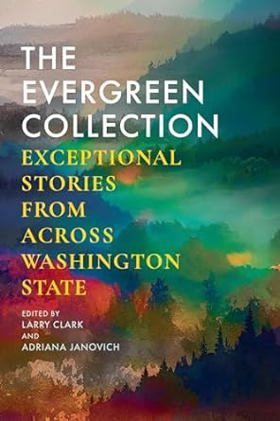
"While working for Washington State Magazine, eleven journalists traveled throughout the region to interview farmers, chefs, wine tasters, mountain climbers, scientists, and more. The resulting stories highlight the Evergreen State's captivating people, industries, and history, describing influential programs, cities from Aberdeen to Zillah, as well as a wide variety of trends, research, and innovative solutions"-- xiii, 273 pages : color illustrations ; 23 cm CIRC [ 0 ]
|
2023 |
|
Getting elected is the easy part working and winning in the state legislature by Karen Keiser 
Across the nation every two years, first-time lawmakers enter state legislatures--institutions steeped in tradition, arcane procedures, and unwritten rules. Although dozens of publications advise candidates on how to run and win campaigns, for those elected, few resources exist. After more than twenty years in the Washington State Legislature, Senator Karen Keiser realized she could address that knowledge gap. Written for legislative newcomers and others interested in state government, her book blends documented research with her personal experiences and observations about how to succeed and achieve real change. She focuses on the culture adjustment and challenges many newly elected lawmakers face, and offers tips and advice to help them achieve their legislative goals xiv, 155 pages : illustrations ; 23 cm CIRC [ 0 ]
|
2023 |
|
New heights transforming Seattle's iconic Space Needle by Olson Sundberg (Firm) , Olson Kundig (Firm) 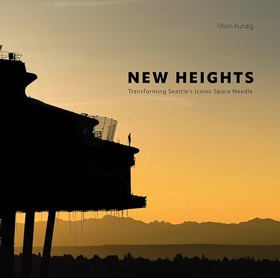
Originally built for the 1962 World's Fair, the Space Needle quickly became an international icon of the Pacific Northwest and a symbol of Seattle. At the time of its construction, the tower pointed the way toward the future with a sense of optimism, possibility, and invention. In its 55th year, the Space Needle is again representing an enhanced future with the Century Project, a holistic renovation of the upper levels led by Olson Kundig that repositions the iconic tower for its next fifty years. 'New Heights: Transforming Seattle's Iconic Space Needle' documents this latest chapter of the Space Needle's story with an in-depth look at the innovations, challenges, and triumphs realized by the client and project team, as seen through the eyes of the architects 191 pages : chiefly color illustrations ; 26 cm CIRC [ 0 ]
|
2023 |
|
Maritime names of Washington by Richard W. Blumenthal 
Maritime Names of Washington is a wonderful companion if you are a boating enthusiast or simply curious about Washington’s maritime history. This book is a scholarly study on the origins of place names for our coastal and inland waters. It covers every name that appears on current nautical charts, from the Pacific Coast to the Strait of Juan de Fuca, the San Juans, and Puget Sound from Port Townsend to Olympia. It includes every named island, bay, point, inlet, pass, harbor, rock, channel, strait, canal, peninsula, sound, and shoal. The book also features many local and historical names that are not shown on the charts. The manuscript generally identifies the individual who named the place, when, why, and for whom. It also identifies the chart where the name first appeared and the early settlement history of many places. The manuscript is richly annotated and uses many quotes from the observations of our earliest explorers to give readers a glimpse of what Puget Sound country looked like 200+ years ago. Each of our early explorations is discussed in detail as they relate to individual place names. The book contains 170 pictures and 44 historical nautical charts from 1790 to 1900 that show many of the names ix, 501 pages : illustrations, maps, charts ; 26 cm CIRC [ 1 ]
|
2023 |
|
The American West and its interpreters essays on literary history and historiography by Richard W. Etulain 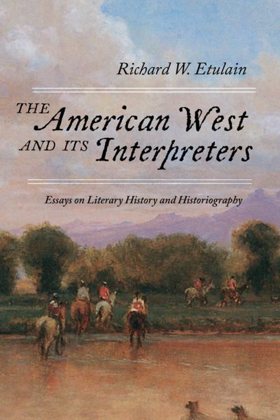
Distinguished historian Richard W. Etulain brings together a generous selection of essays from his sixty-year career as a specialist on the US West in this essential volume. Each essay provides an invaluable overview of the rise of western literary history and historiography--including insightful evaluations of individual historians--revealing summaries of regional literature and discussions of western stories yet to be told. Together these writings furnish readers with useful considerations of important subjects about the American West. All those interested in the American West and its interpreters will find these illuminative moments of literary history and historiography especially appealing xiii, 311 pages ; 23 cm CIRC [ 0 ]
|
2023 |
|
The making of the Northwest Forest Plan the wild science of saving old growth ecosystems by K. Norman Johnson , Jerry F. Franklin , Gordon H. Reeves , Debora L. Johnson (Contributor), Susan Jane M. Brown 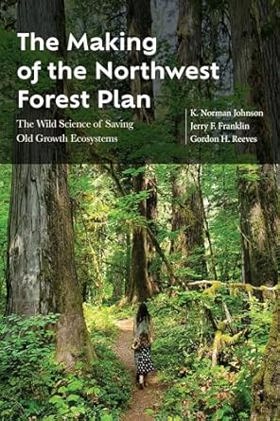
"Tree sitters. Logger protests. Dying timber towns. An iconic species on the brink. The Timber Wars consumed the Pacific Northwest in the late 1980s and early1990s and led political leaders to ask scientists for a solution. The Northwest Forest Plan was the result. For most of the twentieth century, the central theme of federal forest management in the Pacific Northwest had been logging old-growth forests to provide a sustained yield of timber. During the 1970s and 1980s, however, a series of studies by young scientists highlighted the destructive impact of that logging on northern spotted owls, salmon, and the old-growth ecosystem itself. Combining this new science with newly minted environmental laws like the Endangered Species Act, environmental activists obtained court injunctions to stop old-growth logging on federal land, setting off a titanic struggle in the Pacific Northwest to find a way to accommodate conservation imperatives as well as the logging that provided employment for tens of thousands of people. That effort involved years of controversy and debate, federal courts, five science assessments, Congress, and eventually the president of the United States. It led to creation of the Northwest Forest Plan, which sharply and abruptly shifted the primary goal of federal forestry toward conserving the species and ecosystems of old-growth forests. Scientists went from spectators to planners and guides, employing their latest scientific findings and expertise to create a forest plan for 20 million acres that would satisfy the courts. The largest upheaval in federal forest management in history had occurred, along with a precipitous decline in timber harvest, and there was no going back. In this book, three of the scientists who helped craft that change tell the story as they know it: the causes, development, adoption, and implementation of the Northwest Forest Plan. The book also incorporates personal reflections from the authors, short commentaries and histories from key figures- including spotted owl expert Eric Forsman-and experiences from managers who implemented the plan as best they could. Legal expert Susan Jane M. Brown helped interpret court cases and Debora Johnson turned spatial data into maps. The final chapters cover the plan's ongoing significance and recommendations for conserving forest and aquatic ecosystems in an era of megafires and climate change."-- Provided by publisher xv, 457 pages, 16 unnumbered pages of plates : illustrations (some color), maps (some color) ; 23 cm CIRC [ 0 ]
|
2023 |
|
Building Portland 150 years of outstanding architecture in today's central Portland by Victor Graf 
"A treasure trove of facts and factoids, original photos, people, events, weird and picturesque Portland... Your indispensable reference and compact field guide to the great architecture in the one square mile of today's central Portland." --Back cover viii, 106 pages : chiefly color illustrations, map, charts ; 23 cm CIRC [ 0 ]
|
2023 |
|
It did happen here an antifascist people's history by Moe Bowstern , Mic Crenshaw , Celina Flores , Alec Dunn (Writer of introduction), Julie Perini , Eric K. Ward, Erin Yanke 
"Portland, Oregon, 1988. The brutal murder of Ethiopian immigrant Mulugeta Seraw by racist skinheads shocked the city. In response disparate groups quickly came together to organize against white nationalist violence and right wing organizing throughout the Rose City and the Pacific Northwest. It Did Happen Here compiles interviews with dozens of people who worked together during the waning decades of the 20th century to reveal an inspiring collaboration between groups of immigrants, civil rights activists, militant youth, and queer organizers. This oral history focuses on participants in three core groups: the Portland chapters of Anti Racist Action and Skinheads Against Racial Prejudice, and the Coalition for Human Dignity. Using a diversity of tactics-from out-and-out brawls on the streets and at punk shows, to behind-the-scenes intelligence gathering-brave antiracists unified on their home ground over and over, directly attacking right wing fascists and exposing white nationalist organizations and neo-Nazi skinheads. Embattled by police and unsupported by the city, these citizen activists eventually drove the boneheads out of the music scene and off the streets of Portland. This book shares their stories about what worked, what didn't, and ideas on how to continue the fight"-- Provided by publisher xiii, 282 pages : illustrations, map ; 23 cm CIRC [ 0 ]
|
2023 |
|
Constructing a democracy the history, law, and politics of redistricting in Oregon by Norman R. Williams , Oregon State University Press (Publisher) 
"Every ten years, states go through the process of redistricting: choosing how to divide up and apportion their state and federal legislative districts. How the districts are drawn can determine which party wins the district and therefore controls the legislature or Congress. Although the process may be different in every state, the questions are the same: Who draws the maps? Who can prevent gerrymandering? What power do legislatures, governors, courts, and political parties have to influence the process and the outcomes? In Constructing a Democracy, legal scholar Norman Williams presents a comprehensive history of legislative and congressional redistricting in Oregon. Because redistricting impacts the representativeness of the ensuing legislative body, Oregon's constitutional framers, legislators, and courts alike have understandably focused on developing legal rules to constrain the redistricting process. Williams is primarily interested in identifying and understanding the scope of those rules: What legal constraints have existed over time? How aggressively have the courts enforced those restraints? How have political actors undertaken the redistricting task in light of the various rules and the judicial pronouncements regarding those constraints? The redistricting process in Oregon has not drawn national attention the way it has in states like North Carolina and Pennsylvania. But the process in Oregon is notable in several ways, including an early attention to malapportionment, the use of the initiative to reform the process, and the impact of women leaders on the redistricting process. The Oregon process, however, has also notably lagged behind other states, particularly in considering issues of race and minority representation and preventing gerrymandering."-- Provided by publisher ix, 362 pages : map ; 23 cm CIRC [ 0 ]
|
2023 |
|
Forest park exploring Portland's natural sanctuary by Marcy Cottrell Houle 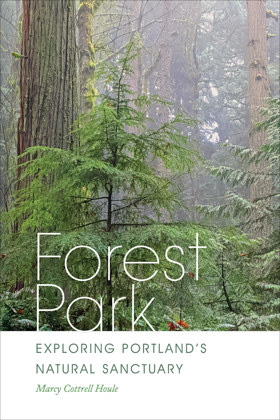
"Situated in the rugged hills west of downtown Portland, Forest Park is the nation's premier urban natural sanctuary. It supports essential habitat for hundreds of native plants and animals, including species at risk, and is one of the largest city parks in the world. While extending critical ecosystem services to the region, it covers miles of outstanding hiking trails, all within minutes of the downtown core. Forest Park: Exploring Portland's Natural Sanctuary showcases this treasure in a new light, offering a compendium of the most up-to-date and comprehensive information available. Twenty-one hikes covering seventy-five miles bring a full awareness of the park's outstanding attributes. Hikes are grouped by theme to encourage people to explore Forest Park's watersheds, geology, lichens and mosses, vegetation, amphibians and reptiles, pollinators, native wildlife, and wildlife corridors. Beautiful photographs and full-color maps accompany each trail description. Forest Park is a shining example of the Pacific Northwest western hemlock community-an ecosystem unique among all temperate forests of the world. It is also an exciting model for a future Urban Biodiversity Reserve, a concept that would recognize the park's scientific, natural, and cultural qualities. Forest Park will help all visitors discover the beauty and wonders of this extraordinary natural resource"-- Provided by publisher xv, 216 pages : color illustrations, color maps ; 23 cm CIRC [ 0 ]
|
2023 |
|
They never asked senryū poetry from the WWII Portland Assembly Center by Shelley Baker-Gard , Michael J. Freiling , Satsuki Takikawa , Duane Watari, Portland Assembly Center (Portland, Or) 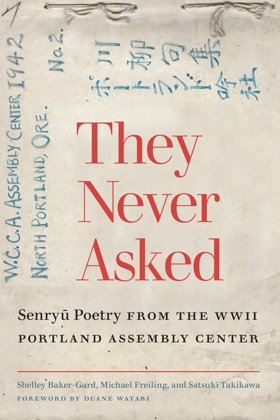
In 1942, after Executive Order 9066 was issued, Japanese families were removed from their homes in Oregon and the Yakima Valley and sent to the Portland International Livestock Exposition Center, where they were housed in converted animal stalls. The Wartime Civil Control Administration forcibly held these Japanese Americans at the Portland Assembly Center until September 1942, when they were transferred to newly built permanent incarceration camps at Minidoka, Heart Mountain, and Tule Lake. The Japanese American communities in Oregon and southern Washington were relatively small and many of the detainees knew each other; they drew on existing family and community networks to help each other through the long summer, living in inhumane conditions under the constant threat of violence. Several members of Bara Ginsha, a Portland poetry group, decided to continue their work while imprisoned at the center, primarily by writing senryū, a type of Japanese poetry related to haiku. They Never Asked is a collection of work produced by Bara Ginsha members in the WCCA camp, based on a journal kept by Masaki Kinoshita. The senryū collected here were written by a group of twenty-two poets, who produced hundreds of poems. Individually, the poems reflect the thoughts and feelings the authors experienced while being detained in the center; collectively, they reflect the resilience and resistance of a community denied freedom. Editors Shelley Baker-Gard, Michael Freiling, and Satsuki Takikawa present translations of the poems alongside the originals, supplemented by historical and literary context and a foreword by Duane Watari, Masaki Kinoshita’s grandson. xiv, 185 pages : illustrations, portraits ; 23 cm CIRC [ 0 ]
|
2023 |
|
Protest city Portland's summer of rage by Rian Dundon (Author, Photographer), Donnell Alexander, Carmen P. Thompson (Writer of introduction) 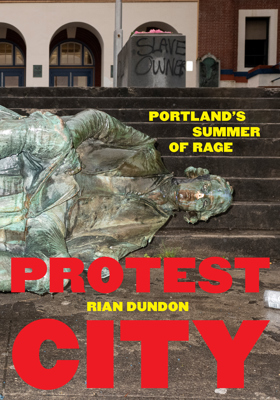
"In the months leading up to the 2020 presidential election, Portland made national news with nightly social justice protests, often met with violent response by counter protestors and law enforcement. Though frequently regarded as a progressive hub, Portland has a long history of racial inequality and oppression, and the city's entrenched divisions gained new attention during the Trump years. The photographs in Protest City present a visceral visual record of this significant moment in Portland's history. Rian Dundon, who has been photographing the rise of extreme politics on the West Coast since 2016, lived only a short walk from the protests that erupted after the murder of George Floyd. For one hundred days, Dundon enmeshed himself in the demonstrations with an unobtrusive point-and-shoot camera. The result is a graphic portrayal of how social movements become politicized, how spectacle serves as a subtext to change in the digital age, and how modern protests blur distinctions among performance, ritual, and surveillance. As he follows the progress of Portland's conflicts, Dundon draws connections to Oregon's legacy as a stronghold of white supremacist extremism and interrogates the role of whiteness in racial justice movements. Dundon's striking photos recreate the immediacy and impact of the protests, while a foreword by journalist Donnell Alexander and introduction by historian Carmen P. Thompson contextualize the uprising's sociopolitical background. A chronology and author's note are also featured"-- Page 4 of cover xxviii, 187 pages : color illustrations ; 26 cm CIRC [ 0 ]
|
2023 |
|
My name is LaMoosh by Linda Meanus , Oregon State University Press (Publisher), Confluence Project (Publisher) 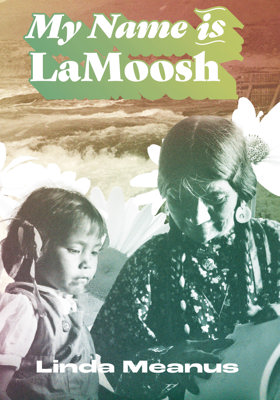
"My Name is LaMoosh is the life story of Warm Springs Tribal Elder Linda Meanus. She grew up with her grandma Flora Thompson and grandpa Chief Tommy Thompson near Celilo Falls, a mighty fishery on the Columbia that was flooded in 1957 by the construction of The Dalles Dam. Linda persevered through this historic trauma and life's challenges to teach young people about the Indigenous ways of the Columbia River. Intended for early readers to learn more about Native American history through a first-hand account, the book is also a reminder that Indigenous people continue to maintain a cultural connection to the land and river that gave them their identity. My Name is LaMoosh includes fact boxes that provide historical, cultural, and environmental context for Linda's personal story. Hundreds of books exist about Lewis and Clark and their journey of "discovery." This book balances our understanding of American history with the long-neglected voices of Indigenous people. Linda's story is not just about historic trauma but also about resilience, perseverance, and reciprocity."-- Provided by publisher 95 pages : illustrations, maps, portraits ; 26 cm CIRC [ 0 ]
|
2023 |
|
Field guide to Oregon rivers by Tim Palmer (Author, Photographer), William E. Avery (Illustrator), Oregon State University Press (Publisher) 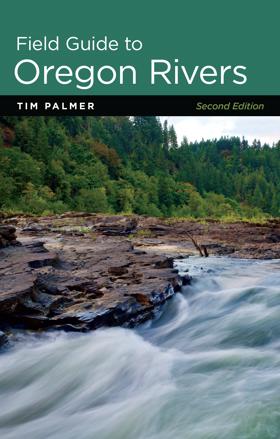
"In this updated edition of his classic Field Guide to Oregon Rivers, Tim Palmer gives us an unprecedented reference, introducing the state's waterways and offering outdoor enthusiasts and resource professionals an interpretive approach to an extraordinary network of streams. He begins with natural history-geology, climate, hydrology, plants, and wildlife-then profiles 111 rivers with notes about nature, fish, and conservation, followed by essential tips on where to see each river, to hike along the shores, to fish, and to explore by canoe, kayak, and raft. Illustrations identify riparian plants and animals while more than 150 photographs showcase a magnificent rivers estate. This volume is an essential outdoor companion for Oregonians and visitors alike."-- Provided by publisher 319 pages : color illustrations, color maps ; 21 cm CIRC [ 0 ]
|
2023 |
|
Macrolichens of the Pacific Northwest by Bruce McCune (Author, Photographer), Linda Geiser , Sylvia Duran Sharnoff (Photographer), Stephen Sharnoff (Photographer), Martin Hutten (Photographer), Joseph Di Meglio (Photographer), Richard Droker (Photographer), Peter R. Nelson (Photographer), Jim Riley (Photographer), Jason Hollinger (Illustra 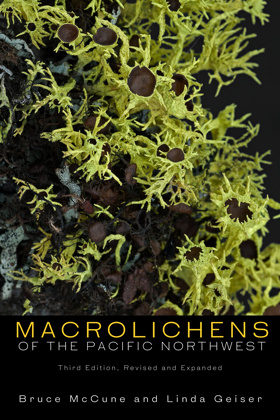
"A key component in healthy ecosystems, lichens can be found in almost any natural habitat in the Pacific Northwest. This comprehensive guide to the region's macrolichens is intended for use by beginners as well as specialists: weekend naturalists will be able to identify specimens and recognize the great diversity of lichens, while lichenologists and mycologists will gain greater knowledge of the distribution and abundance of various species. This updated third edition of Macrolichens of the Pacific Northwest includes 20 new species and an expanded introduction. It features keys to 109 genera and 681 species of Oregon and Washington macrolichens-all the macrolichens known or expected to occur in the two states. The keys also provide excellent coverage for lichens of Idaho and Montana, inland to the Continental Divide. Color photographs and detailed descriptions emphasize lichens prevalent in forested ecosystems. The illustrated glossary and introductory material cover the terminology needed to identify macrolichens and provide information on collection and handling. The biology, ecology, and air-quality sensitivity of lichens are discussed; regional air-quality sensitivities are provided for nearly 200 species. Macrolichens of the Pacific Northwest will prove invaluable to anyone seeking to identify lichens or to better understand these organisms and their vital role in the natural world."-- Provided by publisher 549 pages : illustrations (some color), color maps ; 23 cm CIRC [ 0 ]
|
2023 |
|
Skid Road on the frontier of health and homelessness in Seattle by Josephine Ensign 
Affluent Seattle has one of the highest numbers of unhoused people in the United States. In 2021 an estimated 40,800 people experienced homelessness in Seattle and King County during the year, not counting the significant number of "hidden" homeless people doubled up with friends or living in and out of cheap hotels. In Skid Road Josephine Ensign uncovers the stories of overlooked and long-silenced people who have lived on the margins of society throughout Seattle's history. How, Ensign asks, has a large, socially progressive city like Seattle responded to the health and social needs of people marginalized by poverty, mental illness, addiction, racial/ethnic/sexual identities, and homelessness? Through extensive historical research, Ensign pieces together the lives and deaths of those not included in official histories of the city. Drawing on interviews, she also shares a diversity of voices within contemporary health and social care and public policy debates. Ensign explores the tensions between caregiving and oppression, as well as charity and solidarity, that polarize perspectives on homelessness throughout the country 288 pages, 10 unnumbered pages of plates : illustrations (black and white) ; 23 cm CIRC [ 0 ]
|
2023 |
|
Jesintel living wisdom from Coast Salish elders by Darrell Hillaire , Natasha Frey , Beau Garreau (Photographer), Children of the Setting Sun Productions (Issuing body) 
A gathering of stories for all generations, past, present, and future. Dynamic and diverse, Coast Salish culture is bound together by shared values and relations that generate a resilient worldview. Jesintel—"to learn and grow together"—characterizes the spirit of this book, which brings the cultural teachings of nineteen elders to new generations. Featuring interviews that share powerful experiences and stories, Jesintel illuminates the importance of ethical reciprocal relationships and the interconnectedness of places, land, water, and the spirit within all things. Elders offer their perspectives on language revitalization, Coast Salish family values and naming practices, salmon, sovereignty, canoe racing, and storytelling. They also share traumatic memories, including of their boarding school experiences and the epidemics that ravished their communities. Jesintel highlights the importance of maintaining relations and traditions in the face of ongoing struggles. Collaboration is at the heart of this work and informs how the editors and community came together to honor the boundless relations of Coast Salish people and their territories. Elders Interviewed: Tom Sampson (Tsartlip First Nation), Virginia Cross (Muckleshoot Tribe), Ernestine Gensaw (Lummi Nation), Steve and Gwen Point (Stó:lō Nation), Gene and Wendy Harry (Malahat Nation), Claude Wilbur (Swinomish Tribe), Richard Solomon (Lummi Nation), Elaine Grinell (Jamestown S’Klallam Tribe), Arvid Charlie (Cowichan Nation), Amy George (Tsleil-Waututh Nation), Nancy Shippentower (Nisqually Tribe), Nolan Charles (Musqueam Indian Band), Andy de los Angeles (Snoqualmie Tribe), Jewell James (Lummi Nation), Kenny Moses Sr. Family (Tulalip Tribal Nation), Ramona Morris (Lummi Nation) xiv, 207 pages : illustrations (chiefly color), color maps ; 26 cm CIRC [ 0 ]
|
2023 |