Catalog of British Columbiana and Pacific Northwest Americana
Encyclopedia Cascadia Catalog contains book titles of mostly non-fiction Pacific Northwest Coast of North America Titles (primarially British Columbia, Idaho, Oregon and Washington State) in an easy-to-understand title catalog. If you see a link with this badge ONLINE CIRC it means that there is an online institution that provides free access to that title. In some cases there may be more than one institution hosting the title digitally.
| Catalog Title | Published |
|---|---|
|
A northwest rail pictorial II by Warren W. Wing 
Handsomely done collection of black and white (and a very few color) photos showcasing the railways and streetcars of the Pacific Northwest. Includes vintage photos by James Turner as well as modern ones showing the end of steam and first generation of diesels, such as Northern Pacific Baldwins, Milwaukee Road Alcos, Great Northern F-units and Geeps from all the major roads. Includes rare construction photos showing the Milwaukee Road being built across the Snoqualmie Pass as well as Milwaukee Road steam, diesel and electric locomotives. There are logging railroads and shorelines and even glimpses of streetcars in Portland and Seattle. The Pacific Coast Railway, one of Mr. Wing's favorites, is covered in an expanded section highlighting its wooden trestles, small locomotives, waterfront facilities, and truss-rod rolling stock. 192 pages with index. 190 pages : chiefly illustrations ; 29 cm CIRC [ 1 ]
|
1991 |
|
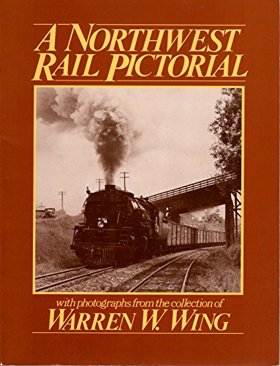
A northwest rail pictorial by Warren W. Wing
|
1983 |
|
A naturalist's guide to the hidden world of Pacific Northwest dunes by George O. Poinar 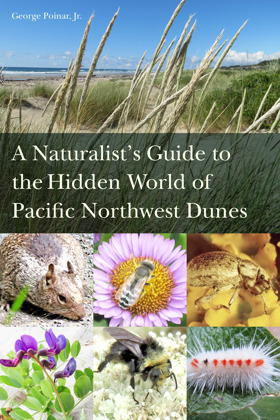
From Northern California to British Columbia, coastal dunes and beaches provide a unique habitat for plants, animals, and insects. With A Naturalist’s Guide to the Hidden World of Pacific Northwest Dunes, hikers and beach walkers on the Pacific Coast will discover a teeming metropolis of life in what may seem a barren landscape to the inattentive eye. Contrary to casual observation, intricate patterns of life occur in coastal dunes and along the strand. Plants, insects, and parasites abound. George Poinar’s in-depth knowledge of this hidden world is unsurpassed, and his enthusiasm for it is infectious. He has been investigating and photographing specimens along the Pacific Coast for more than four decades, and presents this trove of knowledge to the reader in a clear, engaging style. Poinar exposes the small, almost blind weevils that live under driftwood and slowly degrade the wood, the omnipresent beach hoppers that leap up at every step and flee from vicious rove beetles, dune ants that search out aphids for honeydew but are attacked themselves by dive-bomber wasps. He shows why he considers Beach pea, Seashore lupine, and Coast willow keystone species because they provide food and shelter for so many different life forms. With a focus on the associations between dune plants and other life forms, the book includes over 600 full-color photographs from the author’s extensive collection. While it is accessible enough to serve as a field guide for hikers and outdoor enthusiasts, comprehensive data for biologists studying dune ecology are also included. A Naturalist’s Guide to the Hidden world of Pacific Northwest Dunes belongs on every beach house bookshelf from California to Canada. Naturalists, scientists, and anyone who walks along the coast will welcome this lavishly-illustrated reference. 286 pages : color illustrations ; 23 cm CIRC [ 0 ]
|
2016 |
|
A narrative of events and difficulties in the colonization of Oregon, and the settlement of California by Hall J Kelley 
Published as a bitter retrospective by early American expansionist Hall J. Kelley, this narrative details his obsessive, decades-long crusade to promote the American colonization of the Oregon Country during the 1820s and 1830s. The text chronicles his arduous journey to the Pacific Northwest, his near-fatal experiences in California, and his intense clashes with the British Hudson's Bay Company, whom he accused of actively thwarting his utopian settlement plans. Throughout the volume, Kelley airs his profound grievances against both the British monopoly and the United States government, demanding recognition and financial compensation for his role in sparking the mass migration that eventually secured the territory. A keen insight drawn from the text regarding Oregon is how Kelley's fanaticism highlights the paradoxical nature of early frontier boosterism; while his relentless printed propaganda successfully catalyzed the "Oregon Fever" that ultimately flooded the Willamette Valley with American pioneers, his own lack of pragmatic leadership and profound paranoia rendered him a tragic, marginalized figure in the very colonization movement he helped create. 92 pages ONLINE CIRC [ 1 ]
|
1852 |
|
A municipal mother Portland's Lola Greene Baldwin, America's first policewoman by Gloria E. Myers 
On April 1, 1908, Lola G. Baldwin, aged forty-eight, was sworn in "to perform Police Service" for the city of Portland, Oregon. She was the first woman hired by an American municipality to carry out regular enforcement duties. In telling Lola Baldwin's story, Gloria Myers examines the social and cultural impulses that gave rise to the policewoman idea. The Progressive Era redefined the role of women in society; Baldwin's career benefited from the Progressive belief that women could ameliorate urban evil as they had earlier civilized the household. The need for the urban policewoman arose out of concern for the moral and physical welfare of families, single working women, and children living in the cities. Supported by socially active women's organizations and informed by the ideals of "social hygiene," the first policewoman led a crusade against urban vice, deviance, and corruption in the Rose City. Preventive policing strategies developed by "municipal mothers" like Baldwin aid and influence policing policies to this day viii, 232 pages : illustrations ; 24 cm CIRC [ 0 ]
|
1995 |
|
A Muckleshoot poetry anthology at the confluence of the Green and White rivers by Susan Landgraf 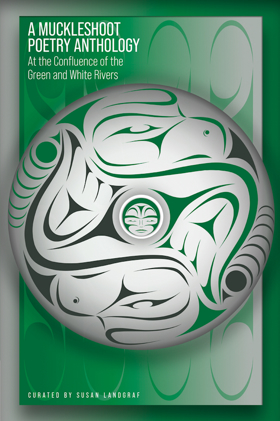
As part of workshops held on the Muckleshoot Indian Reservation, fifty-four poets—most from the Muckleshoot Tribal School—created the works in this collection. Their pieces are about searching and belonging. Loss and finding. All share a common theme—a reaching back and a reaching forward—sometimes in the same poem. They highlight Muckleshoot history and culture, but also spotlight individual histories, lessons, and beliefs. xvii, 91 pages : color illustrations, color map ; 23 cm CIRC [ 0 ]
|
2024 |
|
A most unusual colony Vancouver Island 1849-1860 by Maureen Duffus 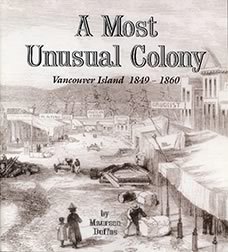
To travel back in time to the Colony of Vancouver Island, read the story of the Hudson's Bay years as told through recollections of a colonial childhood by the fictional Kate Murray and the letters of the real Mary Yates. The letters are inventions, but the real Mary lived through the events of the early years. Their stories combine to give an authentic glimpse of the extraordinary life inside the palisades of Fort Victoria, the world of children at Chaplain Staines's school, the settlers who rebelled against the HBC's autocratic rule, and the growing sophistication of colonial social life before and after BC's gold rush of 1858. viii, 156 pages : illustrations, maps, portraits ; 24 cm CIRC [ 1 ]
|
1996 |
|
A maritime history of central Whidbey Island. Part 1, The sinking of the Calista by Roger M. Sherman 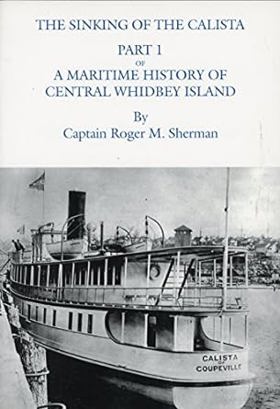
Authored by maritime historian Roger M. Sherman, A Maritime History of Central Whidbey Island, Part 1: The sinking of the Calista details the dramatic local shipping losses and aquatic commerce that shaped the marine highway of Washington's Puget Sound. The volume centers on the fateful shipwreck of the steamer Calista, exploring the intricate mechanics of early 20th-century coastal navigation, passenger travel, and the relentless dangers posed by shifting winds and hidden reefs. Through detailed archival research, contemporary newspaper accounts, and maritime logs, the text brings to light the perilous conditions faced by the small vessels that served as the primary lifeblood of island communities. A keen insight drawn from the work is how maritime disasters served as tragic catalysts for regulatory and technological reform in inland sea transport; the loss of vessels like the Calista forced an unyielding reckoning with corporate safety standards, transforming public attitudes toward the accountability of commercial navigation lines operating in dangerous Pacific Northwest waters. xii, 144 pages : illustrations, maps ; 26 cm CIRC [ 1 ]
|
1998 |
|
A man for all seasons Monroe Sweetland and the liberal paradox by William G. Robbins 
"The life of prominent Oregon political leader Monroe Sweetland spans the spectrum of 20th-century America. Through seven decades, Sweetland experienced the economic collapse of the Great Depression, the unparalleled violence of a nation at war, the divisiveness of Cold War politics, and the cultural and political turmoil of the Vietnam War. Historian William G. Robbins illuminates the wrenching transformation of American political culture in A Man for All Seasons : Monroe Sweetland and the Liberal Paradox. Racial and economic inequalities motivated much of Sweetland's civic life, including his lifelong memberships in the American Civil Liberties Committee, the National Association for the Advancement of Colored People, the Urban League, the Japanese American Citizens League, and the Red Cross, where Sweetland worked repatriating American prisoners of war after Japan's surrender. Robbins' portrait is holistic, exploring Sweetland's socialist beginnings, inconsistencies in his politics--especially during the Cold War--and his regional legacy. He was the most important person in the resurgence of the modern, liberal Oregon Democratic Party from the late 1940s to the 1960s. He joined the National Education Association in 1964 and became the driving force behind the Bilingual Education Act of 1968 and the fight for the age-18 vote, achieved in the ratification of the 26th amendment in 1971. Monroe Sweetland was a nationally prominent figure, whose fights bequeathed to modern America important legislation that shaped its political landscape"-- Provided by publisher xi, 300 pages ; 24 cm CIRC [ 0 ]
|
2015 |
|
A look to the past Kirkland by Matthew W. McCauley, Kirkland Heritage Society 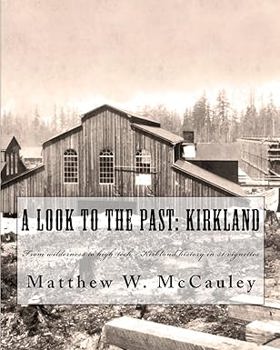
Fifty of the best of Matt McCauley's "A Look to the Past: Kirkland" newspaper columns, edited to present new information and many photos from the prized collection of the Kirkland Heritage Society.In 1870 two teenage boys claim homesteads on Juanita Bay, and to pay for improvements on their homesteads, struggle for the rest of their short lives logging timber on Lake Washington’s eastern shore. In 1872 a couple and their 22-year-old son stake claims at Houghton, carving homes out of dark, dense, first-growth timber. Other pioneers arrive and claim homesteads on the eastern shore. In 1887 a flamboyant young newspaper publisher convinces an even-tempered English steel manufacturer to locate a new, world-class steel mill on a tiny lake between Houghton and Juanita, and to plat a town site on Lake Washington’s shore, which will become Kirkland. Their vision is big. They want to create nothing less than a “Pittsburgh of the Pacific,” but reality intervenes. The speculative bubble bursts and fortunes are lost, lives are broken, and in the shambles of their dreams the scrappy pioneers refuse to quit. They build their town anyway.Kirkland’s past reads like a great western novel, peopled as it is by pioneer settlers, land speculators, loggers, stump ranchers, land developers, steam boatmen, boat builders, WWII Rosie-the-riveters, finally, the suburbanites of post-WWII.Kirkland native Matthew W. McCauley wrote a popular newspaper column, “A Look to the Past,” in the 1990s in which he tells these stories. Here are 50 of the best, updated with new research, and accompanied by many of images from the Kirkland Heritage Society’s prized collection."It is a pleasure having Matt McCauley’s A Look to the Past articles finally gathered together in one volume. When they were first published in the Kirkland Courier two decades ago, they were such a joy to read that I saved most of them in my clippings file. I say “most” because I now see that I missed a few, and I was delighted to read some “new” ones after all these years. What a treat!" — Alan Stein, Staff Historian, HistoryLink.org"Matt is ... an old soul. As a young boy he seemed to show wisdom only seen in older people. Matt always loved older people and their stories. Today, Kirkland is the beneficiary of his interest in the people and history of Kirkland. Matt is a stickler for detail and accuracy. He wants people remembered and respected." — Loita Hawkinson, Kirkland Heritage Society 271 pages : illustrations, maps ; 26 cm CIRC [ 1 ]
|
2011 |
|
A little dam problem by Jim Jones 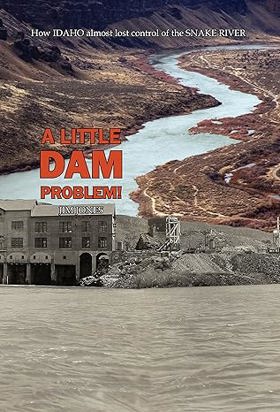
A Little Dam Problem chronicles an epic fight over water rights between the State of Idaho and Idaho Power Company. A court decision in 1982 gave Idaho Power virtual control over the flow of the Snake River in southern Idaho. An unlikely political team Democrat Governor John Evans and Republican Attorney General Jim Jones joined with legislators and water users to undo the damage caused by the decision. Jim Jones brings readers into the midst of the battle, providing an insider view of the struggle between the State of Idaho and a politically powerful adversary. The story reads much like those old western movies where a powerful landowner grabs up all of the water resources, depriving sodbuster families of the precious resource. The book opens a window into the real world of government and politics. viii, 374 pages ; 23 cm CIRC [ 0 ]
|
2016 |
|
A little bit of land by Jessica Gigot , Oregon State University Press (Publisher) 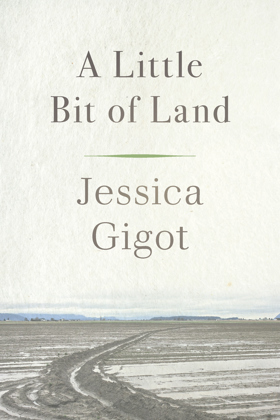
From harvesting herbs to midwifing new lambs, Jessica Gigot invites readers into rural life and explores the uncommon road that led her there. Fascinated by farming and the burgeoning local food movement, she spent her twenties wandering the Pacific Northwest as a farm intern and eventually a graduate student in horticulture, always with an eye towards learning as much as she could about how and why people farm. Despite numerous setbacks and the many difficulties of growing food, from soggy soil to rambunctious rams, she created a life for herself defined by resilience and a genuine love of nature. In A Little Bit of Land, Gigot explores the intricacies of small-scale agriculture in the Pacific Northwest, the changing role of women in this male-dominated industry, and questions of sustainability, economics, and health in our food system. Gigot alternates between describing the joys and challenges of small farm life and reflecting on her formative experiences outdoors and in classrooms throughout the region—from Ashland in southern Oregon to the Skagit Valley in Washington State. Throughout, she discovers what it means to find roots, start a family, and cultivate contentment in this unique corner of the world. A Little Bit of Land is a moving memoir about falling in love with a place and all its inhabitants. It will be relished by readers interested in regenerative agriculture and anyone who is curious about what it means to care about the land. About the author: Jessica Gigot is a poet, farmer, and writing coach. She lives on a little sheep farm in the Skagit Valley in Washington State. Her second book of poems, Feeding Hour, won a Nautilus Award and was a finalist for the 2021 Washington State Book Award. Her writing and reviews appear in publications such as the New York Times, Seattle Times, Orion, Terrain.org, and Poetry Northwest. Jessica's podcast and newsletter, Her Deepest Ecologies, was selected for the 2024 Jack Straw Artist Support Program. 150 pages ; 23 cm CIRC [ 0 ]
|
2022 |
|
A Liberal-Labour lady the times and life of Mary Ellen Spear Smith by Veronica Jane Strong-Boag 
"A Liberal-Labour Lady restores British Columbia's first female MLA and the British Empire and Commonwealth's first female cabinet minister to history. An imperial settler, liberal-labour activist, and mainstream suffragist, Mary Ellen Smith demanded a fair deal for "deserving" British women and men in the late nineteenth and early twentieth centuries. Born in England in 1863, the daughter and wife of miners, she emigrated to Nanaimo, BC, in 1892. As she became a well-known suffragist and her husband Ralph won provincial and federal elections, the power couple strove to shift Liberal parties leftward to benefit women and workers, while still embracing global assumptions of British racial superiority and bourgeois feminism's privileging of white women. His 1917 death launched Mary Ellen as a candidate in a tumultuous 1918 Vancouver by-election. In the BC legislature until 1928, Smith campaigned for better wages, mothers' and old age pensions, and greater justice, even as she endorsed anti-Asian, settler, and pro-eugenic policies. Her death in 1933 ended an experiment in extending democracy that was both brave and deeply flawed. A Liberal-Labour Lady sheds light on a Canadian suffragist undeservedly neglected by scholars and forgotten by posterity. It also illuminates a half a century of political history, first-wave feminism, immigration, and labour history set in a broad context of shifting ideas, ideologies, and strategies. Although simultaneously intrepid and flawed, Mary Ellen Smith is revealed to be a key figure in early Canada's compromised struggle for greater justice, who helped set the contours of a modern Canada."-- Provided by publisher xiii, 274 pages : illustrations (black and white) ; 24 x 16 cm CIRC [ 0 ]
|
2021 |
|
A journey with E.J. Hughes one collector's odyssey by Jacques Barbeau, E. J. Hughes, Ian M. Thom 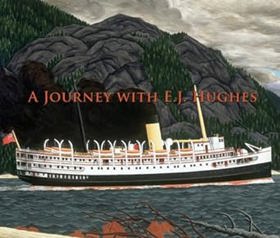
From the moment Jacques Barbeau fell in love with his first E.J. Hughes painting in 1958, he never waivered in his certainty that Hughes would one day become an iconic figure on the Canadian art scene. Barbeau's voice, however, was in the minority and for many years he was one of only a handful of adventuresome collectors who sought out the artist's works. Eventually, the marketplace validated Barbeau's opinion and when Fishboats, Rivers Inlet (1946, oil on canvas) sold at auction for $920,000 in 2004, it served to solidify Hughes' place amongst the great artists of his time. Through the centuries, the passionate collector has always been central to the emergence of important artists. A Journey with E.J. Hughes provides an insightful look into the world of the collector, the artist and where their realms intersect. This very human story of art as master sheds important new light on Hughes and his work. Publisher's note xi, 180 pages : illustrations (some color) ; 24 x 28 cm CIRC [ 1 ]
|
2005 |
|
A journey back to nature a history of Strathcona Provincial Park by Catherine Marie Gilbert 
"A fascinating account of the century-long effort to define, access, preserve, develop, and exploit the uniquely beautiful area of rugged wilderness now known as Strathcona Provincial Park on Central Vancouver Island. Strathcona Provincial Park is situated in the middle of Vancouver Island, bordering Clayoquot Sound on the west, Port Alberni on the south, and a large property once known as the Esquimalt and Nanaimo (E&N) land grant on the east. Measuring 250,000 hectares, this breathtaking park, with its gorgeous mountains, lakes, and waterfalls, is a nature lover's paradise. Yet behind this picture of serenity lies a volatile history. A Journey Back to Nature: A History of Strathcona Provincial Park takes a comprehensive look at this rich, beautiful stretch of wilderness and the competing interests that struggled to protect it, define it, and/or control it--from Indigenous Peoples, who have lived on the land for millennia, to European explorers and industrialists, who could not see beyond the wealth of its natural resources, to early conservationists and enterprising settlers, who wished to preserve the area as a wilderness playground for BC's booming population and nascent tourist industry. Over the course of a century, Strathcona Provincial Park was frequently at the centre of some of the most heated public debates in BC history, between economic and environmental interests. This detailed account--lavishly illustrated with archival and contemporary photographs and maps--uncovers the intriguing history, complex legacy, and majestic natural beauty of BC's first provincial park."-- Provided by publisher 248 pages, 32 unnumbered pages of plates : illustrations (some color), maps ; 23 cm CIRC [ 1 ]
|
2021 |
|
A home on the South Fork an early history of Acme--a northwest Washington community by Margaret A. Hellyer 
"Coast Salish people were the only occupants of the Northwest corner of Washington State for millennia. They retained their unique reign over the land until the mid-1850s when European Americans arrived on the shores of Bellingham Bay. Those early businessmen, adventurers, and settlers seeking a new beginning would forever change the Northwest landscape. Washington Territory had not yet become a state and the land was not surveyed by the federal government when the first outsiders arrived. Once the small towns lining Bellingham Bay began to grow, a handful of settlers traveled inland to stake land claims. The pioneers who made their way up the South Fork of the Nooksack River faced immense hardship and extreme isolation as they established homesteads and put down roots in the wilderness of Whatcom County. This is the story of those settlers and the small town they built in the South Fork valley of Whatcom County, including early contact with the Nooksack Indians. Their stories are told through records, interviews, letters, and a wealth of early images that document their lives and progress as they transformed their corner of Northwest Washington wilderness into a community called Acme."--Page 4 of cover 296 pages : illustrations, maps ; 24 x 28 cm CIRC [ 1 ]
|
2018 |
|
A history of Whidbey's Island (Whidbey Island), State of Washington by George Albert Kellogg, Island County Historical Society 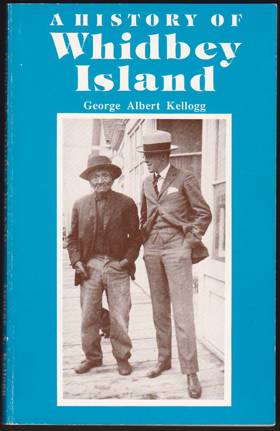
Published by the Island County Historical Society and authored by early pioneer descendant George Albert Kellogg, A History of Whidbey's Island, State of Washington chronicles the foundational decades of Puget Sound's largest island through the eyes of those who settled it. The book details the arrival of the first European-American homesteaders, maritime trading exploits, encounters with local Indigenous populations, and the arduous establishment of agriculture and civic infrastructure across the mid-to-late 19th century. Drawing on firsthand accounts, local lore, and early archival records, the text preserves the gritty, self-reliant spirit of a community forged in maritime isolation. A keen insight drawn from the work is how pioneer-authored local histories functioned as acts of cultural legitimation; by meticulously recording the trials of early settlement, authors like Kellogg sought to rapidly replace a deep, ancient indigenous geography with a heroic, permanent Anglo-American narrative of progress. 183 pages : maps, portrait ; 21 cm CIRC [ 1 ]
|
2001 |
|
A history of Wenatchee the apple capital of the world by John Arthur Gellatly
|
1963 |
|
A history of Victoria, 1842-1970 by Harry Gregson 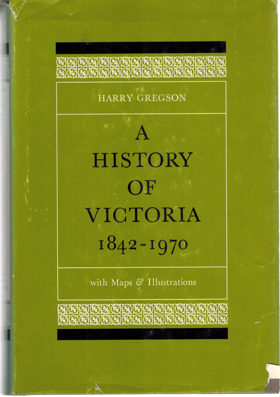
"Victoria as a trading post, gold rush town, despondent backwater, thriving industrial center, pleasant residential resort and busy university city... these are some of the developments entertainingly described..." Dust jacket ix, 246 pages illustrations, maps 24 cm CIRC [ 1 ]
|
1970 |
|
A history of the state of Washington by Lancaster Pollard
Published in 1937, Lancaster Pollard's A History of the State of Washington is a comprehensive, multi-volume chronicle that documents the Pacific Northwest's rapid transformation from an isolated frontier territory into an established, industrialized state. The text meticulously details the economic and political forces that shaped the region, covering the early fur trade, pioneer settlements, complex Native American relations, and explosive urban growth. A keen insight drawn from the work is how the state's extreme geographic isolation from the eastern United States forged a distinct, self-reliant "area-kinship" among early settlers, driving them to rapidly develop robust, localized economies centered on timber and agriculture. Additionally, the latter half of the work serves as an invaluable genealogical archive by preserving hundreds of detailed biographical sketches of the prominent pioneers and civic leaders who built Washington's foundational communities. ONLINE CIRC [ 1 ]
|
1900 |
|
A history of the Snoqualmie Valley by Ada Snyder Hill
|
1970 |
|
A history of the San Juan water boundary question, as affecting the division of territory between Great Britain and the United States by William Fitzwilliam Milton 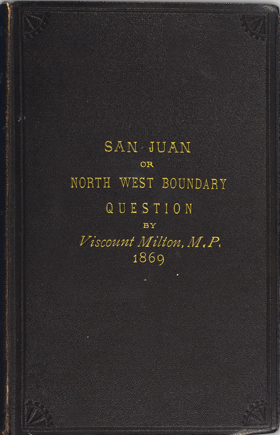
Published in 1869, Viscount William Fitzwilliam Milton’s treatise provides a detailed, staunchly British perspective on the diplomatic stalemate over the San Juan archipelago, a territorial dispute famously ignited by the 1859 "Pig War." The text meticulously dissects the geographic and legal ambiguities of the 1846 Oregon Treaty, which vaguely established the international water boundary through the "middle of the channel" separating Vancouver Island from the mainland. Milton forcefully argues that the boundary must follow the Rosario Strait rather than the Haro Strait, a cartographic interpretation that would have permanently placed San Juan, Lopez, and Orcas islands under the British Crown. A keen insight drawn from the volume is how Milton's exhaustive legal arguments inadvertently reveal the profound anxieties driving British imperial strategy in the Pacific Northwest. By framing the retention of the archipelago not merely as a matter of territorial pride but as an absolute naval necessity to protect the sea lanes to Victoria, the book illustrates how these local island channels and ferry routes briefly became the high-stakes geopolitical linchpin for controlling the entire Puget Sound. 446 pages : 2 folded maps ; 23 cm ONLINE CIRC [ 1 ]
|
1869 |
|
A History of the Deschutes country in Oregon by Deschutes County Historical Society
A History of the Deschutes Country in Oregon by the Deschutes County Historical Society is a comprehensive 1985 regional history published locally in Bend, Oregon, to preserve the pioneer heritage of the state's central high desert. The volume chronicles the region's dramatic transformation from early Indigenous presence and rugged frontier exploration into a booming 20th-century timber and agricultural hub. It meticulously details the fierce "railroad wars" along the Deschutes River gorge, the establishment of massive ponderosa pine sawmills that drove the local economy, and the civic growth of communities like Bend, Redmond, and Sisters. Ultimately, featuring extensive family genealogies, pioneer reminiscences, and archival photographs, it serves as an indispensable, community-driven resource for regional historians seeking to understand the industrial, civic, and cultural foundation of Central Oregon. 530 pages : illustrations ; 29 cm CIRC [ 1 ]
|
1985 |
|
A history of the Catholic Church in the Pacific Northwest, 1743-1983 by Wilfred P. Schoenberg 
A History of the Catholic Church in the Pacific Northwest, 1743-1983 by Wilfred P. Schoenberg is a monumental 1987 historical volume that provides a comprehensive chronicle of Catholic missionary work, institutional growth, and religious influence across the region. Spanning more than two centuries, the book details everything from the earliest pioneer priests and Native American missions to the establishment of modern dioceses, schools, and hospitals in Washington, Oregon, Idaho, and Montana. Ultimately, it serves as an exhaustive and scholarly reference that captures the profound spiritual and cultural impact of the Catholic faith on the broader frontier development of the Pacific Northwest. xi, 883 pages, 16 unnumbered pages of plates : illustrations ; 24 cm CIRC [ 0 ]
|
1987 |
|
|
1942 |