Catalog of British Columbiana and Pacific Northwest Americana
Encyclopedia Cascadia Catalog contains book titles of mostly non-fiction Pacific Northwest Coast of North America Titles (primarially British Columbia, Idaho, Oregon and Washington State) in an easy-to-understand title catalog. If you see a link with this badge ONLINE CIRC it means that there is an online institution that provides free access to that title. In some cases there may be more than one institution hosting the title digitally.
| Catalog Title | Published |
|---|---|
|
21 Things You May Not Know about the Indian Act Helping Canadians Make Reconciliation with Indigenous Peoples a Reality by Bob Joseph 
Since its creation in 1876, the Indian Act has dictated and constrained the lives and opportunities of Indigenous Peoples, and is at the root of many enduring stereotypes. Bob Joseph's book comes at a key time in the reconciliation process, when awareness from both Indigenous and non-Indigenous communities is at a crescendo. Joseph examines how Indigenous Peoples can return to self-government, self-determination, and self-reliance and why doing so would result in a better country for every Canadian. He dissects the complex issues around the Indian Act, and demonstrates why learning about its cruel and irrevocable legacy is vital for the country to move toward true reconciliation. Bob Joseph, founder of Indigenous Corporate Training Inc., has provided training on Indigenous relations since 1994. As a certified Master Trainer, Bob has assisted both individuals and organizations in building Indigenous relations. His Canadian clients include all levels of government, Fortune 500 companies, financial institutions, including the World Bank, small and medium-sized corporate enterprises, and Indigenous Peoples. He has worked internationally for clients in the United States, Guatemala, Peru, and New Caledonia in the South Pacific. Bob Joseph is an Indigenous person, or more specifically a status Indian, and is a member of the Gwawaenuk Nation. The Gwawaenuk is one of the many Kwakwaka'wakw tribes located between Comox and Port Hardy on Vancouver Island and the adjacent mainland of British Columbia. He comes from a proud potlatch family and is an initiated member of the Hamatsa Society. As the son of a hereditary chief, he will one day, in accordance with strict cultural laws, become a hereditary chief. Advance praise: "I have a deep hope for Canada that there can be reconciliation. I want every Canadian to imagine a Canada in which every person will live with dignity, value, and purpose. But to do that, there must be reflection on our shared history and the harmful periods and events that continue to haunt us as a nation. Understanding the Indian Act is fundamental to understanding why those harmful periods and events took place. Bob Joseph's book is an invaluable tool for Canadians who want to understand the past in order to contribute to reconciliation in our country." ?Chief Dr. Robert Joseph, O.B.C., Ambassador, Reconciliation Canada "From declaring cultural ceremonies illegal, to prohibiting pool hall owners from granting Indigenous Peoples entrance, from forbidding the speaking of Indigenous languages, to the devastating policy that created residential schools, Bob Joseph reveals the hold this paternalistic act, with its roots in the 1800s, still has on the lives of Indigenous Peoples in Canada in the twenty-first century. This straightforward book is an invaluable resource. There is much for non-Indigenous people to learn and to do. But equally important, there is much to unlearn and to undo. The time is right for this book. Thank you, Bob Joseph. Gilakas'la." Shelagh Rogers, O.C., Truth and Reconciliation Commission of Canada "Increasing Canadians' knowledge about the terrible foundation this country has been built on is a critical part of reconciliation. Bob Joseph has highlighted some of the unbelievable provisions of the Indian Act and how they have impacted First Nations in Canada, and gives a brief overview of what we may replace it with going forward. His book provides helpful context to the dialogue that needs to take place in Canada." ?Kim Baird, O.C., O.B.C.; Owner, Kim Baird Strategic Consulting; Member of the Tsawwassen First Nation 160 pages CIRC [ 0 ]
|
2018 |
|
|
1991 |
|
110 years with Josephine the history of Josephine County, Oregon, 1856-1966 by Jack Sutton, Josephine County Historical Society
|
1966 |
|
100 days in the San Juans a 1946 voyage through the San Juan Islands by June Burn, Theresa Morrow, Nancy Prindle 
June Burn, born Inez Chandler Harris (1893-1969), began her writing career in 1917 for McCall's. In 1919 she married Farrar Burn (1888-1974), and over the next fifty years they traveled extensively around the United States. They raised their two sons North (1921-1980) and South (1924-1994) in Washington's San Juan Islands. Burn's 1941 autobiography "Living High: An Unconventional Autobiography," documents much of her early life story, particularly their time on Waldron Island. 163 pages : illustrations, map, portraits ; 27 cm CIRC [ 1 ]
|
1983 |
|
1, 2, 3 Salish Sea a pacific northwest counting book by Nikki McClure 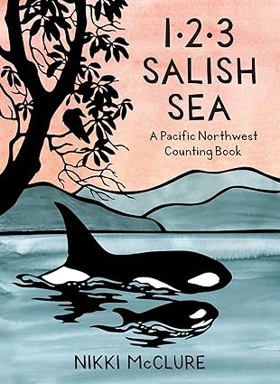
This beautiful natural history counting book features artist Nikki McClure's stunning papercut artwork of flora and fauna found in and alongside the Salish Sea. A celebration of the unique Salish Sea ecosystem, this counting book will inspire kids to learn more about the creatures who are found here, like stubby squids, lumpsuckers, banana slugs, orcas, nudibranchs, and sculpin. Each image is lovingly created by artist Nikki McClure in her intricate papercut style and captures her passion for this special place in the Pacific Northwest. 1 volume (unpaged) : illustrations (some color) ; 24 cm CIRC [ 0 ]
|
2021 |
|
"Yours for liberty" selections from Abigail Scott Duniway's suffrage newspaper by Abigail Scott Duniway, Jean M. Ward, Elaine A. Maveety 
Between 1871 and 1887, Duniway, a leader in the woman suffrage movement, chronicled this "true history" in the pages of The New Northwest, one of the few newspapers in the nation devoted to woman's advancement. With its motto of "Free Speech, Free Press, Free People," Duniway's weekly reform journal aimed to expose and combat social injustice of all kinds. Yours for Liberty, the first published volume of Duniway's writings from The New Northwest, provides a vivid portrait of this pioneering suffragist and her work. The collected essays, news reports, and editorial and travel correspondence reveal her strong, often controversial convictions. Together, the nearly three hundred selections chronicle a fascinating and turbulent era when traditional social attitudes and institutions were being challenged, both in the Pacific Northwest and across the nation. Based in Portland, Oregon, far removed from the center of reform movements in the East, The New Northwest served as a forum for discussions of issues as varied as treatment of the Chinese, policies relating to American Indians, the rights and legal status of women, Temperance and Prohibition, and the vagaries of religion. As a suffragist editor, Duniway wrote to persuade and inform her readers. Still, The New Northwest never failed to entertain. Duniway's wit and love of adventure are evident in lively tales of attending seances, falling off stagecoaches, being egged and hung in effigy, and barnstorming the Pacific Northwest in the company of Susan B. Anthony. In their introductory essay, Jean Ward and Elaine Maveety provide a context for Duniway's tireless fight for reform and examine her remarkable career as an editor, writer, and suffragist. 307 pages : illustrations ; 23 cm CIRC [ 0 ]
|
2000 |
|
"We left because the creek went dry" the people of the First Creek District, Lake Chelan, Washington, 1888-1932 by Elizabeth Watson Perry 
Authored by Elizabeth Watson Perry, "We Left Because the Creek Went Dry": The People of the First Creek District, Lake Chelan, Washington, 1888-1932 chronicles the rise and abandonment of an isolated homesteading community on the arid shores of north-central Washington. The book draws on diaries, family photographs, and oral histories to detail the immense physical and economic toll placed on pioneers attempting to farm steep, water-scarce canyon benches. Through intimate accounts of daily struggle, the text exposes the severe environmental limits that ultimately forced settlers to abandon their hard-won acreage. A keen insight drawn from the work is how agricultural boosterism recklessly ignored ecological realities; by romanticizing the arid Pacific Northwest as an endless land of agrarian promise, promotional literature lured families into fragile microclimates where a single vanishing water source could entirely erase a generation of backbreaking labor. 143 pages : illustrations, map ; 23 cm CIRC [ 1 ]
|
1999 |
|
"This place is romantic and wild" an historical overview of the Cascades area, Fort Cascades, and the Cascades townsite, Washington Territory by Stephen Dow Beckham, United States Army Corps of Engineers Portland District 
"This place is romantic and wild": An Historical Overview of the Cascades Area, Fort Cascades, and the Cascades Townsite, Washington Territory by prominent regional historian Stephen Dow Beckham is a deeply researched 1984 historical study prepared for the U.S. Army Corps of Engineers Portland District. The report meticulously chronicles the complex, layered history of the Columbia River Gorge's strategic Cascades area—a treacherous, vital portage point that dictated the flow of Indigenous trade, early European exploration, and overland pioneer migration. Beckham details the dramatic geographical and navigational challenges of the region, the establishment of early riverfront settlements, and the history of Fort Cascades, a mid-19th-century military outpost built to protect the critical portage routes during periods of intense frontier conflict. Ultimately, it serves as an authoritative, site-specific archaeological and historical resource for scholars and preservationists seeking to understand the military, infrastructural, and cultural heritage that shaped one of the most significant geographic bottlenecks in the Pacific Northwest. xiii, 171 pages : illustrations, maps ; 28 cm CIRC [ 1 ]
|
1984 |
|
"The only woman in the room" the Norma Paulus story by Norma Paulus , Gail Wells , Patricia Amacher 
Norma Petersen Paulus grew up in Depression-era poverty in Eastern Oregon. She survived a bout with polio in her teens, taught herself to be a legal secretary, and graduated from law school with honors despite not attending college first. Anyone with such a story would be remarkable, but she was just getting started. Paulus came from a family of Roosevelt Democrats, but when a friend campaigned for a Republican seat in the state legislature, she switched parties. As she put it, "The Republicans were in politics for all the right reasons." Amid the nationwide political upheavals of the late 1960s, Oregon’s Republicans, led by popular governor Tom McCall, seemed to be her kind of people—principled, pragmatic, and committed to education, the environment, and equality for all citizens under the law. Paulus’s appointment by Governor McCall to the Marion-Polk Boundary Commission in 1969, a precursor to Oregon’s urban growth boundaries, helped launched her on a long and distinguished career of public service. She ran successfully for the Oregon House of Representatives in 1970. After three terms in the House, where she championed environmental causes, women’s rights, and government transparency, she was elected Oregon’s Secretary of State in 1976—the first woman to be elected to a statewide office in Oregon. She was the Republican candidate for governor in 1986, served a stint on the Northwest Power and Conservation Council, went on to become Oregon’s superintendent of public instruction, and headed the Oregon Historical Society. During her years of public service, spanning the 1970s through the early 2000s, Norma Paulus occupied a distinctive niche in Oregon’s progressive political ecosystem. Her vivid personality and strong convictions endeared her to a broad swath of citizens. Engaging and opinionated, charming and forceful, Paulus was widely covered in statewide and national newspapers and television during her eventful, sometimes controversial career. Now, The Only Woman in the Room documents her life and work in a lively, anecdotal history that will appeal to historians, political scientists, newshounds, and ordinary citizens alike. 284 pages : illustrations ; 23 cm. CIRC [ 0 ]
|
2017 |
|
"The object's the thing..." the writings of Yorke Edwards : a pioneer of heritage interpretation in Canada by Yorke Edwards , Richard Kool , Robert A. Cannings , Royal British Columbia Museum (Publisher) 
"R. Yorke Edwards was a pioneer in the field of heritage interpretation in Canada. First with BC Parks and then with the Canadian Wildlife Service, throughout the 1960s Edwards developed an approach to the interpretation of natural and cultural history with a focus on the "real thing"--the object, the place, the process, the person--in front of a visitor. Almost everyone who has visited a Canadian park or museum has been touched by Edwards's legacy--but few know his name. Through essays and photographs, a biography and sections from Edwards's unpublished notebook, The Object's the Thing introduces "the father of nature interpretation in Canada," whose work still affects how we experience our heritage today."-- Provided by publisher xx, 316 pages : illustrations, maps ; 23 cm CIRC [ 0 ]
|
2021 |
|
"Picturesque" frontier the Army's Fort Dalles by Priscilla Knuth 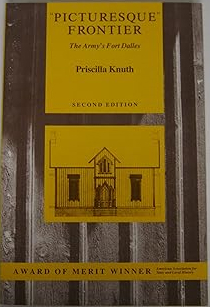
"Picturesque" Frontier: The Army's Fort Dalles by Priscilla Knuth is a detailed 1967 historical monograph, published by the Oregon Historical Society, that examines the mid-19th-century military presence in the Columbia River Gorge. The book chronicles the establishment, architectural evolution, and strategic importance of the Oregon fort during the pioneer era and the region's indigenous conflicts from the late 1840s through the 1860s. Ultimately, it serves as a well-documented look at garrison life and the crucial role this frontier outpost played in the early American settlement of the Pacific Northwest. ix, 114 pages : illustrations, maps ; 23 cm CIRC [ 1 ]
|
1987 |
|
"Another day in paradise" island memories from the thirties and forties by James K. Long 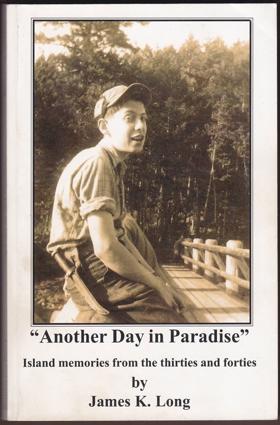
Childhood memories of Orcas Island in the 1930's and 1940s. Published in local editions, James K. Long’s “Another Day in Paradise”: Island Memories from the Thirties and Forties captures the nostalgic, slower-paced rhythms of rural island life during an era defined by isolation and self-reliance. Drawing on personal reminiscences and local lore, the book details the distinct daily routines of farming, community gatherings, and maritime travel in the Pacific Northwest before the arrival of modern bridges and high-speed ferries. Through vivid anecdotal storytelling, the author preserves a vanishing world where neighbors depended entirely on one another to weather economic hardship and geographic seclusion. A keen insight drawn from the work is how the ironic title reframes historical isolation; by contrasting the physical hardships of Depression-era island existence with the deep sense of communal belonging it forged, the narrative reveals that true paradise on the frontier was never about untouched luxury, but rather the profound human connection born from shared vulnerability. 62 p. : ill. ; 25 cm. CIRC [ 1 ]
|
2003 |
|
"A particular friend, Penn's Cove" a history of the settlers, claims, and buildings of central Whidbey Island by Jimmie Jean Cook 
Amazing compendium documenting central Whidbey from the Native Americans, early settlers, pioneer family information and photographs. 148 pages illustrations 28 cm CIRC [ 1 ]
|
1973 |