Catalog of British Columbiana and Pacific Northwest Americana
The Encyclopedia Cascadia Catalog indexes mostly non-fiction literature covering the Pacific Northwest coast of North America, with an emphasis on British Columbia, Idaho, Oregon, and Washington State.
| Catalog Title | Published |
|---|---|
|
Distant neighbors a comparative history of Seattle & Vancouver by Norbert MacDonald 
Distant Neighbors: A Comparative History of Seattle & Vancouver by Norbert MacDonald is a 1987 urban history that explores the parallel yet distinct development of two major Pacific Northwest cities from the 1880s through the mid-20th century. The book analyzes how differing national contexts, political structures, and economic policies shaped the unique civic characters, immigration patterns, and physical landscapes of each municipality despite their close geographic proximity and shared regional environment. Ultimately, it provides a foundational comparative framework for understanding the fascinating divergence between American and Canadian urban evolution on the Pacific coast. xxii, 259 pages, 30 unnumbered pages of plates : illustrations ; 25 cm Non-circulating [ 1 ]
|
1987 |
|
Company town Potlatch, Idaho, and the Potlatch Lumber Company by Keith Petersen, Latah County Historical Society (Publisher) 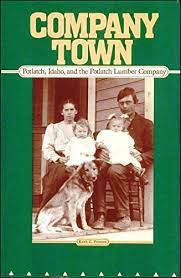
Company Town: Potlatch, Idaho, and the Potlatch Lumber Company by Keith Petersen is a 1987 historical study published in association with the Latah County Historical Society that examines one of the American West's most meticulously planned corporate communities. The book chronicles the establishment and daily life of the lumber town, detailing the Weyerhaeuser syndicate's paternalistic control over its workers' housing, commerce, and social institutions from 1905 until the town's privatization in the 1950s. Ultimately, it serves as a compelling case study of industrial capitalism, labor relations, and the unique socio-economic dynamics that defined early 20th-century timber operations in the Pacific Northwest. xix, 284 pages, 32 unnumbered pages of plates : illustrations ; 24 cm Non-circulating [ 1 ]
|
1987 |
|
Postmarked Washington an encyclopedia of postal history covering eleven counties of eastern Washington based on the research of the late Guy Reed Ramsey and other sources by Bert Webber, Guy Reed Ramsey 
Postmarked Washington: An Encyclopedia of Postal History Covering Eleven Counties of Eastern Washington, compiled by Bert Webber from the foundational research of the late Guy Reed Ramsey, is a comprehensive reference work detailing the region's early pioneer communication networks. The book meticulously catalogs the establishment, operation, and discontinuation of numerous frontier post offices across eastern Washington, highlighting the local postmasters who served these growing communities. Ultimately, it serves as an essential historical resource for genealogists, philatelists, and regional scholars researching the rural development and civic infrastructure of the Inland Northwest. volumes <1> : illustrations ; 27 cm Non-circulating [ 1 ]
|
1987 |
|
Spilsbury's coast pioneer years in the wet West by Howard White, Jim Spilsbury 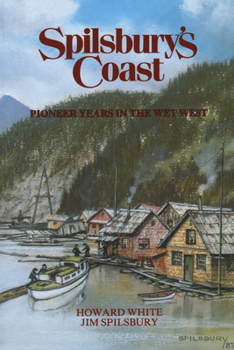
Spilsbury's Coast is that part of the Inside Passage between the Fraser River and the top end of Vancouver Island -- a place of small boats, countless islands and whole towns on floats. When Jim Spilsbury, B.C's most famous pioneer entrepreneur, teams up with master storyteller and literary craftsman Howard White, the result is a spell-binding romp up and down British Columbia's rugged coast; eighty years of fascinating anecdotes and memories distilled into 190 pages. Jim Spilsbury grew up in a tent on Savary Island, squatting on crown land. His story is one of the classic "rags-to-riches" stories in Canadian history. As well as being as brilliant inventor and an ambitious, astute businessman, he had the intangible gift of being in the right place at the right time. In 1923, at the age of 18, primed with a correspondence course in electrical engineering, Jim Spilsbury began building sophisticated radio telephones. Fishermen bought them, loggers bought them, and eventually homesteaders, explorers and even governments bought them. "Radio boomed," Spilsbury recalls, "and it carried me with it." As we follow Spilsbury in his adventures, we meet Frank Osborne, the genius engine-builder; Emil Gordon, the obsessive flamboyant Powell River salesman who sold everything from refrigerators to cows; Red Mahone, the obstreperous Boathouse cook and Spilsbury's own bizarre family, including his rifle-toting mother who cut her hair like a man's and golfed on the beaches at low tide. Howard White, himself a child of BC's backwaters, brings the voice of authority to Spilsbury's amazing tale. A rare gem of authentic storytelling - it flows fast and bright, like a mountain stream. iii, 190 pages, 64 unnumbered pages of plates : illustrations, maps, portraits ; 24 cm Non-circulating [ 1 ]
|
1987 |
|
The adventures and sufferings of John R. Jewitt, captive of Maquinna by John R. Jewitt, Hilary Stewart 
The Adventures and Sufferings of John R. Jewitt, Captive of Maquinna, originally published in 1815 and expertly annotated and illustrated by Hilary Stewart in 1987, is a classic maritime captivity narrative set on the rugged coast of Vancouver Island. The book recounts the harrowing two-year ordeal of an English blacksmith who survived an 1803 attack on his trading ship and was integrated into the Nuu-chah-nulth First Nation under Chief Maquinna. Ultimately, enhanced by Stewart’s detailed ethnographic drawings and historical context, it serves as an invaluable firsthand account of early European contact and traditional Indigenous life in the Pacific Northwest. 192 pages : illustrations ; 24 x 27 cm Non-circulating [ 1 ]
|
1987 |
|
To the Columbia gateway the Oregon Railway and the Northern Pacific, 1879-1884 by Peter J. Lewty 
Fascinating history of the construction of the competitive transportation system in the inland Columbia River basin in the 19th century that linked the Pacific Northwest to eastern markets and provided easier access to the Orient. This volume covers the origins of the Northern Pacific Railroad and the Oregon Railway and Navigation Co., the rise and fall of Henry Villard's first empire, and the completion of overland railways converging on the Columbia Gateway. The author successfully conveys the excitement as well as the enormous amount of time, money and hard work required to build the Pacific Northwest rail lines. Illustrated with black and white photos. With maps. 202 pages with index. xxv, [1], 202 pages, 16 unnumbered pages of plates : illustrations, maps, portraits ; 24 cm Non-circulating [ 1 ]
|
1987 |
|
Reach of tide, ring of history a Columbia River voyage by Sam McKinney 
Aboard a small handmade boat, Sam McKinney set out to rediscover the Columbia River of his youth. The story of his voyage offers an intimate history of the great river and of the people who have lived and worked along its shores. McKinney, a seasoned explorer, historian, and riverman, begins his voyage on the sea. Following the path of Robert Gray's ship Columbia Rediviva across the treacherous Columbia River bar, he embarks on an upriver journey that leads beyond urban Portland to the barrier of Bonneville Dam. Along the way, he visits the sites of old Indian villages, the camps of the Lewis and Clark expedition, the rotting piers of early river communities, and the islands of the lower river. Walking out along the jetty at the mouth of the Columbia, McKinney recounts how this infamous bar was formed, and how it was tamed by turn-of-the-century marine engineering. He sloshes through Astoria's rainy streets, recalling its origins as the first American outpost on the Pacific Slope and its lusty past as a working waterfront. His voyage takes him to ghost towns and abandoned villages — Chinookville, Frankfort, Knappton. He describes the development of the river's fishing industry and the harsh conditions faced by fishers during the industry's peak years. He remembers his own boyhood, working on the river as a gillnet fisherman and as a deckhand aboard one of the last sternwheelers. Combining the river's storied history, rich personal memories, and observations gleaned from the deck of the 16-foot Gander, McKinney gives us a sensitive portrait of the Columbia river, a book that reflects the rhythms of tides that the author knows so well. "Two weeks on the river and I was only fifty miles upstream," writes McKinney, grounded on a hidden sandbar. "My wake, had it been recorded, would have revealed a slow, wandering track of curiosity — islands explored, old townsites discovered, and unnamed channels followed." Sam McKinney is a founder of the Lewis and Clark Columbia River Water Trail and the author of Bligh: A True Account of the Mutiny Aboard HMS Bounty. In the late 1980's he completed a 4-year, 5000-mile journey across North America through the inland waterways of the continent. He lives in Vancouver, British Columbia, and is a research associate at the Vancouver maritime Museum. xi, 172 pages : illustrations ; 26 cm Non-circulating [ 1 ]
|
1987 |
|
Indian affairs in Oregon and Washington territories, &c. message from the President of the United States by United States, James Buchanan, United States Army Division of the Pacific 
Indian Affairs in Oregon and Washington Territories, &c.: Message from the President of the United States is a primary source collection of mid-19th-century government documents, military correspondence, and field reports originally submitted to Congress by President James Buchanan and later reprinted by historical presses for modern researchers. The volume compiles crucial dispatches from the U.S. Army Division of the Pacific, territorial governors, and federal Indian agents detailing the contentious treaties, administrative policies, and armed conflicts—including the Yakima and Puget Sound Wars—that engulfed the region during the late 1850s. Ultimately, it serves as an essential archival resource for historians seeking unfiltered, contemporary insights into the federal government's military operations and its fraught interactions with the Indigenous peoples of the Pacific Northwest during the peak of early pioneer settlement. 21 pages ; 23 cm Non-circulating [ 1 ]
|
1987 |
|
Riverside remembers books I, II & III by Greater Riverside Organization (Everett, Wash) 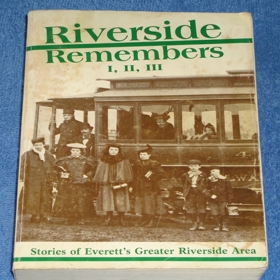
Riverside Remembers: Books I, II & III by the Greater Riverside Organization is a multi-volume grassroots historical compilation, originally published in the mid-1980s, that chronicles the robust working-class heritage of Everett, Washington's historic Riverside neighborhood. The comprehensive collection gathers rich oral histories, archival photographs, and pioneer anecdotes to vividly detail daily life in the community, profiling the resilient mill workers, local labor organizers, families, and neighborhood characters who defined this industrial waterfront hub along the Snohomish River. Ultimately, it serves as an invaluable, community-driven repository that preserves the distinct grit, cultural identity, and enduring civic spirit of one of Everett's oldest and most historically significant neighborhoods. ix, 111 pages : illustrations ; 21 cm Non-circulating [ 1 ]
|
1987 |
|
Handbook of North American Indians Volume 11, Great Basin by William C. Sturtevant, Warren L. d'. Azevedo 
Volume 11 covers the history and culture of the original inhabitants of the area which is now Nevada, Utah, western Colorado, portions of southern Oregon, Idaho, Wyoming, eastern California, Arizona and New Mexico. xvi, 852 pages Non-circulating [ 1 ]
|
1986 |
|
Washington mountain ranges by Robert Steelquist, Pat O'Hara (Illustrator) 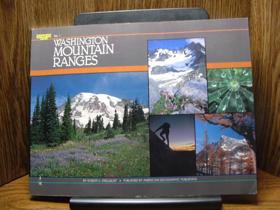
Washington Mountain Ranges by Robert Steelquist, featuring the striking landscape photography of Pat O'Hara, is a 1986 geographic and visual survey originally published as part of the Washington Geographic Series. The book combines detailed natural history with sweeping imagery to explore the complex topography, ecological zones, and rugged wilderness areas that define the state's prominent massifs, particularly the Cascade and Olympic ranges. Ultimately, it serves as a highly engaging and visually rich tribute to the region's physical geography, offering a valuable resource for outdoor enthusiasts, conservationists, and anyone captivated by the natural heritage of the Pacific Northwest. 104 pages : illustrations (some color), maps ; 22 x 28 cm Non-circulating [ 1 ]
|
1986 |
|
Strathcona a history of British Columbia's first provincial park by Wallace Baikie, Rosemary Phillips 
Strathcona: A History of British Columbia's First Provincial Park by Wallace Baikie and Rosemary Phillips is a 1986 regional environmental history that chronicles the exploration, establishment, and preservation of this rugged, mountainous wilderness reserve located in the geographic center of Vancouver Island. The book details the park's origins from its legislative founding in 1911—making it the oldest provincial park in British Columbia—through decades of early mountaineering expeditions, resource use conflicts, and the evolving conservation efforts required to protect its pristine alpine lakes, ancient forests, and glaciated peaks. Ultimately, it serves as an invaluable resource for outdoor enthusiasts and environmental historians seeking to understand the recreational development and the enduring legacy of land preservation in the Canadian Pacific Northwest. vi, 137 pages : illustrations, maps, portraits ; 28 cm Non-circulating [ 1 ]
|
1986 |
|
The mightiest of them all memories of Grand Coulee Dam by Leonhard Vaughn Downs 
The Mightiest of Them All: Memories of Grand Coulee Dam by Leonhard Vaughn Downs is a detailed historical memoir and engineering retrospective, published in 1986 by the American Society of Civil Engineers, that chronicles the monumental construction of the largest concrete structure in the United States. Written by a Bureau of Reclamation engineer who spent decades working intimately on the Columbia Basin Project, the book offers a rare insider's perspective on the massive Depression-era public works endeavor. It details the formidable technical challenges, the massive labor force, and the daily realities of taming the Columbia River to generate hydroelectric power and provide regional irrigation. Ultimately, it serves as an invaluable firsthand account and a tribute to the ingenuity, grit, and colossal scale of federal infrastructure development that fundamentally transformed the landscape and economy of eastern Washington. 186 Seiten : Illustrationen Non-circulating [ 1 ]
|
1986 |
|
South Whidbey and its people Volume 3: Langley, The Village by the Sea by Lorna Cherry, South Whidbey Historical Society 
Langley, The Village by the Sea: A gleam in the eye of a teen-age German boy becomes a South Whidbey village. The village becomes a town and the town becomes a city volumes : illustrations ; 26 cm Non-circulating [ 1 ]
|
1986 |
|
Land of the Umpqua a history of Douglas County, Oregon by Stephen Dow Beckham 
Land of the Umpqua: A History of Douglas County, Oregon by esteemed Pacific Northwest historian Stephen Dow Beckham is a comprehensive 1986 regional history that chronicles the rich heritage of the Umpqua River basin. The book meticulously explores the area's geological origins, its early Indigenous populations, and the transformative eras of pioneer settlement, detailing the subsequent rise of the local timber, mining, and agricultural industries that shaped the county's economic development. Ultimately, it serves as a definitive and highly readable scholarly resource for understanding the environmental and human forces that forged the vibrant cultural landscape of southwestern Oregon. 285 pages : illustrations ; 29 cm Non-circulating [ 1 ]
|
1986 |
|
Vancouver on the Columbia an illustrated history by Ted Van Arsdol, Sheila Guenther, Greater Vancouver Chamber of Commerce (Wash) 
Vancouver on the Columbia: An Illustrated History by Ted Van Arsdol, featuring photo research by Sheila Guenther and produced in cooperation with the Greater Vancouver Chamber of Commerce, is a comprehensive 1986 civic history of Washington state's oldest continuously inhabited non-Native settlement. The book chronicles the city's rich evolution from its origins as a prominent Hudson's Bay Company fur-trading outpost and U.S. military garrison (Fort Vancouver) into a modern industrial, shipping, and commercial hub along the Columbia River. Ultimately, enriched by an extensive collection of archival photographs and business profiles, it serves as a highly visual and engaging tribute to the pioneer heritage, economic milestones, and enduring community identity of Vancouver, Washington. 160 pages : illustrations (some color) ; 28 cm Non-circulating [ 1 ]
|
1986 |
|
As the anvil rings by Geneva Bair Wilson 
As the Anvil Rings by Geneva Bair Wilson is a 1986 autobiographical memoir published by the regional historical publisher Ye Galleon Press, based in Fairfield, Washington. The book chronicles Wilson's pioneer childhood and coming-of-age experiences, tracing her early life in eastern Kansas and near Cheyenne Wells, Colorado, up to her marriage to True Wilson in 1925. While its primary setting is geographically east of the Pacific Northwest, the work is part of the broader Western Americana catalog preserved by this notable Washington press, serving as a valuable firsthand account of early 20th-century frontier settlement, agricultural challenges, and rural family dynamics. 313 pages : illustrations (some color) ; 27 cm Non-circulating [ 1 ]
|
1986 |
|
The Jesuits and the Indian wars of the Northwest by Robert Ignatius Burns 
The Jesuits and the Indian Wars of the Northwest by Robert Ignatius Burns is a definitive 1966 scholarly monograph (later reprinted in 1986 by the University of Idaho Press) that explores the complex intersection of Catholic missionary work, Indigenous resistance, and U.S. military expansion. The book meticulously details the pivotal diplomatic and peacemaking roles played by Jesuit priests among the Native American tribes of the Inland Empire, particularly during mid-19th-century frontier conflicts such as the Yakima, Coeur d'Alene, and Nez Perce wars. Ultimately, it serves as a highly acclaimed, extensively researched resource for historians seeking a nuanced understanding of the religious, cultural, and political dynamics that shaped the violent transformation of the interior Pacific Northwest. xii, 512 pages : maps ; 23 cm Non-circulating [ 1 ]
|
1986 |
|
Coal towns in the Cascades a centennial history of Roslyn and Cle Elum, Washington by John C. Shideler 
From Coal Mine to Recreational In the early 1880s, the Northern Pacific Railroad discovered coal in Roslyn, Washington. By 1886, mining coal in Roslyn became the company's top priority. The coal mines attracted a diverse workforce from across America and Europe. Each group, along with their hopes and dreams for a better life, brought their own culture, cuisine and customs, many of which are still in evidence today.Coal mining operations ceased in 1963. After more than 63 million tons of coal had been mind from the Roslyn coal field, Roslyn became a town with no industry. Over time, Seattlites, seeking sunny skies and fresh mountain air stimulated an increased demand for recreational property. As people began to discover the great natural beauty of the areas close to Seattle, tourism began to grow. People became enchanted with the area's history and its four-season recreational opportunities.The resort community of Suncadia was created on a 6,300-acre piece of property, southwest of Roslyn, which includes Mines No. 9 and No. 10. Suncadia is owned by subsidiaries of JELD-WEN, PacTrust and Lowe Enterprises. The goal of Suncadia LLC was to develop a four-season destination resort, while preserving the beauty and history of the land. An important component of the resort is the Rope Rider golf course, so named as a tribute to the coal miners, who precariously balanced themselves on the coal cars that maneuvered the steep slopes of the mine shafts. The enduring legacy of the Rope Riders is woven into the design, architecture and personality of the Roper Rider Clubhouse. [8], 151 pages : illustrations, chart, portraits; 29 cm Non-circulating [ 1 ]
|
1986 |
|
Seattle in the 1880s by David M. Buerge, Stuart R. Grover , Historical Society of Seattle and King County (Publisher) 
Seattle in the 1880s by David M. Buerge and Stuart R. Grover is a 1986 local history published by the Historical Society of Seattle and King County that chronicles a pivotal decade of explosive growth and transformation for the city. The book details Seattle's rapid evolution from a rugged, isolated lumber town into a booming commercial metropolis, capturing the civic ambitions, economic shifts, and physical landscape of the community in the years immediately preceding the devastating Great Seattle Fire of 1889. Ultimately, it serves as a highly engaging and well-documented resource for regional historians seeking to understand the foundational era that set the stage for Seattle's modern emergence. [6], 115, [4] pages : illustrations, portraits ; 23 cm Non-circulating [ 1 ]
|
1986 |
|
Chief Pocatello, the "White Plume" by Brigham D. Madsen 
Dedicated to a people who faced starvation and destitution as white emigrating settlers continued to flock through his homeland, Pocatello was committed to preserving the life of his people. Even as game and land resources were severely depleted, he sought little other than to provide for his Shoshoni tribe. x, 142 pages : illustrations, maps, portraits ; 22 cm. Desiderata
|
1986 |
|
Victoria, the way it was by Michael Kluckner 
Victoria: The Way It Was by Michael Kluckner is a richly illustrated historical retrospective that chronicles the early history and architectural heritage of Victoria, British Columbia. Featuring a blend of archival photographs and Kluckner's signature watercolor paintings, the 1986 book captures the city's charming streetscapes and historic buildings before they were transformed by modern development. Ultimately, it serves as both a nostalgic visual tribute and a valuable reference for those interested in the history and preservation of Canada's West Coast urban landscape. 175 pages : illustrations (some color) ; 25 x 31 cm Non-circulating [ 1 ]
|
1986 |
|
UniverCity the city within city, the story of the University District by Roy G. Nielsen 
UniverCity: The City Within a City, The Story of the University District by Roy G. Nielsen is a detailed 1986 local history published by the University Lions Club Foundation that chronicles the evolution of Seattle's vibrant U-District. The book traces the neighborhood's dramatic transformation from a remote, wooded pioneer settlement originally known as Brooklyn into a bustling, self-sufficient urban enclave deeply intertwined with the 1895 relocation and subsequent expansion of the University of Washington. Nielsen meticulously details the commercial growth of "The Ave" (University Way), the establishment of local civic enterprises, and the unique social dynamic forged by the convergence of academics, students, and long-term residents. Ultimately, it serves as an invaluable, community-focused resource for regional historians seeking to understand the architectural, economic, and cultural forces that shaped one of Seattle's most distinct and historically rich neighborhoods. 167 pages : illustrations, maps ; 28 cm Non-circulating [ 1 ]
|
1986 |
|
Sandon, the mining centre of the silvery Slocan by Dave May 
Sandon, the Mining Centre of the Silvery Slocan by Dave May is a 1986 regional history (self-published in Nelson, B.C.) that chronicles the dramatic rise, catastrophic decline, and resilient legacy of one of British Columbia's most famous mining boomtowns. The book traces Sandon's explosive 1890s transformation into a wealthy, fully electrified civic hub—often dubbed the "Monte Carlo of North America"—following massive silver-lead ore strikes in the West Kootenay region's Selkirk Mountains. May meticulously details the opulent business district and fierce local sports rivalries, alongside the grueling, hazardous working conditions faced by the miners, and the subsequent fires, labor strikes, and floods that ultimately reduced the bustling city to a renowned ghost town. Ultimately, it serves as an invaluable, grassroots record of the sheer grit, ambition, and tragic boom-and-bust cycles that defined Canada's legendary "Silvery Slocan" district. viii, 216 p. : ill., maps, ports. ; 24 cm. Desiderata
|
1986 |
|
Rainier, Oregon history and heritage on the Columbia by Rainier Centennial Book Committee
The Rainier Centennial Book Committee’s Rainier, Oregon: History and Heritage on the Columbia documents the settlement and industrial growth of the river port community situated opposite the mouth of the Cowlitz River. Founded in 1851 as "Eminence" by pioneer Charles E. Fox, the work traces how early water-powered sawmills and fishing stations were established directly along ancestral Chinookan river fisheries. The text details the rapid expansion of industrial sawmilling, the operation of the historic Longview-Rainier ferry fleets, and the 1930 completion of the Longview Bridge (Lewis and Clark Bridge) that connected Columbia County directly to Washington State. Detailed family genealogies and cadastral surveys record the rural farming and logging communities scattered across the surrounding hills and tributary valleys, including Apiary, Goble, Alston, Hudson, and Delena. 264 pages : illustrations, maps, portraits ; 29 cm Desiderata
|
1986 |