Catalog of British Columbiana and Pacific Northwest Americana
Encyclopedia Cascadia Catalog contains book titles of mostly non-fiction Pacific Northwest Coast of North America Titles (primarially British Columbia, Idaho, Oregon and Washington State) in an easy-to-understand title catalog. If you see a link with this badge ONLINE CIRC it means that there is an online institution that provides free access to that title. In some cases there may be more than one institution hosting the title digitally.
| Catalog Title | Published |
|---|---|
|
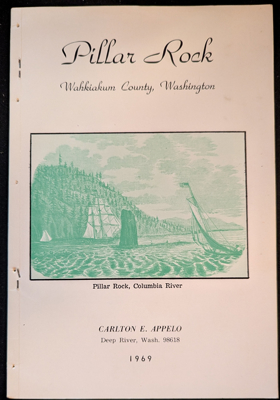
Pillar Rock, Wahkiakum County, Washington by Carlton E. Appelo
|
1969 |
|
Pig-tail days in old Seattle by Sophie Frye Bass 
ONLY SOME TWELVE DECADES have passed since the first small band of settlers dug clams along the beach and built their cabins at Alki Point where Seattle, Washington, had its beginning. When the men came from Alki, after sounding the harbor and finding good anchorage for ships, they staked their claims on February 15, 1852, built their cabins on tiny patches of land they had cleared in the forest, and then began the survey through the heavy timber for the future great city. Seattle's streets still carry many of the names of those first settlers-or names bestowed by them-and in the following pages are the historically true, and often amusing, stories of the early days of these streets-how they looked, who walked along them; all the friendly, gossipy beginnings, recalled by the granddaughter of Arthur Armstrong Denny, founder and surveyor of the city. [4], 191, [1] pages : illustrations, maps (on lining papers) ; 23 cm CIRC [ 1 ]
|
1973 |
|
Pig War islands the San Juans of Northwest Washington by David Richardson
|
1990 |
|
Picturing the Alaska-Yukon-Pacific Exposition the photographs of Frank H. Nowell by Nicolette Bromberg, Frank H. Nowell, John Stamets 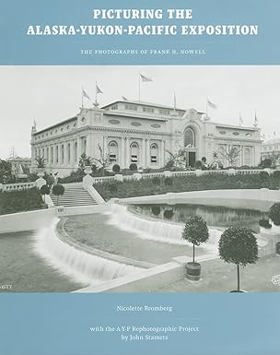
For those who experienced it, the Alaska-Yukon-Pacific Exposition was a time of wonder in a "citadel set in stars" -- a grand world's fair that transformed the summer of 1909 in Seattle into a whirl of excitement and pleasure. On what would become the University of Washington campus, for a brief moment a huge city emerged. At noon on June 1, amidst the blasting of horns and whistles, confetti filled the air and the gates were opened to a pent-up crowd of about 80,000 fairgoers. At the end of the evening on October 16, the fair was over and the magical city became a memory for its 3.7 million visitors. For those who couldn't make the trip to see the exhibits and for the rest of us today, the best record of the event was made by Frank H. Nowell, official photographer for the exposition. He documented the construction of the city, its landscaping, the people who built it, and the people who visited it, as well as the buildings that housed displays from dozens of foreign countries. He used a large view camera and 8 x 10 glass-plate negatives to create several thousand photographs. For this book, Nicolette Bromberg has chosen the best and most representative. Her essay illuminates both the man and the fair, providing perspective to a history of the West that connects us to a world-expanding event a hundred years ago, and also contains Nowell's photographs of Alaska during the gold rush, relating how an Alaskan photographer became the official A-Y-P photographer. For the 100th anniversary of the exposition, John Stamets organized and led University of Washington students in a project to rephotograph the site. This book includes an essay by Stamets describing the challenges, delights, and problems of the project, along with thirty rephotographs that imagine the fabulously spectacular ghost city on the campus. 128 pages : illustrations ; 28 cm CIRC [ 0 ]
|
2009 |
|
Photographic memoirs of Kitsap County a commemorative souvenir by North Kitsap Bicentennial Association
|
1976 |
|
Phil Weyerhaeuser, lumberman by Charles E. Twining 
This is a rich and many-faceted personal and business biography of the main figure in the third generation of Weyerhaeusers, who led the Weyerhaeuser Timber Company through the difficult and decisive years from 1933 to 1956. Although Phil Weyerhaeuser preferred to pass over the importance of his role, he was an industry leader and as such could not escape a large public duty. The years in which he served, from the 1920s tin the Inland Empire, and from 1933 to 1956 with the Weyerhaeuser Timber Company west of the Cascades, were years of great demands and change. Within his tenure the country experience the Great Depression and World War II, the reluctant acceptance by business of New Deal and Fair Deal legislation and bureaucratic requirements, and the adjustments occasioned by the managerial revolution. In the case of the Timber Company, the period witnessed its transition from what had been primarily a dealer in timberlands to an integrated manufacturer of forest products, from a liquidator of forest resources to a managers of tree farms designed to be perpetual in their providence. Phil oversaw his responsibilities to good purpose. His quiet style is of interest and so too are the effects of just being a Weyerhaeuser. The latter, of course, had much to do with his opportunities and also influenced the manner in which he conducted himself. But it was not without its liabilities, and the family relationships are an important element in the story. The most significant feature, however, has to do with the study of a period and a place and an industry through the experiences of a very special organization and its leadership. The study brings people and events into clearer focus and gives them added meaning. This is of particular importance in an industry so given to stereotyping and disapprobation. This well-written account reveals in detail the operation of a huge family enterprise, government-industry relations at a key time in United States history, labor relations, and efforts to expand and continually revitalize a large company--dependent on natural resources--over a period of half a century. Central to these efforts was Phil’s conviction that the best way for a forest products company to operate was to own its own timberlands. he saw such holdings as necessary if the company was to engage in sustained-yield management. This biography draws extensively on primary sources--correspondence, family records, memoranda, and numerous interviews. It will be of interest to historians of the Pacific Northwest and the forest products industry, students of business history, and all readers interested in the development of a major American company. xvii, 401 pages, 40 pages of plates : illustrations ; 24 cm CIRC [ 1 ]
|
1985 |
|
Peter Skene Ogden's Snake Country journals, 1824-25 and 1825-26 by Peter Skene Ogden
|
1950 |
|
Peter Puget's Sound Washington's historic waterway by Walter P. Clausen
|
1979 |
|
Persistent callings seasons of work and identity on the Oregon Coast by Joseph E. Taylor 
"The Nestucca Valley is a small watershed, tucked away in one corner of a county in far western Oregon. There are no incorporated towns, and cows outnumber humans. It has long been a place without a written history, yet its past offers many surprising twists on received wisdom about rural economies. In crisp prose and succinct chapters, Persistent Callings carries readers from aboriginal times to the present, illustrating the wisdom of seasonal labor, the complex relationships between work and identity, and the resilience of rural economics across more than a century of almost continual change. Life in this watershed, known to locals as 'South County,' has always been demanding. Farming, fishing, and logging were difficult occupations, but work had deeper meanings. Challenges arrived in many forms, including climate shifts, market crashes, regulatory changes, and industry consolidations. Residents' ability to innovate was their greatest resource, and their persistence helps us to recognize the callings they pursued. During the late twentieth and early twenty-first centuries, disruptions came more quickly, and they coincided with infusions of capital that dramatically altered the structure of employment, with devastating results for the valley's hardest working residents. Unemployment and poverty skyrocketed while health and life expectancy dropped to alarming levels. Moreover, the arrival of retirees and rise of environmental amenities actually exacerbated some ecological problems. Little in this history plays out as expected, and much of it will make readers reconsider how they think about the social, economic, and environmental contours of rural life in the American West"-- Provided by publisher viii, 219 pages : illustrations, charts, facsimiles, map ; 23 cm CIRC [ 0 ]
|
2019 |
|
Permission to land a memoir of loss, discovery, and identity by Judy LeBlanc 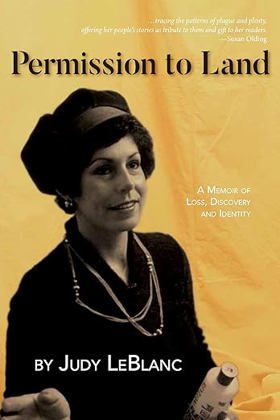
"When Judy LeBlanc’s mother died in 2015, she embarked on a personal journey of discovery and reconciliation with her known but unacknowledged Coast Salish ancestry on her mother’s side. She was to discover that both maternal great-grandparents had Scottish fathers and Coast Salish mothers. Her great-grandmother was from the W̱SÁNEĆ people in what is now known as Saanich on Vancouver Island, and her great-grandfather was the son of a woman from either the Suquamish in Washington state or the Tsleil-Waututh in Burrard Inlet, North Vancouver. Finally, LeBlanc discovers that her great aunt attended Chemawa, an American Indian boarding school where, at the age of fourteen, she contracted tuberculosis and was sent home to die. In this intimate and moving memoir-in-essays, LeBlanc reflects on the impact of erasure in her family, particularly on the women through four generations. Marked by grief for the loss of her mother and the discovery of buried family secrets, LeBlanc sets out on a journey, both literary and cultural, in the form of a voyage by canoe to the home of her ancestors. Permission to Land is a powerful and vulnerable exploration of the complexities of family, heritage and identity, courageously questioning whether it is possible to seek renewal after irrevocable loss."-- Provided by publisher 158 pages : illustrations ; 23 cm CIRC [ 0 ]
|
2024 |
|
People, politics & public power by Ken Billington, Washington Public Utility Districts' Association
|
1988 |
|
People of the southwest coast of Vancouver Island a history of the southwest coast by R. Bruce Scott 
138 pages, 6 unnumbered leaves of plates : illustrations, map (on lining paper), portraits ; 24 cm CIRC [ 1 ]
|
1974 |
|
People of the river native arts of the Oregon territory by Bill Mercer, Portland Art Museum 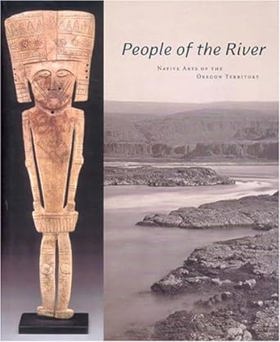
"People of the River: Native Arts of the Oregon Territory is the first major publication to focus exclusively on the rich artistic traditions of the Native Americans who traditionally lived along the lower Columbia River from the mouth of the Snake River to the Pacific Ocean. In this illustrated catalogue, author Bill Mercer describes the Columbia River art style as an Indigenous development that emerged over the course of countless generations and whose forms reveal unique combination of designs, motifs, materials, and techniques. Included are more than two hundred objects organized into sections that focus on sculptural forms, basketry, and beadwork spanning the pre-contact era to the middle of the twentieth century. People of the River features many objects that have never before been published and provides been insight into a previously unrecognized area of Native American art. With insightful texts, lavish reproductions, and an extensive bibliography, People of the River promises to be a key resource on this compelling body of work for years to come."--Jacket 191 pages : color illustrations ; 32 cm CIRC [ 1 ]
|
2005 |
|
People of North Kitsap Peninsula by Hansville Historical Society 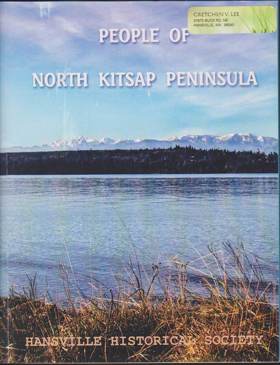
It is a history of the communities and families of the North Kitsap area beginning with the S'Klallam Tribe and moving north. Communities included are S'Klallam Tribe, Eglon, Hansville, Point No Point, Skunk Bay, Twin Spits, Foulweather Bluff, Cliffside, Driftwood Key, and Shore Woods. In addition to the community histories, personal histories of early families are included. --description from Hansville Historical Society Website 198 pages : illustrations ; 28 cm. CIRC [ 0 ]
|
2015 |
|
Penticton 75 years to remember, 1908-1983 by A. David MacDonald
|
1983 |
|
Pendleton a short history of a real western town by Keith F. May, Christina Rae May 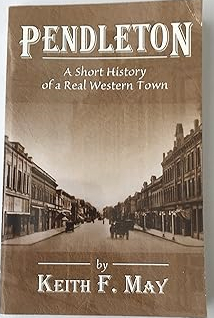
Published by Keith F. May and Christina Rae May, Pendleton: A Short History of a Real Western Town explores the dynamic evolution of this iconic Oregon community from its origins as a frontier trading post into a bustling agricultural and cultural hub. The book chronicles the town's rich heritage, highlighting the impact of the Oregon Trail, the arrival of the railroad, and the establishment of its famous woolen mills and annual Round-Up celebration. Through local anecdotes and historical highlights, the authors capture the rugged spirit and enduring character that distinguish Pendleton from standard suburban settlements. A keen insight drawn from the text is how communities like Pendleton leverage theatrical traditions like the rodeo not just for entertainment, but as vital cultural anchors that allow a changing rural economy to publicly perform and preserve its foundational mythos. 124 pages : illustrations, maps, portrait ; 22 cm CIRC [ 1 ]
|
2005 |
|
Pedaling revolution how cyclists are changing American cities by Jeff Mapes 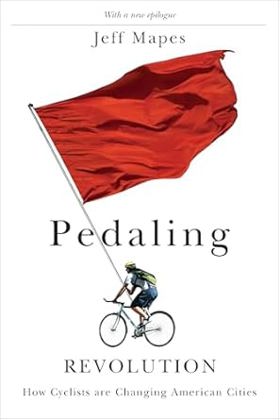
"In a world of increasing traffic congestion, a grassroots movement is carving out a niche for bicycles on city streets. Pedaling Revolution explores the growing bike culture that is changing the look and feel of cities, suburbs, and small towns across North America." "From traffic-dodging-bike messengers to tattooed teenagers on battered bikes, from riders in spandex to well-dressed executives, ordinary citizens are becoming transportation revolutionaries. Jeff Mapes traces the growth of bicycle advocacy and explores the environmental, safety, and health aspects of bicycling. He rides with bicycle advocates who are taming the streets of New York City, joins the street circus that is Critical Mass in San Francisco, and gets inspired by the everyday folk pedaling in Amsterdam, the nirvana of American bike activists. Chapters focused on big cities, college towns, and America's most successful bike city, Portland, show how cyclists, with the encouragement of local officials, are claiming a share of the valuable streetscape."--Jacket 288 pages : illustrations ; 23 cm CIRC [ 0 ]
|
2009 |
|
Peaceful valley the story of Kamiah's early years by Virginia Woods Meyer 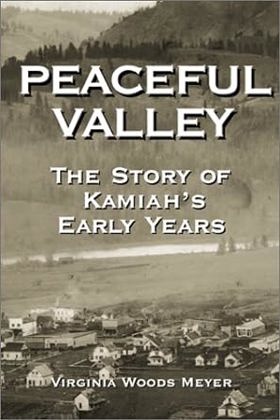
Although this book tells the story of one little Idaho town, Kamiah, located on the Nez Perce Indian reservation and visited by the Lewis and Clark expedition, in many ways it is the story of a multitude of small Pacific Northwestern towns whose origins date back to the turn of the last century--a time when individualism, initiative, and enterprise abounded. Accounts of events as they appeared in the small, weekly newspaper of that day, along with family anecdotes bring Kamiah's history to life. This is a well-researched and entertaining account by a founding father's granddaughter who collected archival pictures from state and private historical societies and museums, and who shared personal family photos never seen before. Over 75 photos and maps. v, 294 pages : illustrations, maps ; 23 cm CIRC [ 1 ]
|
1999 |
|
Peaceful conquest story of the Lewis and Clark Expedition by Kelsie Ramey Osborne, Colista Murray Dowling
|
1955 |
|
Peace weavers uniting the Salish coast through cross-cultural marriages by Candace Wellman 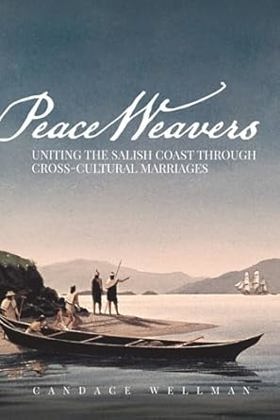
"Strategic cross-cultural marriages between Coast and Interior Salish families and pioneer men played a crucial role in mid-1800s regional settlement and spared Puget Sound's upper corner from tragic conflicts. Accounts of the husbands exist in a variety of records, but the native wives' contributions remained unacknowledged. Combining primary and secondary sources, genealogy, and family memories, author Candace Wellman illuminates this hidden history and shatters stereotypes surrounding these relationships. The four women she profiles exhibited exceptional endurance, strength, and adaptability. They ran successful farms and businesses and acted as cultural interpreters and mediators. Although each story is unique, collectively they and other intermarried individuals helped found Puget Sound communities and left a lasting legacy. They were peace weavers."--Publisher's website xii, 280 pages : illustrations, maps ; 23 cm CIRC [ 0 ]
|
2017 |
|
Peace at heart an Oregon country life by Barbara Drake 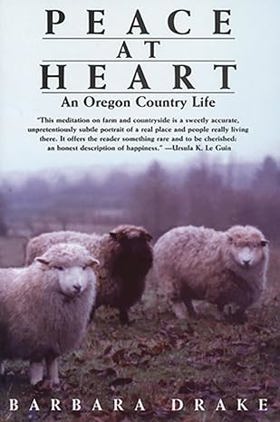
Many dream of leaving the city for a new life in the country. Few follow that dream. In 1987, Barbara Drake and her husband sold their home in Portland and moved to a farm in western Oregon's Yamhill Valley. Home was now a modest white house, an old red barn, and a small vineyard. In Peace at Heart, Barbara Drake reflects on ten years of country living and on the happiness that this rural landscape has brought her. Weather, seasons, plants, and especially animals figure prominently in these stories. The constant company of animals-domestic and wild-on the farm inspires what Drake calls "the sacramental character of country life." In essays on birthing lambs, keeping bees, raising geese, and making wine, Drake combines gentle humor, practical advice, and deep respect for the work and the land. This rich gathering of observations and meditations-on everything from border collies and Oregon mud to picking wild apples-captures the ordinary joys and everyday blessings of country life. Finalist for the Oregon Book Award, 1998 xiv, 176 pages ; 23 cm CIRC [ 0 ]
|
1998 |
|
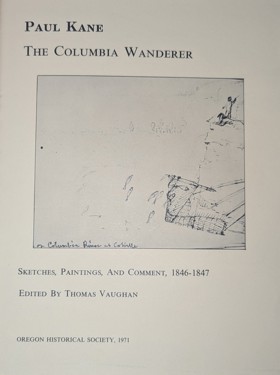
Paul Kane, the Columbia wanderer, 1846-47 sketches and paintings of the Indians and his lecture, "The Chinooks." by Paul Kane, Thomas Vaughan, Francis Norbert Blanchet
|
1971 |
|
Patos Island Lighthouse by Edrie Vinson , Terri Vinson 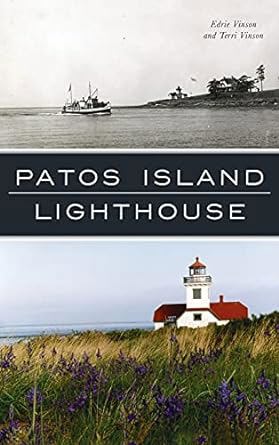
Since 1893, a light has been shining from Patos Island, the northernmost island in Puget Sound. Built to guide ships through treacherous waters, the lighthouse was also a happy home for many, including Edward Durgan and his family in the early 1900s. Boundary waters smugglers and rumrunners once visited the island to stash their contraband, and it was a front-line guard for the nation during World War II. Manned for eighty-one years by the U.S. government, the light was automated in 1974 and is now maintained by the Coast Guard. Join authors Edrie Vinson and Terri Vinson, members of the Keepers of the Patos Light, as they explore the history of this unique Washington landmark. 144 pages : illustrations, maps ; 23 cm CIRC [ 1 ]
|
2020 |
|
Paths to the Northwest a Jesuit history of the Oregon Province by Wilfred P. Schoenberg 
A detailed history of the Oregon Province of the Jesuits from 1831 to 1982. The Oregon Province includes St. Ignatius Mission. Illustrates how the Pacific Northwest Indian missions became a very small part of the Province's business as it grew. The Alaskan Mission and Jesuit educational work occupied most of the Province's resources xiii, 647 pages, 2 unnumbered leaves of plates : illustrations ; 26 cm CIRC [ 1 ]
|
1982 |
|
Past the end of the road a North Island boyhood by Michel Drouin 
"Past the End of the Road recounts a free-range adolescence in mid-century Port Hardy on northern Vancouver Island, at a time when, with no roads south, the town was only connected to the rest of the island by air and sea and the Union steamship was the main mode of travel to and from the sleepy logging village. Michel Drouin's frank and humorous memoir recounts the freedom of his childhood in midcentury Port Hardy. When he was twelve, Drouin and his friend rowed a small boat from town ten kilometres across the Goletas Channel for a day trip to the Gordon Group of islands, without even bringing water to drink, as neither he or his friend owned a canteen and "plastic water bottles hadn't been invented yet." Drouin's adolescence encompassed hunting, fishing, firewood cutting, and more activities that although common at the time are probably foreign to most Canadian children. Although he ultimately prospered, the wildness of Drouin's youth led to some close calls, such as when the young man accidentally lit himself on fire and he was only able to extinguish himself by running to the beach--"fortunately, the tide was in"--and flinging himself into the ocean."-- Provided by publisher x, 230 pages : illustrations, map ; 22 cm CIRC [ 0 ]
|
2024 |